Public Administration: The Best Books on How Government Actually Runs, in Order
Public administration is the layer of government that policy analysts tend to skip: who is hired and how they can be fired, where the money is appropriated and how it is spent, which rules constrain a decision, and what happens between a statute passing and anything changing in the world. It is a real academic field with textbooks and a canon, and it is also a practical craft that its best writers describe as fundamentally different from private management because the constraints are different, not because the people are worse. This path starts with the descriptive classics on how agencies actually behave, moves to the field's textbook foundations, then to decision-making, implementation and budgeting, and ends with the reform literature — including the recent books arguing that the accumulated procedural safeguards have become the problem.
How Agencies Actually Behave
BeginnerUnderstand why public organisations act as they do — the incentives of the people inside them, the discretion exercised at the front line, and why the standard critique of bureaucracy is only half right.
▸ Study plan for this stage
Pace: Three to four weeks for around 900 pages. Wilson's Bureaucracy (433 pages) is the anchor and deserves two weeks with notes, because its framework organises the whole path. Lipsky's Street-Level Bureaucracy (244 pages) is short, argumentative and can be read in a week. Goodsell's The Case for Bureauc
- Wilson's central claim is that public agencies are judged on procedures because their outputs are hard to measure, and that almost everything people dislike about bureaucracy follows from that measurement problem rather than from the character of the people inside it.
- Wilson's typology of agencies by the observability of outputs and outcomes — production, procedural, craft and coping organisations — is the single most reusable tool on this path. A prison, a school, an army and a regulator behave differently because they sit in different cells.
- Constraints, not incentives, are what distinguish public from private management in Wilson's account: a public manager cannot retain earnings, cannot allocate factors of production freely, and must serve goals set by others. That is why importing private practice repeatedly disappoints.
- Lipsky's argument is that policy is in practice made by street-level bureaucrats — caseworkers, police officers, teachers, clerks — who ration their own time and attention under demand that always exceeds supply.
- Coping mechanisms are the mechanism of that claim: creaming, queuing, routinising, and the informal rules workers invent to make an impossible caseload survivable. These become the operative policy regardless of the statute.
- Discretion at the front line is unavoidable and is simultaneously the source of responsiveness and of inequity. Every reform in the final stage is in part an argument about how much of it to permit.
- Goodsell assembles survey and performance evidence showing that citizens rate their own actual encounters with government far better than they rate government in the abstract, which is a genuine and underused corrective.
- The abstraction gap Goodsell documents matters methodologically: opinion about bureaucracy in general and experience of a specific transaction measure different things, and conflating them distorts the reform debate.
- Explain Wilson's typology and place four agencies you know into it. What does the placement predict about how each will be managed and judged?
- Why does Wilson think measuring outputs is the crux? What follows for an agency whose outputs are observable but whose outcomes are not?
- What are street-level bureaucrats actually doing when they ration, and which of Lipsky's coping mechanisms have you observed as a citizen?
- How can discretion be both the source of responsiveness and the source of unequal treatment? Give an example where the same act is both.
- What is Goodsell's evidence, and what is the strongest objection to using satisfaction with specific encounters as a measure of bureaucratic performance?
- Where do Wilson and Lipsky disagree about where policy is really made, and does the disagreement matter for reform design?
- Take one agency and write a Wilson-style analysis of it: what are its outputs, are they observable, what are its outcomes, and which cell of the typology does it fall in?
- Document one of your own encounters with a public service in detail, then identify which of Lipsky's coping mechanisms you were on the receiving end of.
- Write the case against bureaucracy in one page and Goodsell's reply in another, using only evidence from the books.
- List every constraint Wilson says a public manager operates under and, for each, name the private-sector practice it rules out.
Next up: With a working picture of how agencies behave, the next stage supplies the academic vocabulary and the canonical arguments that the reform literature keeps re-fighting.

The single most useful book on this subject and the right first read: Wilson's 1989 study of what government agencies do and why, built on close comparison of prisons, armies, schools and regulators. His central point — that public agencies are judged on procedures because their outputs are hard to measure — organises everything that follows.
Lipsky's argument that policy is in practice made by the caseworkers, police officers and teachers who ration their own time under impossible demand. Read second: it is the view from the counter, and it explains the gap between what a statute says and what a citizen receives.

The deliberate rebuttal, and a genuinely useful corrective: Goodsell assembles the survey and performance evidence that citizens rate their actual encounters with government far better than they rate government in the abstract. Read it third so you have met the critique before the defence.
The Field's Foundations
IntermediateGet the academic vocabulary — the politics-administration dichotomy, the managerial, political and legal approaches, bounded rationality — and know where the field's canonical arguments sit.
▸ Study plan for this stage
Pace: Six to eight weeks for around 1,940 pages, and this is the heaviest stage on the path. Rosenbloom (544 pages) is a survey text — read it over two weeks as your map of the discipline. The Classics of Public Administration reader (608 pages) is not read straight through: take four or five pieces a wee
- Rosenbloom's three approaches — managerial, political and legal — are the framework that explains why reformers from different traditions talk past each other. Each approach has its own value (efficiency, representativeness, due process), its own organisational structure and its own view of the citi
- The politics-administration dichotomy, proposed in the field's founding essay, holds that elected officials set policy and administrators execute it neutrally. It has been rejected as description for a century and continues to organise institutional design, which is itself the interesting fact.
- The classical reader supplies the arguments in their original form — Weber on bureaucracy as a rational-legal ideal type, the scientific management tradition, the administrative principles school, Simon's demolition of it, and Lindblom on incrementalism. Reading them cold is hard, which is why Rosen
- Simon's bounded rationality: administrators have limited information, limited attention and limited computational capacity, so they satisfice — choose the first alternative that meets a threshold — rather than optimise.
- Satisficing is not a defect to be engineered away but a description of what decision-making is. Most reform proposals still smuggle in the assumption that administrators optimise, and Simon is the reason that assumption is unsafe.
- Simon also attacked the administrative principles literature for consisting of proverbs that come in contradictory pairs, which is a general lesson about management advice worth taking beyond this field.
- Kettl's contemporary text covers personnel systems, contracting, federalism and accountability in current American practice, and supplies the institutional detail the older classics assume their readers already have.
- Contracting and third-party government are the structural change the older canon did not anticipate: much public work is now delivered by contractors and grantees, which changes accountability, capacity and what a civil service is for.
- State Rosenbloom's three approaches with the value each maximises, and show how each would design the same agency differently.
- Why has the politics-administration dichotomy survived its own refutation? What work does it still do institutionally?
- Explain bounded rationality and satisficing, and identify one reform proposal in the last stage of this path that assumes optimisation.
- What was Simon's objection to the administrative principles literature, and does the objection apply to management advice you have encountered elsewhere?
- How does Weber's ideal type of bureaucracy differ from Wilson's empirical account of agencies? Are they in conflict?
- What does widespread contracting do to accountability, and which of Rosenbloom's three approaches finds it most troubling?
- Build a one-page comparison of the three Rosenbloom approaches across values, structure, view of the citizen, and preferred reform.
- Read Weber, Taylor, Gulick, Simon and Lindblom from the reader in that order and write a paragraph on each stating its claim and what the next piece did to it.
- Take a real decision you have made under time pressure and describe it in Simon's terms: what alternatives were considered, what threshold was applied, and what was never searched.
- Using Kettl, map the delivery chain for one public service in your own country from appropriation to citizen, marking every point where a non-government party is involved.
- Write out Simon's proverb pairs and then find two contradictory pieces of management advice from any modern source. The exercise ages well.
Next up: With the vocabulary in place, the next stage follows a government action end to end — decided, implemented and paid for — which is where the theory meets its most famous failures.
The standard survey text, organised around Rosenbloom's three competing approaches: managerial, political and legal. Read it as your map of the discipline; the framework is the contribution, and it explains why reformers from different traditions keep talking past each other.
The field's standard reader — Wilson's 1887 essay, Weber on bureaucracy, Taylor, Gulick, Simon, Lindblom, and the rest, in the original. Placed second because Rosenbloom tells you why these pieces matter before you read them cold.
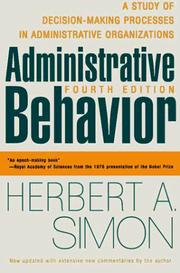
Simon's 1947 book, the origin of bounded rationality and satisficing, and the work that earned him a Nobel in economics. The most demanding book in this stage and the most rewarding: it demolished the idea that administrators optimise, which is the assumption most reform proposals still smuggle in.
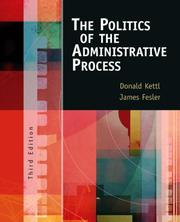
The contemporary textbook, covering personnel systems, contracting, federalism and accountability in current American practice. Read last in this stage as the up-to-date institutional detail that the older classics assume; check which edition you are getting, as it is revised frequently.
Decisions, Implementation and Money
IntermediateFollow a government action end to end — how the decision gets made, why it usually fails on the way to delivery, and how the budget process determines what is possible at all.
▸ Study plan for this stage
Pace: Four to five weeks for around 990 pages. Allison's Essence of Decision (338 pages) takes ten days and is worth reading with the three models kept explicitly separate in your notes. Pressman and Wildavsky's Implementation (281 pages) is short and can be read in a week — its argument is arithmetic and
- Allison analyses the same crisis three times using three models — rational actor, organisational process, and bureaucratic politics — and demonstrates that what an institution does is frequently not what any individual within it chose.
- The organisational process model is the one most useful for public administration: organisations act by executing pre-existing repertoires and standard operating procedures, so their options are limited to what they already know how to do.
- The bureaucratic politics model treats outcomes as the resultant of bargaining among officials whose positions are shaped by their institutional roles. It is the origin of the observation that where you stand depends on where you sit.
- The three lenses are reusable on any case, which is the real reason to read the book. Applying all three to a decision you know is the fastest way to see how much a single-model explanation leaves out.
- Pressman and Wildavsky founded implementation studies by counting the separate approvals a federal jobs programme required and showing the arithmetic of clearance points: even high probabilities of agreement at each step multiply to near-certain failure across many steps.
- The complexity of joint action is the general lesson: programmes fail not because anyone opposed them but because too many parties each had to say yes. It is short, undramatic and the most quietly devastating book on the path.
- Wildavsky's account of budgeting describes it as an incremental, political and repeated game rather than an analytical exercise: last year's base is taken as given and the argument is about the increment, because participants are negotiating repeatedly with each other.
- Budgeting determines what is administratively possible before any management question arises, and the behaviour Wildavsky describes persists even where the formal procedures have been reformed. The particulars are dated; the behaviour is not.
- Apply all three of Allison's models to one recent government decision. What does each model explain, and what does each miss?
- What is a standard operating procedure doing in the organisational process model, and why does it constrain the options available to leadership?
- Explain clearance points and do the arithmetic yourself for a programme requiring ten approvals at ninety per cent each. What does the number imply for programme design?
- Why is implementation failure usually not attributable to opposition? Give an example from Pressman and Wildavsky where everyone agreed and nothing happened.
- What does incrementalism in budgeting actually describe, and what would have to be true of the participants for a comprehensive rational budget process to work?
- How do the three books in this stage connect? Trace one decision from Allison's models through Pressman's clearance points to Wildavsky's budget.
- Write a three-column analysis of a government action you know using Allison's models, one column each. Where the columns disagree is where the analysis is worth having.
- Take a real programme and count its clearance points. Estimate a probability for each and multiply. Then propose a redesign that reduces the count rather than raising the probabilities.
- Read one budget document for an agency you care about and identify the base and the increment. Note which parts of the argument concern each.
- Write a one-page pre-mortem for a hypothetical new programme, using implementation theory to say how it will fail before it starts.
- List every actor who must act for one public service to reach a citizen, and mark which ones could stop it unilaterally.
Next up: Everything so far describes how government works; the last stage assesses the successive attempts to make it work differently, and the current argument that the safeguards have become the obstacle.
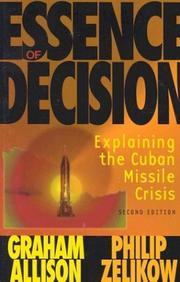
Allison's three competing models of the Cuban Missile Crisis — rational actor, organisational process, bureaucratic politics — and the best demonstration in the literature that what an institution does is not what any individual chose. Read it first here; the three lenses are reusable on any case.

Pressman and Wildavsky's study of a federal jobs programme in Oakland, subtitled at length to explain how great expectations came to nothing. It founded implementation studies by counting the number of separate approvals a policy needed and showing the arithmetic of clearance points. Short, and the most quietly devastating book on the path.
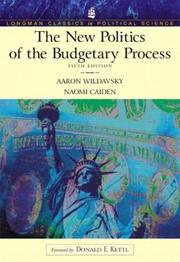
The classic account of budgeting as an incremental, political and repeated game rather than an analytical exercise. Read after Implementation, from the same author, for the money side of the same insight — dated in its particulars, still correct about the behaviour.
Reform, and Why It Keeps Failing
IntermediateAssess the successive waves of administrative reform on their results, and engage the current argument that procedural safeguards accumulated over fifty years now prevent the state from acting.
▸ Study plan for this stage
Pace: Five to six weeks for around 1,560 pages. Osborne's Reinventing Government (405 pages) is readable and fast — a week, read against Wilson from the first stage. Moore's Creating Public Value (402 pages) is the more demanding and more durable book; ten days. Pahlka's Recoding America (336 pages) is a
- Reinventing Government was the bestseller behind the New Public Management wave and a major American reinvention effort: entrepreneurial, market-oriented, results-driven government, with steering distinguished from rowing and competition introduced into service delivery.
- Its record is now assessable, which is why it comes first in this stage rather than being treated as current advice. Read Wilson's constraint argument against it and much of the programme looks like an attempt to manage away constraints that are constitutive rather than accidental — and measurement
- Moore's strategic triangle is the more durable contribution of that era: a public manager must define the public value being created, secure legitimacy and political support for it, and confirm the operational capacity to deliver. The framework is still taught and still used.
- The triangle's usefulness is that it makes political support an explicit management task rather than an interference, which is closer to Wilson's account of the public manager's actual position than the entrepreneurial model is.
- Pahlka's book is the modern case study — why government software fails, drawn from unemployment systems and a large federal website — and it is best read as operational proof of Pressman's clearance-point argument in a digital era, where every policy nuance becomes a form field and every waiver beco
- Pahlka argues for delegating discretion downward to the people building and running services. That is a position rather than a consensus, and it sits in direct tension with the accountability logic of Rosenbloom's legal approach.
- Dunkelman argues that a progressive distrust of centralised power created so many veto points that public projects can no longer be built. It is the most contentious book here, and the related Abundance by Ezra Klein and Derek Thompson makes an overlapping case; both are political interventions as m
- The deep tension the whole stage circles: procedural safeguards exist because discretion was abused, and they now constitute the clearance points that prevent action. Any reform proposal is a position on that trade, and pretending otherwise is the commonest failure in this literature.
- What did Reinventing Government propose, and which of its proposals survive Wilson's argument about constraints and measurement?
- State Moore's strategic triangle and apply it to a real public manager's job. Which of the three corners is usually neglected?
- Why does government software fail, according to Pahlka? Separate the causes that are technical from those that are procedural or legal.
- Pahlka wants discretion delegated downward. What is the accountability objection, and how would you design around it?
- Dunkelman blames accumulated veto points. What would count as evidence for and against that claim, and how would you distinguish it from ordinary cost inflation?
- Safeguards were adopted for reasons. Take one veto point criticised in this stage, state the abuse it was created to prevent, and say what you would put in its place.
- Write a one-page assessment of New Public Management using Wilson's typology: for which kinds of agency would its prescriptions work, and for which would they fail?
- Apply Moore's triangle to a service you use, filling in all three corners with real detail. The corner you struggle to fill is usually the real constraint.
- Take one failed government technology project and analyse it with clearance points, Rosenbloom's three approaches, and Pahlka's account. Note where the three explanations agree.
- Build a list of veto points in one public process, and for each one name the abuse it prevents and the delay it causes. Then decide which you would remove.
- Write a final 700-word statement of what you now think makes government work badly and what could realistically improve it, citing which book each part of the answer comes from and marking where the evidence is contested.
Next up: That closes the path: how agencies behave, the field's canonical arguments, a government action followed end to end, and four decades of reform assessed on results — with the standing tension between safeguards and capacity left unresolved, because it is.

The 1992 bestseller behind the New Public Management wave and the Clinton-Gore reinvention effort: entrepreneurial, market-oriented, results-driven government. Read it first in this stage as the high-water mark of a movement whose record is now assessable — and read Wilson from stage one against it.
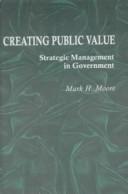
The more durable half of that era: Moore's strategic triangle asks public managers to define the value they create, secure legitimacy and support, and confirm operational capacity. The framework is still taught and still used, which is more than most of the reform literature can claim.

The modern case study, from the founder of Code for America and a former deputy US chief technology officer: why government software fails, told through unemployment systems and healthcare.gov. Read it as the operational proof of Pressman's clearance-point argument in a digital era. Pahlka argues for delegating discretion downward, which is a position, not a consensus.

The most recent book here and the most contentious: Dunkelman argues that a progressive distrust of centralised power created so many veto points that public projects can no longer be built. Read it last and read it as an argument — the related Abundance by Ezra Klein and Derek Thompson makes an overlapping case, and both are political interventions as much as scholarship.