Pragmatism has an unusual problem for a philosophical school: its three founders did not agree on what it meant, and one of them renamed his own version to get away from what the others were doing with it. Charles Peirce coined the term as a rule for clarifying concepts by their practical consequences; William James turned it into a theory of truth; John Dewey turned it into a theory of inquiry and then applied it to schools, art and democracy. Start in the wrong place and you will take one of those for the whole.
The second reason order matters is that the tradition has a twentieth-century revival whose legitimacy is genuinely disputed. Whether Richard Rorty is a pragmatist or a talented apostate is a real argument, conducted in print by people who knew the texts well, and this path includes both sides of it rather than picking.
Start with the history
The Metaphysical Club is the best possible entry point. Louis Menand tells the story of Peirce, James, Oliver Wendell Holmes and Dewey as a group shaped by the Civil War and its aftermath, and it gives you the biography and the intellectual stakes before any of the primary texts. It is history rather than philosophy, and it makes the philosophy far easier.
The founders
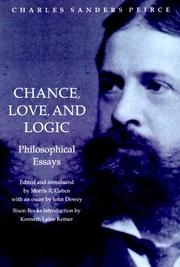
Chance, Love, and Logic is the accessible way into Peirce, a posthumous collection assembled by an editor rather than a book Peirce wrote — worth knowing, since his own writing is scattered across manuscripts and much of it is technical. His maxim about meaning and consequences is the seed of everything after.
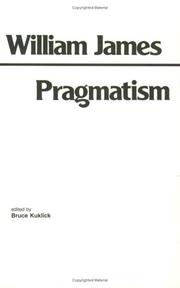
Pragmatism is James's 1907 lecture series and remains the most readable statement the tradition produced. It is also the version Peirce disliked enough to rename his own position, on the grounds that James had loosened a rule of logic into a theory of what it is useful to believe. Notice the difference; it is the fault line of the whole tradition.
Then Dewey, in three steps. Democracy and Education is the entry — his philosophy arrives through the theory of schooling, and it is more approachable than his purely philosophical work. Experience and nature is the hard one, his metaphysics, and it is where readers stall; treat it as optional on a first pass. The public and its problems is his answer to Walter Lippmann's argument that ordinary citizens cannot govern a complex society, and it is the most politically alive book Dewey wrote.
The revival, and the argument about it
Philosophy and the mirror of nature is Rorty's demolition of the idea that the mind represents reality, and it did more than any other book to bring pragmatism back into mainstream philosophical conversation. Contingency, irony, and solidarity is the more accessible statement of where he ended up, and it is where he loses many readers who followed him that far.
Pragmatism, An Open Question is Hilary Putnam replying. Putnam argued that Rorty's relativism abandons exactly the commitment to inquiry and to getting things right that Peirce and Dewey held, and that pragmatism without it is a different animal. That disagreement has never been resolved, and this path deliberately lets both books stand.
The American evasion of philosophy is Cornel West's genealogy of the tradition, reading it as a distinctively American project of cultural criticism and extending it toward race and prophetic politics. The Pragmatic Turn closes the path with Richard Bernstein's survey, which is the fairest available account of the whole arc and the best place to consolidate.
Two gaps worth naming. James's writing on religious experience and Dewey's book on logic are not on this path, and both are substantial omissions from our catalogue rather than judgements about their importance. And Peirce is genuinely underserved here, which reflects how his work was published rather than what it is worth.
Follow the path in order and pragmatism stops being a slogan about whatever works.
Follow the full ordered path here: How to Read the Pragmatists, in Order.