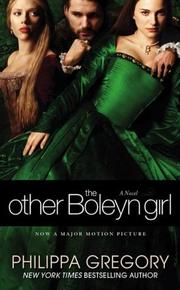
Start with The Other Boleyn Girl. It is the book that made her, it is still the best introduction to what a Gregory novel is — a real woman at court, narrating in the first person, with the history bent toward the story — and it lets you find out quickly whether that is what you want. Then go back to The Lady of the Rivers and read the rest in story order. That hybrid is the recommendation, and the reasoning is below.
Philippa Gregory books in order: where to start with the Tudor novels
August 8, 2026 · 4 min read
Why the two orders diverge so badly
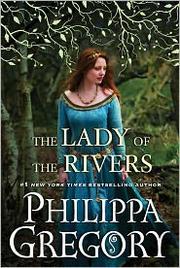
Gregory has published more than thirty novels, and she did not publish them in the order the history happens. The Other Boleyn Girl came out in 2001 and sits in the 1520s and 1530s. The Cousins' War books, covering the Wars of the Roses two generations earlier, appeared between 2009 and 2014 — after the Tudor novels they precede. Within the Cousins' War sequence the divergence is sharper still: The White Queen was published first but The Lady of the Rivers, published third, is the earliest in time, covering the mother of The White Queen's narrator.
The case for strict publication order is that you watch the writer develop and meet each book with the knowledge its first readers had. The case for chronological order is much stronger: these novels re-narrate the same events from different women's positions, and the effect of that only lands when the events arrive in sequence. Read chronologically and the whole fifteenth and sixteenth centuries run as one continuous narrative told by a dozen unreliable witnesses. The Starz adaptations use the Cousins' War story order rather than publication order for the same reason.
The one qualification is where you enter. Starting chronologically means starting with a fifteenth-century Luxembourgish noblewoman, and that is the commonest way to bounce off Gregory before reaching her best-known work. Hence: read The Other Boleyn Girl first as a test, then start again at the beginning.
The Cousins' War, in story order
The Lady of the Rivers gives you Jacquetta of Luxembourg and the Woodville family before The White Queen assumes you know them. The White Queen is Elizabeth Woodville and Edward IV. The Red Queen is Margaret Beaufort running the same years from the Lancastrian side, and should be read immediately after — the overlap is deliberate and the effect is lost if you separate them. The Kingmaker's Daughter covers those years again as Anne Neville, married to Richard III. The White Princess is Elizabeth of York and Henry VII, and the hinge where the Wars of the Roses become the Tudor dynasty. The king's curse follows Margaret Pole, a Plantagenet surviving into Henry VIII's reign, and hands you straight into the Tudor court.
The Tudor court, in story order
The Constant Princess is Katherine of Aragon before she was Henry's queen, and works far better here than as an opening. Three Sisters, Three Queens is Margaret Tudor across England, Scotland and France. Then The Other Boleyn Girl, which you have already read, followed by The Boleyn Inheritance, narrated in turn by Anne of Cleves, Katherine Howard and Jane Boleyn. The Taming of The Queen is Kateryn Parr and the strongest of the later Tudor books. The Last Tudor covers the Grey sisters and the end of the line. The Queen's Fool, The Virgin's Lover and The Other Queen fill in Mary I, Elizabeth and Mary Queen of Scots, and are not in this list — it holds fourteen of her thirty-odd novels.
These are novels, not history
Worth saying plainly, because the books are often read as though they were the other thing. Gregory researches heavily and then takes documented liberties. The Other Boleyn Girl is the clearest case: it treats the 1536 charges against Anne Boleyn — incest with her brother, and dabbling in poison and witchcraft — as substantially true, where the overwhelming weight of historical scholarship holds them to have been fabricated to secure a conviction. It also makes Mary the younger Boleyn sister, which is the minority position among historians. Neither choice is a mistake; both are the novel choosing the more dramatic reading. Read her for the voices and the court politics, and check anything you intend to repeat.
Outside the Tudors
Wideacre is her 1987 debut and the start of a trilogy set on an eighteenth-century Sussex estate, with a genuinely monstrous heroine; it is far darker than the Tudor books and shocks readers who arrive from them. The Favoured Child and Meridon complete it. Tidelands opens the Fairmile novels in the 1640s among poor people rather than at court, continued by Dark Tides and Dawnlands.
More historical fiction reading orders are on Discover.
Follow the full ordered path here: Philippa Gregory books in order: where to start with the Tudor novels.
FAQ
- Should I read Philippa Gregory in publication order or chronological order?
- Chronological, with one exception. The novels re-narrate the same events from different women's viewpoints, and that only works when the events arrive in sequence. But start with The Other Boleyn Girl, published in 2001 and set in the 1530s, because beginning chronologically with The Lady of the Rivers is how most people give up before reaching her best work.
- Are the Tudor novels historically accurate?
- They are novels. Gregory researches the period closely and then takes liberties for the story — most conspicuously in The Other Boleyn Girl, which treats the incest and witchcraft charges against Anne Boleyn as broadly true when historians overwhelmingly regard them as fabricated. Enjoy them as fiction and verify anything you plan to repeat as fact.
Get the books
- 1The Other Boleyn GirlAmazon ↗Philippa Gregory
- 2The Boleyn InheritanceAmazon ↗Philippa Gregory
- 3The Lady of the RiversAmazon ↗Philippa Gregory
- 4The White QueenAmazon ↗Philippa Gregory
- 5The Red QueenAmazon ↗Philippa Gregory
- 6The Kingmaker's DaughterAmazon ↗Philippa Gregory
As an Amazon Associate we earn from qualifying purchases. Some book links are affiliate links; you pay the same price and we may earn a small commission.
Follow the full reading path

Philippa Gregory books in order: where to start with the Tudor novels
Beginner14books164 hrs5 stages
Ready to learn something deeply?
Build a reading path — free