Demon Cycle books in order: where to start with Peter V. Brett
The Demon Cycle is a five-book arc with a straightforward answer to where to start: The Warded Man, then straight on. The only genuine complications are the UK title, which is different, and the novellas, which are optional and best read late rather than in publication order. The structure changes noticeably from book two onward — each volume rewinds and retells events from a new character's point of view — and knowing that in advance stops it feeling like a mistake.
Start here
BeginnerRead the opening of the Demon Cycle and get through the point-of-view shift that surprises most new readers.
▸ Study plan for this stage
Pace: Four to five weeks for 1,040 pages — The Warded Man at 416 and The Desert Spear at 624. Read them consecutively with no gap, because the second book is the one that determines whether the series is for you and reading it promptly while book one is fresh is the difference between the structure feelin
- The premise is simple and does a great deal of work: demons rise from the ground at nightfall, and humanity survives behind wards — protective symbols that must be drawn correctly and unbroken. Everything about the setting follows from a civilisation organised around surviving the night.
- Three children in three villages respond differently to the same terror, and the triple structure of book one is what the whole series is built on. Note who they are and where they start; the series keeps returning to those origins.
- Warding as a magic system is rule-bound and physical. Wards can be miscopied, smudged or broken, and the tension in the early book comes from that fragility rather than from spell-casting.
- The single most important structural fact, and the reason this stage pairs the two books: The Desert Spear opens by going back and retelling a large stretch of book one from the antagonist's side. Readers who expect a straight continuation find it jarring; readers who know it is coming find it the b
- That retelling is not a one-off. From book two onward each volume rewinds and re-presents events from a new character's viewpoint, and the series is structured as a set of overlapping perspectives rather than as a straight line.
- The Krasian material introduced in The Desert Spear is where the series becomes morally complicated, and it is also where the content warnings apply most. The desert culture is presented from inside rather than as a straightforward antagonist.
- The two claimants to prophecy — one Northern, one Krasian — are the engine of the middle books. Book two is where the collision becomes inevitable.
- Brett's prose is functional and the pacing is fast. This is a series read for structure and momentum rather than for sentences, and knowing that sets expectations correctly.
- How does the warding system constrain what characters can do? Name two plot events that depend on a ward's physical fragility.
- Identify the three protagonists of The Warded Man and describe how each responds to the same fundamental problem.
- The Desert Spear opens by retelling book one from another side. What does the retelling change about your reading of events you had already witnessed?
- Does the rewind-and-retell structure work for you? Answer specifically — is the objection the repetition, the pacing, or the shift of sympathy?
- Both claimants to prophecy believe they are the deliverer. Does the text favour one, and how can you tell?
- Confirm which edition you are holding before buying book one. The Warded Man and The Painted Man are the same novel and the duplicate purchase is the commonest mistake with this series.
- Keep a viewpoint ledger from the start: character, volume, and which stretch of the timeline their sections cover. Because later books rewind, a chronological ledger is much more useful than a page-order one.
- After the opening section of The Desert Spear, write a one-line verdict on the retelling structure. It recurs in every subsequent book, so this is the honest decision point for the whole series.
- Sketch the geography — the Free Cities, the desert, the distances involved. The politics of the middle books assume you have it.
Next up: You have both protagonists, both cultures and the structural device the series runs on, which is exactly what the middle books need in place before the human politics take over from the demons.
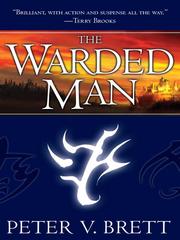
Book one, and the only place to begin. Demons rise at nightfall and humanity survives behind warded circles; three children in three villages respond differently. Published in the UK and Commonwealth as The Painted Man, with a separate catalogue record — it is the same novel, so do not buy both.

Book two, and the volume that decides whether the series is for you. It opens by going back and retelling a large stretch of book one from the antagonist's side. Readers who expect a straight continuation find this jarring; readers who know it is coming find it the best thing in the series.
The middle
BeginnerFollow the two books where the human politics matter more than the demons, and where the rotating viewpoint structure is at its widest.
▸ Study plan for this stage
Pace: Five to six weeks for 1,392 pages — The Daylight War at 632 and The Skull Throne at 760. Read them consecutively. Two warnings that make this stage easier: The Daylight War ends on the hardest cliffhanger in the series, so have book four to hand before you finish it; and The Skull Throne is the volu
- The Daylight War is where the rotating-viewpoint structure reaches its widest. Inevera receives the retrospective treatment Jardir got in book two, so a third major character's whole history is retold from inside.
- The retrospective treatment does consistent work across the series: it takes a character the reader has been positioned against and makes their reasoning legible. Whether that constitutes a defence is left to the reader, which is the more interesting choice.
- The prophecy collision is the plot of book three. Krasian and Northern claims to the same deliverance cannot both be true, and the political consequences of that matter more than any demon fight in the volume.
- The cliffhanger at the end of The Daylight War is genuinely abrupt and was a source of considerable complaint. Knowing it is coming is the practical reason this stage pairs the two books.
- The Skull Throne is the succession novel. The two leads are largely off the page while the political consequences of book three play out among the supporting cast, which is why it is the least-liked volume.
- It is not skippable. Everything the finale needs is set up here, and the supporting characters it develops carry substantial weight in book five. Manage expectations rather than skipping.
- The demons stop being the only antagonist somewhere in this stage. The series' real subject by now is what people do with power once survival is no longer the immediate question.
- The mind demons introduced as the series' higher antagonists raise the ceiling of the threat, and their presence is what keeps the political books from becoming purely political.
- What does Inevera's retrospective section change about how you read her earlier appearances? Does it justify her actions or merely explain them?
- The two prophecy claims cannot both be true. Does the series ever settle it, and what would be lost if it did?
- Why is The Skull Throne generally rated the weakest volume? State the criticism precisely rather than as a verdict.
- Name three things The Skull Throne sets up that the finale requires. This is the test of whether it is skippable.
- How do the mind demons change the nature of the threat compared with the demons of book one?
- Keep the viewpoint ledger updated with each retrospective section, marking which stretch of the timeline is being re-covered. By book four this is genuinely necessary.
- Before starting The Skull Throne, write down what you expect from it. Afterwards, check how much of your disappointment was about the book and how much was about the expectation.
- Track the supporting characters The Skull Throne promotes. Note which of them you expect to matter in the finale.
- Have book five available before you finish The Skull Throne. It stops mid-motion, and the gap is the point at which readers most often drift away from the series.
Next up: The politics are set, the succession is resolved and the mind demons have raised the stakes; the finale is where a series built on surviving the night finally goes to the source.
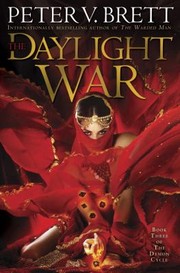
Book three. The Krasian and Northern claims to prophecy collide, and Inevera gets the retrospective treatment Jardir got in book two. Ends on the hardest cliffhanger in the series.
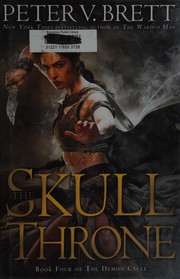
Book four, and the one most often called the weakest — the two leads are largely off the page while the succession politics play out. It sets up everything the finale needs, so it is not skippable, but manage expectations.
The ending
IntermediateFinish the arc and see how a series built on nightly sieges resolves at the source.
▸ Study plan for this stage
Pace: Three to four weeks for 848 pages, the longest single volume in the sequence. Read The Core directly after The Skull Throne, which stops mid-motion. This is one continuous push rather than a book to dip into, and the structure is more conventional than the previous three — it goes forward rather tha
- The Core is book five and the end of the Demon Cycle. It resolves the arc that began with the warded circles in book one, and it is a genuine ending rather than a pause before a continuation.
- The structural change is worth noticing: after four volumes built on rewinding and retelling, the finale largely moves forward. The series has finished assembling its perspectives and now uses them.
- It is the only volume that goes underground, to the demons' own territory, which inverts the premise the whole series has run on — humanity has spent five books defending a perimeter and now crosses it.
- The prophecy question comes to a head. Whether the series answers it, dissolves it or sidesteps it is the main thing to judge about the ending.
- The supporting cast promoted in The Skull Throne carries a substantial share of the finale, which is the retrospective justification for that volume.
- Long-series endings are the hardest thing in this genre and readers divide on this one. Form your own view before reading others; the argument is only worth having once you have finished.
- The Demon Cycle is complete at five books. Everything after this stage is optional — side stories and a sequel sequence — and stopping here leaves you with a finished story.
- How does the underground setting invert the premise the series has run on for four books?
- Does The Core answer the prophecy question, dissolve it, or avoid it? Argue from specific scenes.
- Which characters carry the finale, and how many of them were promoted in The Skull Throne? Does that retroactively justify book four?
- Why does the finale largely abandon the rewind structure? What would have been lost if it had kept it?
- Is the ending earned after roughly four thousand pages? Name the strand you found least satisfyingly resolved.
- Before starting, write out the open questions you expect the finale to answer. Check the list afterwards and mark each as answered, dissolved or dropped.
- Trace one of the three original children from The Warded Man through to their position in The Core. That arc across five volumes is the series' actual achievement.
- Write a one-page assessment of the ending before reading anyone else's. This is the exercise the stage is for.
- Decide now whether you are continuing. The novellas and the sequel duology are both genuinely optional, and stopping here is a complete reading of the Demon Cycle.
Next up: The main arc is finished, which is the condition under which the side stories can be read without any of them spoiling anything — including the one that would.
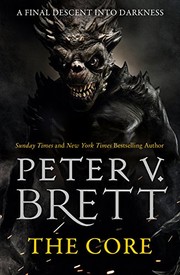
Book five, and the end of the Demon Cycle. Longest volume in the sequence and the only one that goes underground. Read it directly after The Skull Throne, which stops mid-motion.
The novellas
BeginnerFill in the side stories, knowing that none of them are required and all of them read better once the main arc is done.
▸ Study plan for this stage
Pace: One to two weeks. Messenger's Legacy is 124 pages; The Great Bazaar and Brayan's Gold is a combined edition holding two Arlen novellas and Barren is a later novella, neither with a page count in the catalogue record, but all three are short. None of them is required reading. Placement matters more t
- The Great Bazaar and Brayan's Gold is a combined edition — two separate Arlen novellas issued in one volume, which is how the catalogue holds them and the tidier way to buy them. It is one purchase for two stories, not a novel.
- Both Arlen novellas sit chronologically inside The Warded Man, filling in his messenger years. They can be read any time after book one and lose nothing by being read after book five.
- Messenger's Legacy is Briar's novella and sits between The Desert Spear and The Daylight War. It is the one side story that meaningfully improves a main-series character, so if you read only one of the three, read this one — and read it before book three.
- Barren is Selia Barren's novella, published after The Core, and it contains material that would spoil the main arc. This one genuinely has to come last, and the ordering advice here is not a preference.
- Novellas in a long fantasy series generally do one of two jobs: fill a gap in a character's history, or develop someone the main books had no room for. These do one each, and identifying which is which tells you whether to bother.
- Reading the novellas after finishing the arc changes what they are. Backstory read before the payoff is anticipation; read after, it is annotation — and for this series the second is the better experience.
- None of these is load-bearing. A reader who skips the stage entirely has read the Demon Cycle, and saying so plainly is more useful than implying completeness requires them.
- What do the two Arlen novellas add to the character that The Warded Man leaves out? Is the addition necessary or decorative?
- How does Messenger's Legacy change your reading of Briar in the main series? Would you have felt differently about him without it?
- Why must Barren come after The Core? Identify the specific dependency without spoiling it for yourself in advance.
- For each of the three, decide whether it fills a gap or develops a minor character, and say which job is better done.
- Would you recommend the novellas to a new reader of the series? Give your answer as an ordering instruction rather than a yes or no.
- Place all three novellas on your viewpoint ledger's timeline before reading them, so you can see exactly which gaps they occupy.
- Read Messenger's Legacy at its recommended position if you are on a first read, or immediately if you have already finished. Write a line on how the placement affected it.
- Check what you are buying with the Arlen volume — the combined edition holds both novellas, and buying them separately as well is easy to do by accident.
- Read Barren last and write a paragraph on what it would have ruined had you read it earlier. That paragraph is the argument for taking ordering advice seriously in a series like this.
Next up: The Demon Cycle and its side stories are complete; the last stage picks the story up fifteen years on with the next generation.

The two Arlen novellas in one volume — the catalogue holds them as a combined edition, which is the tidier way to buy them. Both sit chronologically inside The Warded Man; read them after book one at the earliest, and after book five without losing anything.

Briar's novella, sitting between The Desert Spear and The Daylight War. The one side story that meaningfully improves a main-series character, so read it before book three if you read it at all.

Selia Barren's novella, published after The Core and containing material that would spoil the main arc. This one genuinely has to come last.
The next generation
IntermediateContinue into the sequel duology set fifteen years later, and decide whether it needs the first series.
▸ Study plan for this stage
Pace: Four to five weeks for 1,264 pages — The Desert Prince at 656 and The Hidden Queen at 608. Read them consecutively. This is the Nightfall Saga, set fifteen years after The Core and following the children of the Demon Cycle protagonists. The Hidden Queen is the current end of the sequence, so expect
- The Desert Prince opens a new sequence rather than continuing the old one, and it is written to be readable without the earlier books. That is a real design choice and it mostly works at the level of plot.
- The qualification is emotional rather than structural: almost every scene's weight depends on knowing who these characters' parents were and what they did. A reader starting here follows the story and misses the point of it.
- The generational shift changes the central question. The Demon Cycle asked how humanity survives the night; the Nightfall Saga asks what the children of the people who answered that question do with the world they inherited.
- The narrative voice is different — closer, more personal, and with a much narrower viewpoint spread than the four-way retrospectives of the Demon Cycle. Readers who disliked the rewind structure often prefer these books.
- The Nightfall Saga engages more directly with gender and identity than the earlier series did, and that is a deliberate development rather than an incidental one.
- The Krasian and Northern cultures both persist, and the political settlement reached at the end of the Demon Cycle is the starting condition here. The prophecy material has consequences a generation on.
- The Hidden Queen continues directly and is the current end of the sequence. Starting it means accepting an open ending, which is worth knowing before committing to twelve hundred pages.
- Whether to read this at all is a genuine question. The Demon Cycle is complete without it, and this stage is a continuation for readers who wanted more rather than a necessary conclusion.
- Could a new reader genuinely start with The Desert Prince? Distinguish what they would follow from what they would understand.
- How does the generational shift change the central question of the sequence?
- The viewpoint structure is much narrower here. What does that gain, and what does it lose compared with the Demon Cycle?
- Which elements of the Demon Cycle's ending turn out to have consequences in the next generation, and which are quietly set aside?
- Having read the whole path, would you recommend the Nightfall Saga to someone who liked the Demon Cycle? Under what conditions?
- Before starting, list what you expect the children of the Demon Cycle protagonists to have inherited — position, reputation, expectation. Check it against what the books do.
- Track which Demon Cycle characters appear and in what capacity. The generational handover is the main pleasure of the sequence and it rewards attention.
- Compare the opening fifty pages of The Desert Prince with the opening fifty of The Warded Man. Write a paragraph on how Brett's technique has changed.
- Write the final artefact of the path: a reading order and recommendation for the whole of Peter V. Brett — where to start, the title trap, where the structure changes, which volume disappoints and why, where the novellas go, and whether to continue past The Core.
Next up: This is the end of the path: the complete Demon Cycle, the three side novellas placed where they do least damage, and the sequel sequence up to its current point.
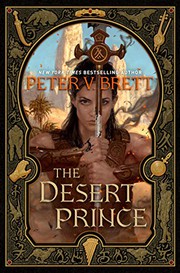
Opens the Nightfall Saga, following the children of the Demon Cycle protagonists. It is written to be readable without the earlier books, but the emotional weight of almost every scene depends on having read them.

The second Nightfall book, continuing directly. This is the current end of the sequence and the last thing to read.
Discussion
Keep reading
Paths that share books, cover the same subject, or open a related topic.