The standard biography is John Richardson's A life of Picasso, and the first thing to know is that it is unfinished. It runs to four volumes — 1881 to 1906, 1907 to 1917, 1917 to 1932, and a posthumous fourth covering 1933 to 1943 — and Richardson died in 2019 before reaching the last thirty years of the artist's life. Our catalogue files the volumes under the one title, so treat that record as the entry point to a set rather than a single book.
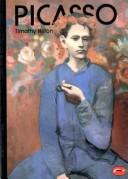
Because of that, do not start there. Begin with Timothy Hilton's Picasso, the short illustrated Thames and Hudson survey, purely to get the chronology straight, and follow it with John Berger's The success and failure of Picasso. Berger's 1965 polemic asks the question the rest of the literature circles: what happens to a painter once he is rich, famous and severed from the world that produced him. It is short, hostile in places, and the right corrective to a survey that reads like a victory lap. Third, Picasso and the Painting That Shocked the World is Miles Unger's narrative biography of the young Picasso built around a single canvas, and it carries the Barcelona and early-Paris years better than any survey.
The pictures, and the catalogues that document them
Three of the books here are exhibition catalogues. They are large, heavily illustrated, expensive and frequently out of print — a library is often the sane route. The 2021 Art Gallery of Ontario and Phillips Collection catalogue, also filed under the bare title Picasso, used technical imaging to show what he painted over during the Blue Period; it was published with a subtitle naming that period, so check the author list to distinguish it from Hilton's survey.
Les Demoiselles d'Avignon is the Museum of Modern Art's Studies in Modern Art volume on the most argued-about painting of the century, with the sketchbooks and the documentary record laid out. Read it straight after Unger: he tells the story, this shows the evidence. Picasso and Braque is the 1989 MoMA catalogue that hung the two painters side by side and made the case that analytic cubism was a genuine collaboration. Nothing else makes the year-by-year development this legible.
The people who were in the room
This is where the reading gets uncomfortable, and the discomfort is in the record rather than in the interpretation. Life With Picasso is Françoise Gilot's memoir of the decade she spent with him. She was a painter herself, she is precise about how he worked, and she documents sustained psychological cruelty and control; Picasso went to court three times to stop the book being published and lost each time. It is the single most useful primary source on the path, and it belongs here rather than first because by now you know the paintings she is describing.
Loving Picasso is Fernande Olivier's Bateau-Lavoir journals from the poor years before the money — the same period Unger and the Blue Period catalogue treat from the outside. Picasso: Creator and Destroyer is Arianna Huffington's hostile biography, and the book that put his treatment of the women in his life at the centre of the account. It is contested on sourcing and Richardson attacked it directly, so read it as the case for the prosecution with Richardson to hand.
The underlying facts are not in dispute between them. The biographies record that Picasso met Marie-Thérèse Walter when she was seventeen and he was forty-five, that he ran overlapping relationships and set the women in his life against one another, and that two of them later took their own lives. What the books disagree about is what follows from that for the work — which is precisely the argument the last stage of this path is about, and one you should reach your own view on. The Picasso subject hub collects the rest of the reading.
Guernica, and what the pictures mean
Two whole books here are about one canvas. Guernica by Gijs van Hensbergen is a biography of the painting — the bombing, the Paris pavilion, the decades at MoMA, the return to Madrid after Franco — and it is the narrative to read first. Picasso's Guernica by Herschel Chipp is the scholarly counterpart, working through the preparatory studies state by state.
Close with the criticism. The Picasso papers is Rosalind Krauss reading the collages and the return to figuration through the sign rather than the life, a deliberate refusal of the biographical method the previous stage depends on. Picasso and Truth: From Cubism to Guernica is T. J. Clark's Mellon Lectures and the best writing anyone has done on the pictures of the late 1920s and 1930s. It rewards everything before it, which is why it goes last.
Follow the full ordered path here: How to Read About Pablo Picasso, in Order.