Pablo Neruda Reading Order: Where to Start
Pablo Neruda wrote for fifty years across at least four distinct modes — the early love poems, the surrealist dark work, the Communist epic, and the late playful odes — and picking up a fat selected volume usually means meeting all four at once with no idea which is which. This path reads the individual collections in an order that separates them, starting with the famous early book, moving through the odes and sonnets, then the two difficult major works, and finishing with the memoir. Every collection here exists as a standalone English edition, usually bilingual.
Start Here
BeginnerMeet the two most approachable Neruda books, one from either end of his career, and get the sound of the poetry before the politics arrive.
▸ Study plan for this stage
Pace: 2–3 weeks, and this is the one path on the site where a slow pace is not a suggestion. Twenty Love Poems and a Song of Despair is 92 pages and the late-collections volume around 180; five to ten poems a sitting is plenty. Read every poem aloud at least once — Neruda wrote for the mouth and the long
- Neruda wrote for fifty years across at least four distinct modes — the early love poems, the surrealist dark work, the Communist epic, and the late playful odes and questions — and a fat selected volume throws all four at you at once with no labels
- Twenty Love Poems was written when he was nineteen and remains the best-selling book of poetry in Spanish; the imagery is physical, concrete and repetitive by design
- The early love poems treat the woman as landscape — body as country, as sea, as earth — which is both the source of their power and the fairest ground for objecting to them
- The second book here is a bilingual collection of his late work, and the questions sequence inside it is the gentlest possible second Neruda: three or four unanswerable lines to a page
- Placing an early and a late book side by side establishes the range before the politics arrive, which is the whole reason for this stage's order
- Translation choices matter enormously in Neruda, more than in most poets, because so much rides on rhythm; if a poem seems flat, find a second translation before blaming the poem
- Reading rate is the main skill this path teaches: poetry read at prose speed produces nothing
- What is the recurring comparison in the Twenty Love Poems, and what does it do to the woman being addressed?
- Read the same poem in two translations. What changed, and which choice is doing more work — vocabulary or line break?
- The late questions sequence refuses to answer anything. What is the effect after thirty pages of it?
- What survives when you read a poem aloud that you did not notice reading it silently?
- Which of the two books here sounds more like a nineteen-year-old? The answer is not always the obvious one.
- Read Poem 20 aloud three times across three days. It is the most quoted poem in the Spanish language and repetition is the only way to hear why.
- Copy out four lines by hand. Neruda's line lengths are irregular in ways that are invisible until you write them.
- Keep a one-line note per poem you finish. Poetry read without a record blurs, and the note is what makes the later stages navigable.
- Try a poem in Spanish aloud with the translation beside it, even with no Spanish. The vowel sounds are half the poem.
Next up: With the ear tuned, the next stage takes the mature love poetry and the odes, which is where most readers become permanently attached to him.

Written at nineteen and still the best-selling book of poetry in Spanish. Start here: the poems are short, the imagery is physical, and you will already half-know several lines.
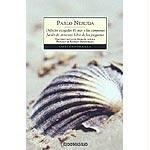
A late sequence made entirely of unanswerable questions, three or four to a page. The gentlest possible second book and a good corrective to the idea that Neruda is only lush.
Love and the Odes
BeginnerRead the mature love poetry and the odes to ordinary objects, which are where Neruda is at his most generous and where most readers become attached to him.
▸ Study plan for this stage
Pace: 3–4 weeks for One Hundred Love Sonnets (226 pages), The Captain's Verses and Odes to Common Things (147 pages). The sonnets are arranged in four parts — morning, afternoon, evening, night — and reading one part per sitting is the natural unit. The odes are best taken two or three at a time, ideally
- One Hundred Love Sonnets was written for Matilde Urrutia and is the mature counterweight to the teenage love poems: the beloved is a specific person with a history rather than a landscape
- They are sonnets only loosely — unrhymed, fourteen lines, deliberately rough; Neruda called them made of wood, and the coarseness is intentional
- The Captain's Verses was published anonymously in 1952 because the affair it records was still secret, and reading it between the sonnets and the odes supplies the biography behind both
- Odes to Common Things praises a spoon, a chair, a pair of socks, a tomato — the mode that changes how you look at a kitchen, and the easiest Neruda to hand to someone who claims not to read poetry
- The odes' very short lines are a deliberate machine: they slow the eye to one or two words at a time, which is how an ordinary object gets enough attention to become strange
- This is Neruda at his most generous, and it is worth noticing that the generosity and the political poetry come from the same conviction about ordinary life
- The odes are the best place to learn his central technique: accumulate concrete nouns until the abstraction arrives without being named
- How does the beloved of the sonnets differ from the beloved of the Twenty Love Poems? Be specific about what she is allowed to do.
- Why publish The Captain's Verses anonymously, and does knowing that change how the poems read?
- Take one ode and count the words per line. What does the shape force on your reading speed?
- What makes an object worth an ode? Deduce the criterion from three of them.
- Are the odes political? Argue the case in both directions.
- Read one ode aloud in the presence of the object it describes. This sounds precious and it is the single most effective exercise on this path.
- Write your own ode to something in your kitchen, using his short-line shape and no abstract nouns.
- Choose the sonnet you like best from each of the four parts, then look at what the four have in common.
- Reread three of the Twenty Love Poems after finishing the sonnets. The improvement across thirty-five years is unmistakable.
Next up: With the accessible Neruda absorbed, the next stage takes on the two difficult major works his reputation as a great poet actually rests on.
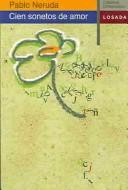
Sonnets to Matilde Urrutia, arranged as morning, afternoon, evening and night. Far better than the teenage love poems and the right correction to them.
Published anonymously in 1952 because the affair it records was still secret. Read between the sonnets and the odes for the biography behind both.
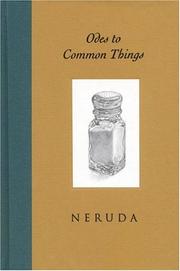
Odes to a spoon, a chair, a pair of socks, a tomato. This is the Neruda that changes how you look at a kitchen, and it is the easiest to hand to someone who claims not to read poetry.
The Two Difficult Major Works
IntermediateTake on the surrealist and the political Neruda, the two books his reputation as a great poet actually rests on and the two most readers skip.
▸ Study plan for this stage
Pace: 6–8 weeks, the longest stage on this path. Residence on Earth is 366 pages of dense surrealist poetry, The Heights of Macchu Picchu is a 64-page sequence in twelve parts, and Canto General is 447 pages of epic. Do not read Canto General straight through — take it in sections, one region or era at a
- Residence on Earth collects the dark, hallucinatory poems of his consular years in Rangoon, Colombo and Batavia — isolation, decay and a syntax that deliberately refuses to resolve
- Nothing else he wrote sounds like Residence on Earth, and its difficulty is the point: the images do not add up, and the failure to add up is the subject
- The Spanish Civil War breaks into the later part of the sequence and converts him from a private poet into a public one; the change is visible within a single book
- The Heights of Macchu Picchu is the twelve-part sequence at the centre of Canto General, published separately in English, and it is the hinge of his entire career
- Its final movement — the summons to the dead builders of the city to speak through him — is the founding gesture of the political poetry and should be read aloud, twice
- Canto General is the epic of the Americas: geology, flora, conquest, dictators and contemporary politics, written partly while he was in hiding from the Chilean government
- Neruda was a committed Communist who held party office and wrote poems in praise of Stalin; the political poetry cannot be read honestly without that fact, and Canto General is where it matters most
- What makes Residence on Earth difficult — vocabulary, syntax, or the refusal of images to cohere? Find a passage that decides it.
- Where in Residence on Earth does the public voice first appear, and what does it displace?
- In The Heights of Macchu Picchu, what does the speaker ask the dead to do, and by what right?
- How does Canto General organise itself — chronologically, geographically, or polemically?
- How should a reader hold the political conviction and the poetry together? Neither ignoring the politics nor reducing the poems to them is a serious option.
- Read The Heights of Macchu Picchu twice in a week, the second time entirely aloud. It is short enough and it is the most rewarding rereading on this path.
- Take Canto General in five sittings by section, with a one-line summary of each. Attempting it as continuous reading is why most readers abandon it.
- For one poem in Residence on Earth, list the images in order without interpreting them. The sequence's logic becomes visible as sound rather than sense.
- Read a short account of the Spanish Civil War's effect on Spanish-language poets before the later Residence poems.
- Note where the political poems argue and where they merely denounce. The distinction is the fairest test of the epic.
Next up: The final stage brings the poet back down to human scale — a self-questioning late collection, and the memoir that supplies the life the political poetry assumes you know.
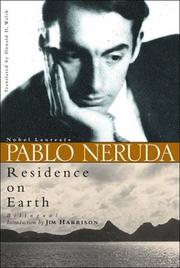
The dark, hallucinatory poems of his consular years in Asia, and the point where the Spanish Civil War breaks into the work. Hard going and worth it; nothing else he wrote sounds like it.

The twelve-part sequence at the centre of Canto General, published on its own in English. Read it as the bridge: it is where the private poet turns into a public one, and it is short enough to reread immediately.
The full epic of the Americas, from geology through conquest to contemporary politics, written partly in hiding. The largest thing he made; approach it after Macchu Picchu, and read it in sections rather than straight through.
Late Neruda and the Life
IntermediateFinish with the self-questioning late collection and the memoir, which supply the biography the political poetry assumes you know.
▸ Study plan for this stage
Pace: 3–4 weeks. Extravagaria is a full collection to be read a few poems at a time; Memoirs is 382 pages of prose and reads much faster than anything else on this path. Read the poetry first and the memoir last, when you can place every poem it mentions. Before starting the memoir, know what is in it: Ne
- Extravagaria is the middle-aged, self-mocking collection written after the Stalin years, and it is full of doubt about the public poet who wrote Canto General
- It contains some of his best-known late poems about silence and stillness, and it is the most human of the collections
- Read against Canto General, Extravagaria is a retraction of tone if not of politics, and the sequence of the two is the argument of this stage
- Memoirs was published posthumously and covers the consulates in Asia, the Spanish war, the escape over the Andes on horseback, and the last days under the 1973 coup
- It is a poet's memoir rather than a reliable record: episodic, self-mythologising, and vague where a historian would want dates
- The Ceylon passage sits inside that self-mythologising and is written without evident remorse, which is part of what has made it so difficult for readers who love the poems
- Neruda died in September 1973, days after the coup that overthrew Salvador Allende; the circumstances of his death have been formally investigated in Chile and remain disputed
- Holding the achievement and the record together, without collapsing either into the other, is the real work of this final stage
- What is Extravagaria doubting, and does the doubt extend to the politics or only to the posture?
- Which poems in Extravagaria could not have been written by the author of Canto General?
- How reliable is the memoir as a record? Find a passage where the poet's shaping is obvious.
- How do you read the Ceylon passage against the love poetry you read in the second stage? The question is not rhetorical and it does not have a comfortable answer.
- Having finished, what would you tell someone deciding whether to read Neruda at all?
- Read a poem from Extravagaria and one from Canto General on the same day and note what the voice has lost and gained.
- Read the Ceylon passage in full rather than in summary, then read what Chilean writers and feminist organisations have said about it. Second-hand accounts on both sides are unreliable.
- Write one paragraph stating your own position on reading the work now. Vagueness here is the only wrong answer.
- Return to your per-poem notes from stage one and pick ten poems as your Neruda. That short list, made after everything, is what the path was for.
Next up: This closes the path; readers who want more poetry read at this pace should look at the Spanish-language and Latin American literature paths on the site.
A middle-aged, self-mocking book written after the Stalin years, full of doubt about the public poet of Canto General. The most human of the collections and the best last poetry stop.

His posthumously published memoir, covering the consulates, the Spanish war, the flight over the Andes and the last days under the coup. Read last, when you can place every poem it mentions.
Discussion
Keep reading
Paths that share books, cover the same subject, or open a related topic.