Outlander Reading Order and Reading Guide
Outlander is one long continuous story told in nine very large novels, plus a spin-off series about a secondary character. Publication order is the reading order and there is no clever alternative: the timelines interlock, and Diana Gabaldon writes assuming you remember minor characters from four books ago. The stages below split the main sequence at its three settings — Scotland, colonial North Carolina, and the Revolution — and then place the Lord John books, which are the only genuinely optional part.
Start Here: Scotland and France
BeginnerRead the first three novels as a unit, which is where the central relationship, the time-travel rules and the Jacobite plot are all established.
▸ Study plan for this stage
Pace: 3–4 months for Outlander (672 pages), Dragonfly in Amber (864) and Voyager (1,024) — roughly 2,500 pages, so 30–40 pages a day is the realistic rate for most readers. Take them as a unit and do not leave long gaps between them; Dragonfly in Amber opens twenty years after Outlander ends and the disor
- The premise: Claire Randall, a former combat nurse, walks through a stone circle in 1945 and arrives in 1743 Scotland; the time-travel rules are established slowly and are not incidental to the plot
- The series is genuinely cross-genre — historical fiction, romance, adventure and speculative fiction at once — and readers who arrive expecting only one of those are the ones who bounce
- Publication order is the reading order and there is no clever alternative: the timelines interlock and Gabaldon writes assuming you remember minor characters from four books ago
- Outlander is Highland Scotland before Culloden; Dragonfly in Amber moves to the Paris court and the Jacobite rising; Voyager spans a twenty-year separation, the Caribbean and the sea
- Dragonfly in Amber's frame is set in 1968 and the novel is structured as an extended flashback — the opening chapters are the point at which most first-time readers get confused
- The books are long by design: Gabaldon writes domestic and medical detail at the same weight as plot, and the pleasure is cumulative rather than propulsive
- Claire's medical knowledge is the engine of most set pieces, and the eighteenth-century medicine is researched carefully enough to reward attention
- What rules govern the stones, and how much does the series actually commit to explaining them by the end of Voyager?
- How does the novel handle the moral distance between eighteenth-century norms and a twentieth-century narrator? Where does it excuse rather than examine?
- What are the consequences of the assault at the end of Outlander across the next two books? Trace them specifically.
- Why does Dragonfly in Amber open in 1968, and what does the frame let Gabaldon withhold?
- By the end of Voyager, what has the twenty-year separation done to both characters that a shorter gap could not?
- Keep a character list with clan affiliations from Outlander onward. The cast grows by hundreds across the series and the Scottish names repeat.
- Note the date at the start of every chapter in Dragonfly in Amber until the structure clicks; the dual timeline is the only structurally tricky book in the set.
- Look up the historical outline of the 1745 rising and Culloden before Dragonfly in Amber. The novel assumes the outcome is known.
- Mark each medical scene and what Claire does with limited materials. It is the clearest through-line of her competence.
- After Outlander, decide honestly whether you want to continue. The content that troubles readers most is front-loaded, and stopping here is a legitimate outcome.
Next up: With the relationship, the stones and the Jacobite catastrophe established, the series relocates to colonial North Carolina and settles into a long domestic saga with another war approaching.

A 1945 nurse walks through a standing stone and arrives in 1743. The only possible starting point; it is published in the UK as Cross Stitch, and the two are the same book, so do not buy both.
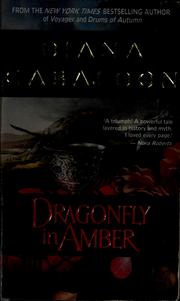
Paris, the Jacobite rising and Culloden, framed by a story set twenty years later. The structure is a shock after book one, so know going in that the frame is deliberate and pays off.
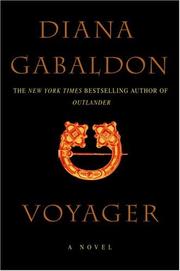
The consequences of book two, then the Caribbean. Widely regarded as the strongest in the series and the point at which most readers commit; if you are unsure after two books, read this before deciding.
The American Books
BeginnerFollow the move to the colonial Carolina backcountry, where the series settles into a long domestic saga with a war approaching.
▸ Study plan for this stage
Pace: 4–5 months for Drums of Autumn (928 pages), The Fiery Cross (992) and A Breath of Snow and Ashes (1,200) — over 3,000 pages, and the slowest stretch of the series. The Fiery Cross in particular covers very little calendar time across a thousand pages and is where most readers stall. Plan for it: 30
- The setting moves to the Carolina backcountry and Fraser's Ridge, and the series becomes a settlement saga — building, farming, medicine, neighbours and disputes
- Brianna and Roger become co-protagonists, and the series is now running two couples and two time periods at once
- The Fiery Cross famously spans only a few months over a thousand pages; the pace is deliberate and it is the volume that most divides readers
- Gabaldon's handling of slavery, indentured labour and Cherokee and Tuscarora communities becomes central here, and it is worth reading critically rather than only for plot
- A Breath of Snow and Ashes is the payoff volume for this arc and contains the most consequential events since Culloden, including material that some readers find as difficult as the first book's
- Recurring structural habit: a newspaper clipping or an out-of-sequence document announces a future event, and the books then spend hundreds of pages moving toward or away from it
- The domestic detail is the series' actual appeal at this stage; a reader who wants plot velocity should know that this is where the books slow furthest
- What does the Ridge as a setting allow that Scotland did not?
- How does the series treat slavery in the Carolina books — as a moral problem the characters confront, as background, or unevenly?
- Why does The Fiery Cross move so slowly? Make the case that it is a structural choice rather than a failure.
- What do Brianna and Roger's chapters add, and does the series need two couples?
- What is the function of the foretold events announced by clippings and documents?
- Draw a map of the Ridge and its households from the text. Half the later plot is about proximity and obligation.
- Track the family tree across both centuries. It becomes genuinely complicated in these three books.
- List every skill Claire has to reinvent without twentieth-century supplies. The improvised medicine is the series' most reliable pleasure.
- If The Fiery Cross stalls, read a chapter summary of its main events and then go back — abandoning it is the commonest way readers leave the series permanently.
Next up: The Revolution has been visible on the horizon for three books; the next stage is where it arrives and scatters the cast across two continents and two centuries.
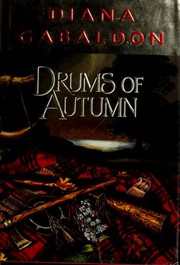
The New World, the founding of the Ridge, and the arrival of the next generation. The series changes shape here from adventure to settlement, so expect a slower gear.

The longest and slowest volume, covering barely more than a year. Worth the patience because almost every relationship in the back half of the series is set up in it.
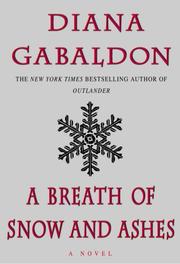
The Ridge under threat as the Revolution begins. It won the Quill Award and is the payoff for The Fiery Cross's groundwork, which is exactly why the two must be read in order.
The Revolution
IntermediateRead the three most recent novels, in which the war arrives properly and the cast scatters across two continents and two centuries.
▸ Study plan for this stage
Pace: 4–5 months for An Echo in the Bone (834 pages), Written in My Own Heart's Blood (864) and Go Tell the Bees That I Am Gone (928). The pace picks up relative to the Carolina books but the point-of-view count is at its highest — expect to be following four or five threads at once. 35 pages a day, and b
- The American Revolution arrives properly, and the series' historical fiction becomes battlefield-scale — Saratoga and Monmouth are handled at length
- The cast splits across Scotland, America and the twentieth century, and Gabaldon rotates first-person Claire with third-person sections for everyone else
- An Echo in the Bone ends on the most abrupt cliffhanger in the series; do not start it unless you can get hold of the next book
- Long-buried plot mechanics — parentage, the stones' rules, characters presumed dead — are cashed in during these three volumes, which is the payoff for having read in order
- The Lord John material becomes structurally necessary here rather than optional; several developments assume you know who he is and what he owes whom
- Go Tell the Bees That I Am Gone is the most recent volume and the series is not finished; a reader arriving now should expect to end mid-story
- The twentieth-century thread carries the series' arguments about what can and cannot be changed by knowing the future
- How does Gabaldon manage five or more viewpoint characters without losing Claire as the centre?
- What does the series say about whether history can be altered by travellers, and has that position changed since Dragonfly in Amber?
- Which long-running mystery pays off most satisfyingly in these three books, and which is left dangling?
- How does the Revolution differ, in the novels' handling, from the Jacobite rising in book two?
- Where does the series need you to have read the Lord John books? Name the specific developments.
- Keep a per-chapter viewpoint log for An Echo in the Bone. It is the most fragmented book of the nine and the log makes it readable.
- Write down the outstanding questions when you finish Go Tell the Bees That I Am Gone. The series is ongoing and this is where your list will sit.
- Compare a battle sequence here with a Culloden-adjacent one in Dragonfly in Amber and note how the writing has changed in thirty years.
- Reread the last chapter of Outlander after finishing. The distance the characters have travelled is the reward for 8,000 pages.
Next up: The last stage covers the parallel Lord John series, which runs alongside the main books and increasingly feeds back into them.
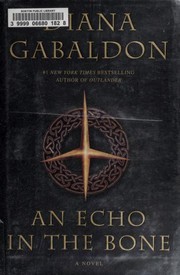
Four parallel storylines and the most notorious cliffhanger in the series. Do not start it unless you have the next book to hand.

Picks up in the same instant book seven ends and resolves its cliffhangers. Lord John's arc merges fully into the main line here, which is why the spin-offs are worth reading before or around this point.

The ninth and most recent novel, with the Ridge rebuilt and the war closing in. The series is not finished, so end here knowing a tenth book is still to come.
The Lord John Books
IntermediateFill in the parallel series about Lord John Grey, which runs alongside the main novels and increasingly feeds back into them.
▸ Study plan for this stage
Pace: 3–4 weeks for Lord John and the Private Matter (305 pages) and The Scottish Prisoner (560). These are far shorter than the main novels and read like historical mysteries. Purists slot them chronologically between the main books; a first-time reader is better served finishing the main sequence first
- Lord John Grey is a secondary character from the main series given his own novels: an English army officer, a gay man in a period where that is a capital offence, and a detective by temperament
- Lord John and the Private Matter is a self-contained London mystery and the best introduction to the spin-off's tone — tighter, wittier and much less domestic than the main books
- The Scottish Prisoner is the crossover: Jamie Fraser is a central character, and it fills in a period of the main timeline that Voyager passes over quickly
- The spin-off feeds back into the main series with increasing weight from An Echo in the Bone onwards, which is why it stops being optional
- Grey's perspective supplies the English and imperial view of events the main series shows from the Scottish and American side
- The mysteries are genuinely plotted as mysteries, which makes these the most conventionally structured books Gabaldon has written
- What does Grey's viewpoint let the series show that Claire's cannot?
- How does The Scottish Prisoner change your reading of Jamie's years between Culloden and Voyager?
- Do the mystery plots work on their own terms, independent of the main series?
- How does the period treatment of Grey's sexuality compare with the main series' handling of its other social realities?
- Should these be read in chronological slot order or after the main sequence? Argue from your own experience of reading them late.
- Place both books on your main-series timeline and note what each fills in.
- List the moments in the main novels that read differently once you know Grey's side.
- Compare a Grey chapter with a Claire chapter for pacing and paragraph length; the two series are written at different speeds.
- Decide, and write down, whether you would tell a new reader to interleave them. It is the most commonly asked question about this series.
Next up: That covers the published sequence to date; the series is not complete, so the natural next step is another long historical saga or one of the Scottish-history paths on the site.
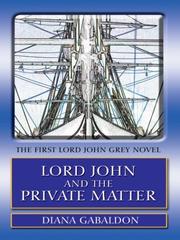
A short London mystery set between Voyager and Drums of Autumn. The best entry to the spin-offs and readable any time after Voyager; the novellas collected elsewhere slot around these and can safely be saved for a completist pass.

The one Lord John book that is genuinely half a main-series novel, since Jamie shares the point of view. Read it before An Echo in the Bone and several later scenes gain a decade of context.
Discussion
Keep reading
Paths that share books, cover the same subject, or open a related topic.