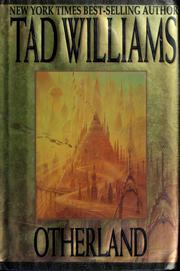
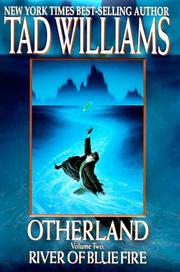
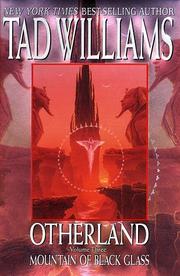
Start with City of Golden Shadow. Otherland is not a series of four related novels; it is one novel that was too long to bind, split into four volumes that end mid-scene rather than concluding. There is no alternative order, no best-of entry point, and no volume that works alone.
Which means the useful question is not where to start but whether to start, because Otherland is roughly three thousand pages and the first hundred and fifty of them are the hardest sell in Tad Williams's bibliography.
The Otherland quartet
City of Golden Shadow, River of Blue Fire, Mountain of Black Glass, Sea of Silver Light, published between 1996 and 2001. The premise, once it arrives: children worldwide are falling into unexplained comas, and the cause traces to a private virtual network built by the richest people alive for reasons that are not the ones they state.
The honest warning is about the opening. Williams starts with half a dozen separate viewpoints in unrelated places — a South African university, a First World War trench that is not a trench, a Bushman narrative told in a different register entirely, a boy in a virtual chatroom — and does not begin joining them for a long time. Readers who abandon Otherland almost all abandon it here, and they are not being impatient; the structure genuinely withholds. If you are still adrift at page two hundred, that is the intended experience, and it does resolve.
The second honest warning is about the middle. The network is a collection of simulated worlds, which means volumes two and three contain a run of set pieces that are inventive individually and can feel like a tour rather than a plot. Most readers find Mountain of Black Glass the baggiest. And the resolution in Sea of Silver Light divides people — a large minority find the explanation for the whole apparatus underwhelming after three thousand pages of setup. Go in knowing that is the risk.
There is no partial credit here. If volume one does not hold you, stop at volume one rather than at volume two.
Memory, Sorrow and Thorn
The Dragonbone Chair, Stone of Farewell, To Green Angel Tower, Book Three, published from 1988. This is the more influential work — George R. R. Martin has repeatedly credited it as part of what convinced him epic fantasy could be written seriously — and if you like Williams at all you will end up here.
Read it in order and know that The Dragonbone Chair has the most notorious slow opening in the genre: roughly two hundred pages of a kitchen boy doing chores in a castle before the plot arrives. It is deliberate, the payoff is real, and it is still two hundred pages of chores.
One edition note: To Green Angel Tower was long enough that United States paperbacks split it into two parts, sold separately as Siege and Storm. Our catalogue holds it as a single record. Check which you are buying so you do not end up with half a book. The sequel trilogy that begins with The Witchwood Crown is not in our catalogue.
Shadowmarch
Shadowmarch, Shadowplay, Shadowrise, Shadowheart, from 2004 onward. Williams doing epic fantasy a second time, with a border castle, a vanished king and a non-human race pressing south. Most readers rank it below Memory, Sorrow and Thorn, and the reason is structural — the last two volumes were originally written as one book and split by the publisher, which shows. Read it in order, or read it not at all; there is no entry point except the first.
The standalones, and how to test Williams cheaply
The War of the Flowers is the best single-volume introduction to him: a failing San Francisco musician crosses into a faerie world organised as a corporate oligarchy, with class politics and industrial infrastructure where the enchantment should be. If you want to know whether Williams suits you without a four-volume commitment, read this.
The Dirty Streets Of Heaven is the fastest thing he has written — first-person, wisecracking, an angel working as an advocate in a noir afterlife bureaucracy where a soul has gone missing. It is the first of a trilogy and reads nothing like the epics.
Tailchaser's Song is the 1985 debut, an epic quest with a cast of cats. Read it last and only if the premise appeals; it is an early book and it reads like one.
The order that actually matters
Otherland and Memory, Sorrow and Thorn are independent. Read whichever you prefer first. But if you have never read Williams, do not open with either — read The War of the Flowers, decide, and then commit.
Follow the full ordered path here: Otherland Reading Order: Where to Start with Tad Williams.