Osamu Dazai Reading Order: Where to Start
Dazai wrote one book that everybody reads and about twenty that almost nobody does, and the famous one is so bleak that readers who start and stop there come away with a badly incomplete picture — he was also very funny. This path takes the two late masterpieces first, then the short novels, then the stories that show the comic and folkloric writer underneath, and ends with the wartime books that are the least like his reputation.
The Two Late Masterpieces
BeginnerRead the two books Dazai is famous for, in the order that makes the second one land hardest.
▸ Study plan for this stage
Pace: ⚠️ READ THIS BEFORE YOU START. Osamu Dazai died by suicide in 1948, at thirty-eight, and No Longer Human is a first-person account of suicidal despair, alcoholism and self-destruction written in the last months of his life. It is not a book with a sad passage in it; despair is its entire substance a
- No Longer Human is presented as three notebooks left behind by Oba Yozo, framed by a narrator who has come into possession of them — the frame matters, because it means the voice inside is a document rather than a confession delivered to you directly
- Yozo's central device is the clown: from childhood he performs buffoonery to conceal the fact that he cannot understand what other people appear to feel, and the performance is what the book means by being disqualified as a human being
- The book was published in 1948, weeks before Dazai drowned himself in a Tokyo canal together with a woman he had been living with. Readers have treated it as a suicide note ever since, and the biographical closeness is real — but it is also a constructed novel with a frame narrator, and reading it p
- It is one of the best-selling novels in Japanese history and is read by enormous numbers of Japanese teenagers, which is worth knowing: it is not an obscure cult book but a national fixture
- The Setting Sun is the other side of the same material. An aristocratic family loses everything in the immediate aftermath of Japan's defeat, and it is narrated by the daughter, Kazuko, who decides to survive by an act of will that the novel treats as heroic
- Its brother Naoji is the Dazai figure, and Kazuko is not. Reading The Setting Sun second is the design of this stage: it gives you the same despair placed inside somebody who chooses against it
- The title entered the Japanese language — shayozoku, the setting-sun people, for the dispossessed former aristocracy — which is a measure of how directly the book named its moment
- Both novels are set in a defeated country under Allied occupation, with the social order that had organised Japanese life visibly dissolving, and the personal collapse in each is inseparable from the national one
- What does the frame narrator of No Longer Human add? Read the opening and closing sections and ask what the book would be without them.
- Yozo says he cannot understand human beings. On the evidence of the notebooks, is that true, or is it a story he tells about himself?
- The novel gives Yozo several people who plainly love him. Why does none of it reach him, and does the book present that as illness, character, or fact about the world?
- In The Setting Sun, what does Kazuko decide, and on what grounds? State her reasoning as she gives it, not as a summary of hope.
- Naoji's last letter and Yozo's notebooks make similar arguments. What does Dazai gain by putting one of them at a distance, inside another character's novel?
- Japan lost the war between these two books' settings. How much of the despair is historical rather than personal, and how would you tell?
- Set a limit before you open No Longer Human — thirty pages a sitting — and keep to it even if it is going down easily. This is the practical instruction that matters most in this stage.
- Note every scene where Yozo makes someone laugh. The performance is the book's central mechanism and seeing it listed makes visible how relentless it is.
- After finishing No Longer Human, read the frame narrator's final paragraph again. It is the only outside judgement in the book and readers routinely forget it exists.
- In The Setting Sun, mark the point where Kazuko changes direction. Being able to name the page is the difference between reading it as a companion to the first book and reading it as an answer to it.
- If you find the material is landing too close, stop and go to stage three of this path — the comic stories — rather than pushing through. Nothing later in this path depends on finishing No Longer Human.
Next up: Having read the two books everyone reads, the short novels show that the voice in them was a deliberate construction rather than the only one Dazai had.

Three notebooks left by a man who never managed to be a person, published weeks before Dazai drowned himself. Start here — it is the book the entire reputation rests on, and everything else in the catalogue reads as commentary on it.

An aristocratic family collapsing in the immediate postwar, narrated by the daughter. Read second: it is the same despair given to someone who chooses to survive it, and it made Dazai a national bestseller.
The Short Novels
IntermediateSee Dazai working in voices that are not his own, which is where the craft is most visible.
▸ Study plan for this stage
Pace: 3 weeks. Schoolgirl is 106 pages, covers a single day and is best read in one or two sittings so the day stays continuous. The Flowers of Buffoonery is a short novel in a 279-page edition and takes a fortnight at a relaxed pace. ⚠️ The Flowers of Buffoonery is set in a sanatorium after a double suic
- This stage exists to prove a single point: the self-loathing narrator of No Longer Human is a construction Dazai could switch off at will, and the craft is most visible when he is writing in a voice that is not his
- Schoolgirl runs from waking to sleeping inside the head of a teenage girl, and it is entirely convincing — irritable, self-conscious, embarrassed by her mother, exhilarated for no reason and miserable ten minutes later
- It made his name when it appeared in 1939, before the war and long before the late books, so it is also a useful correction to the idea of Dazai as a postwar phenomenon
- The narration's movement is the technique: the girl's mood turns several times a page without transition, and Dazai never signals the turns. Read it as an exercise in interior rhythm rather than as a story
- The Flowers of Buffoonery puts a young man in a seaside sanatorium recovering from a suicide attempt that killed the woman he was with, visited by two friends who will not stop making jokes
- The jokes are the point. Everyone in the room knows what has happened and nobody can say it, so the comedy is a device for occupying a room that grief has made unbearable — which is exactly the mechanism Yozo describes in No Longer Human, seen from outside
- Its narrator shares a name with the protagonist of No Longer Human, and Dazai interrupts his own novel to comment on how badly he is writing it — a metafictional habit that predates the confessional reputation by more than a decade
- Read directly after the first stage, the pairing is the argument of this whole path: the same author, the same event, one version unbearable and one version funny, and neither one more sincere than the other
- Count the mood changes in ten pages of Schoolgirl. How does Dazai move between them without announcing the turn?
- Is the narrator of Schoolgirl convincing as a teenage girl, or convincing as a performance of one? What in the prose settles it for you?
- In The Flowers of Buffoonery, what is the joking for? Name what each visitor is avoiding by making them.
- Dazai breaks in to criticise his own novel while writing it. What does that do to your trust in him, and is it a defence mechanism or a technique?
- The Flowers of Buffoonery and No Longer Human share a name and an incident. What does each one do that the other cannot?
- Both books here are short and were written to sell. What did commercial pressure get out of Dazai that his more confessional writing did not?
- Read Schoolgirl in one sitting if you can. It is a single day and the continuity is most of the effect.
- Take one page of Schoolgirl and one page of No Longer Human and read them consecutively aloud. The difference in sentence rhythm is the whole case that the confessional voice was a choice.
- In The Flowers of Buffoonery, mark every authorial interruption. Read them together afterwards; they form a running commentary on the difficulty of writing the book at all.
- Write one paragraph on what Dazai thinks jokes are for. All four books read so far have an answer and they are not the same answer.
Next up: The short novels show the voices; the stories show the whole twenty-year career, including the writer nobody expects.

One day in the head of a teenage girl, from waking to sleep. The book that made his name in 1939, and startling proof that the self-pitying narrator of No Longer Human was a construction he could switch off.

A young man recovering in a seaside sanatorium after a suicide attempt that killed the woman with him, visited by friends who cannot stop joking. It shares its narrator's name with No Longer Human and is best read directly after it.
The Stories
IntermediateMeet the other Dazai — the comic writer, the parodist, the retailer of folk tales.
▸ Study plan for this stage
Pace: 6 weeks, and the least demanding stage in the path. Self Portraits is 230 pages of eighteen stories in chronological order — read them in that order, two or three a sitting, over two weeks. Blue Bamboo (182 pages) two weeks, one story an evening. Crackling Mountain (255) two weeks. ⚠️ Selections ove
- This is the other Dazai, and it is the stage that makes the path worth taking rather than just reading the famous novel: he was a comic writer, a parodist and a reteller of folk tales for far more of his career than he was a confessional one
- Self Portraits collects eighteen autobiographical stories arranged chronologically across the whole career, which lets you watch the persona being built over twenty years rather than meeting it fully formed in one late book
- Read that way, the self-destruction looks less like a fixed condition and more like a literary subject he developed, abandoned, mocked and returned to — including stories where he is plainly laughing at his own reputation
- Blue Bamboo is fantastical and comic, several stories drawn from Chinese and Japanese legend, and nothing in it matches the received image of Dazai as a pure depressive. It is the corrective, and readers who only know No Longer Human tend to disbelieve it is the same writer
- Crackling Mountain runs from early work to the final year and includes the title retelling of a folk tale that is genuinely cruel — Dazai keeps the folk material's brutality rather than softening it, and adds a psychological reading the original does not have
- His technique with a legend is consistent: keep the plot, replace the moral, and give the villain an interior life. It is the same instinct that gives Yozo his notebooks
- Dazai came from a wealthy landowning family in Aomori in the far north, was one of many children raised largely by servants, and repudiated the family repeatedly in his fiction. The stories return to this more often than the novels do
- Reading three collections is deliberate overkill: this is the largest and least-read part of the catalogue, and the whole point of a reading order is that it does not stop at the famous book
- In Self Portraits, at what point does the persona become recognisable as the narrator of No Longer Human? Name the story.
- Find a story where Dazai is plainly mocking his own reputation. What is the joke, and who is it aimed at?
- Take one folk tale retelling in Blue Bamboo or Crackling Mountain. What does Dazai keep from the original and what does he replace?
- Crackling Mountain's title story is cruel. Is the cruelty the folk tale's or Dazai's, and does the retelling endorse it?
- The family in Aomori recurs across the stories. What is Dazai's charge against them, and does it change over twenty years?
- Having read the stories, has your sense of No Longer Human changed? Say specifically how.
- Read Self Portraits strictly in the given order and note the year of each story. The chronology is the collection's argument and reading around it destroys it.
- Pick the funniest story you find in Blue Bamboo and read it immediately after a chapter of No Longer Human. The whiplash is the point of this stage.
- Look up the original of one folk tale Dazai retells — the tanuki and the rabbit, or Urashima Taro — then read his version. Ten minutes of preparation doubles the payoff.
- Keep a one-line note on each story: comic, confessional, folkloric, or something else. The proportions at the end will not be what you expected before starting.
- Write a paragraph describing Dazai to someone who has only read No Longer Human. If it does not include the word funny, go back to Blue Bamboo.
Next up: The last stage is the least-read part of the catalogue: the wartime and travel writing, where he is looking outward at a country under bombardment and at the place he came from.
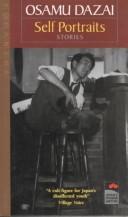
Eighteen autobiographical stories spanning his whole career, arranged chronologically. The best single collection for seeing how the persona was built over twenty years rather than confessed in one book.
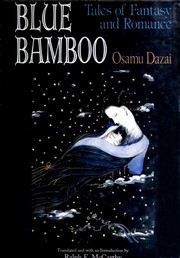
Fantastical and comic tales, several drawn from Chinese and Japanese legend. Read it as the corrective: nothing here matches the image of Dazai as a pure depressive.
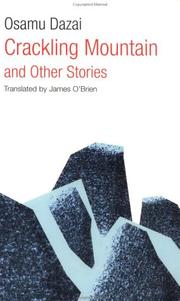
A wider selection running from early work to the final year, including the title retelling of a cruel folk tale. Read after Self Portraits for the range it adds.
The Deeper Cuts
IntermediateFinish with the wartime and travel books, which almost no casual reader reaches.
▸ Study plan for this stage
Pace: 3 weeks and genuinely optional — this stage is for readers who finished the path and want the parts almost nobody reaches. Return to Tsugaru is 213 pages of travel writing and takes a fortnight at a gentle pace; it is the most relaxed prose Dazai wrote and does not reward hurrying. Early Light is a
- Both books were written in or about the war years, when Dazai stayed in Japan writing while the country was bombed, and they are the least like his reputation of anything he produced
- Return to Tsugaru began as a commissioned travel book about his home province in the far north of Honshu, and turns into something else entirely: a search for Take, the servant woman who raised him
- It is the only book in the whole catalogue where he goes LOOKING for something rather than away from it, and that structural difference is why it belongs late in a reading order rather than early
- The travel-writing surface is genuinely useful — food, dialect, snow, the specific poverty and pride of the north — and Dazai is an affectionate and observant guide, which almost no reader of No Longer Human expects
- The reunion at the end is the emotional payoff of the entire path, and it is worth not having spoiled. It is also the plainest, least performed writing he ever did
- Early Light is a recent collection of three late pieces, including an account of the firebombing of Tokyo experienced from inside a family fleeing it with children
- The bombing piece is reportage rather than confession, and its restraint is the surprise: the man who wrote pages about his own inadequacy describes a city burning without once making it about himself
- Read last, these two books complicate the whole reputation. The writer who has spent this path insisting he is not a human being spends his war carrying children through a burning city and looking for the woman who raised him
- What is Return to Tsugaru actually about? The commissioned travel book and the private search run in parallel — say when the second one takes over.
- Who is Take, and what does Dazai want from finding her? Be specific; the book is careful not to overstate it.
- How does Dazai write about the north's poverty? Compare it with how he writes about his family's wealth elsewhere.
- In the firebombing piece in Early Light, what is he attending to? List what he notices, and note what he does not say about himself.
- These are wartime books by a writer who stayed. What is absent from them politically, and is the absence caution, indifference, or censorship?
- Having finished the path, how would you now describe Osamu Dazai? Test the description against No Longer Human and against Return to Tsugaru, and keep only what fits both.
- Find Aomori and the Tsugaru peninsula on a map before starting. The book is organised as a journey and the geography makes it concrete.
- Note every meal in Return to Tsugaru. Food is how Dazai signals ease, and the density of it here compared with the novels is striking.
- Read the final pages of Return to Tsugaru, then the last page of No Longer Human. Written a few years apart by the same man, they are as far apart as two endings can be.
- After Early Light, write one paragraph on what wartime prose does to a confessional writer. Being forced outward changed the sentences and it is visible.
- Finally, revisit the recommendation you would make to a new reader. Most people who complete this path stop telling others to start with No Longer Human, and it is worth deciding whether you agree.
Next up: That is Dazai far beyond the one book — the two masterpieces, the voices, the comedy, the folk tales and the war — and it is enough to read any postwar Japanese writer and hear what they were reacting to.

A commissioned travelogue about his home province that turns into a search for the servant who raised him. Read it late; it is the only book where he goes looking for something rather than away from it.

Three late pieces including the firebombing of Tokyo seen from inside a fleeing family. A short, recent collection and a good final stop.
Discussion
Keep reading
Paths that share books, cover the same subject, or open a related topic.