Orchids: the best books to grow and rebloom them at home
This curriculum takes a beginner orchid grower from zero knowledge to confident home cultivation, covering the essentials of light, water, potting media, and reblooming before moving into species-specific care and advanced growing techniques. Each stage builds directly on the last — you'll first learn the language and core habits, then deepen your understanding of individual orchid groups, and finally master the finer arts of long-term culture and reblooming. Roughly 9 books across 3 stages give you a focused, practical path without overwhelming you.
Foundations: Core Care & Confidence
BeginnerUnderstand what orchids need to survive and thrive indoors — light levels, watering rhythm, potting media basics, and how to avoid the most common beginner mistakes.
▸ Study plan for this stage
Pace: 4–5 weeks, ~25–30 pages/day. Start with Northen's foundational chapters (weeks 1–2), then transition to Rogers' practical guidance (weeks 3–4), with a final week for review and hands-on application.
- Light requirements vary by orchid type (high, medium, low) and how to assess your home's light conditions
- Watering rhythm depends on potting media, humidity, season, and air circulation—not a fixed schedule
- Potting media composition (bark, sphagnum, charcoal, perlite) affects drainage and frequency of watering
- Root health as the foundation: healthy roots indicate proper care; rot and dehydration are the most common killers
- Temperature and humidity ranges that keep orchids thriving indoors without specialized equipment
- How to identify and correct the five most common beginner mistakes: overwatering, poor drainage, insufficient light, wrong potting media, and temperature stress
- Orchid physiology basics: epiphytic vs. terrestrial growth habits and what they mean for indoor care
- Seasonal adjustments in watering, light, and temperature to match orchids' natural growth cycles
- What are the three main light categories for orchids, and how would you determine which your home offers?
- Why is watering 'by the calendar' a mistake, and what factors should you assess instead?
- Describe the ideal potting media for a typical Phalaenopsis orchid and explain why each component matters.
- What do healthy orchid roots look like, and what visual signs indicate root rot or dehydration?
- What are the five most common beginner mistakes, and what is the consequence of each?
- How should your orchid care routine change between the growing season and dormancy period?
- Map the light levels in your home throughout the day using a light meter app or by observing shadow patterns; identify which spots suit high-, medium-, and low-light orchids.
- Repot an orchid (or practice on a non-orchid plant) using the media composition described in Northen and Rogers; document the drainage and aeration you observe.
- Create a watering log for one orchid over 2–3 weeks: record media moisture, root appearance, humidity, and temperature each time you water; identify your personal watering rhythm.
- Examine the roots of a healthy orchid and a struggling one (if available); photograph or sketch the differences and note what care adjustments each needs.
- Set up a simple humidity station (pebble tray, grouping, or misting schedule) and track how it affects your orchid's leaves and roots over one week.
- Diagnose a common problem: obtain a photo or description of an orchid with yellowing leaves, soft stems, or pale roots; apply Northen and Rogers' troubleshooting to identify the cause and propose a fix.
Next up: This stage equips you with the knowledge to keep orchids alive and stable; the next stage will build on this foundation by teaching you how to encourage blooming, propagate orchids, and specialize care for different genera.

A classic beginner-friendly guide focused specifically on growing orchids in the home environment, reinforcing watering and light concepts with practical, room-by-room advice.

Short, visually driven, and highly practical, this book consolidates beginner fundamentals — including potting media choices and reblooming triggers — making it an ideal capstone for the foundations stage.
Going Deeper: Popular Genera & Reblooming
IntermediateLearn the specific care requirements of the most popular home orchid groups (Phalaenopsis, Cattleya, Dendrobium, etc.) and understand the environmental cues that trigger reliable reblooming.
▸ Study plan for this stage
Pace: 4–5 weeks, ~25–30 pages/day. Start with "Orchids to Know and Grow" (weeks 1–2), then transition to "Orchid Growing Illustrated" (weeks 3–5) for visual reinforcement and detailed genus-specific protocols.
- Phalaenopsis (moth orchid) care: temperature tolerance, watering frequency, and light requirements for reliable indoor blooming
- Cattleya care: dormancy triggers, pseudobulb development, and the role of temperature drop in initiating flower spikes
- Dendrobium care: seasonal watering cycles, cool-season rest periods, and genus-specific reblooming cues
- Genus-specific environmental requirements: how light intensity, humidity, and air movement differ across popular groups
- The relationship between pseudobulbs and reblooming: how to assess plant vigor and predict flowering cycles
- Watering and fertilizing protocols tailored to growth and rest phases for each major genus
- Root health assessment and potting media selection for different orchid types
- Temperature and humidity ranges that trigger and sustain blooming in home conditions
- What are the specific temperature, light, and watering requirements for Phalaenopsis, and why does this genus tolerate warmer conditions than others?
- How do pseudobulbs function in Cattleya and Dendrobium, and what environmental signals trigger flower spike initiation in these genera?
- What is the dormancy or rest period for Dendrobium, and how does manipulating temperature and water during this phase promote reblooming?
- How do watering and fertilizing schedules change between the growth phase and rest phase for sympodial orchids?
- What potting media and root conditions are optimal for each major genus, and how do you assess root health?
- How do light intensity, humidity, and air circulation differ in requirements across Phalaenopsis, Cattleya, and Dendrobium?
- What are the most common reblooming failures in home collections, and how do genus-specific care adjustments prevent them?
- Create a care card for each of the three major genera (Phalaenopsis, Cattleya, Dendrobium) documenting temperature ranges, light levels, watering frequency, and rest-period triggers based on the books.
- Examine your own orchids (or visit a local orchid nursery) and identify the genus, assess pseudobulb condition, and predict the reblooming timeline based on current growth stage.
- Repot one orchid of each major genus using the media recommendations from 'Orchid Growing Illustrated,' documenting root condition and media drainage before and after.
- Track watering and environmental conditions (temperature, humidity, light hours) for one orchid over 4 weeks, then compare your log against the genus-specific protocols in the books to identify gaps.
- Photograph and compare the leaf, pseudobulb, and flower characteristics of at least three different genera to internalize visual identification and growth habit differences.
- Design a reblooming protocol for a non-blooming orchid in your collection: identify the genus, determine which environmental cue (temperature drop, light change, or rest period) is missing, and implement the correction over the next 6–8 weeks.
- Create a seasonal care calendar for your home collection, mapping out when to reduce water, lower temperature, and adjust fertilizer for each genus based on their natural cycles.
Next up: This stage equips you with the specific, actionable knowledge to maintain and rebloom the most common home orchids; the next stage will expand into advanced propagation, hybridization, and specialized genera, building on the solid foundation of reliable care and reblooming mastery you've developed here.
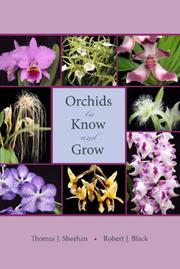
Provides a genus-by-genus breakdown of care requirements, giving the reader a structured framework to understand why different orchids need different light, water, and rest periods.

Step-by-step photographic sequences for repotting, dividing, and encouraging rebloom make abstract intermediate concepts concrete and easy to apply at home.
Mastery: Advanced Culture & Long-Term Success
ExpertDevelop a deep, science-informed understanding of orchid physiology, potting media chemistry, and advanced reblooming strategies to keep a diverse home collection healthy and flowering year after year.
▸ Study plan for this stage
Pace: 8–10 weeks, ~40–50 pages/day (alternating between species reference and practical application)
- Orchid physiology: root anatomy, photosynthetic pathways (CAM vs. C3), water uptake mechanisms, and how these drive cultural requirements
- Potting media chemistry: bark particle size, pH buffering, water retention vs. drainage, and how media composition affects nutrient availability and root health
- Species-specific cultural profiles: temperature preferences, humidity ranges, light intensity, dormancy triggers, and bloom cycles for major genera (Cattleya, Phalaenopsis, Dendrobium, Oncidium, Paphiopedilum, etc.)
- Advanced reblooming strategies: manipulating temperature differentials, light duration, rest periods, and fertilizer ratios to induce flowering in reluctant plants
- Nutrient cycling and fertilizer chemistry: NPK ratios, micronutrient roles, seasonal feeding schedules, and how to avoid salt buildup in long-term cultivation
- Diagnosing and correcting physiological disorders: chlorosis, bud drop, root rot, and other problems rooted in environmental mismatch or media degradation
- Building a diverse collection: compatibility matrices for temperature/humidity zones, succession planning for continuous bloom, and scaling care protocols
- Explain how orchid root anatomy (velamen, exodermis, endodermis) determines water and nutrient uptake, and how this justifies the use of coarse, well-draining media
- Compare the cultural requirements of three major orchid genera from 'The Manual of Cultivated Orchid Species' and explain how their native habitats inform their light, temperature, and humidity needs
- Describe the chemistry of a high-quality orchid potting medium: what role does bark particle size play, how does pH affect nutrient availability, and why does media degrade over time?
- Design a reblooming protocol for a Phalaenopsis or Cattleya that has failed to bloom for two years, specifying temperature differentials, light hours, rest period duration, and fertilizer adjustments
- Diagnose the cause of bud drop in an orchid collection and propose a corrective action plan based on physiological principles
- Create a fertilizer schedule for a mixed collection through a full year, accounting for seasonal growth phases, bloom cycles, and media type
- Dissect and examine fresh orchid roots under magnification; sketch and label the velamen, exodermis, and endodermis; correlate structure to water-holding capacity
- Conduct a media chemistry audit: test pH and water retention of your current potting mix, then formulate and pot a specimen in a custom blend (e.g., fine bark + sphagnum + perlite); track growth and root health over 6 months
- Select five orchid species from 'The Manual' representing different habitats (e.g., high-altitude cloud forest, warm lowland, seasonal dry); create a one-page cultural profile for each, then group them by compatible growing conditions
- Identify one non-blooming orchid in your collection; apply a targeted reblooming strategy (temperature drop, extended photoperiod, or rest period) over 3–4 months and document weekly observations
- Prepare a fertilizer solution at three different NPK ratios (e.g., 20-20-20 for growth, 10-30-20 for blooming, 5-10-10 for rest); apply to three matched plants and compare leaf color, root vigor, and bloom quality
- Repot an orchid showing signs of media breakdown or root rot; examine the old medium under magnification, identify the degradation pattern, and select a new medium formulation to prevent recurrence
Next up: Mastering the science of orchid physiology and species-specific culture equips you to troubleshoot any collection problem and adapt to new genera, preparing you for the next stage: independent experimentation, hybridization, or specialized cultivation of rare or challenging species.

The definitive species-level reference for serious home growers, providing detailed cultivation notes for hundreds of species so you can tailor light, water, and media to each plant's natural habitat.
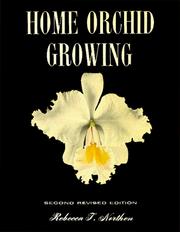
Northen's most thorough work, this advanced classic ties together physiology, potting media science, and reblooming triggers into a unified system — the ideal final text for a well-rounded orchid education.
Discussion
Keep reading
Paths that share books, cover the same subject, or open a related topic.