Get into opera: where to start & how to listen
This curriculum takes a complete newcomer from "what even is opera?" to genuine, passionate engagement with the art form — covering how to listen, the essential composers and works, the drama of the stories, and the magic of the human voice. Each stage builds the ears, vocabulary, and emotional context needed to go deeper in the next, turning a curious outsider into a devoted fan.
First Steps: Learning to Love It
BeginnerOvercome intimidation, understand what opera is and why it moves people, and get a friendly map of the landscape before hearing a single note.
▸ Study plan for this stage
Pace: 3–4 weeks, ~20–25 pages/day — a relaxed, pressure-free pace that mirrors the book's own welcoming tone; aim for one major section per sitting rather than racing through chapters
- What opera actually is: a fusion of music, drama, poetry, and stagecraft into a single art form — not just 'loud singing'
- The major voice types (soprano, mezzo-soprano, tenor, baritone, bass, etc.) and how each is associated with certain character archetypes
- The difference between opera seria and opera buffa, and why the distinction still shapes how we experience opera today
- The Big Three national traditions — Italian, German, and French opera — and their distinct flavors, languages, and conventions
- Key vocabulary: aria, recitative, libretto, overture, leitmotif, bel canto, and how these building blocks fit together in a performance
- The historical arc from Monteverdi's early Baroque experiments through the Romantic peaks of Verdi and Wagner to 20th-century opera
- How to 'read' a performance: what to watch for in staging, conducting, and singing so that confusion turns into engagement
- Why opera moves people: the unique emotional power that comes from combining the human voice with orchestral music and live theatrical drama
- In your own words, how would you explain opera to a skeptical friend who thinks it is boring or inaccessible?
- What are the six main voice types, and what kind of character or emotional role does each typically play on stage?
- What is the difference between an aria and a recitative, and why does that contrast matter for following the story?
- How do Italian, German, and French operatic traditions differ from one another in style, subject matter, and musical approach?
- Name at least three composers covered in Opera for Dummies and describe what makes each one's style distinctive.
- What practical strategies does the book suggest for a first-time opera-goer to prepare for and enjoy a live performance?
- 'Explain it to a stranger' journal entry: After finishing the introductory chapters of Opera for Dummies, write a one-page explanation of opera as if texting a skeptical friend — no jargon allowed. Revisit and refine it once you finish the whole book.
- Voice-type ear training: Using free clips on YouTube, find one famous aria for each of the six voice types mentioned in the book (e.g., a soprano 'Queen of the Night,' a bass 'La vendetta'). Listen back-to-back and jot down three words describing the emotional feeling each voice gives you.
- Aria vs. recitative listening log: Pick any opera synopsis from Opera for Dummies, find a recording of a scene online, and timestamp at least two moments of recitative and two of aria. Note how the music and pacing shift between them.
- National traditions taste test: Choose one Italian opera (e.g., a Verdi excerpt), one German opera (e.g., a Wagner excerpt), and one French opera (e.g., a Bizet excerpt) referenced in the book. Listen to the opening five minutes of each and write two sentences on how they feel different.
- Personal 'opera map': Draw or digitally create a simple timeline/mind-map placing the composers, eras, and national traditions from Opera for Dummies in relation to each other. Pin it somewhere visible as a reference throughout the curriculum.
- First live (or streamed) experience: Using the book's 'going to the opera' guidance, attend one live performance or watch one full opera via a free streaming platform (Met Opera on Demand free trial, YouTube, etc.). Bring a notepad and jot down one moment that surprised you, one that confused you, and one that genuinely moved you.
Next up: Having shed the intimidation factor and built a friendly mental map of opera's landscape, voices, and history through Opera for Dummies, the reader is now ready to go deeper — exploring specific masterworks, composers, and the dramatic and musical craft that makes individual operas unforgettable.

Warm, funny, and genuinely useful, this book explains voices, plots, composers, and how to attend a performance without feeling lost — the perfect companion for a first visit to the opera house or a first recording.
The Stories and the Stage
BeginnerKnow the plots, characters, and emotional arcs of the most essential operas so the drama makes sense when you watch or listen.
▸ Study plan for this stage
Pace: 10–12 weeks total. Weeks 1–8: Read Kobbé's at a selective pace — focus on the 20–25 most-performed operas (roughly 15–20 pages of plot synopsis and commentary per day, skipping lesser-known works on a first pass). Weeks 9–12: Read Opera 101 cover-to-cover at ~25 pages/day, using it to revisit and de
- Opera as drama first: every musical choice serves a narrative or emotional purpose
- The anatomy of a plot synopsis — how to track acts, scenes, key arias, and dramatic turning points
- Stock character archetypes (the tragic heroine, the villain, the comic servant, the romantic tenor lead) and how they recur across the repertoire
- The emotional arc: how operas build tension, release it through set pieces (arias, duets, ensembles), and resolve (or refuse to resolve) dramatically
- The relationship between libretto and score — understanding that the words and the music together tell the story, as Plotkin emphasizes in Opera 101
- Composer-era context: how Baroque, bel canto, Romantic, and verismo operas tell stories differently (Kobbé's historical groupings make this visible)
- The role of the stage picture — sets, staging conventions, and how the physical production reinforces or complicates the drama
- How to use a synopsis as a listening/viewing guide rather than a substitute for the experience itself
- After reading the Kobbé's synopsis for a given opera (e.g., La Traviata, Don Giovanni, or Madama Butterfly), can you narrate the full plot — including the central conflict, each act's turning point, and the resolution — without looking at the book?
- Who are the principal characters in at least 10 core operas, what voice type does each role require, and how does that voice type reinforce the character's dramatic function?
- What does Plotkin mean in Opera 101 when he argues that opera must be experienced rather than merely studied, and how does that philosophy change the way you approach a synopsis?
- How does the emotional arc of a bel canto opera (e.g., Lucia di Lammermoor) differ structurally from a verismo opera (e.g., Cavalleria Rusticana) as presented in Kobbé's?
- What is the dramatic purpose of a specific famous aria you have read about in Kobbé's — how does it advance character or plot rather than simply displaying vocal technique?
- Using Plotkin's guidance in Opera 101, what practical steps would you take to prepare yourself before attending or streaming a live performance of an unfamiliar opera?
- The 'blind retell' drill: after reading each Kobbé's synopsis, close the book and write a 1-page narrative summary in your own words, including the names of at least three characters and the emotional stakes of the final act
- Build a 'repertoire map': create a running reference sheet (paper or digital) with one row per opera — columns for composer, era, voice types of leads, one-sentence plot summary, and the single most dramatically important moment; update it after every opera you read in Kobbé's
- Cross-reference exercise: for every opera covered in Kobbé's that also appears in Opera 101, write 2–3 sentences on what new insight or framing Plotkin adds that Kobbé's does not — this trains you to read the two books in dialogue
- Aria-in-context listening: pick one famous aria per week from an opera whose synopsis you have just read (e.g., 'Casta Diva,' 'Nessun Dorma,' 'Summertime'), listen to a recording, and write a short paragraph on how the aria functions dramatically at that exact moment in the story
- Character-type taxonomy: after finishing Kobbé's core operas, group all the characters you have encountered by archetype (tragic soprano, buffo bass, etc.) and note which operas subvert or complicate the type — this builds pattern recognition across the repertoire
- Pre-performance ritual (from Plotkin's Opera 101 method): choose one opera available on a streaming platform (e.g., Met Opera on Demand, YouTube), apply Plotkin's preparation steps, watch it, then score yourself: how many plot points, character motivations, and dramatic climaxes did you correctly anticipate from your reading?
Next up: Knowing the stories and characters cold gives you a dramatic skeleton onto which the next stage — understanding the music itself (voices, forms, orchestration) — can be hung, so that when you encounter a term like 'cabaletta' or 'leitmotif' you already know exactly which dramatic moment it belongs to.
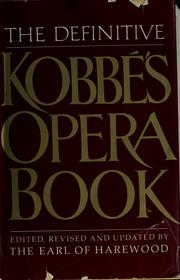
The classic opera-plot reference, covering hundreds of works with synopses, background, and musical highlights — read the entries for the dozen or so operas you plan to explore first, and return to it again and again.
A step-by-step guide to experiencing opera that pairs plot knowledge with listening advice, bridging the gap between reading about an opera and actually hearing it with open ears.
The Composers: Portraits and Masterworks
IntermediateDevelop a personal relationship with the giants — Verdi, Puccini, Mozart, Wagner — understanding their worlds, obsessions, and why their operas endure.
▸ Study plan for this stage
Pace: 8–10 weeks total. Week 1–5: Budden's "Puccini: His Life and Works" (~25–30 pages/day, reading both the biographical chapters and opera-by-opera analyses). Week 6–10: Swafford's "The Vintage Guide to Classical Music," focusing on the opera composers — Mozart, Verdi, Wagner, Puccini, and their contemp
- Puccini's dramatic architecture: how he constructs emotional climaxes through leitmotif, orchestral color, and verismo realism (Budden)
- The evolution of Puccini's style across his major works — Manon Lescaut, La Bohème, Tosca, Madama Butterfly, Turandot — as traced by Budden's opera-by-opera analysis
- Verismo as an aesthetic movement: its roots in Italian literary naturalism and how it shaped operatic subject matter and vocal writing
- Mozart's operatic genius as framed by Swafford: the balance of comic and tragic, the humanity of his characters, and the revolutionary nature of Da Ponte collaborations
- Wagner's concept of the Gesamtkunstwerk (total artwork) and how Swafford contextualizes it within 19th-century Romanticism and German nationalism
- Verdi's dramatic evolution from early bel canto influences to the psychological complexity of Otello and Falstaff, as surveyed by Swafford
- The relationship between a composer's biography — personal obsessions, relationships, historical moment — and the emotional DNA of their operas
- How to listen analytically: connecting a composer's stated intentions and life circumstances to specific musical and dramatic choices in the score
- According to Budden, how did Puccini's personal life and emotional temperament directly shape the heroines and tragic arcs of his operas — and can you cite at least two specific works as evidence?
- Swafford presents Mozart, Verdi, Wagner, and Puccini as distinct artistic personalities. How would you describe the core dramatic 'obsession' of each composer in one or two sentences, drawing on Swafford's portraits?
- How does Budden characterize the development of Puccini's orchestral writing from La Bohème to Turandot — what changed, and why does it matter dramatically?
- Using Swafford's framework, how did Wagner's theoretical writings (e.g., Opera and Drama) translate into actual compositional practice, and how does this differ from Verdi's more instinctive, character-driven approach?
- What is verismo, and how do both Budden and Swafford treat its influence — do they agree on its importance to Puccini's legacy?
- After reading both books, which composer's world feels most vivid and personal to you, and what specific biographical or analytical detail from either Budden or Swafford made it so?
- Composer Snapshot Journal: After finishing each major composer portrait in Swafford, write a one-page 'personality profile' — their core obsession, their signature sound, one masterwork, and one surprising biographical fact. Do the same for Puccini after completing Budden.
- Parallel Listening Log: For every opera Budden analyzes, listen to at least one act while keeping the book open. Annotate moments where you can hear what Budden is describing — a harmonic shift, a leitmotif, a dramatic rupture. Do the same for key operas mentioned in Swafford.
- Side-by-Side Comparison: Choose one shared theme — e.g., 'the doomed heroine' or 'the use of the orchestra as narrator' — and write 500 words comparing how Puccini (via Budden) and one Swafford composer (Verdi or Wagner) handle it differently.
- Timeline Construction: Build a single visual timeline placing the major operas from both books in chronological order, annotating each with its historical context (revolutions, wars, cultural movements) as described by Swafford and Budden.
- Aria Deep-Dive: Pick one famous aria from a Puccini opera (e.g., 'Nessun Dorma,' 'Un bel dì') and one from a composer covered in Swafford (e.g., Mozart's 'Dove sono,' Verdi's 'Caro nome'). Write a short analysis of each: what does the music reveal about the character that words alone cannot?
- Personal Canon List: By the end of the stage, draft your own ranked list of the five operas you most want to experience in full (in concert or recording), with a one-sentence justification for each drawn directly from something Budden or Swafford wrote.
Next up: By building intimate knowledge of the giants' biographies, aesthetics, and masterworks, the reader has developed the analytical vocabulary and personal investment needed to explore opera's broader historical sweep — movements, national schools, and the works of lesser-known but equally vital composers.

Puccini's operas (La Bohème, Tosca, Madama Butterfly) are often the first works newcomers fall for; Budden's authoritative yet readable account deepens that love by revealing the craft and passion behind them.
A broader musical-history panorama that places opera composers — from Monteverdi through Mozart to the Romantics — in their cultural moment, giving the reader the connective tissue between individual composers.
The Voice: Heart of the Art Form
IntermediateUnderstand the instrument at opera's core — voice types, technique, the great singers of history — and learn to hear what makes a performance extraordinary.
▸ Study plan for this stage
Pace: 8–10 weeks total. Weeks 1–5: "The Singing Voice" by Rushmore (~25–30 pages/day, including time to pause and listen to referenced singers). Weeks 6–10: "Maria Callas" by Huffington (~20–25 pages/day, reading more slowly to cross-reference Callas's vocal choices with Rushmore's technical framework).
- Voice classification (Fach system): the spectrum from soprano to bass, and the subcategories within each voice type (e.g., lyric vs. dramatic soprano, spinto tenor, basso profondo) as laid out by Rushmore
- Vocal technique fundamentals: breath support, registration (chest/head voice), passaggio negotiation, resonance, and how these physical realities shape what singers can and cannot do
- The historical arc of singing styles: bel canto ideals, the shift to heavier Romantic-era voices, verismo, and how Rushmore traces these changes through specific singers across centuries
- Timbre and color as expressive tools: how a singer's unique tonal quality — not just pitch accuracy — is the primary carrier of emotion in opera
- The concept of the 'complete singer': how Rushmore evaluates singers not only on technique but on musicianship, intelligence, and interpretive depth
- Maria Callas as a case study in vocal paradox: Huffington reveals how Callas's voice was technically imperfect yet interpretively unmatched, embodying the tension between pure sound and dramatic truth
- The relationship between a singer's biography and their art: Huffington shows how Callas's personal suffering, ambition, and relationships with Onassis and Meneghini directly shaped her stage presence and vocal choices
- Legacy and the recording era: how recordings (central to both books) allow us to study and compare singers across generations, and why listening critically is an essential skill for opera appreciation
- After reading Rushmore, can you define at least six voice types and explain what repertoire and physical characteristics distinguish them from one another?
- What does Rushmore identify as the hallmarks of the bel canto tradition, and which singers does he hold up as its greatest exemplars?
- How does Huffington's biography explain the way Callas's personal life — her relationship with Onassis, her weight loss, her rivalry with Tebaldi — affected her vocal longevity and artistic choices?
- Using Rushmore's technical vocabulary (passaggio, legato, messa di voce, coloratura), how would you describe what made Callas's voice both celebrated and controversial?
- What is the 'Fach' system and why does it matter practically — both for singers protecting their voices and for audiences understanding casting decisions?
- How do both books together suggest that greatness in operatic singing is about more than technical perfection — and what qualities do they propose matter more?
- Active listening log: For each voice type Rushmore discusses, find and listen to at least one canonical recording of a singer he mentions. Write 3–5 sentences describing the timbre, power, and style — use Rushmore's own vocabulary as your descriptive toolkit.
- Callas listening journal: As you read Huffington's biography chapter by chapter, pair each life period with a Callas recording from that era (e.g., early 1950s Cetra recordings vs. late EMI recordings). Note in writing how her voice changes and whether Huffington's narrative explains what you hear.
- Voice-type blind test: Queue up 10 operatic arias by singers of different voice types without looking at the labels. Try to identify the voice type and Fach before checking. Score yourself and review any misses using Rushmore's descriptions.
- Comparative essay (500–700 words): Choose one other soprano discussed by Rushmore (e.g., Flagstad, Sutherland, or Schwarzkopf) and compare her approach to the voice with what Huffington reveals about Callas's approach. Who embodies Rushmore's ideal of the 'complete singer' more fully, and why?
- Biography-to-performance connection: Pick one famous Callas performance (e.g., her 1958 Rome walkout, or the 1964 Covent Garden Tosca) and research both the biographical context (from Huffington) and the musical/vocal content. Write a short analysis of how the life moment and the artistic moment illuminate each other.
- Teach-it-back exercise: Explain the concept of the passaggio and why it is a defining challenge for every singer, as if teaching someone who has never read Rushmore. Then explain, using Huffington, how Callas's handling of her own passaggio was both a weakness and a source of her unique expressivity.
Next up: By mastering voice types, technique, and the interpretive depth exemplified by Callas, the reader is now equipped to move beyond the singer and into the broader theatrical and compositional world of opera — understanding how composers write for specific voices, how conductors shape performances, and how the full dramatic machinery of the art form is constructed.

A beautifully written exploration of how the operatic voice works, what distinguishes a soprano from a mezzo, and what the great singers of the past and present actually do — essential for training the ear.

Maria Callas is opera's most legendary figure; reading her biography while listening to her recordings is one of the most reliable ways to fall irreversibly in love with the art form.
Going Deep: Opera as Culture and Obsession
ExpertEngage with opera as a living, contested, culturally rich art form — its politics, its excesses, its future — and join the conversation that passionate opera lovers have been having for centuries.
▸ Study plan for this stage
Pace: 8–10 weeks total: Spend weeks 1–5 on "Opera in America" by John Dizikes (~25–30 pages/day, given its density and breadth as a cultural history), then weeks 6–10 on "The Queen's Throat" by Wayne Koestenbaum (~15–20 pages/day, reading slowly and reflectively to absorb its lyrical, essayistic prose and
- Opera in America as a site of cultural negotiation — how European art was transplanted, contested, democratized, and commercialized on American soil (Dizikes)
- The interplay of class, immigration, nationalism, and identity in shaping American opera audiences and institutions (Dizikes)
- The tension between opera as elite 'high culture' and its recurring populist, democratic impulses throughout U.S. history (Dizikes)
- The role of technology — recordings, radio, television — in transforming how Americans experience and consume opera (Dizikes)
- Opera fandom as a form of queer identity and desire: Koestenbaum's argument that the operatic voice is a site of erotic, emotional, and subcultural meaning (Koestenbaum)
- The 'opera queen' as a cultural archetype — the obsessive, marginalized, passionately devoted listener — and what this figure reveals about opera's social life (Koestenbaum)
- The operatic voice as a bodily, physical phenomenon: how listeners internalize, project onto, and are transformed by singers' voices (Koestenbaum)
- Criticism as autobiography: Koestenbaum's method of blending personal confession, cultural theory, and close listening as a model for engaged opera writing
- According to Dizikes, what were the major social and institutional forces that shaped opera's development in America, and how did opera both reflect and resist American democratic ideals?
- How does Dizikes trace the impact of technology (recordings, radio, broadcast) on the democratization — and commodification — of opera in America?
- What does Koestenbaum mean by 'the queen's throat,' and how does he construct the relationship between the operatic voice, the body, and queer desire?
- How does Koestenbaum use his own autobiography and obsessions as critical tools, and what does this method argue about the nature of opera criticism itself?
- Taken together, how do Dizikes and Koestenbaum differently define what it means to be an opera 'audience'? Where do their visions of the listener converge or clash?
- What vision of opera's future — cultural, institutional, political — can be extrapolated from the arguments and anxieties present in both books?
- Trace a single opera (e.g., Verdi's Aida or Puccini's Madama Butterfly) through Dizikes's American history: find evidence of how it was received, staged, and debated at different moments in U.S. cultural life, then write a one-page timeline of its American 'career.'
- Write a personal 'opera confession' in the style of Koestenbaum: a 500–800 word piece describing your own first or most intense operatic experience, using his technique of weaving bodily sensation, memory, and cultural observation together.
- Select one major American opera house or institution discussed by Dizikes (e.g., the Metropolitan Opera) and research one specific production or controversy from its history; write a short analysis of what it reveals about the cultural tensions Dizikes identifies.
- After finishing Koestenbaum, listen to a complete operatic aria or scene that he discusses and write a 'close listening' response: describe what you hear in the voice physically, emotionally, and culturally — resisting the urge to simply summarize the plot.
- Stage a debate with yourself (or a reading partner): using Dizikes as your evidence, argue that opera in America is fundamentally a democratic art form — then, using Koestenbaum, argue the opposite, that opera is irreducibly a cult of the marginal and the excessive.
- Curate a personal 'opera playlist' of 8–10 recordings that respond to both books — pieces that illuminate American operatic history (Dizikes) and that exemplify the kind of vocal obsession Koestenbaum describes — and write a sentence of justification for each choice.
Next up: Having wrestled with opera's cultural politics, its American history, and the fierce intimacy of obsessive listening through Dizikes and Koestenbaum, the reader is now equipped to engage with opera not merely as a spectator but as a fully informed, critically self-aware participant — ready to explore primary sources, attend live performances with analytical depth, or pursue specialized study in op
A sweeping cultural history of how opera took root in America, revealing the social and political forces that shaped the art form's reception — perfect for understanding opera not just as music but as a cultural phenomenon.
A cult classic of opera writing — lyrical, personal, and intellectually dazzling — that captures the irrational, all-consuming passion of the true opera devotee and marks the reader's graduation from newcomer to lover.
Discussion
Keep reading
Paths that share books, cover the same subject, or open a related topic.