Get into dance & ballet: a viewer's guide
This curriculum takes a complete beginner from pure enjoyment and basic literacy all the way to a nuanced, culturally informed appreciation of dance and ballet. Each stage builds on the last: first you learn to see and feel dance, then you learn its history and landmark works, then you go deep into the craft of choreography and the living culture of the art form.
Learning to Watch: First Steps
BeginnerDevelop a basic vocabulary for watching dance, understand what ballet actually is, and feel comfortable as an audience member before diving into history or theory.
▸ Study plan for this stage
Pace: 4–5 weeks, ~20–25 pages/day (Ballet 101 is dense but conversational — shorter daily sessions prevent overwhelm and allow time to reflect between readings)
- Ballet as a codified art form: understanding that ballet has a shared, internationally recognized vocabulary of steps, positions, and conventions that make it 'readable' to trained observers
- The five positions of the feet and arms: the foundational building blocks Greskovic returns to repeatedly as the grammar of all ballet movement
- Turnout: what it is anatomically and aesthetically, why it defines classical ballet's visual language, and how to spot it (or its absence) while watching
- The male and female 'danse': Greskovic's framework for understanding how roles, technique, and theatrical purpose differ between male and female dancing, and why both matter equally
- Pointe work in context: what going 'en pointe' actually requires technically and dramatically, moving beyond the popular myth to understand it as a tool, not a goal
- The corps de ballet, soloists, and principals: the hierarchy of a ballet company and how each tier contributes to a performance's texture and meaning
- Active watching vs. passive watching: Greskovic's core argument that informed audiences see more — learning to notice line, weight, musicality, and effort rather than just story
- The relationship between music and movement: how ballet choreography is structured in response to musical phrasing, tempo, and dynamics
- In your own words, what makes ballet 'classical' — what distinguishes it from other forms of theatrical dance, according to Greskovic?
- What is turnout, and why does Greskovic treat it as so central to understanding what you are seeing when you watch ballet?
- How does Greskovic describe the difference in theatrical and technical purpose between male and female dancing? Do you find his framework convincing?
- What is the role of the corps de ballet, and how does Greskovic suggest you watch them rather than ignore them in favor of the principals?
- Before reading this book, what did you assume ballet was 'about'? Which of those assumptions did Greskovic most directly challenge or complicate?
- Pick one chapter where Greskovic analyzes a specific ballet or choreographer. What watching 'tools' did he give you that you could apply to a live or recorded performance?
- Turnout observation exercise: Watch any 10-minute clip of a professional ballet class or performance on YouTube with the sound off. Focus only on the feet and legs — write down every moment you notice turnout being used, lost, or exaggerated. Compare your notes to Greskovic's description.
- Vocabulary flashcards: As you read, create a physical or digital flashcard for every French term Greskovic introduces (e.g., arabesque, plié, pas de deux). On the back, write his definition in plain English plus one sentence about what it looks like. Aim for 30–40 cards by the end.
- Hierarchy mapping: After reading the sections on company structure, sketch a simple diagram of a ballet company's hierarchy (principal, soloist, corps). Then watch the first act of any full-length ballet recording (Swan Lake and The Sleeping Beauty are widely available) and try to identify which tier each dancer belongs to based on what they are given to do.
- Music-and-movement listening session: Choose one short ballet excerpt (the Rose Adagio from Sleeping Beauty or the Waltz of the Snowflakes from The Nutcracker work well). Listen to the music once with your eyes closed, noting the phrasing and dynamics. Then watch the clip and observe how the choreography responds to exactly those moments you noticed. Write 3–5 sentences on what you found.
- Pre- and post-reading reflection journal: Before starting Ballet 101, write one page answering 'What is ballet, and what do I expect to get from watching it?' Seal it or save it. After finishing the book, write a second page answering the same questions. Compare the two entries and note the specific ideas from Greskovic that changed your thinking.
- Live or recorded performance attendance: Attend one live ballet performance or watch one full-length recorded ballet (not a highlight reel) before finishing this stage. Bring or keep nearby the vocabulary cards you built. Afterward, write a one-page response using at least eight terms from your flashcard deck — focusing on what you actually saw, not the story.
Next up: Greskovic gives the reader a working visual and technical vocabulary for what ballet looks like from the outside; the next stage can now build confidently on that foundation by introducing the historical and choreographic forces — Petipa, Diaghilev, Balanchine — that shaped why ballet looks the way it does.
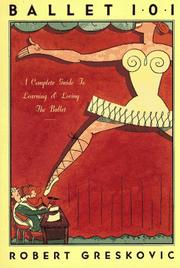
The ideal starting point: a warm, comprehensive primer that explains what to look for when watching ballet — technique, music, stagecraft — without assuming any prior knowledge.
History and the Great Works
BeginnerTrace ballet and theatrical dance from its Renaissance court origins through the Romantic and Imperial eras to the 20th-century revolution, and meet the landmark works and companies that shaped the art.
▸ Study plan for this stage
Pace: 8–10 weeks total. Weeks 1–6: "Apollo's Angels" by Jennifer Homans (~550 pages of text) at roughly 25–30 pages per day, 5 days a week — linger on the chapter-opening historical context before diving into the dance analysis. Weeks 7–10: "Diaghilev, A Life" by Sjeng Scheijen (~500 pages) at 25–30 pages
- Origins of ballet in Renaissance court spectacle and the codification of technique in the French Académie Royale de Danse, as traced in Homans' opening chapters
- The Romantic era's transformation of ballet into a vehicle for ethereal, otherworldly femininity — the rise of the ballerina, pointe work, and works like Giselle and La Sylphide, covered in depth by Homans
- The Imperial Russian school: how the Maryinsky/Petipa tradition synthesized French, Italian, and Russian influences into the grand classical canon (Swan Lake, Sleeping Beauty, The Nutcracker)
- Ballet as a bearer of national identity and ideology — Homans' argument that ballet encodes the values and anxieties of the societies that produce it
- Diaghilev's Ballets Russes as a total-art revolution: the fusion of choreography, avant-garde visual art, and modernist music into a single unified aesthetic event, per Scheijen
- The role of personality, patronage, and power in shaping art — Scheijen's portrait of Diaghilev as impresario, tastemaker, and autocrat whose personal relationships directly drove artistic output
- Key collaborators and their contributions: Nijinsky, Fokine, Balanchine, Stravinsky, Picasso, Matisse, Bakst — understanding the Ballets Russes as a collective rather than a solo enterprise
- The tension between tradition and rupture: how the Ballets Russes simultaneously drew on and demolished the classical inheritance Homans describes in the earlier chapters
- According to Homans, how did the political and social context of the French court under Louis XIV shape the earliest codified forms of ballet, and what institutional structures did that era leave behind?
- How does Homans characterize the shift in ballet's center of gravity from Paris to St. Petersburg, and what does she argue the Imperial Russian school added to the art form that the French and Italian traditions had not?
- Scheijen presents Diaghilev as both a visionary and a deeply flawed human being — what specific personal qualities and contradictions does he identify, and how did they manifest in the Ballets Russes' working methods?
- Which landmark Ballets Russes productions does Scheijen treat as turning points, and what made each one artistically or culturally revolutionary in its moment?
- Both Homans and Scheijen deal with the question of what ballet 'means' beyond its steps — how do their answers differ, and where do they converge?
- How did Diaghilev's death in 1929 affect the companies and artists Scheijen describes, and how does that ending connect to the broader arc of ballet history Homans narrates?
- Build a living timeline: create a two-column chronological chart — one column for historical/political events, one for ballet milestones — updating it chapter by chapter as you read both books. By the end, you should have a single visual that spans roughly 1489 to 1929.
- Landmark-work dossiers: for each major ballet mentioned prominently in either book (e.g., Giselle, Swan Lake, The Rite of Spring, Petrushka, L'Après-midi d'un faune), write a one-page fact sheet covering: premiere date and company, choreographer, composer, visual designer, and what Homans or Scheijen says about its historical significance. Watch a recording of at least three of these works while r
- Collaborator web: after finishing Scheijen, draw a relationship map of the Ballets Russes inner circle — Diaghilev at the center, with lines to each key artist labeled with the nature of their relationship (romantic, professional, rivalrous) and the works they produced together. This makes the book's dense social world concrete.
- Comparative close-read: choose one ballet that both Homans and Scheijen discuss (The Rite of Spring is ideal). Write 300–400 words comparing how each author frames its significance — what does each emphasize, what does each omit, and what does the difference reveal about each author's larger argument?
- National-style listening and viewing session: pair Homans' chapters on the French, Italian, and Russian schools with a short viewing exercise — find a clip of a Petipa-era classical variation, a Romantic-era white-act excerpt, and a Ballets Russes work. Jot down three specific visual or stylistic differences you can now name and explain using vocabulary from the books.
- Reflective journal entry: after finishing both books, write one page responding to this prompt — 'Homans ends Apollo's Angels on a note of elegy; Scheijen ends with Diaghilev's death. Do you read ballet history as a story of progress, loss, or something else entirely? Use evidence from both books.'
Next up: By grounding you in the full sweep of ballet history — from court origins through the Ballets Russes revolution — this stage gives you the chronological backbone and the landmark reference points needed to engage meaningfully with the technical, aesthetic, and analytical literature that follows.
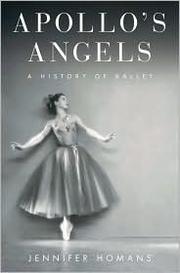
The definitive single-volume history of ballet — beautifully written and accessible — covering five centuries of style, politics, and artistry; read it now that you have basic viewing vocabulary.

Diaghilev and the Ballets Russes represent the single most explosive moment in dance history; this biography brings that world vividly to life and connects ballet to modernism in painting and music.
Wider Dance: Beyond the Ballet Stage
IntermediateExpand appreciation beyond classical ballet to modern and contemporary dance, understanding how different traditions — American modern, jazz, world dance — relate to and challenge the classical canon.
▸ Study plan for this stage
Pace: 6–8 weeks total: Weeks 1–4 on "The Vision of Modern Dance" (~20–25 pages/day, including re-reading key manifestos and essays); Weeks 5–8 on "Footnotes" (~15–20 pages/day, pausing to watch referenced performances and journal reflections).
- The philosophical and aesthetic break from classical ballet that defines American modern dance — rejection of codified technique in favor of personal expression and natural movement
- The pioneering voices and manifestos in 'The Vision of Modern Dance': how figures like Isadora Duncan, Martha Graham, Doris Humphrey, and José Limón articulated their own movement philosophies in their own words
- Humphrey's 'fall and recovery' arc and Graham's 'contraction and release' as foundational technical and expressive principles that stand in direct contrast to ballet's verticality and elevation
- The role of gravity, breath, and the floor as choreographic tools — elements largely absent from classical ballet vocabulary
- How 'Footnotes' situates dance within broader cultural, social, and political contexts, showing that dance traditions are never created in a vacuum but are responses to their historical moment
- The relationship between jazz dance and African-American cultural heritage, and how jazz movement vocabulary entered and influenced concert dance
- World dance traditions as complete, self-sufficient artistic systems — not 'exotic' alternatives to a Western norm — and how cross-cultural exchange has shaped contemporary practice
- The ongoing dialogue (and tension) between codified classical technique and the improvisational, democratic, or culturally specific impulses of modern and world dance forms
- According to the primary sources in 'The Vision of Modern Dance,' what specific limitations of classical ballet did early modern dance pioneers identify, and what alternative movement values did each propose in its place?
- How do Graham's contraction-and-release and Humphrey's fall-and-recovery principles each reflect a distinct philosophical stance toward the human body and its relationship to gravity — and how do both differ from ballet's aesthetic ideals?
- Drawing on 'Footnotes,' how does Elena Alexander connect specific dance styles or moments to their surrounding social and political histories? Choose two examples and explain the connection she makes.
- In what ways does 'Footnotes' challenge or complicate the idea that ballet is the 'standard' against which all other dance forms should be measured?
- How do the jazz and world dance traditions discussed across both books both borrow from and resist the influence of the Western classical canon?
- After reading both books, how would you define 'modern dance' — and do you think that definition is stable, or does it shift depending on who is speaking and when?
- Manifesto mapping: For each pioneer featured in 'The Vision of Modern Dance,' write a 3-sentence summary of their stated philosophy, then draw a simple diagram showing where they agree and where they diverge from one another and from ballet.
- Movement journaling: After reading each major section of 'The Vision of Modern Dance,' spend 10 minutes attempting to physically embody the described principle (e.g., Humphrey's fall-and-recovery by swaying off-balance; Graham's contraction by curling the torso inward). Write one paragraph on what the principle felt like from the inside.
- Parallel viewing: For each dance tradition or choreographer mentioned in 'Footnotes,' find and watch at least one short video clip (archival or contemporary). Keep a viewing log noting: tradition/artist, approximate date, one movement quality that stands out, and one connection to something in the book.
- Cultural context timeline: Using 'Footnotes' as your primary source, build a timeline that places key dance developments alongside the historical events Alexander links them to (e.g., the Harlem Renaissance and jazz dance, post-WWII America and the rise of abstract modern dance).
- Comparative essay (500–700 words): Choose one classical ballet value (e.g., turnout, elevation, line) and trace how two different non-ballet traditions discussed across both books either subvert, reinterpret, or simply ignore that value — and what that tells us about each tradition's deeper priorities.
- Discussion or journal prompt — 'Who gets to be canon?': After finishing both books, write a reflective response to this question: Which dance forms are treated as historically significant in these books, which are marginalized, and what does that reveal about the authors' own perspectives and the field's ongoing biases?
Next up: By grounding the reader in the philosophical origins and cultural diversity of non-ballet dance traditions, this stage builds the critical vocabulary and open aesthetic lens needed to engage with more advanced choreographic analysis, dance criticism, or specialized study of a single tradition in greater depth.
A well-curated anthology of writings by the pioneers of modern dance (Duncan, Graham, Cunningham, and others) that lets the innovators speak for themselves, building on the historical arc established in Stage 2.
Bridges the gap between reading about dance and understanding how choreographers think, showing how movement ideas are captured, transmitted, and debated across different dance forms.
Inside the Craft: Choreography and the Body
IntermediateUnderstand how choreography is actually made — the creative process, the relationship between movement and music, and what dancers experience from the inside — so you can watch any work with genuine depth.
▸ Study plan for this stage
Pace: 3–4 weeks, ~20–25 pages/day — Tharp's memoir is dense with anecdote and reflection, so read slowly enough to pause and visualize the movement passages; plan one longer re-reading session per week for key chapters on process and collaboration.
- Choreographic process as daily discipline — Tharp's relentless practice-room routine reveals that creativity is a craft built on repetition, not inspiration alone
- The body as archive — how a choreographer stores, retrieves, and transforms movement vocabulary accumulated over years of physical training
- Movement and music in dialogue — Tharp's complex, sometimes adversarial relationship with score (from Bach to Beach Boys) shows that music can be a springboard, a constraint, or a counterpoint rather than a simple guide
- Collaboration and authorship — the negotiated power between choreographer, dancer, composer, and designer, and how Tharp asserts (and sometimes surrenders) creative control
- Risk and failure as method — Tharp's frank account of works that collapsed in rehearsal or bombed at premiere frames failure as essential data in the creative loop
- The dancer's interior experience — passages describing what it feels like to inhabit a phrase from the inside, distinct from how it reads from the audience
- Institutional context and independence — navigating Broadway, ballet companies, and her own troupe illustrates how venue and funding shape the art itself
- Autobiography as choreographic text — the memoir's structure mirrors Tharp's aesthetic: fragmented, layered, circling back, resisting easy narrative resolution
- How does Tharp describe her daily creative routine, and what does her account suggest about the relationship between discipline and spontaneity in choreography?
- In Push Comes to Shove, how does Tharp approach the use of existing music — what tensions arise, and how does she resolve (or deliberately preserve) them?
- What does Tharp reveal about the experience of being inside a movement phrase versus watching it from outside, and why does that gap matter to a viewer trying to understand dance?
- How does Tharp portray the choreographer–dancer power dynamic, and what does this tell us about who 'owns' a piece of choreography?
- Which specific works does Tharp discuss as failures or near-failures, and what does she say she learned from them about her own creative process?
- How does the institutional setting (Broadway vs. ballet company vs. her own company) change what Tharp can make, and what does that reveal about the relationship between art and infrastructure?
- Movement journaling: After each reading session, write 150–200 words describing a physical action you performed that day (walking upstairs, cooking) using Tharp's vocabulary of weight, rhythm, and spatial intent — train yourself to see ordinary motion as choreographic material
- Score-mapping exercise: Choose one piece of music Tharp discusses (e.g., the Bix Beiderbecke tracks behind Deuce Coupe or the Bach pieces) and listen while writing down every decision point where a choreographer could agree with, ignore, or contradict the music — then watch a clip of the actual work and compare your predictions
- Failure audit: Identify a creative project of your own (any discipline) that didn't work; write a one-page 'choreographer's post-mortem' in Tharp's analytical style, separating what failed in concept, execution, and context
- Collaboration map: Draw a diagram of one production Tharp describes, placing every collaborator (composer, designer, dancers, producer) and drawing arrows that show where creative decisions flowed — annotate who had final say at each node
- Inside/outside split-screen: Watch a full performance of Push Comes to Shove (available on video) twice — first as a naive audience member, then re-watch with the book open, pausing to read Tharp's own account of specific passages and noting where her interior description matches or surprises your visual reading
- Discipline experiment: Adopt Tharp's core principle of showing up regardless of inspiration — commit to 15 minutes of any creative practice every day for two weeks and keep a log tracking which sessions felt forced versus generative, then analyze the pattern
Next up: Tharp's insider account of how choreography is built from the body outward gives you the creative and kinesthetic foundation to next examine how movement is formally analyzed, notated, and theorized — moving from the practitioner's felt experience to the scholar's structural language.
One of the most candid and intelligent memoirs by a working choreographer, revealing the daily reality of making dances across ballet and contemporary forms — a perfect complement to the analytical approach of the previous book.
Culture, Identity, and the Living Art
ExpertEngage with dance as a living cultural practice shaped by race, gender, politics, and economics, and develop a critical perspective that will enrich every future performance you attend or watch.
▸ Study plan for this stage
Pace: 6–8 weeks total: Weeks 1–3 on "Watching the Dance Go By" (~20–25 pages/day, reading essays in thematic clusters rather than straight through); Weeks 4–7 on "Black Dance in America" (~15–20 pages/day, pausing after each historical era to reflect); Week 8 reserved for synthesis, re-reading marked pass
- Dance criticism as a cultural act: Siegel's essays model how a critic's language, framing, and aesthetic assumptions are never neutral — they reflect and reinforce cultural values.
- The body as text: both books treat the dancing body as a site where identity (race, gender, class) is inscribed, contested, and performed.
- Canonization and erasure: Siegel's canon-building criticism and Haskins's recovery of Black dance history together reveal how certain artists and traditions get elevated while others are systematically marginalized.
- The politics of form: how choreographic choices (abstraction vs. narrative, European vs. African-derived movement vocabularies) carry ideological weight and are shaped by the social conditions of their making.
- Race, appropriation, and ownership in American dance: Haskins traces how Black movement innovations were repeatedly absorbed into mainstream (white) commercial culture with little credit or compensation.
- Gender and the gaze: Siegel's criticism surfaces assumptions about femininity, virtuosity, and spectatorship that have long structured how ballet and concert dance are evaluated.
- Economic structures of the dance world: both authors illuminate how funding, venue access, and critical attention determine which artists survive and which are forgotten.
- Living tradition vs. fixed artifact: dance exists only in performance and in the bodies of practitioners — both books argue that understanding dance history requires understanding the communities that carry it forward.
- After reading Siegel's critical essays, how would you describe her methodology? What does she prioritize in a performance, and what blind spots or biases can you identify in her critical lens?
- Haskins documents Black dance from African roots through the late 20th century. What recurring patterns do you see in how Black artists navigated — or were blocked by — white-controlled institutions, and how did they build alternative structures in response?
- How do the two books speak to each other on the question of critical authority: who gets to define what 'good' dance is, and whose aesthetic standards become the default measure of excellence?
- Siegel writes about many of the same mid-century American companies and choreographers that Haskins discusses from a different angle. Choose one artist or company that appears in both books and compare how each author frames that work — what does the difference reveal?
- How does Haskins's historical account change the way you read Siegel's contemporary criticism? Does knowing the suppressed history of Black dance alter your evaluation of which works Siegel chose to review and how she reviewed them?
- Both authors implicitly or explicitly argue that dance cannot be understood apart from its social context. Drawing on specific examples from each book, articulate your own position: to what extent should cultural and political context shape how we evaluate a dance work?
- Parallel criticism exercise: Choose a single performance (live, archival video, or documentary) and write two short reviews — one modeled on Siegel's close-movement-description style, one informed by Haskins's historical-cultural framing. Compare what each approach reveals and conceals.
- Erasure mapping: After finishing Haskins, make a timeline of Black dance milestones he covers. Then go back through Siegel's essays and mark every point where a Black artist, tradition, or influence is mentioned, minimized, or absent. Write a one-page reflection on what the gaps tell you.
- Vocabulary audit: Keep a running glossary of evaluative language Siegel uses (e.g., 'refined,' 'raw,' 'primitive,' 'sophisticated'). After finishing both books, annotate each term with its cultural assumptions and consider how Haskins's history recontextualizes that language.
- Living-tradition interview: Identify a local dancer, teacher, or community member connected to any tradition discussed in either book (African American vernacular dance, ballet, modern dance, etc.) and conduct a short interview about how they learned the form, who they credit, and what they feel is at risk of being lost.
- Economics deep-dive: Research the funding history of one company or artist featured in Haskins — grants received, venues performed in, critical coverage — and compare it to a company Siegel championed. Present your findings as a one-page comparative memo on how economic access shaped artistic legacy.
- Capstone critical essay: Write a 600–900 word essay arguing for or against the following proposition, using evidence from both books: 'Dance criticism, as practiced in 20th-century America, was a political act whether critics acknowledged it or not.'
Next up: By internalizing how race, economics, and critical authority have shaped the dance canon, the reader is now equipped to engage with primary choreographic works and theoretical texts at a deeper level — approaching any future reading or performance not as a passive consumer but as a critically aware participant who can ask whose story is being told, by whom, and at whose expense.
A landmark collection of dance criticism that models how to write and think about performance with precision and passion — reading great criticism sharpens your own eye.
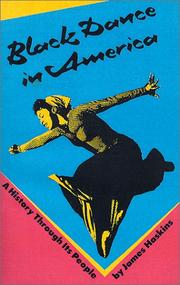
Traces the essential and often underacknowledged contribution of Black artists to American dance history, completing the cultural picture and challenging any narrow view of what dance is and who it belongs to.
Discussion
Keep reading
Paths that share books, cover the same subject, or open a related topic.