Norman Mailer in Order: Where to Start with a Vast, Uneven Bibliography
Mailer published more than forty books in six decades and a great many of them are bad, which is precisely why an order helps more with him than with a tidier writer. The consensus that has settled since his death is that the journalism outlasted the novels. This path therefore starts where he is unarguably great — the reported books of the late sixties and seventies — moves through the enormous true-crime book that won his second Pulitzer, and only then goes back to the fiction, ending with the doorstops that only completists should attempt.
Start With the Journalism
BeginnerMeet Mailer where his reputation is safest: reporting himself into the story in the third person, which was a genuine formal invention rather than just ego.
▸ Study plan for this stage
Pace: Three to four weeks. The armies of the night is around 300 pages and The Fight is under 250, so this is the lightest stage in the path by some distance. Read them in the given order and leave a few days between: the point of the pairing is to watch the same technique applied to a subject Mailer is p
- The third-person self. Mailer narrates The armies of the night as a character called Mailer, which sounds like ego and functions as a device — it lets him report his own vanity, drunkenness and cowardice as evidence rather than confess them
- History as a Novel, the Novel as History — the subtitle is the argument. Part one narrates the march on the Pentagon as fiction; part two supplies the collective history the individual account could not reach
- Participation as a reporting method. Mailer is arrested in the first book and cornered in Ali's camp in the second, and in both cases the access is the story
- The Fight as the demonstration case: a subject with no political stake for him, which is why it is the most purely enjoyable thing he wrote and the cleanest proof that the method is a method
- Ali and Foreman rendered as two philosophies of the body, with Mailer's own physical vanity in the frame — the self-insertion earns its place because he is honest about what he wants from the fighters
- Style as a load-bearing element. The sentences are long, subordinate and rhythmically built, and reading a page aloud tells you more about Mailer than any summary
- Why journalism first. The critical consensus since his death holds that the reported books outlasted the novels, and starting here means meeting him at his least disputed
- What does the third-person device let Mailer report that a first-person narrator could not?
- The armies of the night divides into a novel and a history. What does the second part supply that the first cannot, and is the division a solution or an admission?
- In The Fight, what is Mailer's actual interest in Ali? Trace it and note where he is describing the fighter and where he is describing himself.
- Both books put the reporter at the centre. Where does that serve the material and where does it crowd it out? Find one instance of each.
- Having read only these two, what would you say Mailer could do that a conventional reporter could not?
- Read any two pages of The armies of the night aloud and mark the sentence structure. Mailer's clauses are built for breath and the shape is not visible at silent reading speed.
- Write 200 words on the march on the Pentagon in flat wire-service prose, using only facts from the book. Set your version beside a page of Mailer's and say what each gets and loses.
- In The Fight, list every moment where Mailer's access shapes what he can see. The list is a working account of participatory journalism's trade-offs.
- Pick the single passage in either book where you most disliked the narrator, and write a paragraph on whether Mailer intended you to.
Next up: You have the method in its two most controlled applications, which is what you need to follow it out to convention reportage, to the moon, and finally to the book where he removes himself entirely.
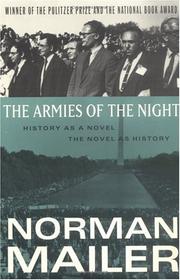
The 1967 march on the Pentagon, narrated by a character called Mailer, subtitled History as a Novel, the Novel as History. It won the Pulitzer and the National Book Award and it is the single best entry point, because it makes the case for his whole method in three hundred readable pages.
Ali against Foreman in Kinshasa, and the most purely enjoyable book he wrote. Read it second as proof that the method works on a subject where Mailer has no political stake, only fascination.
The Reported Books at Full Stretch
IntermediateFollow the non-fiction from convention reportage to the moon shot to the thousand-page book where Mailer finally removed himself from the page altogether.
▸ Study plan for this stage
Pace: Ten to twelve weeks. Miami and the siege of Chicago is short and can be read in a week. Of a fire on the moon is around 470 pages and is heavy going in the technical middle section. The executioner's song is over 1,100 pages and needs a month on its own — but it is the fastest-reading long book in t
- Speed as a condition of the work. Miami and the siege of Chicago was written in weeks and shows it — rougher, less shaped, and the clearest view of how Mailer worked when the material was still hot
- The 1968 conventions as two set pieces with completely different textures, and Mailer's differing sympathies at each, which he does not hide
- The moon book as a mismatch he makes productive: a writer committed to instinct, magic and the body, assigned to a triumph of systems engineering and losing the argument with his own material in public
- NASA's language versus Mailer's. Of a fire on the moon spends real effort on the flatness of engineering prose, and his frustration with it is the book's subject as much as the launch is
- The executioner's song's flat style as a deliberate withdrawal — no third-person Mailer, no ornament, no metaphysics, just testimony arranged. It won his second Pulitzer
- Gary Gilmore's murders and execution given to the reader without an interpreter, and the effect that has: the book refuses to tell you what to think about capital punishment or about Gilmore
- The ego as a choice rather than a limit. This is the finding of the whole stage, and it is only demonstrable by reading the restrained book after the unrestrained ones
- Miami and the siege of Chicago was written fast. What in the prose shows it, and does the speed cost the book anything you regret?
- Where in Of a fire on the moon does Mailer's sensibility fail to get purchase on the material, and what does he do about it?
- What is Mailer's actual objection to NASA, and is it an argument or a temperament?
- The executioner's song removes the narrator entirely. What does that withdrawal make possible that his usual method could not?
- Does The executioner's song take a position on the execution? Point to evidence rather than to impression.
- Having read four reported books, which one would you now hand to someone who had read no Mailer at all, and why is it not necessarily the one this path started with?
- Take one page of The executioner's song and one page of The armies of the night and count sentence lengths and adjective density. The difference is measurable and it is the point of the stage.
- In Of a fire on the moon, find a passage where Mailer quotes NASA language directly and write 200 words on what he is doing by leaving it unornamented.
- For The executioner's song, list the voices the book uses across any fifty-page stretch and note who is never given one. The absences are editorial decisions.
- Write a paragraph arguing that The executioner's song is the better book, then a paragraph arguing that The armies of the night is. You will need both to answer the last question honestly.
Next up: With the non-fiction behind you, you can go back to the novels that made him famous and test the standard verdict that they are the weaker half — a verdict you are now equipped to dispute rather than merely inherit.

The 1968 conventions, written in a few weeks. Shorter and rougher than Armies of the Night, and the clearest look at how fast he could work when the material was hot.
Apollo 11, and the strangest fit of subject to sensibility in his career: a writer who believed in instinct and magic, assigned to a triumph of engineering. Read it fourth, once you can enjoy him losing an argument with his own material.
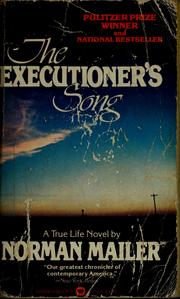
Gary Gilmore's murders and execution across eleven hundred pages of flat, plain, un-Maileresque prose. His masterpiece, his second Pulitzer, and the book that proves the ego was a choice rather than a limit. It belongs here rather than first only because its restraint is invisible until you have read the books it is restrained against.
Now Go Back to the Fiction
IntermediateRead the novels that made him famous and the manifesto that made him notorious, and judge the standard verdict that the fiction is the weaker half.
▸ Study plan for this stage
Pace: Ten to twelve weeks. The Naked and the Dead is around 700 pages of conventional narrative and reads steadily. Advertisements for myself is a stitched assembly and should be grazed rather than marched through. An American Dream is short, around 250 pages, and fast. Why are we in Vietnam? is shorter s
- The Naked and the Dead as a conventional achievement — a Pacific war novel written at twenty-five, built on a Dos Passos-shaped structure of platoon narrative plus flashback biographies, and enormously successful
- Why it is placed fourth rather than first: as an opening book it sets an expectation of realism that literally nothing else in the bibliography honours
- Advertisements for myself as the hinge of the career. Stories, essays and fragments stitched together with running commentary on his own failures, including a notorious survey of his contemporaries
- The invention of the public Mailer. That book is where the persona is deliberately constructed, which is why it reads best directly after the conventional novel the persona was a reaction against
- An American Dream's metaphysics of violence — the claim, made in fiction and elsewhere, that violence can be psychically clarifying. It is the most concentrated statement of a position many readers reject outright, and the novel does not hedge it
- Serial composition. An American Dream was written and published a chapter a month, and the improvisatory pressure is visible in the plotting
- Why are we in Vietnam? as the formal extreme: an Alaskan bear hunt narrated in obscene, high-velocity monologue by a Texas teenager, with the war named only on the final page
- The standard verdict under test. Having read the journalism first, you are in a position to say whether the fiction really is the weaker half or whether it has simply aged worse
- What does The Naked and the Dead do well that nothing later in the bibliography attempts again?
- In Advertisements for myself, what is Mailer constructing, and what does he gain by admitting his failures so loudly?
- An American Dream advances a position about violence that many readers find indefensible. State the position as the novel states it, then state your own objection or agreement separately. Keeping the two apart is the exercise.
- Why are we in Vietnam? never depicts the war. Does the withheld subject work, or is it a trick?
- Which of these four is the best novel, and is the best novel the same as the most interesting one?
- The consensus holds that the journalism outlasted the fiction. On this evidence, do you agree, and what specifically is the fiction missing?
- Read the first thirty pages of The Naked and the Dead and then the first thirty of Why are we in Vietnam? back to back. Write 200 words on what happened to the prose in twenty years.
- In Advertisements for myself, read the survey of his contemporaries and then check three of his verdicts against how those writers are now read. The exercise is about the reliability of literary self-positioning, including his own.
- For An American Dream, write a paragraph describing the plot in plain summary and a second paragraph on why the summary sounds so much worse than the reading experience. That gap is worth examining rather than resolving.
- Take one page of Why are we in Vietnam? and read it aloud twice. It was built for voice and is close to unreadable silently.
- Write 300 words defending the fiction against the standard verdict, using the strongest case you can actually make.
Next up: You have the famous novels and the persona that grew out of them, which is the only preparation for the late enormous books where the ambition finally outran what he could execute.
The Pacific war novel he published at twenty-five, conventional, Dos Passos-shaped and enormously successful. Read it here rather than first: as an opening book it sets an expectation of realism that nothing after it honours.
Stories, essays, fragments and self-assessments stitched together with commentary on his own failures, including the notorious survey of his contemporaries. The hinge of his career and the book where he invented the public Mailer, so it reads best directly after the novel that public persona was a reaction to.
A television intellectual murders his wife and spends thirty-two hours getting away with it. Serialised monthly as he wrote it, and the most concentrated dose of his metaphysics of violence. Deeply objectionable to many readers, which you should know before starting.

An Alaskan bear hunt narrated in obscene high-velocity monologue by a Texas teenager, with Vietnam mentioned only on the last page. Short, formally the most radical of the novels, and best attempted once you have his ear.
The Doorstops
IntermediateAttempt the late enormous novels, understanding that these are the books where the ambition outran the execution and that not finishing one is a defensible choice.
▸ Study plan for this stage
Pace: Twelve to sixteen weeks if you attempt all three, and abandoning one is a defensible choice rather than a failure. Ancient Evenings runs about 700 pages, Harlot's ghost about 1,300, and The Castle in the Forest is a comparatively brisk 480. Read Harlot's ghost only if you have the appetite — it is t
- Ancient Evenings as the private cosmology unfiltered — Egyptian reincarnation, magic and bodily process across seven hundred pages that took him a decade. Widely regarded as his worst failure and defended by a determined minority
- The value of reading a famous failure deliberately. It shows what Mailer actually believed once no editor and no subject was restraining him
- Harlot's ghost as the one late novel where the research does real work: the CIA rendered institutionally rather than mythologically, at a level of detail the other doorstops never reach
- An unfinished project. Harlot's ghost ends with an announcement of a continuation that was never written, which is a fact about the book you should know going in rather than discover on the last page
- The Castle in the Forest as a genuine surprise — Hitler's childhood narrated by a demon, quiet and controlled where the career had been loud, and the closest he came to a settled late style
- The demon narrator as a device that finally suits the metaphysics. Mailer spent decades asserting supernatural forces in realist novels; here the frame permits it and the book is steadier for it
- Ambition outrunning execution, which is the honest summary of this stage. Naming it plainly is more useful than either dismissing the late work or defending it wholesale
- Knowing when to stop. Not finishing one of these is a reasonable reader's decision and worth making consciously rather than by attrition
- What is Ancient Evenings actually trying to do, stated as generously as you can manage? Then say why it does not come off.
- Harlot's ghost is the most researched of the late novels. Does the research produce a better novel, or a more informative one?
- The Castle in the Forest is narrated by a demon. What does that frame permit that a human narrator could not, and does it evade the problem of explaining Hitler or address it?
- Which of the three did you find most worth the time, and would you tell someone else to read it?
- Across the whole path, when did Mailer's method stop working, and can you name the book where it happened?
- Having read journalism, fiction and the late doorstops, what would you now put on a four-book Mailer shelf, and what would you leave off?
- Give Ancient Evenings a hundred pages before deciding. Then write 200 words on your decision, either way. The written decision is the exercise; the book is optional.
- In Harlot's ghost, pick one operational sequence and note what Mailer had to know to write it. The contrast with the metaphysics of the earlier fiction is stark.
- Read the opening chapter of The Castle in the Forest immediately after any chapter of An American Dream. Write a paragraph on what forty years did to the voice.
- Draw up your own four-book Mailer reading list for a friend and write one sentence per book justifying its place. Then note which of the twelve books on this path you would tell them to skip and why.
Next up: This is the end of the path — twelve books across six decades, from the reporting that holds up to the novels that mostly do not — and the natural next step is a reread of The armies of the night, which reads differently once you know both what he was capable of at his most restrained and what he did when nothing restrained him.
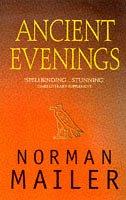
Seven hundred pages of Egyptian reincarnation, magic and bodily fluids that took him a decade. Widely considered his worst failure and defended by a determined minority; read it only if the earlier books have made you curious about the private cosmology.
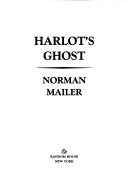
Thirteen hundred pages on the CIA, ending with the words TO BE CONTINUED for a sequel he never wrote. The most rewarding of the late novels if you have the stamina, and the one where the research does real work.
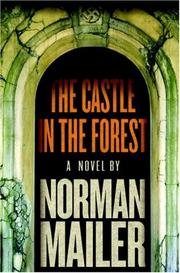
His last book, on Hitler's childhood, narrated by a demon. A strange, controlled, unexpectedly quiet finish to a very loud career, and the right final stop on the path.
Discussion
Keep reading
Paths that share books, cover the same subject, or open a related topic.