Becoming a Music Therapist: The Best Books, in Order
Music therapy is a clinical profession with a research base, not a description of listening to music because it helps. These books will tell you what a therapist actually does in a session, which theoretical traditions exist and how they disagree, and what the evidence supports for particular populations. What they cannot tell you is how to qualify, because credentialing is national: in the United States it runs through an approved degree plus board certification, in the United Kingdom through HCPC registration, and elsewhere through other bodies entirely. Check the requirements with the professional association in your own country and use this path to decide whether the work itself is what you want.
What Music Therapy Actually Is
BeginnerGet an accurate picture of the profession's scope, history and clinical claims before committing to a degree.
▸ Study plan for this stage
Pace: 6–8 weeks for about 860 pages: Davis, Gfeller and Thaut's An Introduction to Music Therapy (379 pages) is a textbook and takes three weeks read chapter by chapter; Bunt's Music Therapy (240 pages, now co-written with Brynjulf Stige — its second-edition record displays simply as Music Therapy) takes
- The profession's scope: what a qualified music therapist does, in which settings, and under whose supervision
- The history of the field's professionalisation and why it matters that this is a clinical discipline with a research base rather than a description of music being helpful
- The difference between the American and British traditions in theory, training and typical practice — Davis and Bunt disagree substantively, not just nationally
- Active versus receptive methods as the field's basic division of practice
- Bruscia's definitional apparatus: what distinguishes therapy from music education, entertainment and medicine
- What the evidence base does and does not support, stated honestly, as Davis and his co-authors do
- Practice settings — medical, psychiatric, educational, community, rehabilitation — and how differently the work looks in each
- Describe what a music therapist does in a hospital, a special school and a psychiatric unit, and say what changes between them.
- Where do the American and British traditions actually differ, and what is each tradition's account of why the other is incomplete?
- What is Bruscia's definition of music therapy, and which practices does it exclude that you might have assumed were included?
- What claims about clinical effect does the evidence currently support, and for which populations is the evidence thinnest?
- What is the qualifying route in your own country, which body sets it, and what does it require beyond a degree?
- Take three practice settings described in Davis, Gfeller and Thaut and test each against Bruscia's definition. Where a real setting fails his test, work out whether the definition or the practice is the problem — that is the exercise Defining Music Therapy is designed to provoke.
- Read Bunt and Stige's account of British training beside Davis's account of American training and write a one-page comparison of what a graduate of each is assumed to be able to do on day one.
- Write down, on one page, the specific requirements of the qualifying body in your own country — degree accreditation, supervised clinical hours, certification exam, registration — with the source for each. No book on this list can do this for you and every one of them says so.
- Draft the answer you would give in an interview to 'what do you think therapy is', in three sentences, using Bruscia's distinctions. Redraft it after stage three and compare.
Next up: With the profession's scope and its definitional arguments in view, the next stage moves inside the session itself — how one is planned, run and written up.
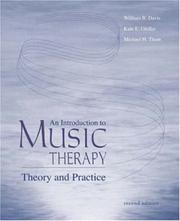
Davis, Kate Gfeller and Michael Thaut wrote the standard American survey and it is the book most degree programmes assign first. Start here for the profession's history, its practice settings and an honest account of what the research does and does not show.
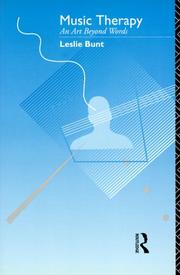
The British counterpart, now co-written with Brynjulf Stige, and worth reading alongside Davis because the two national traditions differ substantially in theory and training. The catalogue record for this second edition displays simply as Music Therapy.

Bruscia takes the definitional question seriously across a whole book, which sounds academic until you sit in an interview and are asked what you think therapy is. Read it third, once you have two concrete surveys to test his distinctions against.
Inside a Session
BeginnerUnderstand how a session is planned, run and documented, and the difference between active and receptive methods.
▸ Study plan for this stage
Pace: 8–10 weeks for about 1,160 pages, and the three books here are very different in kind. Hanser's The New Music Therapist's Handbook (296 pages) is the practical one and takes two weeks — read it first if you want to know what the job looks like on a Tuesday morning. Bruscia's Improvisational Models o
- Assessment: what you observe, what you record, and how an initial assessment becomes a treatment goal
- Goal-writing and documentation as clinical skills, including how outcomes are described for a multidisciplinary team
- Session structure — opening, working, closing — and the reasons behind each part
- Clinical improvisation as a set of distinguishable techniques rather than a single skill, which is the whole burden of Bruscia's survey
- The comparative dimensions Bruscia uses to hold twenty-five models against each other: who leads, what the music is for, what counts as a therapeutic event
- Receptive work: song listening, relaxation, vibroacoustic methods, and Guided Imagery and Music as its most developed form
- Why active and receptive methods are usually taught as counterparts, and what each is indicated for
- The gap between a session plan and a session, and what Hanser recommends doing about it
- Walk through planning a first session for a named referral: what do you assess, what do you prepare, and what do you write down afterwards?
- Name four of Bruscia's improvisational models and state, for each, what it takes the therapeutic mechanism to be.
- What is Guided Imagery and Music, what training does it require, and why is it not something to attempt from a book?
- How would you document a session for a clinical record that a doctor and a teacher will both read?
- For a given clinical goal, how do you decide between an active and a receptive method?
- Write a full session plan and a post-session note using Hanser's templates for one hypothetical referral, then rewrite both after reading Bruscia to see what you would now do differently.
- Use Bruscia's own comparative dimensions to build a table of five improvisational models side by side. His book is the only place these are laid out comparably and the table is the thing you will actually keep.
- Take three of Grocke and Wigram's receptive techniques and prepare the materials each requires — the specific music, the timing, the script — as if for a real session. The preparation is where the difference between receptive work and putting a record on becomes obvious.
- Pick one clinical goal and design both an active and a receptive intervention for it, then write a paragraph justifying which you would use first and why.
Next up: Knowing how a session runs, you can now read the theoretical schools as competing accounts of what was happening in it.
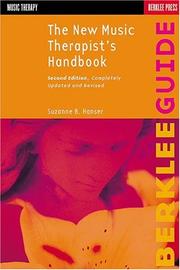
The most practical book in the path: assessment, goal-writing, session structure and documentation. If you want to know what the job looks like on a Tuesday morning, read this before anything theoretical.
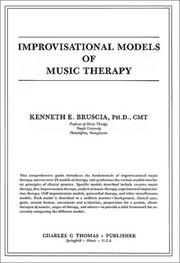
Bruscia's survey of twenty-five improvisational approaches side by side, which is the only place the differences between the schools are laid out comparably. Dense, but it saves you from mistaking one tradition for the whole field.
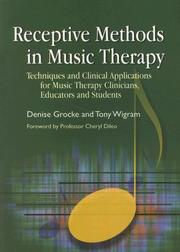
Grocke and Tony Wigram on the other half of practice — listening-based methods, including Guided Imagery and Music. Placed after Bruscia because receptive work is usually taught as the counterpart to improvisation.
The Major Traditions
IntermediateDistinguish the main theoretical schools and understand what each claims music is doing therapeutically.
▸ Study plan for this stage
Pace: 10–12 weeks for about 1,440 pages, all of it theoretical. Nordoff and Robbins's Creative Music Therapy (384 pages, the primary source, revised by David Marcus) takes three weeks and should be read before any commentary on it — the clinical case material is the argument. Aigen's Music-Centered Music
- Nordoff-Robbins creative music therapy: the two-therapist model, clinical improvisation as the treatment itself, and the case-study evidence base it rests on
- The music-centred position — that the musical experience is the therapy rather than a route to non-musical goals — which is the sharpest theoretical claim in the field
- What is at stake in that claim for goal-writing, funding and outcome measurement, which is why it divides practitioners rather than merely interesting them
- Community music therapy's challenge to the individual-treatment model: groups, institutions and public performance as the work rather than as an adjunct
- Stige's culturally situated account of musical meaning, and its consequence that no technique transfers unchanged between populations
- The tension between a manualised, transferable method and a practice whose advocates say meaning is local
- How each tradition would describe the same session differently — the schools disagree about what the therapeutic event is
- Reading advocacy as advocacy: each of these authors is a participant in the dispute they are describing
- What does creative music therapy claim is happening in a clinical improvisation, and what evidence do Nordoff and Robbins offer?
- State Aigen's music-centred thesis precisely. What does it commit a therapist to when writing goals for a funder?
- What is Pavlicevic and Ansdell's objection to the consulting-room model, and what do they propose instead?
- If Stige is right that musical meaning is culturally situated, what follows for the manualised protocols you will read in the next stage?
- Which of these four positions is most compatible with the evidence-based-practice framework, and which is least?
- Take one case from Nordoff and Robbins and write out what happened, then rewrite the same case as Aigen would describe it and again as Pavlicevic and Ansdell would. The three accounts of one session are the clearest statement of the disagreement.
- Build a four-column table — Nordoff-Robbins, music-centred, community, culture-centred — with rows for: what music is doing, who the client is, and what counts as a good outcome.
- Return to the session plan you wrote in the previous stage and rewrite its goals twice: once in music-centred terms and once in conventional non-musical clinical terms. Note which version a funder would accept.
- Read Stige's argument against a specific technique from Grocke and Wigram that you had planned to use, and decide in writing whether you still would.
Next up: The theoretical positions in hand, the last stage turns to specific clinical populations and asks how strong the evidence for any of this actually is.
Nordoff and Clive Robbins founded the improvisational tradition that carries their name, and this is the primary source, revised by David Marcus. Read it before the commentaries — the clinical case material is the argument.

Aigen's articulation of the position that the musical experience itself is the therapy rather than a route to non-musical goals. It is the sharpest theoretical claim in the field and the one that most divides practitioners.
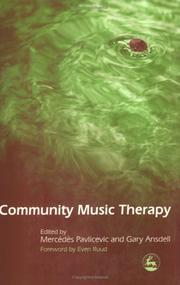
Pavlicevic and Gary Ansdell on the move out of the clinic and into groups, institutions and public performance. Read it as the challenge to the individual-treatment model the earlier books assume.

Stige's argument that music's meaning is culturally situated, which undercuts any claim that a technique transfers unchanged between populations. The natural theoretical endpoint of this stage.
Populations and the Evidence Base
BeginnerSee how the method is applied to specific clinical populations and how strong the evidence actually is.
▸ Study plan for this stage
Pace: 6–8 weeks for about 895 pages. Thaut's Rhythm, Music, and the Brain (247 pages) first and slowly, over two to three weeks — it is a scientific monograph and the neuroscience is the reason the next book's protocols look the way they do. The Handbook of Neurologic Music Therapy (392 pages), edited by
- Rhythmic entrainment as the mechanism underneath neurologic music therapy — motor timing, gait and speech
- The difference between a mechanism established in a laboratory and a clinical effect established in a trial
- Standardised, manualised protocols as an outlier in this profession, and what standardisation makes possible in research terms
- Why a manualised intervention is worth studying even if you never work in rehabilitation: it shows what a testable music therapy looks like
- Dementia as the population most often cited to prospective students, and the actual state of evidence there
- The gap between observed in-session engagement and durable clinical outcome, which Aldridge's contributors are careful about and press coverage is not
- How to read an edited volume: chapters vary in evidential quality and the editor's framing is not a warranty
- Reconciling this stage's protocols with the previous stage's argument that meaning is culturally situated
- How does rhythmic auditory stimulation affect gait, and what is the proposed neural mechanism as Thaut states it?
- Pick one protocol from the neurologic handbook and describe its indication, its procedure and its documented outcome measure.
- What does the dementia evidence actually support — engagement during sessions, mood, agitation, cognition — and where does the evidence stop?
- Why is manualisation rare in this profession, and what would the music-centred and culture-centred camps say against it?
- If a prospective employer asked you to justify a music therapy post on evidence, which populations would you cite and which would you not?
- Trace one neurologic music therapy protocol from the handbook back to the mechanism Thaut describes in Rhythm, Music, and the Brain, and write the two-sentence rationale a physician would accept.
- Take three chapters from Aldridge's dementia volume and, for each, write down what was measured, in how many people, and over what period. The variation between chapters in a single edited book is the exercise.
- Write the honest paragraph you would give a family asking whether music therapy will help a relative with dementia — including what it will not do. Then check it against what Aldridge's contributors actually claim.
- Set one neurologic protocol beside the culture-centred argument from the previous stage and write out how you would defend using it with a client from a musical culture other than the one it was developed in.
- Having finished the path, revisit the qualifying requirements you wrote down in stage one and decide, in writing, whether this work is what you want.
Next up: This closes the path: the reading has told you what the profession is, how a session runs, what the schools argue about and what the evidence supports, leaving only the qualifying route, which is set by your national body and not by any book.
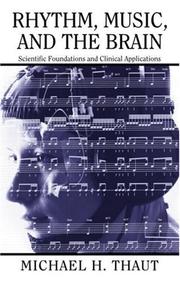
The neuroscientific foundation for neurologic music therapy — rhythmic entrainment, motor timing and speech. Read it before the clinical handbook; it explains why the techniques are expected to work.

Thaut and Volker Hömberg's protocol-by-protocol clinical manual, and the most standardised material in the profession. Useful whether or not you intend to work in rehabilitation, because it shows what a manualised music therapy looks like.

Dementia is the population most often cited to prospective students, so it is worth reading a full edited volume rather than press coverage. Aldridge's contributors are careful about the gap between observed engagement and durable clinical outcome.
Discussion
Keep reading
Paths that share books, cover the same subject, or open a related topic.