Best Books to Become a Museum Curator, in Order
This curriculum builds a deep, professional-grade understanding of museum careers by moving from core museum studies theory and practice, through the specialized disciplines of curatorial work and collections management, and finally into career strategy and leadership. Because the learner starts at an intermediate level, the path skips introductory surveys and dives straight into canonical professional texts, each stage adding a new layer of expertise that the previous one makes possible.
Museum Studies Foundations
IntermediateEstablish a rigorous conceptual and ethical framework for how museums function as institutions — their purpose, politics, and professional culture — so that later technical reading has meaningful context.
▸ Study plan for this stage
Pace: 4–5 weeks, ~25–30 pages/day, with 2–3 days per week reserved for reflection and exercises
- Museums as social institutions with explicit missions, governance structures, and accountability to multiple stakeholders (public, donors, boards, communities)
- The museum experience as a constructed encounter: how design, curation, and institutional choices shape visitor meaning-making and engagement
- Historical evolution of museum purpose—from cabinets of curiosity and elite repositories to public institutions with educational and social mandates
- The politics of representation: how museums select, interpret, and display objects; whose stories are told and whose are omitted
- Professional ethics and standards in museum work, including stewardship, access, and the responsibility to communities and collections
- Visitor-centered thinking: understanding diverse audiences, learning outcomes, and the psychological/emotional dimensions of museum visits
- The relationship between institutional identity, collection philosophy, and curatorial decision-making
- Museums as sites of power and cultural authority—the ethical tensions between preservation, interpretation, and social responsibility
- What are the core functions of a museum as a social institution, and how do mission statements operationalize these functions?
- How has the primary purpose of museums changed from the 18th century to the present day, and what drove these shifts?
- What is the 'museum experience,' and what factors (institutional, design-based, psychological) influence how visitors construct meaning from it?
- What ethical obligations do museums have to their communities, collections, and diverse audiences, and where do these obligations sometimes conflict?
- How do curatorial choices about acquisition, display, and interpretation reflect and reinforce institutional values and power dynamics?
- What does it mean to practice 'visitor-centered' museum work, and how does this approach challenge traditional curatorial authority?
- Visit a local museum and document the mission statement, governance structure, and stated educational goals; compare these to the actual visitor experience you observe—where do they align or diverge?
- Read a museum's collection policy or acquisition guidelines and analyze what values and assumptions are embedded in their selection criteria; identify what types of objects or stories might be systematically excluded
- Conduct informal interviews with 3–5 museum visitors (or reflect on your own visits) about what they remember, what surprised them, and what they learned; map these responses against the museum's stated learning outcomes
- Create a comparative timeline of how one museum type (e.g., art, natural history, science) has redefined its purpose and audience over the past 100 years, using primary sources (annual reports, mission statements) where possible
- Design a small exhibition label or interpretive text for a real or imagined object, then critique your own choices: Whose perspective does it center? What context is missing? How might different audiences interpret it differently?
- Attend or watch a recorded panel discussion, lecture, or podcast episode featuring museum professionals discussing a contemporary ethical issue (repatriation, decolonization, accessibility); document the competing values and stakeholder perspectives at play
Next up: This stage grounds you in the institutional logic, ethical frameworks, and visitor psychology that underpin all museum work, preparing you to engage with specialized technical reading on collections management, exhibition design, and curatorial practice with a clear understanding of *why* these practices matter beyond mere procedure.
A classic, widely-used primer on museum theory and practice that defines core vocabulary — collections, interpretation, exhibition, registration — giving the intermediate learner a shared professional language before diving into specializations.

Shifts focus to the visitor and meaning-making, a perspective every curator must internalize; reading it second grounds exhibition thinking in audience outcomes rather than object-centric assumptions.

Surveys the full history and typology of museums, providing the institutional and historical literacy needed to understand why curatorial and collections roles evolved the way they did.
Collections Management & Registration
IntermediateMaster the professional standards, legal frameworks, and day-to-day systems that govern how collections are acquired, documented, cared for, and made accessible — the backbone of any curatorial or registrarial career.
▸ Study plan for this stage
Pace: 8–10 weeks, ~25–35 pages/day. Start with "Museum Registration Methods" (weeks 1–5, ~200 pages), then "A Legal Primer on Managing Museum Collections" (weeks 6–10, ~250 pages). Build in 1–2 review days per week.
- Registration as the foundational documentation system: how accession numbers, catalog records, and metadata create institutional memory and legal proof of ownership
- The acquisition process: gift, purchase, and loan procedures; due diligence and provenance research; legal and ethical vetting before an object enters the collection
- Intellectual property and rights management: understanding copyright, moral rights, reproduction rights, and how to document and enforce them for collection items
- Legal frameworks governing collections: title, ownership, liability, deaccessioning ethics and legality, and the role of institutional policies in protecting both objects and the museum
- Collection care standards and legal obligations: how proper storage, conservation, and handling reduce institutional liability and fulfill fiduciary duties to donors and the public
- Accessibility and use policies: balancing public access with preservation, managing loans and reproductions, and documenting restrictions and permissions
- Risk management and institutional governance: insurance, indemnification, board oversight, and how registration systems protect the museum legally and operationally
- What is the purpose of an accession number and catalog record, and how do they serve as both a curatorial and legal tool?
- Walk through the steps of acquiring an object via gift, purchase, and loan—what due diligence and documentation is required at each stage?
- What are the key intellectual property rights you need to understand and document for a museum collection, and why does this matter for public access and reproduction?
- Under what circumstances can a museum legally deaccession an object, and what ethical and legal obligations must be met?
- How do collection care standards and conservation practices reduce institutional liability and fulfill the museum's duty of care?
- What is the relationship between a museum's registration system and its insurance, indemnification, and risk management strategy?
- Create a mock accession record for a donated object (real or imagined): include accession number, donor information, provenance research summary, condition assessment, and storage location. Compare your record against Buck's standards.
- Research and document the copyright and reproduction rights for a real artwork or artifact (use museum websites or archives). Identify who holds rights, what restrictions apply, and how the museum may legally use the image.
- Draft a gift agreement for a hypothetical donation, including conditions, restrictions, and the museum's right to deaccession. Reference Malaro's legal framework and compare against sample agreements from real museums.
- Conduct a provenance research exercise: trace the ownership history of a well-known artwork or object with a complex past (e.g., Nazi-looted art, colonial artifacts). Document gaps, red flags, and how a museum would handle acquisition.
- Design a collections management policy for a small hypothetical museum, covering acquisition, accessioning, care, loans, and deaccessioning. Ground it in both Buck's practical systems and Malaro's legal requirements.
- Analyze a real museum's collections access policy (available on many museum websites). Identify how it balances preservation, public access, intellectual property, and liability—and critique it using concepts from both books.
Next up: This stage equips you with the legal, ethical, and operational infrastructure of collections stewardship; the next stage will build on this foundation to explore how curators use these systems to interpret, exhibit, and share collections with audiences.

The definitive field manual for collections registration, used in museum studies programs worldwide; it establishes the authoritative standards and procedures that curators and registrars must know cold.
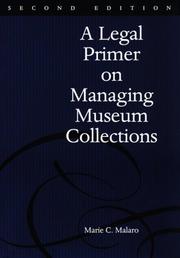
Collections work is inseparable from legal and ethical obligations; this canonical text on acquisitions, loans, deaccessioning, and intellectual property should follow registration methods to show the policy layer behind the procedures.
Curatorial Practice & Exhibition-Making
IntermediateDevelop a sophisticated, hands-on understanding of how exhibitions are conceived, argued, designed, and evaluated — the core creative and intellectual work of a curator.
▸ Study plan for this stage
Pace: 8–10 weeks, ~40–50 pages/day, with 1–2 weeks between books for reflection and exercises
- The curator as author and interpreter: how curators construct meaning through selection, arrangement, and narrative framing rather than simply displaying objects
- Exhibition as argument: exhibitions communicate ideas and provoke interpretations; they are not neutral presentations but deliberate intellectual and aesthetic propositions
- The exhibition cycle: conception, research, design, installation, and evaluation as interconnected stages that inform each other
- Spatial and sensory design in exhibitions: how layout, lighting, color, typography, and visitor flow shape understanding and emotional response
- Audience engagement and interpretation: strategies for making exhibitions accessible while maintaining intellectual rigor; the role of labels, guides, and interactive elements
- Institutional and practical constraints: budgets, conservation requirements, building limitations, and stakeholder interests as real forces shaping curatorial decisions
- Critical evaluation of exhibitions: methods for assessing whether an exhibition achieved its intellectual and aesthetic goals with its intended audience
- What is the distinction between a curator as a collector versus a curator as an author, and how does this distinction shape exhibition-making?
- How do curators construct and communicate an argument or thesis through an exhibition, and what are the risks of imposing too narrow an interpretation?
- Describe the major stages of exhibition development from conception to evaluation, and explain how decisions made in one stage affect the others.
- How do spatial design elements—layout, lighting, color, and visitor flow—influence how audiences understand and experience an exhibition?
- What strategies can curators use to balance scholarly rigor with accessibility for diverse audiences, and what are the trade-offs involved?
- How do practical constraints such as budget, venue architecture, and conservation requirements shape curatorial choices, and how can curators work creatively within these limits?
- Analyze an existing exhibition (in person or via documentation): identify the curator's apparent thesis, trace how the spatial arrangement supports or complicates that thesis, and evaluate whether the exhibition succeeds in communicating its argument to different visitor types.
- Design a mini-exhibition on a topic of your choice (8–12 objects or artworks): write a curatorial statement, create a floor plan with annotations on spatial flow and sight lines, and draft interpretive labels that balance accessibility with intellectual depth.
- Conduct a visitor study: spend 1–2 hours observing how people move through and interact with an exhibition; note where they pause, which labels they read, and what questions they ask; reflect on what this reveals about the exhibition's effectiveness.
- Critique an exhibition label or interpretive text: assess whether it clarifies or obscures the curator's argument, whether it speaks to multiple knowledge levels, and how it shapes visitor interpretation.
- Create a detailed exhibition proposal (5–10 pages) including: a curatorial thesis, a list of 15–20 key works, a preliminary floor plan, a budget outline, and an evaluation framework for assessing success.
- Interview a museum professional (curator, designer, educator, or conservator) about how their role shapes exhibition decisions; synthesize their insights into a brief reflection on the collaborative nature of curatorial practice.
Next up: This stage grounds you in the intellectual and practical foundations of exhibition-making; the next stage will likely deepen your expertise in specialized curatorial domains (e.g., contemporary art, historical narratives, community engagement, or digital/virtual exhibitions) and prepare you to lead curatorial projects independently.

A sharp, critical history of the modern art museum and the curator's evolving role within it; reading this first in the stage provides the intellectual and ideological stakes of curatorial decision-making.
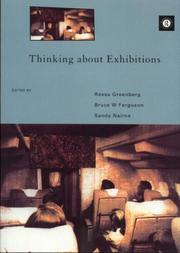
An essential anthology of critical essays on exhibition history and theory, building the analytical vocabulary needed to evaluate and design exhibitions with scholarly rigor.

Moves from theory to practice, covering the full exhibition development process from concept through installation and evaluation — the practical counterpart to the critical readings that precede it.
Career Strategy & Professional Identity
ExpertUnderstand how museum careers are actually built — navigating the job market, developing a professional identity, advancing into leadership, and contributing to the field's evolving conversations about equity and relevance.
▸ Study plan for this stage
Pace: 8–10 weeks, ~25–30 pages/day, with 1–2 weeks per book for deep engagement and reflection
- Museum career pathways and entry strategies: understanding diverse roles (curatorial, education, conservation, administration) and realistic routes into the field
- Professional identity development: how to position yourself as a museum professional, build networks, and establish credibility within the field
- Institutional change and innovation: recognizing how museums are reinventing themselves in response to social, technological, and cultural pressures
- Equity, access, and relevance: understanding the field's evolving conversations about who museums serve, whose stories are told, and how to contribute meaningfully to these shifts
- Leadership and advancement: strategies for moving beyond entry-level roles, influencing institutional direction, and becoming a change agent
- Navigating institutional politics and constraints: understanding how to work effectively within museum structures while advocating for meaningful change
- Building a sustainable career: balancing passion with practical realities, managing burnout, and finding long-term fulfillment in museum work
- What are the major career pathways in museums, and what are realistic entry points for someone at different stages of their career?
- How do you develop and communicate a professional identity in the museum field, and why does this matter for career advancement?
- What does 'reinvention' mean in a museum context, and what are the key drivers pushing museums to change their practices and missions?
- How are museums addressing equity and inclusion, and what role can individual professionals play in advancing these conversations?
- What strategies can emerging museum professionals use to navigate institutional constraints while still advocating for meaningful change?
- How do successful museum leaders balance innovation with institutional stability, and what skills are essential for advancement into leadership roles?
- Career mapping exercise: Research 5–7 museum professionals (via LinkedIn, museum websites, or published interviews) working in different roles. Document their career paths, transitions, and how they describe their professional identity. Identify patterns and potential entry points for your own trajectory.
- Personal positioning statement: Draft a 1-page professional statement articulating your unique value as a museum professional—your expertise, values, and vision for how museums should evolve. Refine this as you read and reflect.
- Institutional audit: Select one museum you know or are interested in. Analyze how it is (or isn't) addressing equity, access, and relevance based on its public-facing materials, programming, and stated mission. Identify one concrete change you would advocate for and why.
- Reinvention case study: Choose one museum mentioned in *Reinventing the Museum* or another museum undergoing significant change. Research the change initiative in depth—what problem was it solving? Who championed it? What resistance did it face? Write a 3–4 page analysis.
- Networking and mentorship plan: Identify 3–5 museum professionals you admire or want to learn from. Develop a realistic plan to connect with them (informational interviews, conferences, professional associations). Document what you hope to learn from each.
- Job market analysis: Research 10–15 current job postings in your target museum role(s). Identify recurring skills, qualifications, and institutional priorities. Compare these to your current skill set and create a development plan for gaps.
Next up: This stage equips you with a realistic understanding of how museum careers actually unfold and the field's current challenges and opportunities, preparing you to either specialize deeply in a particular museum discipline or explore how emerging technologies and methodologies are reshaping curatorial and educational practice.

A frank, practical guide to entering and advancing in the museum profession, covering job searching, networking, and career paths across departments — best read after building substantive disciplinary knowledge.
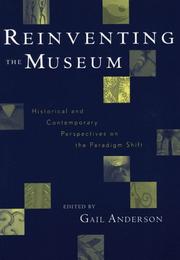
An anthology of landmark essays on institutional transformation, diversity, and the museum's social contract; reading it last challenges the learner to think critically about what kind of curator and leader they want to become.
Discussion
Keep reading
Paths that share books, cover the same subject, or open a related topic.