Michael Moorcock books in order: where to start with Elric and the Eternal Champion
Moorcock's Eternal Champion multiverse is one story told through many incarnations, and the reissue history has produced at least four incompatible orderings — chronological within the multiverse, order of composition, the Millennium omnibus grouping and the current Saga volumes — none of which agree. The practical answer is to read Elric in the sequence Moorcock himself endorsed for reading rather than for writing, finish that arc, then sample a second Champion, then meet Jerry Cornelius, who is the same figure turned inside out, and then read the novels outside the multiverse entirely, which is where Moorcock's reputation as a literary writer actually rests.
Elric, in the order to read him
IntermediateFollow the albino emperor of Melnibone from his throne to the edge of his story, in the internal-chronology sequence the modern editions use, and understand what Moorcock was writing against in 1960s heroic fantasy.
▸ Study plan for this stage
Pace: Three to four weeks for five short books. Elric of Melniboné is 192 pages, The Sailor on the Seas of Fate 172, The Weird of the White Wolf 160, The Vanishing Tower 183 and The Bane of the Black Sword 160 — none of them is more than a couple of evenings, and reading two a week is comfortable. Read th
- Elric as the deliberate inversion of the pulp barbarian hero: an albino emperor, physically weak, drug- and sorcery-dependent, intelligent, and the ruler of a decadent empire he despises. Moorcock wrote him explicitly against Robert E. Howard's Conan.
- Stormbringer, the sword that feeds on souls and gives Elric his strength — a dependency rather than a weapon, and the mechanism by which everyone he loves is eventually killed.
- The Eternal Champion premise: a single figure incarnated across many worlds, fated to serve the Balance whether he wants to or not. The Sailor on the Seas of Fate states it explicitly by putting three other incarnations on the same ship.
- Law, Chaos and the Cosmic Balance as a cosmology in which neither side is good, and the Champion's job is to restrain whichever is winning.
- The multiverse as Moorcock's organising idea, and the reason the Elric books connect to everything else on this path.
- Composition history visible on the page. The Weird of the White Wolf collects the earliest stories, written in 1961; its prose is rawer and its plotting more episodic than the two later-written books that now precede it.
- The sack of Imrryr and the death of Cymoril in The Weird of the White Wolf as the events that define Elric for the rest of the sequence — everything after is aftermath.
- Moorcock's speed of composition as an aesthetic fact rather than an excuse: many of these were written in days, and the resulting energy and unevenness are both part of what the books are.
- What is Elric an inversion of, specifically? Name the conventions he breaks and the ones he keeps.
- What is the relationship between Elric and Stormbringer? Who is using whom, and does the answer change across the five books?
- The Sailor on the Seas of Fate introduces the multiverse explicitly. What has that done to the stakes of the Elric story by the end?
- Law and Chaos are not good and evil. What are they, and what does the Balance actually require?
- Where can you hear the difference between the 1961 stories and the 1972 novels? Give a specific passage from each.
- Elric of Melniboné was written to introduce a character who already existed. What does it establish that the earlier stories assumed?
- Keep a tally of every named character close to Elric and how each one dies. The list is the argument of the sequence and you will want it complete before Stormbringer.
- Read the first chapter of Elric of Melniboné and the first chapter of The Weird of the White Wolf back to back and write down the differences in sentence length, vocabulary and pacing. That is eleven years of a writing career in two pages.
- Track every mention of the Balance, Law and Chaos across the five books, noting who says it and what they want. The cosmology is delivered by interested parties, not by a narrator.
- In The Sailor on the Seas of Fate, list the other Champions who appear, what each one is, and what the encounter tells Elric about himself. Keep it — you will match Corum against it in stage 3.
Next up: Five books of aftermath have brought Elric to the end of what he can lose, and the next book is the ending Moorcock wrote to make the whole sequence mean something.

The starting point in every modern reading order, though it was written a decade after the stories that follow it: Elric on the Ruby Throne, physically dependent on drugs and sorcery, ruling a decadent empire he despises. Read it first — it is the introduction Moorcock wrote once he knew what the character had become. Published as Elric of Melnibone, with an accent on the final e.
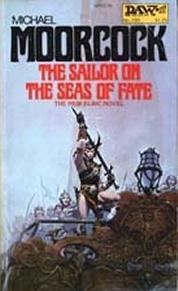
Elric meets three other incarnations of the Eternal Champion aboard a ship crossing between worlds. Second in order and the book that first states the multiverse premise explicitly — read it before deciding whether the wider Champion cycle interests you, because this is the argument for it.
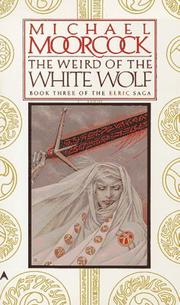
The sack of Imrryr and the death of Cymoril: the events that define Elric for the rest of the sequence, collected from the earliest stories Moorcock wrote about him in 1961. The prose is rawer here than in the two books above, which is the composition history showing through.
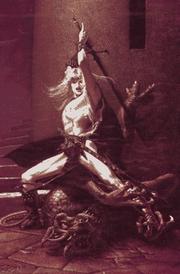
Elric wandering the Young Kingdoms with the sword Stormbringer and the growing knowledge of what it costs him. Fourth in the reading order; also published as The Sleeping Sorceress in some editions.

The penultimate volume, gathering the last of the wandering stories and introducing Elric's final companions. Read directly before Stormbringer, which it sets up.
Where Elric ends
IntermediateFinish the arc with the novel that gives the sword its name and that ends not just the character but his world.
▸ Study plan for this stage
Pace: One week. Stormbringer is 294 pages, longer than any of the five volumes before it, and it should be read in as few sittings as possible — it is an apocalypse and the pacing depends on momentum. Read it directly after The Bane of the Black Sword. It ends Elric, Melniboné and the entire cycle of that
- The refusal of the heroic ending as the book's whole point, and the reason the Elric books mattered to fantasy: the hero does not save the world, and what he does instead is the argument.
- Stormbringer's final revelation about what the sword is, which recasts every earlier book — the dependency you have been tracking since stage 1 turns out to have been a different relationship than either Elric or the reader assumed.
- Apocalypse as a structural choice rather than a set piece. Moorcock ends a world, permanently, at a point in the history of the genre where nobody did that.
- The cost accounting completed. Every death you have been tallying since Elric of Melniboné pays into this ending.
- The Balance resolved, or not, and what the resolution says about the Law and Chaos cosmology — the Champion's service is shown to be to something that does not care about him.
- The influence, which is easier to see backwards: the doomed antihero, the sentient cursed weapon and the world-ending finale all enter fantasy from here.
- Chronology and the later Elric books. The Fortress of the Pearl and The Revenge of the Rose are insertions into a sequence that has already been definitively closed, and reading them first defuses the ending.
- What is Stormbringer, on the evidence of the final chapters? Go back and identify the earliest point in the sequence where that answer was available.
- Moorcock refuses the heroic ending. What exactly does Elric achieve, and at what price?
- What happens to the Balance, and is the outcome a victory for anyone?
- Reread your tally of deaths from stage 1. Which of them look different now, and why?
- Why should The Fortress of the Pearl and The Revenge of the Rose be read after this rather than in chronological place?
- Complete the death tally you started in stage 1 and write one paragraph on what the finished list makes the sequence about.
- Find the earliest passage in the six books where the truth about Stormbringer is available to a careful reader, and quote it. Moorcock plays fairer than his reputation suggests.
- Write out the final two pages' events as a plain summary, then write a paragraph on what a conventional heroic-fantasy ending would have done instead at each beat.
- List three later fantasy works you know that use the doomed antihero or the sentient cursed weapon, and identify what each borrowed and what it softened.
Next up: With one Champion's story finished, the next stage runs the same premise again with a different incarnation, which is the fastest way to see what is formula and what is Elric.
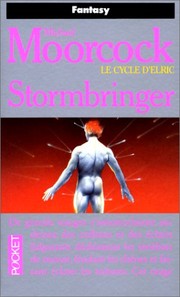
The apocalypse: the end of Elric, of Melnibone, and of the entire cycle of that world. Moorcock wrote it as a deliberate refusal of the heroic ending, and it is the reason the Elric books mattered to fantasy. Two later novels, The Fortress of the Pearl and The Revenge of the Rose, were written afterwards and slot into gaps earlier in the sequence; read them only if you want more, and never before this.
A second Champion
IntermediateSee the Eternal Champion conceit working across a different incarnation, and judge whether the multiverse rewards further reading or whether Elric was the point.
▸ Study plan for this stage
Pace: Ten days to two weeks. The Knight of the Swords is 143 pages and The Queen of the Swords 152; King of the Swords has no page count in this record and is a comparable short volume. The Swords trilogy is genuinely one book in three parts and should not be broken up — read all three inside a fortnight.
- Corum Jhaelen Irsei as the direct comparison piece to Elric: last of a slaughtered elder race, the same Champion archetype, the same structure, a colder tone and a different relationship to his own doom.
- The Sword Rulers as an explicitly hierarchical cosmology — three Chaos lords to be defeated in sequence — which makes the Swords trilogy the most schematic thing on this path and therefore the clearest view of the machinery.
- The Hand of Kwll and the Eye of Rhynn: replacement body parts that are also weapons and also curses, occupying the same structural slot Stormbringer occupies for Elric.
- Genocide and the last-survivor premise, which Moorcock uses to give Corum a motive Elric never has — Elric destroys his own people, Corum's are destroyed for him.
- Chaos and Law reappearing with the same names and different local rules, which is the multiverse premise doing actual work: the cosmology recurs, the details do not.
- Speed of composition as a visible property. Moorcock wrote at a pace that produced structural cleanliness and prose flatness together, and the Swords trilogy is the purest example.
- Where the Corum books connect explicitly to the wider multiverse, which happens most directly in King of the Swords and is the payoff for reading them after Stormbringer.
- The formula question this stage exists to answer: with two Champions in hand, you can say which elements are the Eternal Champion and which were Elric.
- What does Corum have that Elric does not, and vice versa? Answer structurally, not by personality.
- The Sword Rulers are defeated in sequence. What does that schematic shape gain and lose against Elric's aftermath structure?
- The Hand and the Eye do the job Stormbringer does. Compare them: what kind of dependency is each?
- Corum's people were destroyed by others; Elric destroyed his own. What does each premise let Moorcock write?
- Having read both, state in one sentence what the Eternal Champion actually is as a literary device.
- Build a two-column comparison of Elric and Corum across ten rows — origin, race, weapon, dependency, patron power, companions, relation to Chaos, ending, prose register, page count — and mark which rows are Champion and which are character.
- Take the list of other Champions from The Sailor on the Seas of Fate that you made in stage 1 and check Corum against it. Does he fit the description given there?
- Read the opening chapter of The Knight of the Swords and the opening of Elric of Melniboné and describe what Moorcock does differently when he is writing fast.
- Mark every explicit multiverse connection in King of the Swords and say what each one is for.
Next up: If the Champion can be a Melnibonéan emperor and a mutilated elder-race survivor, the next stage asks what happens when Moorcock rewrites him as a pop star in a collapsing London.

Prince Corum Jhaelen Irsei, last of a slaughtered elder race, in the first book of the Swords trilogy. The most direct comparison piece to Elric — same structure, colder tone, and written at speed in the early 1970s, which shows in both directions.

Corum against the second of the Sword Rulers. The trilogy is genuinely one book in three parts and should not be broken up.

The conclusion, and where the Corum sequence connects most explicitly to the wider multiverse. If you want a third Champion after this, Hawkmoon begins with The Jewel in the Skull.
Jerry Cornelius
IntermediateMeet the Eternal Champion as 1960s London antihero, in the experimental novels that are Moorcock's most formally ambitious and least like the fantasy he is known for.
▸ Study plan for this stage
Pace: Two to three weeks for two books, and both should be read slowly despite their length. The Final Programme is 168 pages and The Condition of Muzak 240, but these are the most formally difficult books on the path — fragmentary, non-linear, deliberately discontinuous, and resistant to being read for p
- Jerry Cornelius as the Champion archetype rewritten as pop-cultural pastiche: physicist, assassin, rock star, dandy, moving through a collapsing London with the same structural role Elric has and none of the tragic apparatus.
- The New Worlds context. This is where Moorcock the magazine editor takes over from Moorcock the pulp writer — the Cornelius books belong to the British New Wave, and their formal ambition is the point rather than a flourish.
- Fragmentation as method: cut-up-adjacent structure, interpolated news clippings and advertisements, scenes that contradict each other, and a protagonist who dies and reappears without explanation.
- The shared-character experiment. Moorcock invited other writers to use Cornelius, which makes the character deliberately unstable across texts — an anti-property, and a direct comment on the ownership of series characters.
- The Condition of Muzak as the volume that resolves the sequence, and what it resolves into: failure, class and English self-mythology rather than a spy plot. It won the Guardian Fiction Prize.
- The reveal that the earlier fantasy was compensatory. The Cornelius sequence turns out to be about a young man in an unglamorous life, which retroactively recasts the multiverse as something other than cosmology.
- 1960s London as the actual subject: Notting Hill, the music business, the end of the decade's promise, and Moorcock's ambivalence about all of it.
- The connection to the rest of the path, which is real rather than decorative: Cornelius is another incarnation, and reading him after Elric and Corum is what makes the joke and the argument legible.
- How is Jerry Cornelius the same figure as Elric? Give three structural correspondences that survive the change of register.
- The Final Programme is discontinuous by design. What is the discontinuity doing, and what would a linear version lose?
- What does The Condition of Muzak reveal, and what does the revelation do to your reading of The Final Programme?
- Moorcock let other writers use Cornelius. What does an intentionally unstable character allow that a stable one does not?
- The Cornelius books are about class and English self-mythology. Where does that show most clearly in The Condition of Muzak?
- Is the multiverse in these books a cosmology or a metaphor? Does Moorcock let you decide?
- Read The Final Programme once for texture without trying to follow the plot, then again taking notes. Write down what the second reading gave you and what it did not.
- Map Cornelius onto your Elric and Corum comparison table from stage 3. The rows that will not fill in are the point of the exercise.
- Take one chapter of The Final Programme and list every non-narrative element — clippings, lists, advertisements, fragments — and describe what each is doing to the reading experience.
- After The Condition of Muzak, reread the first twenty pages of The Final Programme and note every passage that now reads as compensation rather than as event.
- Write a paragraph arguing that the Cornelius books are the key to the whole multiverse, and then a paragraph arguing they are a joke at its expense.
Next up: The Cornelius books already leave genre behind halfway; the last stage is the three books where Moorcock leaves it entirely, and where the case for him as a major English novelist is made.
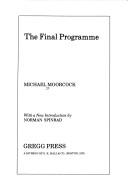
The first Jerry Cornelius novel: a physicist-assassin-rock-star in a collapsing London, told in fragments. It is the same Champion archetype as Elric, deliberately rewritten as pop-cultural pastiche, and it is where Moorcock the New Worlds editor takes over from Moorcock the pulp writer. A warning about the catalogue record — Open Library files this under a marketplace string referencing the film title The Last Days of Man on Earth; the book is The Final Programme.

The fourth Cornelius novel and the one that won the Guardian Fiction Prize — the point where the sequence resolves into something about failure, class and English self-mythology rather than about a spy. Read it after The Final Programme; the two middle volumes, A Cure for Cancer and The English Assassin, sit between them and are worth having but are not required to follow this.
Moorcock outside the multiverse
IntermediateRead the three novels that established Moorcock as a serious literary writer, and see how little they need any of the above.
▸ Study plan for this stage
Pace: Five to six weeks. Behold the Man is 144 pages and reads in two sittings — start here, since it is the shortest and sharpest way to see what Moorcock could do without genre furniture. Gloriana is 378 pages of deliberately mannered prose written in homage to Mervyn Peake, and it is slow going by desi
- Behold the Man's premise executed without hedging: the historical inquiry produces nothing, and the protagonist's response is the novel. It is theologically serious in a way its premise does not advertise.
- Compulsion and self-fulfilment as Moorcock's real subject in Behold the Man, and its continuity with the Eternal Champion — a man who becomes the figure he went looking for is the Champion premise stripped of cosmology.
- Gloriana as sustained stylistic performance: an alternate Elizabethan England written in a deliberately archaic and ornamented register, in explicit homage to Peake's Gormenghast.
- The court as a machine, and the queen's private frustration as the engine of a public allegory about statecraft, sexuality and rule.
- The Gloriana revision as a fact about the book's history: the original ending's handling of a rape scene drew criticism and Moorcock rewrote it, which makes the novel a rare case of an author publicly changing a text in response to that objection. Both versions have been discussed; the revised one i
- Mother London as an entirely realist novel apart from its premise — the telepathy is the only fantastic element and it is used to license a chorus rather than a plot.
- London itself as the subject: the Blitz, the postwar decades, redevelopment and loss, rendered through three characters who move through time non-chronologically.
- The case Mother London makes for Moorcock as a major English novelist rather than a genre writer, and the fact that the whole path has been building to a book with almost no genre in it.
- In Behold the Man, what does Glogauer find, and what does he do? State the loop precisely.
- How is Behold the Man's ending a version of the Eternal Champion premise?
- Gloriana is written in a borrowed register. What does the Peake homage let Moorcock say about the court that plain prose could not?
- Mother London's telepathy is its only fantastic element. What does it enable structurally, and could the novel work without it?
- How does Mother London handle time, and what does the non-chronological structure do to forty years of London?
- Taking the whole path: is there one writer here, or several? What, if anything, is constant from Elric to Mother London?
- Read Behold the Man in one sitting and immediately write a page on where its structure matches the Elric sequence and where it departs.
- Take one page of Gloriana and rewrite a paragraph of it in plain modern prose, then compare. The exercise makes the stylistic argument concrete in a way analysis does not.
- Read about the Gloriana revision and, without adjudicating, write down what each version's ending commits the novel to.
- Chart Mother London's chronology: take one character and put their scenes in date order, then compare that sequence with the order Moorcock prints them in. Describe what the reordering achieves.
- Complete the Champion comparison table you have been building since stage 3 by adding Glogauer and, if you can justify it, one Mother London character. Then write a two-page assessment of what the Eternal Champion turned out to be.
- Write a final paragraph recommending a first Moorcock to three different readers — one who wants fantasy, one who wants the New Wave, one who wants a literary novel — and justify each choice.
Next up: The path closes with the strongest case for Moorcock as an English novelist: from here Byzantium Endures opens the Pyat quartet, An Alien Heat opens the Dancers at the End of Time, and the Hawkmoon books beginning with The Jewel in the Skull are the next Champion sequence if you want one.
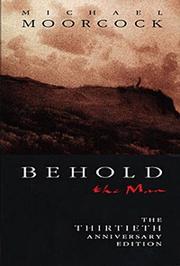
A time traveller goes back to find the historical Jesus and discovers there is nobody there to find. Winner of the Nebula in its novella form, and the shortest and sharpest way to see what Moorcock could do outside genre furniture. Start here.
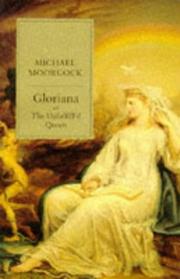
An alternate Elizabethan England, written in deliberate homage to Mervyn Peake, and winner of both the World Fantasy and John W. Campbell awards. Note that Moorcock revised the ending in later editions after criticism of a rape scene's treatment; the revised text is the one now in print. Catalogued with its full title, Gloriana, or, The unfulfill'd queen.
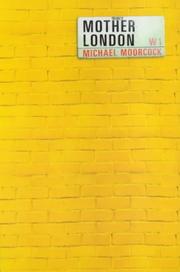
Three psychiatric patients who can hear the city's thoughts, and forty years of London from the Blitz onward. Booker-shortlisted, entirely realist apart from its premise, and the book Moorcock's admirers reach for when arguing he is a major English novelist. Closes the path. From here, Byzantium Endures opens the Pyat quartet and An Alien Heat opens the Dancers at the End of Time.
Discussion
Keep reading
Paths that share books, cover the same subject, or open a related topic.