Elric of Melnibone Reading Order: Where to Start with Michael Moorcock
Michael Moorcock wrote Elric's ending first. The 1960s novellas that became Stormbringer came before the origin novels, so publication order and Elric's own chronology are two different reading experiences and there is no consensus about which is better. This path takes Elric's internal chronology, because it is the more comprehensible first pass, but marks clearly where each book was actually written and points out the collection whose contents overlap the reordered novels. The albino emperor who kills his own civilisation with a sword that eats souls is a deliberate rebuttal of Conan and of Tolkien, and it reads better when you know that.
The beginning Moorcock wrote last
BeginnerStart with Elric's origin, written after his death had already been published.
▸ Study plan for this stage
Pace: Three to four weeks, 524 pages. These are short books by modern standards — Elric of Melniboné (1972) is 192 pages, The Sailor on the Seas of Fate (1976) is 172, and The Weird of the White Wolf (1977) is 160, the shortest book in the path — so each is two or three evenings. Read them in this order,
- The compositional inversion: Moorcock published Elric's ending in the 1960s and wrote the origin novels a decade or more later, so these books are prequels written to a fixed destination
- Melniboné itself — a decadent, cruel, dying empire, and Elric as its ambivalent emperor rather than its hero
- Stormbringer as a character rather than a weapon: a black blade that consumes souls and feeds strength to a physically weak albino who needs drugs or the sword to function
- Law and Chaos, the Cosmic Balance, and the Eternal Champion structure that connects Elric to Moorcock's wider work
- Elric as a deliberate rebuttal of Conan and of Tolkien — an anti-hero who destroys his own civilisation, written against the muscular and the pastoral traditions at once
- The Sailor on the Seas of Fate as the book that makes the multiverse explicit, with Elric meeting other incarnations of the Champion
- That The Weird of the White Wolf is a collection of 1960s stories reordered into the new chronology, not a novel
- What does Elric want at the start of Elric of Melniboné, and why does the answer make him unlike a conventional fantasy protagonist?
- What is the relationship between Elric and Stormbringer — who depends on whom, and how does the dependency change across these three books?
- What are Law and Chaos, and does the saga treat either as good?
- What happens in 'The Dreaming City', and why does knowing it was written in 1961 change how you read the origin novel you have just finished?
- How does The Sailor on the Seas of Fate introduce the multiverse, and what does it do to the stakes of Elric's own story?
- Read 'The Dreaming City' in The Weird of the White Wolf, then reread the closing chapters of Elric of Melniboné and list every element in the origin novel that exists to set up that 1961 story
- Track every use of Stormbringer across the three books and record what it costs Elric each time; the ledger is the saga's actual plot
- Note the publication date of each individual story in The Weird of the White Wolf against its position in the chronology, and mark where the reordering creates a continuity seam
- Write down what a Conan story and a Tolkien chapter would each do with Elric's situation, then find the passage where Moorcock is most obviously answering one of them
Next up: With the origin, the multiverse and the sword established, the next stage is the episodic middle where Elric simply wanders — the part the chronology holds together and publication order does not.

The origin novel: the last emperor of a decadent island empire, his cousin's coup, and the bargain that follows. Written in 1972, a decade after Elric's ending. Our catalogue holds it under the accented spelling Elric of Melnibone.
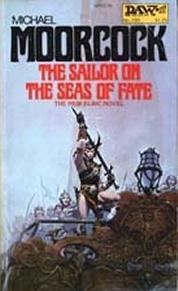
Elric pulled across worlds to fight alongside other incarnations of the Eternal Champion, which is where Moorcock's multiverse becomes explicit. Read it second in chronology and treat it as the key to his whole body of work.
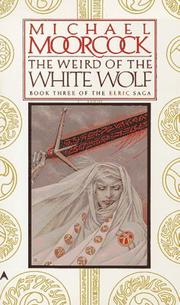
The sack of Imrryr and the loss that defines the rest of the saga. This volume is a reassembly of earlier magazine stories, so its contents overlap The Stealer of Souls in the third stage; that is a feature of the publishing history, not a duplicate purchase.
The wandering years
IntermediateFollow the middle of Elric's chronology, where the saga is most episodic.
▸ Study plan for this stage
Pace: Two weeks, 343 pages — the lightest stage in the path. The Vanishing Tower (originally published in 1970 as The Sleeping Sorceress) is 183 pages and The Bane of the Black Sword (1977) is 160, and both are assembled from shorter magazine pieces rather than conceived as novels — expect episodes rather
- The episodic construction of this middle stretch and why it feels loose — these are stitched serials, and the seams are visible
- Moonglum as Elric's companion, and the function of a cheerful sidekick beside a doomed protagonist
- Theleb K'aarna as a recurring antagonist across both books, and the pursuit that supplies what continuity there is
- The Vanishing Tower's multi-Champion sequence, and how it deepens the Eternal Champion framework introduced in The Sailor on the Seas of Fate
- The Bane of the Black Sword as the run-up: the point at which the drift stops and the ending begins to close in
- The one-title-two-names problem, which recurs throughout the Elric bibliography
- What actually connects the episodes in these two books — a plot, an antagonist, or only Elric himself?
- What is Moonglum for, structurally, and what would these books be without him?
- How do the multi-Champion sequences change the scale of the story, and do they help or dilute it?
- Which of these episodes were originally standalone magazine stories, and can you tell from the text?
- At the end of The Bane of the Black Sword, what has been set in motion that cannot now be stopped?
- Break both books into their component episodes and date each one from a bibliography; the resulting list explains most of the unevenness you will have noticed
- Track Theleb K'aarna's appearances and write down what each encounter accomplishes — the answer, more often than not, is nothing, and that is worth being able to say
- Compare a Moonglum scene with an equivalent scene from stage one where Elric is alone, and describe what the companion does to Moorcock's prose register
- Note every point in these two books where Elric could plausibly abandon Stormbringer and does not, and what reason the text gives each time
Next up: The next stage is the ending Moorcock wrote before any of this, followed by the original collection that shows how the material was reordered around it.
Elric hunting Theleb K'aarna, and the most ordinary stretch of the saga. Published in the United Kingdom as The Sleeping Sorceress, which is a separate record in our catalogue for the same book.

The last of the reassembled 1960s material before the ending, and the volume in which the sword's cost becomes unavoidable rather than deferred.
The ending, and the stories as first published
IntermediateRead the conclusion Moorcock wrote first, and then the original collection to see how the material was reordered.
▸ Study plan for this stage
Pace: Five weeks, 752 pages. Stormbringer (1965) is 294 pages and is the conclusion — the book Moorcock wrote first, and the destination everything so far has been arranged around. The Stealer of Souls (1963) is 458 pages, much the longest book in the first four stages: it contains the earliest Elric stor
- Stormbringer as apocalypse: the Chaos incursion, the end of the Young Kingdoms, and the final revelation about the sword's nature
- That this was written before the origin novels, and how much of the later material exists to justify what happens here
- The Cosmic Balance resolved, and what Moorcock's cosmology requires of an ending
- The Stealer of Souls as a publication-order artefact: the same character, before the saga had a shape imposed on it
- The overlap problem — several stories appear in both The Stealer of Souls and the reordered volumes, so you will be rereading material under different arrangements
- What the reordering gained in coherence and lost in strangeness
- What is finally revealed about Stormbringer, and does the revelation follow from the origin novel or was it retrofitted?
- How does the world end, and what does Moorcock's cosmology require to happen afterwards?
- Which stories in The Stealer of Souls also appear elsewhere in this path, and how were they resequenced?
- Reading the 1963 and 1965 material after the 1970s novels, what does the early Elric have that the later one does not?
- Having now read the ending, was chronological order the right choice — and what would publication order have given you instead?
- Build a two-column table of every Elric story you have read so far, with composition date in one column and chronological position in the other; the shape of that table is the saga's central peculiarity
- Identify the stories duplicated between The Stealer of Souls and the reordered volumes, and compare any textual differences between the two printings
- Reread the first chapter of Elric of Melniboné immediately after finishing Stormbringer and mark every line that only works if you already know the ending
- Write a paragraph making the case for publication order as the better first reading, using specific evidence from the two 1960s books
Next up: The story is finished, which is exactly why the next stage is interesting: three books Moorcock wrote afterwards and inserted into gaps in a chronology that already had an ending.
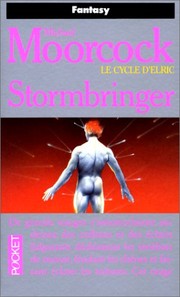
The apocalypse: the end of Elric, the sword and the world. Written in 1965, before every book above it in this path. It is the reason the saga exists and it does not disappoint.
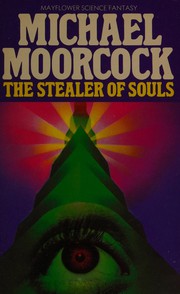
The original 1963 collection of the earliest Elric stories, in the order readers first met them. Read it after Stormbringer as a document of how the saga was actually assembled; its contents substantially overlap the third and fifth books above.
The later insertions
IntermediateRead the novels Moorcock wrote decades afterwards and slotted into gaps in the existing chronology.
▸ Study plan for this stage
Pace: Four weeks, 648 pages. The Fortress of the Pearl (1989) is 240 pages and The Revenge of the Rose (1991) is 233, both written decades after the saga concluded and slotted into gaps within the existing chronology. Elric at the End of Time (1984) is a shorter collection of 175 pages, and is the outlier
- Interstitial novels: books written to fit between existing ones, which cannot change any outcome and must generate their interest elsewhere
- Moorcock's prose in 1989 against his prose in 1963 — the later books are more considered, denser and slower, and the difference is unmissable
- The Fortress of the Pearl's dreamthief material, which introduces a concept the modern continuations will build on
- The Revenge of the Rose's fuller engagement with the multiverse and with Elric's father
- Elric at the End of Time as deliberate tonal disruption, and Moorcock's willingness to treat his own creation comically
- The structural constraint of a prequel written after a published ending, and what freedoms it does still have
- What can an interstitial novel do that the original sequence could not, given it cannot alter any outcome?
- How has Moorcock's prose changed between 1963 and 1989, on specific evidence?
- What are dreamthieves, and why does the concept matter for the following stage?
- What does The Revenge of the Rose add about Elric's father and about the multiverse structure?
- Is Elric at the End of Time consistent with the saga, and does it need to be?
- Place both novels precisely in the chronology — between which earlier books does each fall — and check what each one has to leave exactly as it found it
- Set a page of The Fortress of the Pearl beside a page of The Stealer of Souls and describe the differences in sentence length, vocabulary and pacing; this is the clearest measure of twenty-six years
- Track the dreamthief concept from its introduction here and hold it for the next stage, where it becomes central
- Read Elric at the End of Time last and write down whether it damages, deepens or simply sits beside the saga — the answer is genuinely contested among readers
Next up: The final stage follows Elric into Moorcock's twenty-first-century writing, which is a different kind of book with a different set of concerns.
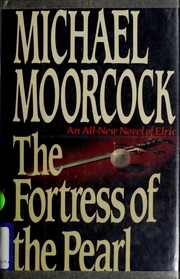
A 1989 novel dropped into a gap early in the chronology, and the best of the late additions. Read it after the original saga so you can see what a mature Moorcock does with the same character.

A 1991 insertion, stranger and more baroque than the sixties material. The point at which the saga stops being sword and sorcery and becomes something closer to a dream.
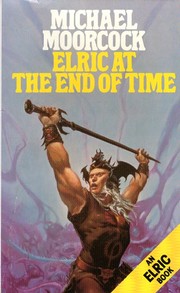
A short collection including the title story, in which Elric collides with Moorcock's Dancers at the End of Time and the tone turns comic. A palate cleanser, and a demonstration of how loosely the multiverse is held.
The modern continuations
IntermediateFollow Elric into Moorcock's twenty-first-century work, which is a different kind of book.
▸ Study plan for this stage
Pace: Nine to ten weeks, and these are the longest books in the path by some margin. The Moonbeam Roads trilogy — The Dreamthief's Daughter (2001) at 460 pages, The Skrayling Tree (2003) at 405 and The White Wolf's Son (2005) at 386 — comes to 1,251 pages and must be read in that order; any one of them is
- The von Bek family as Moorcock's other long-running vehicle, and the merging of the two sequences
- Ulric von Bek as a twentieth-century Eternal Champion incarnation, and Oona the dreamthief's daughter as the link back to the previous stage
- Historical fiction entering the multiverse: real twentieth-century atrocity as material rather than as backdrop, which is a considerable tonal departure
- The Moonbeam Roads themselves as a device for moving between worlds and periods
- The Citadel of Forgotten Myths as an old writer returning to an early creation, and what fifty years does to a character
- Why many readers stop after Stormbringer, and what the argument for continuing actually is
- How does Moorcock connect the Elric sequence to the von Bek books, and does the join hold?
- What is Oona's relationship to the previous stage's material, and why is the dreamthief concept load-bearing here?
- What is the effect of setting a multiverse fantasy inside the documented history of Nazi Germany, and what risks does it run?
- How do these books differ in pace and preoccupation from the 1960s Elric, and is the difference age, ambition or genre?
- Having read the whole path, what is your answer to the question it began with: chronological order or publication order for a first reading?
- Chart the incarnations across the trilogy — Elric, Ulric, Oona and the rest — and mark which chapters belong to which, since the braiding is where readers most often lose the thread
- Compare the treatment of a battle in The Skrayling Tree with one in Stormbringer and describe what forty years changed in how Moorcock stages violence
- Read The Citadel of Forgotten Myths against Elric of Melniboné, both set early in Elric's life and written fifty years apart, and list what the later book assumes the reader already knows
- Complete the composition-date table you started in the third stage with every book in stages four and five; the finished table is the single most useful object this path produces
- Write the reading-order recommendation you would now give a first-time reader, stating plainly which order you chose, why, and what it costs
Next up: This completes the path: Elric's own chronology from origin to apocalypse, the original 1960s stories that show how the material was reordered, the later insertions, and the modern continuations — with every book's composition date recorded so the other reading order remains available to you.
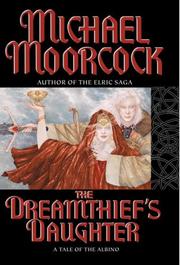
Elric entangled with a twentieth-century German aristocrat and the rise of Nazism. The first of a modern trilogy and a sharp change of register from everything above.
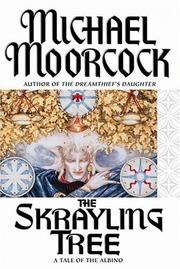
The middle volume, moving into pre-Columbian North America. Read only in sequence; unlike the classic saga, this trilogy really is continuous.
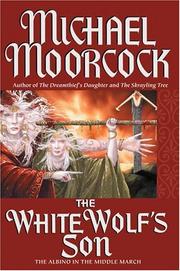
The conclusion of the modern trilogy, and the point where Moorcock ties the Elric material to his wider multiverse most explicitly.
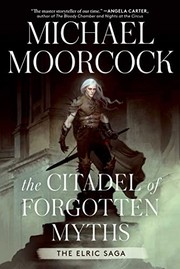
A 2022 novel set in a gap between the early books, written sixty years after Stormbringer. The last stop, and best read as a coda rather than as part of the saga proper.
Discussion
Keep reading
Paths that share books, cover the same subject, or open a related topic.