Start with Elric of Melniboné. It is a proper short novel rather than a fix-up of magazine stories, it establishes Melniboné, Cymoril and Yyrkoon before the sword does its work, and it is the first volume in the numbering every current edition uses. Read the six Elric books in the order they are listed here and you are reading the sequence the publishers now print.
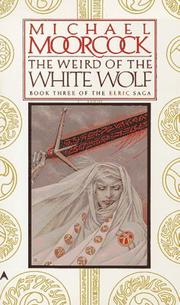
That recommendation is contested, and the counter-case is real. Elric of Melniboné was written in 1972, more than a decade after the character first appeared. In publication order you would begin with the material collected in The Weird of the White Wolf, where Elric arrives fully formed and immediately does the thing he is famous for — leading a raid that destroys his own city. Readers who came to Elric that way argue the prequel drains the mystery: the 1972 novel explains a character who worked better unexplained. Both cases hold. Take the prequel first anyway, because the cost of the other route is confusion and the cost of this one is only a little less surprise.
The Elric sequence
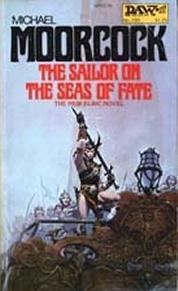
Elric of Melniboné, The Sailor on the Seas of Fate, The Weird of the White Wolf, The Vanishing Tower, The Bane of the Black Sword, Stormbringer. Elric is the albino emperor of a decadent, cruel empire, dependent on drugs and then on a sentient sword that feeds on souls, including those of people he loves. The arc ends, definitively, in Stormbringer — Moorcock wrote an ending and meant it.
Be aware that three of these six are not novels. The Weird of the White Wolf, The Vanishing Tower and The Bane of the Black Sword are collections of the early magazine stories arranged into a running order. They read as episodes.
The edition trap
This is the practical hazard with Moorcock, and it costs people money. The Elric material has been repackaged repeatedly — as these six paperbacks, as the six-volume Chronicles of the Last Emperor of Melniboné with added material and a different arrangement, and as various omnibuses. Mixing editions produces duplicated stories and gaps. Pick one edition family and stay in it. Two later Elric novels, The Fortress of the Pearl and The Revenge of the Rose, are not in this catalogue at all.
Corum, and what the Eternal Champion actually is
Moorcock's heroes are incarnations of one figure recurring across a multiverse, and the books point at each other. Corum is the most accessible of the other incarnations and the best-constructed of the trilogies: The Knight of the Swords, The Queen of the Swords, The King of the Swords, all published in 1971. A second Corum trilogy exists and is not here. Read Corum second.
Jerry Cornelius: the hard wall
The Final Programme and The Condition of Muzak are the first and last of the Cornelius Quartet; the middle two, A Cure for Cancer and The English Assassin, are missing from this list, which matters more than usual because the quartet is cumulative. Cornelius is the Eternal Champion as 1960s London dandy, and the books are deliberately anti-narrative — fragmentary, satirical, time-scrambled, actively resisting summary. The Condition of Muzak won the Guardian Fiction Prize and is the one critics rate highest. Neither is a starting point, and plenty of readers who love Elric bounce off both.
The books that stand alone
Behold the Man sends a damaged modern man back to first-century Judaea and lets him become the crucifixion he went to observe; the novella version won a Nebula Award and the expanded novel is short and unsparing. Gloriana is an Elizabethan-analogue court fantasy dedicated to Mervyn Peake and a World Fantasy Award winner — and its original ending, which resolves a rape, was criticised sharply enough that Moorcock revised it in later editions, saying he had got it wrong. Check which text you are buying. Mother London is his literary novel, three psychiatric outpatients remembering the Blitz and after, shortlisted for the Whitbread Prize, and the book most likely to be admired by readers who have no interest in fantasy at all.
Where to stop
Elric and Corum is a complete Moorcock education for most people: nine books, one clear arc each. Add Mother London whether or not you liked them. Moorcock wrote extremely fast — he has said some of these were drafted in a matter of days — and it shows in both directions: they move, and the prose is uneven. Browse more author orders on Discover, or see the Michael Moorcock hub.
Follow the full ordered path here: Michael Moorcock books in order: where to start with Elric and the Eternal Champion.