Maya Angelou Reading Order: All Seven Autobiographies, in Sequence
I Know Why the Caged Bird Sings is volume one of seven, and most readers never find out the other six exist. The autobiographies cover roughly fifty years, from a childhood in segregated Arkansas to a nightclub career, to Ghana, to the assassinations of Malcolm X and Martin Luther King, and they are genuinely sequential: each opens where the last one stopped. This path reads all seven in order, then adds the two books of counsel and the poetry, which is the half of her work that the memoirs tend to overshadow.
Volume One
BeginnerRead the book everybody knows, and register that it ends when Angelou is seventeen — which is the fact that makes the rest of the path necessary.
▸ Study plan for this stage
Pace: One to two weeks. I Know Why the Caged Bird Sings runs to about 280 pages and is written in short, self-contained chapters that make it easy to read twenty or thirty pages an evening. Two chapters are hard going — the assault at eight and the silence that follows it — and there is no reason to read
- The book closes when Angelou is seventeen, holding her newborn son. It is not a life; it is the first instalment of one, and almost every reader who stops here does so believing otherwise
- Stamps, Arkansas, and Momma's store as the moral centre — the grandmother's authority, her handling of the white children who mock her, and what dignity under those conditions actually looked like
- The years of silence after the assault, and Mrs Flowers using literature to bring her back to speech. This is the origin story of the writer and it is told without any of the uplift a later writer would add
- Bailey, and the fact that the sibling relationship is the most sustained love story in the book
- The graduation chapter, in which a speaker's condescension turns a ceremony inside out and a song restores it — the most anthologised set piece in American autobiography for good reason
- Angelou's method: scene rather than summary, dialogue reconstructed at length, and a narrator who reports what the child felt without the adult correcting her
- That this is one of the most challenged and banned books in American schools, and precisely which chapters the challenges concern
- The distinction between the child's understanding at the time and the writer's understanding at the desk, which Angelou keeps deliberately unstable
- How old is Angelou on the last page, and what is she doing? Say it out loud — it is the fact this whole path rests on.
- What does Mrs Flowers actually do, and why does it work when the adults around her have failed? Be specific about the method rather than the kindness.
- The graduation chapter turns twice. Locate both turns and describe what each one does to the room.
- Momma's response to the white children outside the store is often read as either submission or victory. What does the text support, and does the child narrator understand it the same way the adult author does?
- Where can you see the narrator declining to explain something the reader wants explained? Angelou withholds a great deal and the withholding is a technique.
- Knowing this book has been repeatedly banned, what would you say to a challenge — using the text rather than a general principle?
- Write down the last date and the last age in the book on a card. Keep it in the front of volume two. It is the cheapest possible defence against the standard misreading that Caged Bird is the whole story.
- Read the graduation chapter twice: once for what happens, once counting how many pages Angelou spends on the ceremony before the speaker arrives. The proportion is the craft lesson.
- Take any two pages of dialogue and rewrite them as summary. Then compare. This is the fastest way to feel what Angelou's preference for scene actually buys her.
- Note every book, poem or piece of scripture named in the text. The list is longer than expected and it is the reading path that produced the writer — a second, hidden curriculum running underneath the first.
- Look up the standard summary of Angelou's life, then check it against what this volume actually covers. The gap is the next four hundred pages of your reading.
Next up: Volume one ends with a seventeen-year-old and a baby and no plan whatsoever, which is exactly the situation volume two opens on — and volume two is the book that proves the series is not an inspirational sequence.
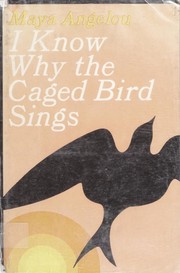
Stamps, Arkansas, the grandmother's store, the rape at eight and the years of silence that followed, and a pregnancy at sixteen. One of the most banned books in America and the only one of the seven most readers finish. It closes with a teenage mother holding her son, not with a life summed up.
The Young Woman: Volumes Two to Four
BeginnerFollow Angelou through the years she is least often credited with — cook, madam, dancer, calypso singer, touring performer — and see her refusing to sand the story into a moral.
▸ Study plan for this stage
Pace: Six to eight weeks for the three. Gather Together in My Name is the shortest at around 200 pages and should be read immediately after Caged Bird, with as little gap as possible — the continuity is the point. Singin' and Swingin' is the longest at nearly 290 pages and moves fastest, since much of it
- Gather Together in My Name covering ages seventeen to nineteen: waitressing, a brief period running a brothel, work as a dancer, and a close pass with heroin. Angelou refuses to sand any of it into a moral, which is why it is the least-read volume and the one that establishes the series' honesty
- The title's double meaning, and Angelou's stated reason for writing the volume — that young people should know a life can pass through this and continue
- Guy, her son, as the constant across all seven books, and the recurring cost of a working mother's absences — most sharply in volume three
- Volume three's European tour with Porgy and Bess: the first sustained experience of being treated as an artist, in countries where the racial arithmetic was different but not absent
- The convergence of the performing career with the writing life — Angelou is a singer, dancer and calypso performer for years before she is a writer, and the stage training is audible in the prose
- The Heart of a Woman as the pivot from private to public: the Harlem Writers Guild, organising work for Martin Luther King, and the company of writers who take her seriously as one
- Marriage to a South African freedom fighter and the move to Cairo, where the personal and the political become inseparable and the marriage does not survive the arrangement
- The pattern the three volumes establish: Angelou arrives somewhere with almost nothing, becomes competent at something unlikely, and leaves
- Gather Together in My Name is the volume readers most often skip. Having read it, what would be lost by skipping it — not morally, but structurally, in the shape of the series?
- Angelou describes the brothel period without either apology or bravado. Find a paragraph where you can see her choosing that register, and describe what she does with the sentences to hold it.
- In volume three, what does she gain from the Porgy and Bess tour, and what does it cost Guy? The book keeps both ledgers open.
- How does being abroad change what she notices about America? Compare a European passage with an equivalent one from the Arkansas chapters of volume one.
- In The Heart of a Woman, at what moment does she start being treated as a writer rather than a performer? Identify the scene.
- Across these three volumes, who teaches her? The named mentors are worth listing — the series is unusually explicit about apprenticeship.
- Start a single timeline document: year, her age, city, occupation, who she is with. Add to it as you read. By volume six it will be several pages and it is the only reliable way to hold seven instalments together.
- Read the opening page of Gather Together immediately after the closing page of Caged Bird, back to back. The seam is deliberate and demonstrates that these are chapters of one work rather than sequels.
- Pick the passage in volume two you found hardest to read and write 200 words on how Angelou tells it — tense, distance, how much the narrator judges. This is the technical question underneath the emotional one.
- In The Heart of a Woman, list every real historical figure who appears. Look up two you do not know. The volume is a genuine record of a movement and reads twice as well with the names filled in.
- Track Guy across the three volumes: his age, where he is living, and who is looking after him. Angelou never presents this as a tidy account, and following it is the closest thing the series has to a running argument with itself.
Next up: Volume four ends with Angelou in Africa with her teenage son, which is where the fifth volume — the best-written of the seven — begins, and where the question of what a homeland is stops being rhetorical.
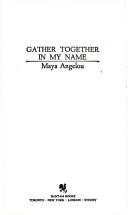
Ages seventeen to nineteen: waitressing, a brief period running a brothel, a stint as a dancer, and a near-miss with heroin. The most uncomfortable volume and the one that proves the series is not an inspirational sequence. Read it immediately after Caged Bird.
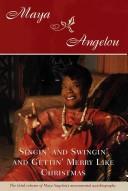
Her first marriage, a record deal, and a European tour with Porgy and Bess, plus the guilt of leaving her son behind. Volume three, and the point where the performing career and the writing life start to converge.
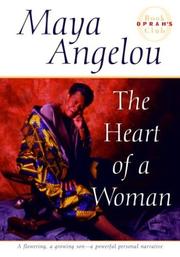
New York, the Harlem Writers Guild, organising for Martin Luther King, a marriage to a South African freedom fighter, and Cairo. Volume four, and the one where the private story becomes a public one.
Africa, Return and the Last Volume
IntermediateFinish the sequence, including the late seventh volume published thirty-four years after volume four, and see the whole shape of a life told in instalments across four decades.
▸ Study plan for this stage
Pace: Six to seven weeks. All God's Children Need Traveling Shoes is around 220 pages and is the volume to slow down for — it is the intellectual centre of the series and rewards fifteen pages an evening with notes. A Song Flung Up to Heaven is around 210 pages and covers the hardest events in the sequenc
- Four years in Ghana among American expatriates who had gone looking for a homeland, and the discovery that an African homeland does not straightforwardly accept an African American
- Malcolm X's circle in Accra, and Angelou's encounter with him as a working colleague rather than a symbol — one of the few first-hand accounts of that period of his thinking
- The book's central and uncomfortable finding: that the returning descendant is a foreigner, and that the recognition runs in only one direction
- The prose quality of volume five, which is the most controlled writing in the series and the strongest argument for reading past Caged Bird
- A Song Flung Up to Heaven returning her to America directly into the assassination of Malcolm X, the Watts riots, and then the assassination of Martin Luther King on her birthday
- The dinner-party dare at the end of volume six — the challenge that produced I Know Why the Caged Bird Sings — which means volume six closes exactly where volume one opens. This is why it cannot be read out of order
- Mom & Me & Mom retelling the entire sequence through Vivian Baxter: the mother who sent her away as a child, took her back, and became the central relationship of her adult life
- Reading the seventh volume last, from the far end of a life, and watching episodes you already know acquire a different cause
- What does Angelou expect Ghana to be, and what is it? Track the correction across the book — it happens gradually and she marks the stages.
- How does her account of Malcolm X differ from the public image of him? Be specific about what she observed rather than what she concluded.
- Volume five is often called the best written. Take a page and say why — sentence length, image density, how much is scene and how much is reflection.
- Volume six ends at the moment volume one began. What does that circular construction claim about the whole series?
- In Mom & Me & Mom, which episodes from earlier volumes are retold, and what changes in the retelling? At least three are worth identifying.
- Angelou published the last volume at eighty-four, thirty-four years after the fourth. Does it read as a continuation, a correction, or a different kind of book?
- Finish the timeline. All seven volumes, in one document. Then read it through in one pass — the shape of the life is not visible from inside any single instalment and this is the only way to see it.
- After volume six's final pages, reread the first chapter of Caged Bird. The series closes a circle and this is the reading that makes it land.
- Write 300 words on what Angelou found in Ghana, without using the word home. The constraint forces precision on the book's actual finding.
- Take one episode retold in Mom & Me & Mom — the sending away, the return, a moment of Vivian's practical help — and set the two versions side by side on a page. The differences are the point of the seventh volume existing.
- List, from all seven volumes, the jobs Angelou held. It is a long and improbable list and it is the most direct answer to anyone who knows her only as a poet.
Next up: The seven volumes are the private record; the essays and poems are the public voice most people actually know her by, and they read completely differently once you know which episode each line was paid for.
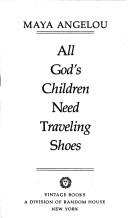
Four years in Ghana, working alongside Malcolm X's circle and discovering that an African homeland does not straightforwardly accept an African American. The best-written volume and the intellectual centre of the series.
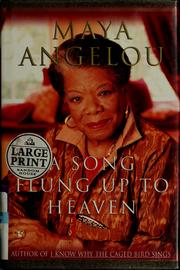
The return to America into the assassinations of Malcolm X and King, the Watts riots, and the dinner-party dare that produced Caged Bird. Volume six ends exactly where volume one begins, which is why it must be read here and not earlier.

The seventh and final volume, published when she was eighty-four, retelling the whole sequence through her relationship with the mother who sent her away and later took her back. Read last: it revises everything above from the far end of a life.
The Counsel and the Poems
IntermediateRead the two short books of essays and the poetry, which is where the public voice most people know Angelou for actually lives.
▸ Study plan for this stage
Pace: Three to four weeks, and none of it should be read straight through. Wouldn't Take Nothing for My Journey Now is 140 pages of very short essays and works best a few at a time over a fortnight. Letter to My Daughter is 166 pages of twenty-eight brief pieces and reads the same way. The poetry needs a
- Essays that are not autobiography but are paid for by it — nearly every piece of counsel in Wouldn't Take Nothing traces back to an episode in the seven volumes, and after the memoirs you can name most of them
- Letter to My Daughter addressed to a daughter she never had, which lets her write directly to a reader without either instructing or confessing
- The material in Letter to My Daughter that the memoirs skipped — several episodes appear here for the first and only time, which is a real reason to read it rather than treat it as an afterthought
- Just Give Me a Cool Drink of Water 'Fore I Diiie as the first collection, published a year after Caged Bird and a Pulitzer finalist: the same voice, compressed, and the public performer already fully present
- And Still I Rise as the collection carrying the two poems most people can quote, and the case for reading it whole rather than encountering those two in isolation
- The performance dimension: these poems were written by someone who had been a professional stage performer for twenty years, and they are built for a speaking voice rather than a page
- On the Pulse of Morning, read at a presidential inauguration, as the point where the private writer of volume one becomes a public national voice
- How much shorter the distance is than it looks between the seven-hundred-page memoir project and a sixteen-line poem — the same characteristic move, of scene and refusal, operating at different scales
- Take three pieces of counsel from Wouldn't Take Nothing and name the episode in the memoirs each one was earned by. If you can do it for all three, the path has worked.
- What can Letter to My Daughter say that the autobiographies could not? The address to an imagined reader changes what is sayable — find an instance.
- Read Still I Rise on the page and then aloud. What changes? Then ask what that tells you about how these poems were composed.
- Compare a poem from the first collection with one from And Still I Rise. What has changed in seven years, and what has not?
- The poetry is often treated as the lesser half of the work. Having read the memoirs first, do you agree — and is the comparison even the right one to make?
- On the Pulse of Morning was written for one occasion and one audience of millions. Does it survive being read alone, quietly, off a page?
- Read Phenomenal Woman and Still I Rise aloud, standing, at full volume, alone in a room. It is a slightly ridiculous instruction and it is the correct one; these poems were built for a body.
- Pick five essays from Letter to My Daughter and write one line each connecting them to a specific volume of the memoirs. Where you cannot find the connection, you have probably found one of the episodes she never put in the seven books.
- Copy out, by hand, the poem you like least. Handwriting a poem you are unconvinced by is the fastest way to find out whether the objection is to the poem or to its reputation.
- Go back to your seven-volume timeline and add the publication dates of the poetry collections. Seeing the poems and the memoirs interleaved rather than separated changes the picture of the career considerably.
- Choose the single book on this whole path you would hand to someone who has only read Caged Bird. Write a paragraph defending the choice. Most readers pick volume five; having a reasoned answer either way is a fair test of whether you read the sequence or completed it.
Next up: This is the end of the path. The natural next step is outward rather than onward — the writers Angelou names as her teachers in volumes one and four, read now that you know what she took from each of them.
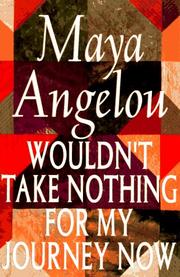
Very short essays on style, faith, rage and manners. Not autobiography, and best read after the memoirs, when you know which episode each piece of advice was paid for.
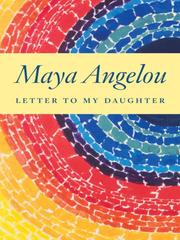
Twenty-eight brief pieces addressed to the daughter she never had, including some material the memoirs skipped. The gentlest book on the path and a fitting close to the prose.
Her first poetry collection, a Pulitzer finalist, published a year after Caged Bird. Read it here to see the same voice compressed, and to see how early the public performer was already present.
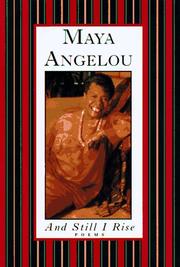
The collection containing the title poem and Phenomenal Woman, which are the two things most people can quote. Short and worth reading whole rather than in fragments.
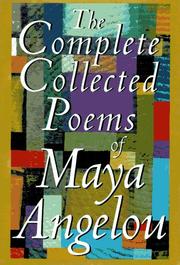
Everything in one volume, including On the Pulse of Morning, read at Clinton's inauguration. It duplicates both collections above, so choose this instead of them if you want a single book rather than the chronology.
Discussion
Keep reading
Paths that share books, cover the same subject, or open a related topic.