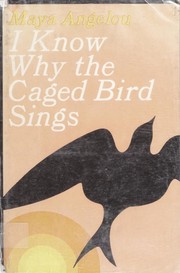
Start with I Know Why the Caged Bird Sings. It is the first of the seven autobiographies, it is the strongest of them, and — unusually for a first volume — it needs nothing from the books that follow. Read it alone and you have read a complete book.
The entry point most people actually reach for is the poetry, usually because one poem found them first. That is the weaker choice. Angelou's control of voice lives in the prose; the poems land harder once you can hear how she talks on the page.
The seven autobiographies, in sequence
I Know Why the Caged Bird Sings covers her childhood between Stamps, Arkansas and St. Louis. It contains a direct account of her rape at seven and the years of mutism that followed. Readers who want to know that in advance should know it.
Gather together in my name takes her from seventeen through her early twenties as a single mother, including a stretch working in and around prostitution. She refuses to soften any of it, and it is the volume that most often surprises readers who arrived expecting uplift.
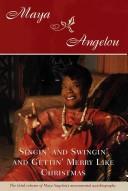
Singin' and swingin' and gettin' merry like Christmas covers her first marriage and the international tour of Porgy and Bess. The heart of a woman moves to New York and the Harlem Writers Guild, then to civil rights organising and a marriage that takes her to Cairo. All God's children need traveling shoes is the Ghana volume, and it is the one where the book's real subject — what it means to go looking for home — comes fully into focus.
A song flung up to heaven returns her to America in the years of the Malcolm X and King assassinations, and closes with her sitting down to write the first book. It is short and it is the bleakest.
Mom & me & mom was published last, decades after the others, and is the seventh. It doubles back over the whole sequence to look squarely at her mother, Vivian Baxter. Read in position, it works as an answer to questions the earlier books raise and refuse to settle.
Volumes four through six are generally held to be the weakest stretch. If you stall, that is why — and Mom & me & mom is worth jumping to regardless.
The essays, which are not autobiography
Wouldn't take nothing for my journey now and Letter to my daughter are short essay collections, not part of the seven, and they read very differently: aphoristic, addressed outward, closer to counsel than to narrative. Angelou had no daughter — the second is written to the daughters she never had — which is worth knowing before you open it.
Then the poetry
Just Give Me a Cool Drink of Water 'Fore I Diiie is the first collection, and the misspelling in that title is hers, not a catalogue error. And Still I Rise holds the two poems most readers already half-know. The complete collected poems of Maya Angelou gathers everything and is the efficient purchase if you want the whole body of work in one volume rather than tracking down individual collections.
One honest caveat about the form
Angelou said openly that she used a novelist's techniques on autobiographical material — compressing time, composing scenes, shaping dialogue. Scholars have argued for years about where exactly the line falls in these books. That argument is unresolved and worth carrying with you; it does not make the volumes less truthful, but it does mean you are reading a constructed narrative rather than a transcript.
For a reader with limited time: books one, two and seven. For a reader who wants the whole arc, the full ordered sequence is on the path below, along with where the essays and the poetry slot in.
Follow the full ordered path here: Maya Angelou Reading Order: All Seven Autobiographies, in Sequence.