Margery Allingham books in order: where to start with Albert Campion
The Albert Campion novels run from a 1929 thriller to the 1960s, and Campion changes almost beyond recognition across them — he begins as a silly-ass aristocrat in a Wodehouse register and ends as a serious man in a frightening London. Reading them in order is the only way that transformation makes sense.
Start here
BeginnerBegin at the beginning, and expect a thriller rather than a detective story.
▸ Study plan for this stage
Pace: One week, around 50 pages a sitting. The Crime at Black Dudley is a short 1929 thriller of 208 pages and moves fast; do not slow down for the detection, because there is very little.
- Campion appears as a minor character in his own first book, not as the hero
- The 1929 country-house thriller convention: a criminal gang, a ritual object, a house cut off
- The silly-ass aristocrat manner as a working disguise rather than a personality
- Abershaw's gang plot standing in for a detection plot
- Allingham's starting point is Edgar Wallace, not Dorothy L. Sayers
- Why beginning here is worth it even though it is the weakest book on the path
- Who is the actual hero of Black Dudley, and where does Campion sit in the structure?
- What conventions of the period thriller is Allingham writing inside?
- What does the silly-ass manner allow Campion to do that a serious manner would not?
- Which details introduced here are still paying off twenty years later?
- How much of the book is detection, and how much is chase?
- Note every line where Campion drops the ass manner, and write down what he says instead
- Count the pages of detection against the pages of action, then run the same count on Police at the Funeral and compare
- Read the first chapter aloud for the period register; the class comedy is carrying plot information
Next up: Having met Campion as a comic supporting player, you can watch the thirties books turn him into the centre of a real detective series.
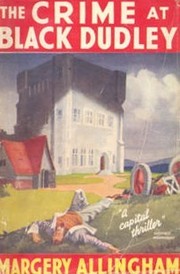
Campion's first appearance, and he is not even the hero — a country house, a ritual dagger and a criminal gang. Closer to Edgar Wallace than to Sayers.
The thirties
BeginnerWatch the series find its real form.
▸ Study plan for this stage
Pace: 2-3 weeks, one novel a week at roughly 250 pages each. Note that publication order runs Police at the Funeral (1931) then Sweet Danger (1933); read them that way if you want the development in sequence.
- Amanda Fitton's first appearance in Sweet Danger, and what she becomes to the series
- The Faraday household in Police at the Funeral: a closed family as a murder engine
- The move from thriller to genuine detection between the two books
- Lugg as comic counterweight and class commentary
- Ruritanian adventure surviving alongside domestic realism
- Campion becoming a person rather than a mask
- What makes Police at the Funeral the first genuinely serious book in the sequence?
- How does Amanda function in Sweet Danger, and what makes her more than a love interest?
- Where do the Black Dudley thriller conventions still show through?
- How much of the Faraday case turns on character rather than on physical clues?
- Which of the two books would you hand to a Sayers reader, and why?
- Read the first Amanda scene in Sweet Danger closely, then check what the later books on this path assume you already feel about her
- List the Faraday deaths as they occur and what each reveals about the household, then hold your list against the solution
- Reread the opening of Black Dudley beside the opening of Police at the Funeral and mark the change in what Allingham thinks a scene is for
Next up: The thirties books establish the family-in-a-house pattern that the postwar novels break open into a whole city.
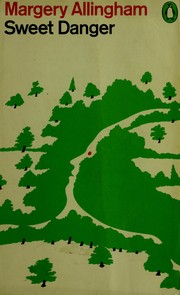
A lost European principality, a missing charter, and the first appearance of Amanda Fitton, who matters enormously later.
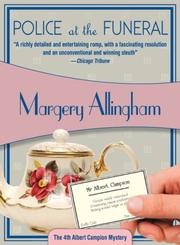
A poisonous Cambridge household in which several elderly relatives are dying. The first genuinely serious book in the sequence.
The postwar novels
IntermediateThe books where Campion, and Allingham, become something else entirely.
▸ Study plan for this stage
Pace: About 3 weeks. More Work for the Undertaker is deliberately hard to follow across its 255 pages, so give it a fortnight and keep a list of names; The Tiger in the Smoke is a similar length and reads far faster.
- Postwar London as a physical and moral condition, not a backdrop
- The Palinode family and baroque comic plotting in the Undertaker
- Jack Havoc and evil as a subject in its own right rather than a puzzle to solve
- The fog as structure rather than atmosphere in Tiger in the Smoke
- Canon Avril as the book's answer to Havoc
- Campion no longer at the centre of his own novels
- Why does The Tiger in the Smoke barely qualify as a detective story?
- What does the Havoc and Avril confrontation actually argue?
- How is the difficulty of the Undertaker related to its comedy?
- What has the war done to the world these two books are set in?
- How is Campion used now, if he is not the one driving the solution?
- Keep your own Palinode family tree as you read the Undertaker, then compare it with the one the book eventually supplies
- Mark every fog description in Tiger in the Smoke and see how many are doing plot work rather than mood work
- Read the Avril chapters twice, once for plot and once as an argument about evil
- Set Havoc beside the gang villains of Black Dudley: twenty-three years apart, the same author, and decide what changed
Next up: After a novel about evil in a city, the late book turns the same instrument on a summer party where almost nothing happens.
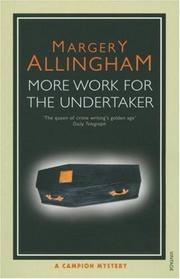
An eccentric family in a decaying London street. Baroque, funny and quite hard to follow, and much admired for both.

A killer loose in a London fog, and a novel far more interested in evil than in whodunnit. It is the acknowledged masterpiece and it barely counts as a detective story.
The late books
IntermediateFinish with the one her admirers keep for last.
▸ Study plan for this stage
Pace: About a week for The Beckoning Lady's 250 pages. Nothing in it hurries, so read in long relaxed sittings rather than chasing the plot.
- A near-plotless crime novel, and what holds it together instead of plot
- Pontisbright and the postwar rural England Allingham is quietly recording
- Campion and Amanda as a settled marriage twenty-two years after Sweet Danger
- Comedy used as elegy
- Bodies deliberately kept in the background
- The book her admirers keep for last, and why that is a defensible choice
- What is the book actually about, if it is not about its murders?
- How do Campion and Amanda function here compared with Sweet Danger?
- What is being mourned, and where is that stated rather than implied?
- Would this work as a first Allingham, and what exactly would a new reader miss?
- How far has the series travelled from the shape of the 1929 debut?
- Read the party sequence in one sitting and note how many of the characters have already appeared in earlier books on this path
- Place the murders on a timeline and see how far into the book the first one actually registers with anyone
- Reread the Pontisbright scenes of Sweet Danger for a direct comparison of the same place twenty-two years on
Next up: With six books spanning twenty-six years read in order, the rest of the Campion novels can be picked up anywhere, because you now know which Campion you are meeting.
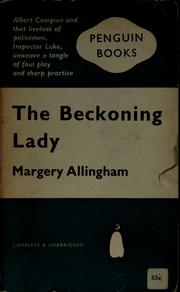
A summer party in the Suffolk countryside with bodies accumulating in the background. Almost plotless, and a lovely book about a world about to disappear.
Discussion
Keep reading
Paths that share books, cover the same subject, or open a related topic.