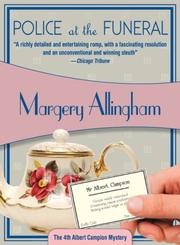
Start with Police At the Funeral. A Cambridge household of elderly relatives, ruled by a formidable matriarch and steadily losing members to violent death, is the first case where Albert Campion functions as a detective rather than as an adventure-story sidekick — and the household itself, airless and rule-bound and poisonous long before anyone is poisoned, is Allingham doing the thing she is actually great at.
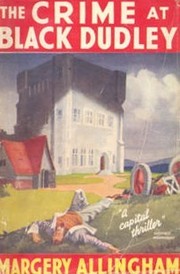
The obvious alternative is The Crime at Black Dudley, which is where Campion first appears and therefore looks like the correct opening. It misrepresents the series badly. It is a country-house thriller about a criminal gang, the hero is somebody else entirely, and Campion drifts through it as a suspicious minor figure with a silly voice. Read it later as a curiosity, or skip it. Nobody who loves Allingham loves her for that book.
Publication order, plainly
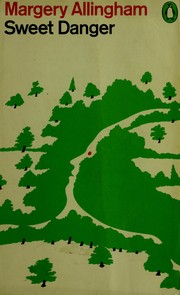
The order these were written in is: The Crime at Black Dudley in 1929, Police At the Funeral in 1931, Sweet danger in 1933, More Work for the Undertaker in 1948, The Tiger in the Smoke in 1952 and The beckoning lady in 1955. The reading path on this site groups them by how they are best approached rather than by date, so if chronology matters to you, use the years above and choose for yourself — the two early ones in particular are often listed the other way round.
Chronology matters more here than in most Golden Age series, for one reason: Campion changes. He begins as an aristocratic idiot in the Wimsey mould, all babble and horn-rimmed spectacles, and Allingham quietly promotes him over twenty-five years into a serious, tired, competent man. Read in date order and you watch a writer outgrow her own joke. Read out of order and he simply seems inconsistent.
The early Campion
Sweet danger is the best of the light books: a comic-adventurous treasure hunt over a lost European principality, a missing charter and a village hiding something. It also introduces Amanda Fitton, who becomes the most important recurring character in the series, so there is a case for reading it before the later novels even though it sits after Police At the Funeral.
The post-war peak
More Work for the Undertaker is where the series arrives at full strength — a decaying London family in a crumbling house, an eccentric poisoning, a genuinely strange cast, and prose that has stopped being decorative. It is often named as the best pure detective novel she wrote.
The Tiger in the Smoke is the masterpiece, and it is barely a detective novel. A killer moves through a London fog, you know who he is almost from the start, and the book becomes a pursuit and a moral confrontation between him and a priest. Allingham's fog, her ragged street band, her sense of postwar London as a place still shocked, are all better than the plotting they surround. If you read one Allingham, read this. If you read three, make this the third, so you arrive at it knowing Campion well enough to notice how little he can do.
The late book, honestly
The beckoning lady is the weakest of the six. It is a summer-party novel set among Campion's own circle, warm and diffuse, with a plot that surfaces reluctantly and a great deal of affectionate business among characters you are assumed to already care about. Read it if you have become fond of the series; do not read it to judge her.
What is not here
Several well-regarded Campion novels are missing from our catalogue, including Flowers for the Judge, The Fashion in Shrouds and Traitor's Purse — the last is a favourite among readers, an amnesia thriller in which Campion wakes with no memory and a matter of national urgency in his hands. Their absence is a gap in our records rather than a verdict on the books.
Where to stop
The Tiger in the Smoke is the summit and a natural place to finish. Allingham wrote on into the 1960s and the late books are patchier; her husband completed the final one after her death. Browse more Golden Age crime paths on Discover.
Follow the full ordered path here: Margery Allingham books in order: where to start with Albert Campion.