Marcus Didius Falco Reading Order: Where to Start
Lindsey Davis wrote twenty Falco novels, set between AD 70 and 77 in Vespasian's Rome, and they run in strict publication order because that is also chronological order — Falco marries, has children, changes rank, and buries people, and none of it can be shuffled. This path takes the core sequence rather than all twenty: the opening trio that establishes Falco and Helena, the travel books, the strong middle run, and the finale, then points to the successor series narrated by his adopted daughter. Each novel resolves its own case, so stopping anywhere is allowed; going out of order is not.
Start Here: Rome, and Helena
BeginnerMeet Falco, his appalling family and Helena Justina, and settle into a first-person Roman narrator who sounds like a 1940s private eye on purpose.
▸ Study plan for this stage
Pace: Three to four weeks for about 950 pages. The Silver Pigs is the shortest at around 270 pages but the slowest to settle, because the first fifty pages have to teach you a first-century Rome and a narrator's voice at the same time. Push through that opening. Shadows in Bronze is the longest of the thr
- The joke is deliberate. Falco is a first-century Roman narrating in the voice of a 1940s hardboiled private eye, and the anachronism is the design, not a research failure. If the tone reads as a mistake in chapter one, that is the book working as intended.
- Publication order is also chronological order, running from AD 70. Falco marries, has children, changes rank and buries people across the series, so the sequence cannot be shuffled.
- Helena Justina as the actual engine of the series. The relationship established in The Silver Pigs drives more of the next nineteen books than any individual case does.
- Falco's family as running comedy and running obstruction: his mother, his awful brother-in-law, and the dead brother whose reputation he cannot escape.
- The informer as a job with a real place in Roman society, paid badly and despised, which fixes Falco's class position and most of his problems.
- Vespasian's Rome as a working state with mines, taxes, building projects and patronage, all researched and all used as plot rather than scenery.
- Each novel resolves its own case completely, so there is no cliffhanger obligation and you may stop after any book without being left hanging.
- The Silver Pigs sends Falco to Britain and the silver mines. What does the trip establish about the empire that a Rome-only book could not?
- Where exactly does the hardboiled voice sit oddly against the Roman setting, and where does it fit better than you expected?
- Shadows in Bronze continues the conspiracy rather than starting a new one. What does Davis gain by making book two a clean-up operation?
- Venus in Copper is largely about property, rents and tenement landlords. How much of the Roman economy do you now understand that you did not before?
- What is actually keeping Falco and Helena apart, and is it a plot obstacle or a class one?
- Keep a page of Falco's family members and their grievances as they appear. The comedy compounds across twenty years of story and the list gets funnier the longer you keep it.
- Mark three places where a modern idiom is used for a Roman thing and decide in each case whether it clarifies or breaks the illusion. Your answer determines whether this series is for you.
- Note every mention of money, in sesterces, and what it buys. Davis is consistent about prices and it is the quickest route into Falco's actual standard of living.
- This is the first natural stopping point. The opening trio is a complete introduction and a reader who has had enough can stop here having lost nothing unresolved.
Next up: The first three books settle the household and the voice, which frees the next three to take Falco out of Rome without having to explain who he is once he gets there.
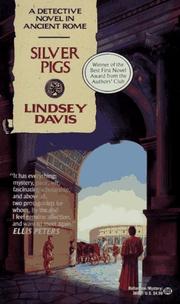
A girl in trouble in the Forum, silver smuggled out of Britain, and the beginning of the relationship the whole series runs on. Start here without exception — everything domestic in the next nineteen books begins in this one.
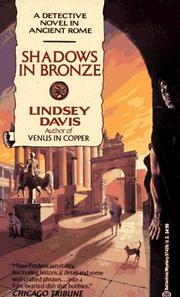
The direct aftermath of the conspiracy in The Silver Pigs, with Falco cleaning up loose ends around the Bay of Naples. Read it second; it is genuinely a continuation rather than a fresh case.
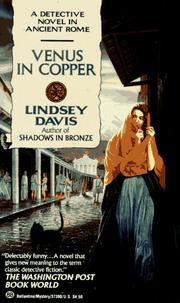
A professional bride and a tenement landlord, and Falco's first real look at how Roman property money works. The comedy about his mother and his awful brother-in-law fully arrives here.
Falco Abroad
BeginnerFollow the imperial informer out of Rome, and watch Davis use the series to tour the provinces.
▸ Study plan for this stage
Pace: Four to five weeks for roughly 1,070 pages, and the pace varies more than in the opening trio. The Iron Hand of Mars is a military and political book that takes a while to get moving on the Rhine. Poseidon's Gold is back in Rome, domestic and quick. Last Act in Palmyra is the longest of the three at
- The provincial books doubling as a tour of the empire. Germany, Rome itself and the eastern desert in three volumes, each with its own economy, garrison and politics.
- Falco's uneasy relationship with the imperial court, established properly in The Iron Hand of Mars: he works for Vespasian without ever being trusted or paid promptly.
- Poseidon's Gold as the load-bearing family book of this stage. It deals with the dead brother and the estranged father, and skipping it in favour of the more exotic titles breaks the domestic arc.
- The comic register at full stretch in Last Act in Palmyra, which is the fairest test of whether the series' humour is for you.
- Rank and status as a running plot: what Falco is legally allowed to be determines who he can marry, and the series keeps returning to it.
- Davis using travel to vary structure, since a case abroad has no witnesses Falco already knows and no family to interfere.
- Research worn lightly but genuinely present, from legionary organisation on the Rhine to the caravan trade in the east.
- What does The Iron Hand of Mars show about how Rome held a frontier province, and how much of that is doing plot work rather than colour?
- Poseidon's Gold is about a dead man's debts. How does Davis make a brother who never appears on the page into the strongest character in the book?
- Last Act in Palmyra runs on a theatre company rather than a client. Does the looser structure suit the series or strain it?
- Falco's status problem is still unresolved three books later. Is the obstacle convincing, or is it being kept alive because the series needs it?
- Which of these three provinces felt most real to you, and what specifically made it so?
- For each of the three settings, write down two facts about how the province worked economically. Davis is accurate enough that this becomes a genuine list.
- Read the scenes with Falco's father in Poseidon's Gold, then look back at how he was described in the first three books. The reappraisal is the point of the novel.
- In Last Act in Palmyra, mark the point where you either accepted or rejected the comic register, and note what triggered it. That reaction is the best predictor of how much of the remaining series you will enjoy.
- Draw the route Falco has travelled since The Silver Pigs on a map of the empire. The series is partly a travelogue and seeing the distances makes the later provincial books land harder.
Next up: With the empire established and the family business settled, the next stage stays largely in Rome and lets the mysteries get considerably darker.
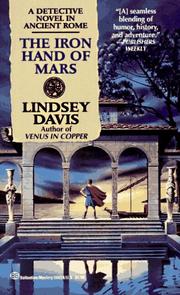
Germany, the Rhine legions, and the aftermath of a revolt. The first of the travel books and the one that establishes Falco's uneasy relationship with the imperial court.
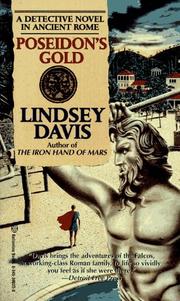
Back in Rome, entangled with his dead brother's debts and his estranged father. The most important book for the family arc, so do not skip it in favour of the more exotic ones.

Falco joins a travelling theatre company across the eastern desert. The funniest entry in the series and a good test of whether the comic register is for you.
The Strong Middle Run
IntermediateRead the stretch where the mysteries get more serious and Rome itself becomes the subject.
▸ Study plan for this stage
Pace: Five to six weeks for around 1,540 pages, the longest stage on the path and the one where the books physically get bigger. Time to Depart and A Dying Light in Corduba are both over 400 pages and both slower going than anything before them. Three Hands in the Fountain is a page-turner by comparison a
- Time to Depart as the tonal turn. Organised crime in Rome and a permanent personal loss, and the first book that cannot be read as comedy with a plot attached.
- Consequences that stick. Deaths, promotions and changes of address here are permanent, which is the strongest argument against reading the series out of order.
- A Dying Light in Corduba as the best-researched provincial book, showing the olive oil cartels of Baetica as a working industry with genuine commercial motives for murder.
- Helena heavily pregnant across Corduba and a parent thereafter, which changes what Falco is able to risk and how the books are plotted around him.
- Three Hands in the Fountain as the series' first serial-killer plot, used as an excuse for a superb tour of Rome's aqueducts and water supply.
- One Virgin Too Many taking on the state religion and the Vestals with exactly the same irreverence Davis applies to everything else, alongside Falco's new official appointment.
- Rome itself becoming the subject: water, crime, religion and property in four consecutive books, with the case as the way in.
- Time to Depart is often named the best Falco novel. Would it work at all as someone's first, and what does that tell you about how the series is built?
- In A Dying Light in Corduba, what makes the olive oil trade worth killing over, and could the same plot be told about any other commodity?
- Three Hands in the Fountain solves a case through infrastructure. How much of Rome's water system do you actually understand by the end of it?
- One Virgin Too Many treats the Vestals as an institution rather than a mystery. Does the irreverence cost the book anything?
- Falco's official position changes in this stage. Has he become respectable, and does the series want him to be?
- Before starting Time to Depart, write down which members of the household you would be sorry to lose. Then read it.
- Track a single amphora of olive oil through A Dying Light in Corduba from press to Rome. The book supports this and it is the clearest demonstration of how much research is underneath the jokes.
- While reading Three Hands in the Fountain, keep a list of the aqueducts named and where each one enters the city. Davis is using a real map.
- At the end of this stage, note everything that has permanently changed since Venus in Copper. Ten books in, the list is the reason publication order matters.
Next up: These four books make the household and Falco's official standing matter enough that the late novels and the finale have something to close.

Organised crime in Rome, and a personal loss that permanently darkens the series. Often named the best Falco novel; it depends entirely on your caring about the household by now.
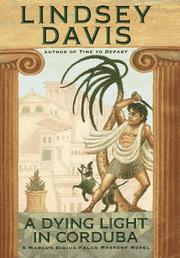
Olive oil cartels in Baetica, with Helena heavily pregnant. The best-researched of the provincial books and the one that most convincingly shows a Roman industry working.
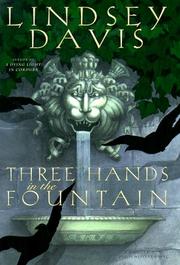
Body parts in the aqueducts — the series' first serial-killer plot, and an excuse for a superb tour of Rome's water supply. Squarely in the middle of the run and one of the strongest.

A missing child, the Vestals, and Falco's new official appointment. The state religion handled with the same irreverence as everything else.
The Late Books and the Finale
IntermediateReach the end of the twenty-book sequence and decide whether to carry on into the successor series.
▸ Study plan for this stage
Pace: Five weeks for roughly 1,350 pages. Note the jump: this path goes straight from One Virgin Too Many to Saturnalia, skipping several novels in between. That is a deliberate shortcut, not an error, and the intervening books can be picked up later in publication order without spoiling anything here. Sa
- Saturnalia as the strongest of the later Falco novels, using the midwinter festival to let Rome misbehave for a week, and proof that Davis had not exhausted the institutions worth mocking.
- Alexandria as the last of the big travel books, with a murder in the Great Library and the whole family on holiday in Egypt.
- Nemesis as the twentieth and final Falco novel, closing the family arc that began in The Silver Pigs, and far darker than anything around it. This is the second and largest natural stopping point.
- The Ides of April is not a Falco novel. It is the first book of the successor series, narrated by Falco's adopted daughter Flavia Albia in the reign of Domitian, roughly twenty years later. The narrator changes, the tone is harsher, and a reader who does not know this will think they have picked up
- Why Albia works only after Nemesis: her series assumes you know exactly who these people are, and it is written against the warmth of the Falco books rather than continuing it.
- Domitian's Rome as a genuinely different setting from Vespasian's, more dangerous and less funny, which is the point of the handover.
- Seven of the twenty Falco novels are not on this path. Since each case resolves independently, they can be added later in publication order whenever you want more.
- The comic voice persisting to the end even as the material darkens, which is what makes Nemesis land as hard as it does.
- Saturnalia uses a festival as a structural device. What does a week of licensed disorder let Davis do that an ordinary week could not?
- Alexandria takes the whole family abroad. Is the holiday setting a strength or a sign the series is winding down?
- Nemesis is much bleaker than its neighbours. Is that a fitting ending for twenty books of comedy, or a break with them?
- After one Albia novel, is the change of narrator an extension of Falco's series or a replacement for it?
- Falco began as a broke informer in the Forum. What is he by Nemesis, and did the series ever decide whether that was a good thing?
- Before opening The Ides of April, remind yourself that the narrator is no longer Falco. Read the first chapter with that in mind and the tonal shift becomes a deliberate effect rather than a disappointment.
- After Nemesis, list what has changed for Falco since the first page of The Silver Pigs: rank, family, address, income. That list is the twenty-book arc.
- Decide explicitly whether to stop at Nemesis or continue into the Albia series. Both are complete endings and Nemesis closes Falco's own story on purpose.
- Pick two of the seven skipped Falco novels from a publication list and read them next if you want more of the same, before committing to a second series.
Next up: You have read the core of Falco's twenty-book run from his first case to his last and sampled the successor series, so from here you can either fill in the seven novels this path skipped, carry on with Flavia Albia in Domitian's Rome, or stop at Nemesis with the arc closed.
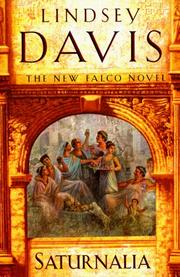
A midwinter festival, an escaped German priestess, and Rome misbehaving for a week. The best of the later entries and a good demonstration that Davis had not run out of Roman institutions to mock.

A murder in the Great Library, with the whole family on holiday in Egypt. The penultimate novel, and the last of the big travel books.
The twentieth and final Falco novel, and much bleaker than the ones around it — the family arc that began in The Silver Pigs is closed here. Read it last of the main series and do not sample it early.
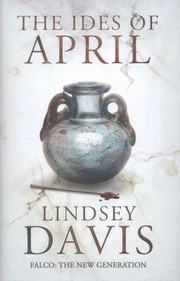
The successor series, narrated by Falco's adopted daughter Flavia Albia in the reign of Domitian twenty years later. Read it only after Nemesis: it is deliberately darker, and it assumes you know exactly who these people are.
Discussion
Keep reading
Paths that share books, cover the same subject, or open a related topic.