Malazan Reading Order: Where to Start
The Malazan Book of the Fallen is one of the most ambitious and demanding fantasy series ever written — dense with gods, continents, and thousands of years of history dropped on the reader without a map or a guide. This curriculum is organized for an expert-level reader who can handle complexity from page one. The path moves through the ten core Erikson novels first (in publication order, which is the recommended reading order), then weaves in the essential Esslemont novels that expand the world, and closes with a reflection stage on craft and context. Honest warning: the first 200 pages of Gardens of the Moon are famously brutal — trust the process, take notes, and know that the payoff is extraordinary.
The Core Ten — Erikson's Main Sequence
ExpertRead all ten main-sequence novels in publication order, building the world-knowledge, character familiarity, and emotional investment that each successive book demands. Understand that Gardens of the Moon's brutal opening is intentional: Erikson drops you mid-campaign with no hand-holding. Persist past the first 200 pages and the world clicks into place.
▸ Study plan for this stage
Pace: Approximately 20–24 weeks total (roughly 5–6 months), reading ~35–45 pages per day on weekdays with longer sessions on weekends. Suggested per-book pacing: Gardens of the Moon (3 weeks), Deadhouse Gates (3 weeks), Memories of Ice (4 weeks), House of Chains (3 weeks), Midnight Tides (3 weeks), The Bo
- The 'in medias res' immersion method: Erikson deliberately withholds exposition, trusting readers to assemble context from action, dialogue, and implication — Gardens of the Moon is the hardest entry point by design, and persistence past the first 200 pages is the single most important skill to deve
- The Malazan magic system — Warrens and Holds: understanding that each Warren is a dimensional realm tied to a specific force (e.g., Meanas for shadow, Denul for healing, Kurald Galain for Darkness), and that Holds are their more ancient, primal equivalents central to Midnight Tides.
- Convergence as a narrative engine: the in-world principle that great power attracts greater power, driving plots toward catastrophic collisions of gods, ascendants, armies, and artifacts across all six books.
- The Malazan military and its culture: the Bridgeburners (Gardens of the Moon, Memories of Ice), the Chain of Dogs and the Wickans (Deadhouse Gates), and the Bonehunters (The Bonehunters) each represent distinct military identities whose loyalty, sacrifice, and exhaustion are central emotional thread
- Ascendancy and the Deck of Dragons: how mortals become ascendants and eventually gods, how the Deck of Dragons reflects and influences the cosmic power structure, and how figures like Shadowthrone, Cotillion, and the Crippled God are reshaping that structure.
- Erikson's use of parallel and braided narratives: Deadhouse Gates and Memories of Ice run concurrently in-world, House of Chains revisits and recontextualizes earlier events from Karsa Orlong's perspective, and Midnight Tides introduces an entirely new continent (Lether) whose connection to the main
- Themes of empire, colonialism, and complicity: the Malazan Empire is neither hero nor villain — Gardens of the Moon through The Bonehunters systematically interrogate what empire does to soldiers, conquered peoples, and the land itself.
- Grief, compassion, and the 'soldier's burden': Erikson's philosophical core, most explicit in the Chain of Dogs sequence (Deadhouse Gates) and the Siege of Coral / Memories of Ice, asks what it means to witness suffering and continue anyway.
- After finishing Gardens of the Moon, can you explain who Anomander Rake is, what Moon's Spawn is, and why the Bridgeburners and the Malazan Empire are in conflict with the Empress Laseen — and why that conflict is more morally ambiguous than it first appears?
- Deadhouse Gates is famous for the Chain of Dogs: who is Coltaine, what is he trying to accomplish, and why does Erikson structure the novel so that readers experience the march's outcome before its emotional weight fully lands?
- Memories of Ice introduces the Pannion Domin and the Siege of Capustan — how does the horror of the Pannion Seer's forces function thematically, and what does the fate of the Bridgeburners at Coral mean for the series' emotional arc going forward?
- House of Chains begins with nearly 200 pages entirely from Karsa Orlong's point of view — how does this opening reframe the reader's assumptions about heroism, civilization, and the Malazan world's moral compass?
- Midnight Tides takes place on a continent (Lether) with no previously seen characters — what is the Tiste Edur/Letherii conflict actually about beneath its surface, and who is Rhulad Sengar and why does his arc matter?
- By the end of The Bonehunters, how have the events of all five preceding novels converged, and what does the Malaz City sequence reveal about the relationship between the Malazan soldiers and the empire they serve?
- Keep a running 'Dramatis Personae' journal: for each book, maintain a hand-written or digital character sheet with name, faction, Warren/Hold affiliation, and one-line role summary. Update it at the start of each reading session — this combats the series' notoriously large cast and trains active reading.
- Draw or annotate a world map after each book: mark new locations, the routes of major campaigns (the Chain of Dogs march, the Pannion campaign, Karsa's journey, the Bonehunters' march), and note which continents/regions remain unexplored. This makes Midnight Tides' geographic shift feel intentional rather than disorienting.
- Write a one-page 'convergence log' at the end of each book: list every major power (gods, ascendants, armies, artifacts) in play and draw arrows showing which are being drawn toward each other. Predict one convergence that hasn't happened yet — then check your prediction when you finish the next book.
- After finishing Deadhouse Gates AND Memories of Ice, write a 500-word comparative essay on a single theme (e.g., sacrifice, leadership, or the cost of compassion) as expressed through Coltaine's Chain of Dogs and the Siege of Capustan — since both events occur simultaneously in-world, this exercise reveals how Erikson uses parallel tragedy.
- For Midnight Tides specifically, before starting the book write down your assumptions about what a 'Malazan novel' feels like based on the first four books. After finishing, write a paragraph on how Erikson deliberately violated each assumption — this trains awareness of his structural experimentation.
- After completing The Bonehunters, construct a timeline of all major events across all six books, placing Gardens of the Moon through The Bonehunters on a single chronological axis. Identify at least three moments where a later book recontextualized an event you thought you understood from an earlier one.
Next up: Completing these six novels establishes the world-knowledge, emotional investment, and tolerance for narrative complexity needed to engage with the remaining four main-sequence books — Reaper's Gale, Toll the Hounds, Dust of Dreams, and The Crippled God — where every thread seeded across Gardens of the Moon through The Bonehunters begins its final, devastating convergence.
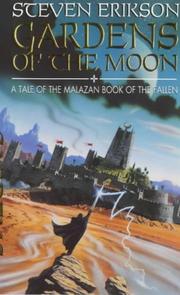
Book 1 and the famous trial-by-fire opening. Erikson does not explain his world — he trusts you to keep up. Take notes on names and factions; re-read confusing passages rather than skipping. The payoff for patience is immense.
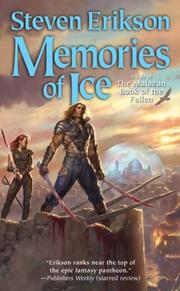
Book 2 shifts continents and cast entirely, following the Chain of Dogs — widely considered one of the greatest military-fantasy sequences ever written. The emotional weight here is the series' first gut-punch.
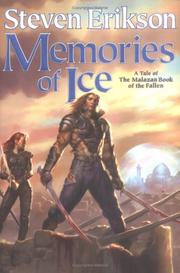
Book 3 returns to the characters from Book 1 and delivers a siege narrative of staggering scale. Reading Books 1 and 2 first makes the reunion and the horror here land with full force.

Book 4 opens with a long, slow-burn origin story for a new POV before reconnecting to the Seven Cities arc. The structural risk pays off by the end and deepens the series' thematic core.
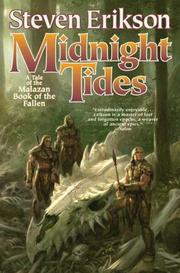
Book 5 is a complete tonal and geographical reset — a self-contained tragedy on a new continent. It feels like a detour but introduces characters who become central to the back half of the series.

Book 6 begins the grand convergence of all threads. Everything you have read so far starts pulling together here, and the series' philosophical ambitions become impossible to ignore.
The Core Ten — Erikson's Convergence
ExpertComplete the final four Erikson novels, experiencing the full convergence of the series' many storylines and its devastating, hard-won emotional and philosophical conclusions.
▸ Study plan for this stage
Pace: 16–20 weeks total (~4–5 weeks per book), reading approximately 25–35 pages per day. Reaper's Gale and Toll the Hounds are each ~1,000+ pages and demand slower, more reflective pacing; Dust of Dreams and The Crippled God form a single duology and can be read back-to-back with minimal break, treating
- Convergence as narrative architecture: Erikson's deliberate funneling of dozens of independent storylines toward catastrophic, emotionally resonant collision points in each volume
- The Letherii Empire and its critique of capitalism and colonialism, fully dramatized through Rhulad Sengar's tragic arc and the Edur occupation in Reaper's Gale
- Karsa Orlong's philosophical evolution from destroyer to liberator — his rejection of civilization as a moral framework and his role as the series' most radical anti-hero
- Anomander Rake's sacrifice in Toll the Hounds: the theology of Hood, the nature of willing death, and what it means to choose an end with full awareness
- Compassion as the series' central philosophical argument — Erikson's insistence, crystallized in Dust of Dreams and The Crippled God, that witnessing suffering and refusing to look away is itself a moral act
- The Crippled God as symbol: the chained, broken deity as a stand-in for every marginalized, discarded, and forgotten being, and the Bonehunters' final march as an act of collective, irrational mercy
- Elder Gods, Azath Houses, and the cosmological endgame — the resolution of the Forkrul Assail, the Jaghut, the K'Chain Che'Malle, and the T'lan Imass storylines
- Erikson's use of poetry, epigraph, and metafiction (Gothos' Folly, Fisher kel Tath's verses) as philosophical commentary running parallel to the narrative
- In Reaper's Gale, how does Tehol Beddict's economic sabotage of the Letherii financial system function as both plot and ideological argument, and what does its success (and its limits) say about Erikson's view of systemic power?
- Toll the Hounds stages Anomander Rake's death as a chosen, orchestrated event. What is Rake's theological and personal motivation, and how does Erikson use Kruppe, Picker, and the city of Darujhistan to frame this sacrifice emotionally?
- How do Dust of Dreams and The Crippled God reframe the Bonehunters — soldiers who have been used, discarded, and despised — as the moral center of the entire series? What does their final march argue about duty, loyalty, and meaning in the absence of reward?
- The Crippled God resolves the question of what the Adjunct Tavore actually believes and intends. How does Erikson use her deliberate opacity across multiple books as a narrative and thematic device, and is the payoff earned?
- Across all four books in this stage, how does Erikson treat the relationship between gods and mortals — specifically, who bears the greater moral burden, and how is that argument resolved by the end of The Crippled God?
- How do the K'Chain Che'Malle (Sag'Churok, Gunth Mach, and the Matron Kalyth) in Dust of Dreams and The Crippled God complicate or enrich the series' meditation on extinction, survival, and what it means to choose to continue?
- Convergence mapping: Before starting each book, draw a character/faction web on paper. As you read, draw lines when storylines collide. After finishing, annotate each collision point with one word describing its emotional register (grief, triumph, irony, horror). Compare maps across all four books to visualize the series' narrowing funnel.
- Philosophical journal: Erikson embeds dense philosophical arguments in dialogue and interior monologue (especially through Icarium, Karsa, Cotillion, and Tavore). After each major philosophical exchange, paraphrase the argument in 2–3 sentences in your own words, then write one sentence of your own agreement or rebuttal.
- Epigraph analysis: Every chapter opens with a verse or prose fragment attributed to in-world authors (Fisher kel Tath, Gothos, etc.). Choose one epigraph per 100 pages that surprised or confused you, research its in-world source, and write a short paragraph on how it recontextualizes the chapter it precedes.
- Sacrifice inventory: Keep a running list of every significant character death or sacrifice across all four books. For each, note: (1) was it chosen or imposed? (2) who witnessed it? (3) what did it change? At the end of The Crippled God, review the list and write a paragraph on what pattern Erikson seems to believe about the relationship between sacrifice and meaning.
- Reread the final 50 pages of The Crippled God immediately after finishing, this time reading every sentence of the epilogue and Erikson's author's note slowly and aloud. Write a one-page personal response: what did the series ultimately argue, and do you believe it?
- Comparative character essay: Choose one character who appears in at least three of the four books in this stage (suggested: Karsa, Tavore, Cotillion, or Icarium). Write a 500-word arc summary tracing how their core belief or wound changes — or refuses to change — across Reaper's Gale through The Crippled God, and what that stubbornness or transformation costs them.
Next up: Completing Erikson's ten-book convergence provides the emotional and cosmological baseline needed to approach Ian C. Esslemont's concurrent Malazan Empire novels, which revisit the same world, timeline, and themes from perspectives that recontextualize — and sometimes quietly challenge — what Erikson's arc presented as settled truth.
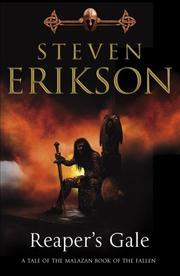
Book 7 returns to the Letherii continent and begins paying off Midnight Tides in full. The scale of destruction — physical and moral — escalates sharply here.
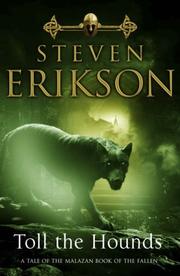
Book 8 is the most literary and elegiac entry, set in Darujhistan. Erikson's narrator becomes an explicit presence; this is where the series' meditation on compassion and mortality reaches its peak.
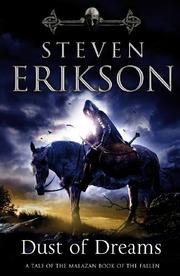
Book 9 is the first half of a two-part finale. Do not read it without The Crippled God immediately available — it ends mid-sequence by design.
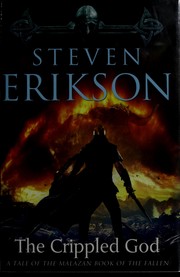
Book 10 and the conclusion of the main sequence. Everything — every character, every god, every theme — arrives here. Read it back-to-back with Dust of Dreams for the intended experience.
The Esslemont Novels — The Other Half of the World
ExpertRead Ian C. Esslemont's six Malazan Empire novels, which are co-canonical with Erikson's sequence. They cover events and characters (especially Empress Laseen and the Crimson Guard) that Erikson's books only reference obliquely. Best read after completing Erikson's ten, though Night of Knives can be read after Book 1.
▸ Study plan for this stage
Pace: 10–12 weeks total; Night of Knives is short (~250 pp) so allow 3–4 days; Return of the Crimson Guard (~700 pp) and Stonewielder (~600 pp) each deserve 2–2.5 weeks; Orb Sceptre Throne, Blood and Bone, and Assail (~500–600 pp each) can be read at roughly 35–40 pages/day, ~1.5–2 weeks each. Build in a
- The Malazan Empire from the inside: Esslemont's novels shift the lens from the armies in the field to the political and institutional heart of the Empire — the Empress Laseen, the Claws, the Talons, and the machinery of imperial power that Erikson's books only glimpse.
- The Crimson Guard as a world-historical force: Return of the Crimson Guard establishes the Guard's Vow, their internal factions (the Avowed, the Disavowed), and their ideological opposition to Empire — a counterweight to the Malazan state that reframes events across both authors' works.
- Laseen's tragedy and legitimacy: Across Night of Knives and Return of the Crimson Guard especially, readers must grapple with Laseen as a complex ruler — her ruthlessness, her isolation, and the question of whether her reign was a betrayal or a necessary evolution of Kellanved's vision.
- The Stormwall and Korelri cosmology (Stonewielder): The Stormwall, the Stormriders, and the theocratic Korelri state introduce a self-contained cosmological system — a millennia-old supernatural siege — that expands the world's metaphysical scope beyond the Warren framework.
- Darujhistan's post-Erikson political ecology (Orb Sceptre Throne): Returning to the city of Darujhistan after the events of Erikson's sequence, this novel shows how power vacuums are filled, how ancient entities (the Azath, the T'lan Imass, Moranth) continue to operate, and how the city resists abso
- The Himatan jungle and Ardata's domain (Blood and Bone): The continent of Jacuruku and its goddess Ardata represent an older, stranger layer of the world's history — pre-Imperial, pre-Malazan — forcing readers to think about what civilizations existed before the sequence's 'present' and what survive
- The resolution of the Crimson Guard Vow and the fate of Assail (Assail): The final novel ties together the Gold and the Crimson Guard's Vow, the T'lan Imass convergence, and the mystery of Assail itself — functioning as a capstone that rewards readers who have tracked threads across all six books.
- Esslemont's narrative voice vs. Erikson's: Recognizing the stylistic differences — Esslemont's tighter pacing, more accessible prose, and preference for political intrigue and military action over philosophical digression — as a feature of co-authorship rather than a flaw, and understanding how the
- By the end of Night of Knives, what do we understand about the Night of the Assassination — the fall of Kellanved and Dancer — that was previously only rumor in Erikson's novels, and how does Temper's arc reframe the cost of that night for ordinary soldiers?
- What is the Crimson Guard's Vow, who took it, what does it bind them to, and how do the events of Return of the Crimson Guard both fulfill and complicate that Vow's original purpose?
- How does Stonewielder recontextualize the Malazan invasion of Korel/Fist — a campaign mentioned but never shown in Erikson's books — and what does the Stormwall reveal about the limits of Warren-based power against purely elemental or pre-Warrenic forces?
- In Orb Sceptre Throne, which factions compete for dominance in Darujhistan, what ancient entities become active, and how does the novel argue that the city's survival depends on its very resistance to centralized control?
- What is Ardata's relationship to Jacuruku's history, and how does Blood and Bone use the Himatan jungle as a setting to explore themes of nature, divinity, and the cost of immortality in ways that contrast with the Warrens-and-Holds framework?
- How does Assail function as a conclusion to the Esslemont sequence — specifically, which long-running mysteries (the fate of the Crimson Guard Vow, the nature of Assail's isolation, the T'lan Imass convergence) are resolved, and what remains deliberately open?
- Parallel timeline mapping: As you read each novel, place its key events on a master timeline alongside the Erikson novels they overlap with. Night of Knives, for instance, is concurrent with Gardens of the Moon's prologue — mark exactly where the seams are and note what each author chose to show or hide.
- Character dossier — the Crimson Guard: Create a one-page dossier for each major Avowed encountered across Return of the Crimson Guard and Assail (e.g., K'azz D'Avore, Skinner, Cowl, Blues, Shimmer). Track their stated motivations, their relationship to the Vow, and how their arc ends. This forces close reading of a cast Erikson only sketches.
- Laseen prosecution/defense essay: After finishing Night of Knives and Return of the Crimson Guard, write a 400–600 word argument either prosecuting or defending Laseen's reign. Use specific textual evidence from both novels. Then write the opposing argument. This exercise surfaces the moral ambiguity Esslemont builds into her portrayal.
- Setting-as-character analysis: For each of the six novels, write one paragraph describing the primary setting (Malaz City, the Korelri Stormwall, Darujhistan, the Himatan jungle, Assail) as if it were a character with its own agenda, history, and effect on the plot. This trains attention to Esslemont's world-building craft.
- Cross-author scene comparison: Find at least two moments referenced in Erikson's ten novels that are dramatized or recontextualized in Esslemont's six (e.g., the Laseen succession, the Crimson Guard's history). Write a short comparison of how each author frames the same event — what details each includes, omits, or reinterprets.
- Thematic thread tracker — 'What does Empire cost?': Keep a running log across all six novels of moments where characters pay a personal price for imperial ambition — soldiers, rulers, conquered peoples, and immortals alike. At the end of Assail, synthesize your log into a one-page reflection on how Esslemont's answer to this question differs from or complements Erikson's.
Next up: Completing Esslemont's six novels gives the reader a fully stereoscopic view of the Malazan world — its political interior, its cosmological edges, and its resolved mysteries — providing the comprehensive foundation needed to approach supplementary materials, re-reads, or Erikson's follow-on Kharkanas Trilogy with genuine depth and critical confidence.
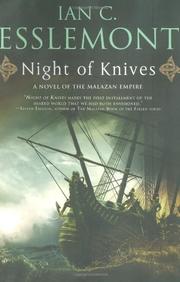
The shortest and most accessible Esslemont novel, covering the night of the Laseen coup referenced throughout Erikson's books. Reading it here, after finishing all ten, gives it maximum retrospective weight.

The most epic of the Esslemont novels, depicting the Crimson Guard's return to the Empire. It runs parallel to events in Erikson's later books and fills in enormous political gaps.

Focuses on Korel, a continent barely glimpsed in Erikson's sequence, and deepens the lore of the Stormwall. Esslemont's world-building confidence grows visibly here.

Returns to Darujhistan after the events of Toll the Hounds, making it essential to read Erikson's Book 8 first. Closes several threads left open in the city's storyline.

Set in Jacuruku, the jungle continent, and explores the Shaduwam and Ascendant politics that underpin the whole cosmology. Rewards readers who have absorbed the full Erikson sequence.

The final Malazan Empire novel, converging threads from across both authors' works. A fitting capstone to the Esslemont sequence and a true end to the classic Malazan era.
Deeper Context — Craft, Lore, and the Prequel
ExpertGain deeper perspective on the world's origins and Erikson's craft by reading the Kharkanas prequel trilogy (in progress) and Esslemont's Witness trilogy opener, situating the entire Malazan project within its own deep history.
▸ Study plan for this stage
Pace: 10–13 weeks total: ~4–5 weeks for Forge of Darkness (~700 pp, ~25–30 pages/day), ~4–5 weeks for Fall of Light (~700 pp, ~25–30 pages/day), and ~2–3 weeks for Dancer's Lament (~400 pp, ~25–30 pages/day). Budget extra days between books for reflection journaling and concept review.
- The Tiste civil war as mythological origin — Forge of Darkness and Fall of Light recast characters already known from the main series (Anomander Rake, Silchas Ruin, Draconus) as tragic, morally complex figures in their own right, demanding the reader hold two temporal frames simultaneously.
- Kurald Galain and the nature of Darkness as a living force — the magic system's metaphysical roots are explored in granular detail, showing how Warren/Hold lore is not merely mechanical but cosmological and emotional.
- Draconus and the creation of Dragnipur — Fall of Light deepens the sword's origin, transforming it from a fearsome artifact into a symbol of imprisonment, love, and catastrophic good intentions.
- Mother Dark, Father Light, and the Shake — the theological schism between Darkness, Light, and the un-aligned Shake prefigures every religious and cultural conflict in the main series, making doctrine feel earned rather than invented.
- Erikson's use of Homeric/tragic structure — both Kharkanas books employ deliberate epic-poetry cadences, unreliable narrators (especially Gallan/Fisher), and dramatic irony; recognizing these craft choices is essential at the advanced level.
- Dancer's Lament as a founding myth of the Malazan Empire — Esslemont's novel strips the empire back to its street-level origins in Li Heng, showing Dancer and Kellanved before legend calcified around them.
- Comparative authorship within a shared world — Dancer's Lament offers a direct opportunity to analyze how Esslemont's tighter, action-forward prose and POV discipline differ from Erikson's philosophical density, and what each approach reveals about the same world.
- Deep-history dramatic irony — because the reader already knows the fates of Anomander, Draconus, Dancer, and Kellanved from the main series, every choice these characters make in the prequels carries compounded weight; tracking that irony is the central reading skill of this stage.
- By the end of Forge of Darkness and Fall of Light, how has your understanding of Anomander Rake's character in the main series changed? What decisions in the Kharkanas books make his later actions feel inevitable or contradictory?
- What does the schism between Mother Dark, Father Light, and the Shake reveal about how Erikson constructs religion — as politics, as metaphysics, or as both? Use specific scenes from either Kharkanas book to support your answer.
- How does Draconus's role in Fall of Light reframe the meaning of Dragnipur as you encountered it in the main series? Does knowing the sword's origin make it more or less tragic?
- Dancer's Lament is set centuries before the main series, yet Li Heng and its Protectress feel fully realized. How does Esslemont use a contained city-siege structure to establish the empire's founding mythology without relying on the reader's prior knowledge?
- Compare Erikson's narrative voice in the Kharkanas books (filtered through Gallan/Fisher) with Esslemont's third-person limited approach in Dancer's Lament. What does each technique make visible or invisible about the world's history?
- Across all three books in this stage, what recurring theme or image connects the prequel era to the main series? How does identifying it change the way you would re-read any single book from the earlier stages?
- Dual-timeline annotation: As you read Forge of Darkness and Fall of Light, keep a running two-column document — left column for what happens in the Kharkanas timeline, right column for how it recontextualizes a specific scene or character from the main series. Aim for at least one entry per reading session.
- Gallan/Fisher narrator audit: Identify five moments in the Kharkanas books where the in-world poet-narrator (Gallan, later Fisher) seems to editorialize, omit, or romanticize events. Write a short paragraph for each asking: what might actually have happened, and why would the narrator shade it this way?
- Theology map: Draw or diagram the religious landscape of the Tiste civil war — Mother Dark's court, Father Light's followers, the Shake, and the Deniers. Annotate each node with the political faction it corresponds to and one character who embodies its contradictions.
- Prose style comparison: Choose one action scene from Dancer's Lament and one from either Kharkanas book of roughly equal length. Write a 400-word comparative analysis focusing on sentence rhythm, POV intimacy, and what each author chooses to withhold from the reader.
- Character fate essay: Pick one character who appears in both this stage's prequels and the main series (Anomander, Silchas Ruin, Draconus, or Dancer). Write a 500-word essay arguing whether the prequel portrayal deepens or complicates their main-series arc — and whether that complexity was already latent in the earlier books.
- Reading group or solo Socratic question: After finishing all three books, pose yourself (or a reading partner) this question — 'Is the Malazan world better understood forwards (main series first) or backwards (prequels first)?' — and defend a position using textual evidence from at least two of the three books in this stage.
Next up: By grounding the reader in the mythological and imperial origins of the Malazan world through the Kharkanas and Witness prequels, this stage equips them to engage with the remaining Esslemont Witness novels and any concluding Kharkanas volume with the full weight of deep history behind every page — transforming future reading from discovery into recognition.
Book 1 of the Kharkanas Trilogy, a prequel set 300,000 years before the main sequence among the Tiste Andii. Best read after completing the main ten so the tragic dramatic irony — you know how this civilization ends — hits at full force.

Book 2 of the Kharkanas Trilogy, deepening the civil war among the Tiste. Erikson's prose here is at its most dense and literary; the payoff is a profound recontextualization of Anomander Rake.

Book 1 of Esslemont's Path to Ascendancy trilogy, an origin story for Dancer and Kellanved — the founders of the Malazan Empire. A more accessible entry point into the lore's deep history and a perfect companion to the Kharkanas reading.
Discussion
Keep reading
Paths that share books, cover the same subject, or open a related topic.