Maisie Dobbs Reading Order: Where to Start
Jacqueline Winspear's Maisie Dobbs novels run in publication order for a reason that is unusually strict: each book advances the calendar, so the series marches from 1929 through the Depression and into the Second World War, and Maisie's own war — she was a nurse at Flanders — is revealed gradually across the early volumes. Reading out of order spoils both the historical progression and the personal one. This path takes the core sequence from the first novel to the last, without attempting all eighteen.
Start Here: The Great War Underneath
BeginnerMeet Maisie as she opens her own practice, and learn the thing the series is actually about — the unfinished damage of 1914 to 1918.
▸ Study plan for this stage
Pace: About two weeks for the pair, roughly 630 pages. Maisie Dobbs is a fast 294 pages but structurally odd: it opens as a 1929 detective novel, stops, and hands you a long flashback covering Maisie's education and her service as a nurse at a casualty clearing station in France, then returns to the case.
- Winspear opens with a case and then suspends it for biography; the flashback is load-bearing structure, not a digression
- Maurice Blanche as mentor, and investigation taught as a psychological and moral discipline rather than a hunt for clues
- Maisie's habit of matching a witness's posture and breathing before she asks anything - a method she was taught, not a mannerism
- The class ascent: servant girl in a Belgravia house, then Girton, then her own practice, and the people who will not let her forget the first of those
- Billy Beale arrives in Birds of a Feather and stays for the rest of the series; his shrapnel wound and the pain it causes run all the way through
- The white feather as both a plot device and a piece of real 1914 social history
- Calendar time: the books start in 1929 and advance in real historical years, which is why publication order is the only order
- The actual subject is what the war left behind - shell shock, disfigurement, the missing generation of men, women whose futures were erased
- Why does Winspear interrupt her first detective plot with a long flashback rather than releasing the same material gradually, and what would each method cost?
- What does Maisie physically do when she interviews someone, and how does that differ from the deduction practised by a Holmes or a Poirot?
- Maurice teaches that a case is not closed until the living are settled. What does honouring that cost Maisie in these two books?
- Birds of a Feather turns on the white feather campaign. What does the novel suggest about who was doing the shaming, and on whose behalf?
- Maisie is out of place both in the world she came from and the one she works in. Where does each book show that most sharply?
- Note the year at the head of each book and start a running timeline; the series is still using it fifteen volumes later, so it is worth the two minutes
- When the flashback in Maisie Dobbs ends, write down what you now know about her war that chapter one did not tell you, then check how much of it the detective plot actually needed
- Count the characters in Birds of a Feather damaged by the war and note whether each is treated as victim, suspect, or both at once
- Decide at the end of Birds of a Feather whether to go on. These two make a complete introduction - the mystery resolves and the backstory is delivered - and stopping here is a real stopping point, not a failure to finish
Next up: Maisie's war has now been sketched but not settled, and Pardonable Lies sends her physically back to the battlefields to finish it.

The first novel: a servant girl educated by her employers becomes a psychologist and investigator in 1929 London. Its long central flashback to the casualty clearing stations is the foundation of every later book, so this must be read first.
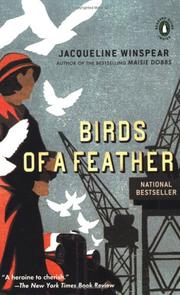
A missing heiress and three dead women connected by white feathers. The proper mystery plotting starts here, and Billy Beale becomes the fixture he stays for the rest of the series.
The Post-War Cases
BeginnerFollow Maisie through the early thirties as the practice establishes itself and the personal past finally resolves.
▸ Study plan for this stage
Pace: Three books, around 1,040 pages, three to four weeks at a novel a week. Pardonable Lies is the longest at 384 pages and the heaviest emotionally - it is the payoff the first two books were setting up and deserves an uninterrupted week. Messenger of Truth has the slowest plot of the early run and is
- Maisie goes back to France in person, so the flashback material of book one becomes physical geography she has to walk over
- The opening trilogy shape: the first two novels create a debt and Pardonable Lies pays it
- How the war would be remembered, staged through the dead war artist in Messenger of Truth
- The gap between the official account of a death and what actually happened - the engine of nearly every case in the series
- Closed rural communities in An Incomplete Revenge: hop-picking, a Gypsy encampment, and a village that has agreed on one story
- The practice as a business, with fees, an assistant to pay, rent, and clients who cannot afford her
- Class and the war dead - whose deaths were commemorated, whose were quietly absorbed
- Maurice's rule that a case closes only when the living are settled, now applied by Maisie to herself
- What does Pardonable Lies resolve that the first two novels deliberately left open, and why did it need two books of setup?
- Messenger of Truth concerns a painter of the war. What does it argue about the difference between recording an event and being believed about it?
- An Incomplete Revenge depends on a whole village agreeing not to say something. What holds that silence together, and what finally breaks it?
- Across these three, what is Winspear suggesting about official records - war office letters, inquests, newspaper reports - as sources of truth?
- Which of the three works best as a mystery and which works best as a novel about the war? Are they the same book?
- Read the French chapters of Pardonable Lies against the casualty clearing station flashback in Maisie Dobbs and note what has changed in how she describes the same ground
- Keep a list of the recurring cast as it grows - Billy, Priscilla, Maurice, Lady Rowan, Maisie's father - because the later books assume you know them and stop reintroducing them
- In An Incomplete Revenge, mark the point where you first suspected concealment, then go back and find how early Winspear actually planted it
- Before starting the middle books, decide how you want to continue: An Incomplete Revenge is a clean place to stop, and the books after it change the series considerably
Next up: Maisie's own war is now fully accounted for, which frees the series to turn outward, and the next stage is where the Depression, her changed circumstances and the coming war start pressing on the cases.
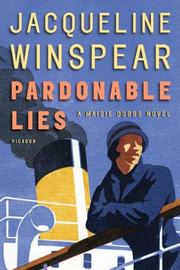
An airman reported dead over France, and Maisie forced back to the battlefields herself. The emotional climax of the opening trilogy — the two earlier books exist largely to make this one land.
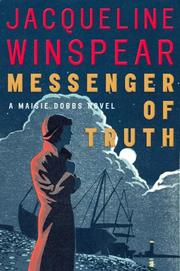
A war artist dies before his exhibition opens. The first case that is really about how the war was going to be remembered rather than about how it was survived.
Hop-picking in Kent, a burned village and a wartime secret. Usually named the best of the early run, and the most self-contained if you want to test the series on one book.
The Thirties
IntermediateRead the middle books, where the Depression bites, Maisie's circumstances change sharply, and the next war starts becoming visible.
▸ Study plan for this stage
Pace: Four books, about 1,330 pages, a month at a comfortable pace. None of these is a slog, but the sequence matters more here than anywhere else in the path: The Mapping of Love and Death changes Maisie's material circumstances permanently, and the two books after it assume that change without re-explai
- Shell shock stops being backstory and becomes the case itself in Among the Mad
- The Depression as texture rather than headline: Billy's family, unemployment, bad housing, and what people will do for money
- A large change in Maisie's circumstances in The Mapping of Love and Death, and how it complicates a woman who has defined herself entirely by work
- The turn from private investigation toward government work, beginning with the Secret Service commission in A Lesson in Secrets
- Fascism and the next war visible at the edges - a Cambridge college, pacifist politics, informers, students being watched
- Empire and race in Leaving Everything Most Loved, and the limits of 1930s London's tolerance
- Winspear deliberately closing threads: these read like the end of a movement rather than a run of instalments
- Maurice's influence still shaping Maisie's decisions after his direct role in the books recedes
- Among the Mad puts a damaged veteran in the villain's position. How does the book avoid turning the war's casualties into monsters, and does it entirely succeed?
- What does Maisie's changed situation in The Mapping of Love and Death take away from her rather than give her?
- A Lesson in Secrets asks her to work for the state rather than for a client. What does she lose in that exchange, and does she notice?
- Leaving Everything Most Loved concerns an Indian community in London. What does Winspear show about who gets investigated and who gets protected?
- Why does the decision that ends this stage feel earned rather than abrupt, given the seven books behind it?
- Add each book's year to your running timeline and note what was happening in Europe that year; Winspear keeps to real chronology and the pressure is cumulative
- Write down the change in Maisie's circumstances in The Mapping of Love and Death, then check it against her behaviour in the two books that follow
- Note every mention of Germany, fascism or rearmament across these four books and watch how the frequency climbs
- Read the final chapter of Leaving Everything Most Loved and decide whether to stop there. It is the strongest stopping point in the series and the last one before the tone changes completely
Next up: Maisie ends this stage by choosing to leave, and Journey to Munich opens with the reason she is called back, into the Germany these four books have been watching arm itself.
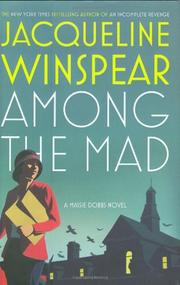
A threat of chemical attack on London from a damaged veteran. The book where shell shock stops being backstory and becomes the case.

An American cartographer's remains are found in France. It also brings a major change in Maisie's material circumstances that everything afterwards depends on — skipping it makes the later books puzzling.
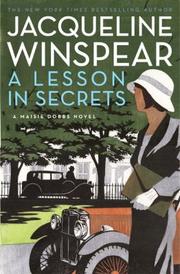
Maisie goes undercover at a Cambridge college and works for the Secret Service for the first time. The pivot from private investigator toward wartime intelligence begins here.

An Indian woman murdered in London, and a decision that ends the first phase of the series. Winspear intended it as a natural break point, and it reads like one.
The Second War
IntermediateFollow Maisie into the war she spent ten books dreading, and to the end of the series.
▸ Study plan for this stage
Pace: Four books, roughly 1,375 pages, three to four weeks. Expect a genre shift: these are espionage and home-front novels rather than detective stories, and the puzzle element thins considerably. Journey to Munich is tense and quick at 320 pages. In This Grave Hour opens on the day Britain declares war
- The series changes genre: intelligence work and wartime service displace the private client and the fee
- Two wars laid directly over one another - Belgian refugees from 1914 being murdered in 1939 is the whole series argued in one image
- Winspear putting Maisie inside real events: Munich in 1938, the declaration of war, the Blitz
- Evacuation, rationing and the civilian home front as the working setting for crime
- Maisie's personal life advancing significantly in the later wartime books after being held still for years
- The final novel returning deliberately to the people and places of the first
- The argument the series has been making since 1929 - that the earlier war never ended for the people who survived it
- Eighteen novels of accumulated cast, and the way The Comfort of Ghosts settles each of them
- Journey to Munich sends Maisie into Nazi Germany. Why does she accept, and what in the previous book made that plausible?
- In This Grave Hour kills survivors of the first war during the second. What does that structure argue that a speech could not?
- How do the wartime novels handle the loss of the detective format - what replaces the client, the fee and the puzzle?
- The American Agent covers the Blitz. Which details convince you it was researched rather than imagined, and which do not?
- The Comfort of Ghosts was written as an ending. Which threads from the first novel does it return to, and does the closure feel true to the character?
- Lay your running timeline alongside a chronology of the war and mark where each novel sits; the fit is close and following it is part of the pleasure
- Compare the opening chapter of In This Grave Hour with the opening of Maisie Dobbs and note what fifteen years and a second war have done to both the prose and the woman
- Note where in the wartime books Maisie's Flanders nursing is invoked directly rather than implied, and what it is being used to do
- List the characters from the earlier stages who reappear in The Comfort of Ghosts and check what each was last seen doing
Next up: You have read thirteen of the eighteen novels, which is the spine of the series from 1929 to 1945; the five this path skips sit in the middle and later runs and can be picked up in publication order whenever you want them, or left alone, since the arc you have followed is complete.

Maisie is sent into Nazi Germany to extract an engineer in 1938. The series changes gear here into espionage; read it after Leaving Everything Most Loved, which explains why she accepts.

Opens on the day war is declared, with Belgian refugees from the first war being murdered in the second. The two wars are finally laid directly over one another, which is the whole series' argument.

An American correspondent killed during the Blitz. The strongest of the wartime novels for atmosphere, and it advances Maisie's personal life significantly.

The eighteenth and final novel, set in 1945, deliberately written to close every thread from the first book. The correct place to stop — Winspear ended the series here on purpose.
Discussion
Keep reading
Paths that share books, cover the same subject, or open a related topic.