Learn magic: sleight of hand and showmanship
This curriculum takes a complete beginner from their very first card palm to the polished showmanship of a seasoned performer. Each stage builds on the last: you first develop clean technique, then deepen your repertoire and misdirection skills, and finally study the psychology and artistry that transform tricks into genuine wonder.
Foundations: First Steps in Sleight of Hand
BeginnerBuild core manual dexterity and learn the universal language of magic — basic card and coin handling, essential sleights, and the mindset of a magician.
▸ Study plan for this stage
Pace: 10–12 weeks total. Weeks 1–6: Mark Wilson's Complete Course in Magic (~20–25 pages/day, working through each chapter's tricks before moving on). Weeks 7–12: The Royal Road to Card Magic (~15–20 pages/day, but spend at least 30–45 minutes of hands-on practice for every 15 pages read — the text demand
- The Magician's Mindset: performance attitude, misdirection, and the 'one-ahead' principle introduced in Wilson's foundational chapters
- Basic Card Handling: the mechanics grip, the dealing grip, and squaring the deck as natural, invisible actions (Royal Road, early chapters)
- The Overhand Shuffle and its uses for controlling a card to the top or bottom of the deck (Royal Road, Chapter 1–2)
- The Key Card Principle: using a known card to locate a spectator's selection without any sleight of hand (Royal Road)
- The Double Lift: cleanly showing two cards as one — the single most important sleight in card magic (Royal Road, Chapter 4)
- Coin Handling Fundamentals: the finger palm, the classic palm, and the French Drop vanish as introduced in Wilson's coin magic section
- Forcing a Card: the classic force and the riffle force as tools for controlling spectator choice (Royal Road)
- Presentation and Patter: Wilson's emphasis on building a script around each effect so the trick tells a story, not just a puzzle
- After reading Wilson's introductory sections, can you explain in your own words what misdirection is and give two concrete examples of how it is used in a trick?
- From The Royal Road to Card Magic, what is the difference between a 'pass' and an 'overhand shuffle control,' and when would you choose one over the other at the beginner stage?
- How does the Key Card Principle work, and why does Royal Road introduce it before teaching any sleight of hand?
- What are the three critical elements of a convincing Double Lift as described in Royal Road — grip, timing, and turnover — and what common mistake does the book warn against?
- From Wilson's coin section, what is the French Drop and what physical action must the non-performing hand make to sell the vanish to an audience?
- How does Wilson's 'Complete Course' structure suggest you should practice a new trick — what is the recommended progression from mirror work to live performance?
- Daily Dexterity Drill (10 min/day): Practice the mechanics grip and dealing grip with a borrowed deck until switching between them feels completely natural and draws no attention — film your hands and compare to Wilson's illustrations.
- Overhand Shuffle Control Log: Using Royal Road's instructions, perform 20 consecutive overhand shuffle top-controls each practice session, then verify the card is actually on top. Track your success rate daily until you hit 95%+ consistency.
- Key Card Routine: Design and perform a complete 3-trick set using ONLY the Key Card Principle (no sleights) for a real spectator. Use Wilson's patter-building framework to script each trick before performing it.
- Double Lift Isolation Practice: Spend one full week doing nothing but Double Lifts — get-ready position, the lift, the replacement — at least 50 repetitions per day in front of a mirror, then record a video to self-critique the 'one card' illusion.
- Coin Vanish Performance Test: Learn the French Drop and finger palm from Wilson's coin chapters, then perform the basic coin vanish for 5 different non-magician spectators. Note which moment each person 'looks' — use that data to refine your misdirection timing.
- End-of-Stage Showcase: Construct a 5-minute, 3-effect routine — one coin trick from Wilson, one self-working card trick using the Key Card from Royal Road, and one sleight-based card trick using the Double Lift from Royal Road — and perform it start to finish for a live audience, applying Wilson's presentation principles throughout.
Next up: Mastering these foundational sleights and the magician's mindset creates the technical vocabulary and performance confidence needed to tackle more sophisticated card controls, false shuffles, and multi-phase routines in the intermediate stage.
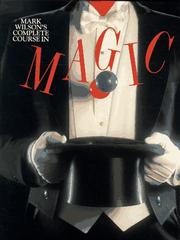
The single best starting point for any beginner — a massive, illustrated survey of cards, coins, rope, and mentalism that gives you a working vocabulary across all branches of magic before you specialize.
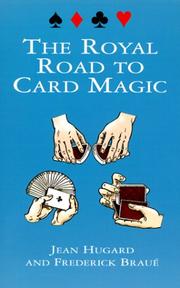
The definitive beginner card manual, teaching fundamental sleights (the pass, the break, the glide) in a carefully sequenced, self-teaching format that builds muscle memory before moving on.
Going Deeper: Expanding the Repertoire
IntermediateMaster a broader and more sophisticated set of sleights, learn to construct full routines, and begin thinking about how effects are structured for an audience.
▸ Study plan for this stage
Pace: 10–14 weeks total: Spend 5–7 weeks on Card College Vol. 1 (~20–25 pages/day, practicing each sleight before moving on), then 5–7 weeks on Card College Vol. 2 at the same pace. Never advance a chapter until you can perform its techniques smoothly at performance speed.
- The mechanics and muscle memory of foundational card sleights: the Overhand Shuffle (and its controls), the Riffle Shuffle, the Hindu Shuffle, and the Double Lift — all covered systematically in Vol. 1
- Card controls and breaks: how to secretly maintain and exploit a break (thumb break, little-finger break) to control a selected card to the top or bottom of the deck
- The Classic Pass and its role as an invisible, in-the-hands card control — introduced in Vol. 1 and refined in Vol. 2
- False shuffles and false cuts: how to maintain deck order while appearing to mix the cards thoroughly, a cornerstone of deceptive card magic
- Palming: the Top Palm and its applications for secretly removing or adding cards, introduced in Vol. 2 as a gateway to advanced card handling
- Routine construction: how Giobbi sequences individual effects into a coherent, paced performance arc — studying the example routines embedded throughout both volumes
- Presentation and misdirection: Giobbi's philosophy (drawn from Ortiz and Ascanio) that technique must be invisible and that timing, eye contact, and patter are as important as the sleight itself
- Card flourishes and handling elegance: the Charlier Cut, the Ribbon Spread, and other display moves that build audience confidence in the performer's skill
- Can you explain the difference between a top control using an Overhand Shuffle and a top control using a Hindu Shuffle, and when you would choose one over the other in performance?
- What is a break, how is it obtained, and how does it serve as the foundation for multiple sleights described across both volumes?
- How does Giobbi recommend you practice a new sleight — what is his stated progression from slow isolated drilling to performance-ready execution?
- What structural elements does Giobbi identify as essential when assembling individual card effects into a full routine (opening effect, middle effects, closer)?
- Why is the Double Lift considered a 'master move,' and what are the most common angles and timing errors that expose it to spectators?
- How do false shuffles and false cuts work together to create the illusion of a thoroughly mixed deck, and what is the psychological principle that makes them convincing?
- Sleight isolation drill: Choose one sleight per week (e.g., Double Lift in week 1, Overhand Shuffle control in week 2). Practice it for 15 minutes daily in front of a mirror, then record yourself on video and compare your angles to Giobbi's illustrations.
- The 'spectator test': After drilling a sleight to smoothness, perform it for one real person without naming it. Ask them afterward if they noticed anything unusual. Log their reaction and adjust accordingly.
- Routine assembly exercise: Select three effects from Vol. 1 and three from Vol. 2 that use compatible sleights. Write a one-page script connecting them with patter and logical transitions, then perform the full 6-effect set end-to-end.
- False shuffle gauntlet: Perform every false shuffle and false cut taught across both volumes back-to-back on a single deck without breaking order. Time yourself and aim to complete the sequence in under 90 seconds while maintaining natural rhythm.
- Palming integration drill (Vol. 2): Practice the Top Palm 50 times per session, then immediately segue into a simple effect that uses it. The goal is to eliminate the 'palm pause' — the telltale hesitation that signals something is hidden.
- Teach-back exercise: After finishing each volume, explain three of its core sleights out loud as if teaching a beginner, using only your hands and words (no book). Gaps in your explanation reveal gaps in your understanding.
Next up: Mastering the sleights and routine-building principles in both Card College volumes gives you the technical vocabulary and performance mindset needed to tackle more advanced, nuanced material — such as psychological forces, impromptu work, and full professional sets — that characterizes the next stage of the curriculum.

The most thorough and pedagogically rigorous card magic course ever written — now that you have basic vocabulary from Royal Road, Giobbi's precise, step-by-step instruction will correct bad habits and deepen every technique.

Read directly after Vol. 1, this volume introduces more demanding sleights and longer routines, pushing your technical ceiling while keeping the same clear teaching style.
The Art of Deception: Misdirection & Psychology
IntermediateUnderstand why magic works on the human mind — learn misdirection, timing, and the psychological principles that make audiences look where you want them to look.
▸ Study plan for this stage
Pace: 4–5 weeks, ~15–20 pages/day; Erdnase rewards slow, deliberate reading — plan for re-reading dense technical passages and pausing to practice each described move before moving on
- Misdirection through naturalness: Erdnase's philosophy that the most deceptive actions are those that appear completely natural and unremarkable to the observer
- The 'blind' and cover mechanics: how one hand's visible, justified action draws attention away from the secret work of the other hand
- Timing and rhythm: the precise moment within a sequence of actions when a secret move must occur to be invisible — neither too early nor too late
- The psychology of expectation: audiences see what they expect to see, and Erdnase's techniques exploit this by conforming to familiar, anticipated patterns of card handling
- Nerve and composure: Erdnase's emphasis on the performer's mental state — confidence, unhurried manner, and the suppression of 'tells' as psychological tools
- The convincing display: staging moments where the audience believes they have full information (e.g., a card is 'clearly' in one place) when they do not — manufacturing false certainty
- Economy of motion: eliminating unnecessary or suspicious movements so that secret actions are buried in plain, minimal handling
- The role of practice in psychological deception: that technical proficiency is itself a psychological weapon — hesitation destroys illusion, fluency creates it
- According to Erdnase, why is a natural, unhurried manner more important to deception than the technical perfection of a sleight in isolation?
- How does Erdnase use the concept of 'cover' — what physical and attentional conditions must exist simultaneously for a secret move to be undetectable?
- Identify a specific sequence in The Expert at the Card Table where timing (the exact moment of execution) is the primary mechanism of deception rather than physical concealment alone.
- What does Erdnase suggest about the performer's psychology and composure, and how does an unsteady mental state betray secret work to an observant spectator?
- How does Erdnase engineer 'convincing displays' — moments that manufacture false certainty in the spectator's mind — and why are these psychologically more powerful than simply hiding an action?
- In what ways does Erdnase's writing imply an understanding of selective attention, even without using modern psychological terminology?
- Slow-motion mirror drill: Perform any Erdnase sleight (e.g., the bottom deal or a false shuffle) at one-quarter speed in front of a mirror, identifying the exact frame where misdirection must occur — then rebuild to full speed only after that moment is internalized
- The 'justified action' audit: For each major sleight you study, write one sentence describing what the action looks like to an observer and one sentence describing what is actually happening — if the two sentences sound similar, the misdirection is working
- Timing log: Perform a chosen Erdnase sequence ten times, marking with a tap or verbal cue the precise moment of the secret action each time — review for consistency, since inconsistent timing is the enemy of invisible technique
- Composure stress test: Perform a practiced Erdnase sequence while a friend asks you questions or tries to distract you — note whether your handling changes under social pressure, and drill until it does not
- False certainty construction: Design a short, self-contained handling sequence (using Erdnase techniques) whose sole goal is to make a spectator absolutely certain a card is in a location where it is not — no full trick needed, just the convincing display moment
- Video review for 'tells': Film yourself performing an Erdnase sleight, then watch it back with the sound off, looking only for changes in body language, facial expression, or rhythm that coincide with the secret action — eliminate each tell systematically
Next up: Mastering Erdnase's foundational psychology of naturalness, timing, and manufactured certainty gives the reader the perceptual framework needed to understand how more advanced performance theory — scripting, persona, and audience management — layers narrative and theatrical misdirection on top of these purely mechanical and attentional principles.
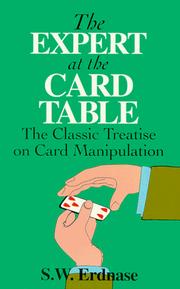
The legendary 1902 masterwork on card handling and deception — now that your technique is solid, Erdnase reveals the deeper logic of sleight of hand and the psychology of the gambling cheat, which is the root of all misdirection.
Showmanship: Presentation & Performance
ExpertTransform technically correct tricks into emotionally resonant performances — develop a performing persona, learn scripting, pacing, and the theatrical craft that creates real wonder.
▸ Study plan for this stage
Pace: 3–4 weeks, ~20–25 pages/day — Absolute Magic is dense with philosophy and nuance, so slower, reflective reading with journaling pauses is strongly recommended over rushing through it
- The 'honest/dishonest' performance framework — Brown's argument that magic should feel emotionally true even when technically deceptive, and why audiences connect with sincerity over cleverness
- Developing a performing persona — crafting a stage identity that is an authentic extension of yourself rather than an adopted costume, and why artificiality kills wonder
- The 'real person' principle — treating spectators as intelligent, feeling humans rather than props or puzzle-solvers, and how this fundamentally reshapes every scripting decision
- Scripting and language — the deliberate choice of every word spoken during a performance, avoiding magician-speak clichés, and writing patter that sounds natural and conversational rather than rehearsed
- Pacing and structure — understanding the emotional arc of a single effect and a full set, knowing when silence is more powerful than words, and how to build and release tension
- The role of meaning — giving each trick a 'reason to exist' beyond the method, anchoring effects in human themes (memory, connection, fate) so the audience feels something rather than merely witnesses something
- Removing the 'look at me' impulse — subordinating ego to the experience of the spectator, and how genuine focus on the audience paradoxically makes the performer more compelling
- Theatrical craft fundamentals — eye contact, physicality, stillness, and the management of attention as tools equal in importance to any sleight of hand
- According to Derren Brown, why is technical perfection insufficient — and potentially harmful — to a truly effective magic performance?
- What does Brown mean by performing with 'honesty,' and how can a performance be simultaneously deceptive and emotionally honest?
- How should a performer go about constructing a genuine performing persona, and what are the warning signs that a persona has become a hollow mask rather than an authentic extension of self?
- How does Brown suggest a magician should approach scripting — what makes language feel alive in performance versus dead on stage?
- What is the 'reason to exist' principle, and how would you apply it to a specific effect from your own repertoire to give it genuine emotional weight?
- How does Brown's philosophy reframe the relationship between performer and spectator, and what practical changes to your performance behaviour follow from that reframing?
- Persona audit: Write a one-page honest self-portrait — your genuine interests, quirks, worldview, and communication style. Then map your current performing persona against it. Identify every gap where you are 'performing a magician' rather than performing as yourself, and draft three specific changes to close those gaps.
- Script surgery: Take one effect you already perform and write out every word you currently say during it. Then rewrite the script from scratch using Brown's principles — eliminate all clichés, give the effect a human theme, and read it aloud until it sounds like natural speech. Record both versions and compare.
- The silent run-through: Perform a full effect in front of a mirror with no patter at all. Focus entirely on physicality — eye contact with your reflection, stillness, where your hands go when they are not 'doing magic.' Identify every moment where nervous movement or fidgeting fills silence that should be left empty.
- Meaning mapping: Choose three effects from your repertoire and, for each one, write a single sentence that answers 'why does this moment matter to a human being?' If you cannot write that sentence, redesign the presentation until you can.
- Audience-focus drill: Perform a short set for a small group of friends and instruct one observer to count every moment your attention is visibly on yourself (checking your own hands, looking away during a reaction, rushing past a spectator's emotion). Debrief and set a target to reduce that count by half in the next run.
- Pacing and arc design: Map the emotional journey of a 10–15 minute set as a simple graph — label peaks of tension, moments of release, silences, and the final emotional landing. Perform the set, then re-draw the graph based on what actually happened. Iterate until the intended and actual arcs match.
Next up: Absolute Magic instills the philosophical and theatrical foundation for why performance matters; the next stage can now build outward — exploring how these principles scale to specific contexts such as close-up, stage, or mentalism, and how to continue refining a mature, fully-owned performing identity through real-world performance experience and critical self-review.
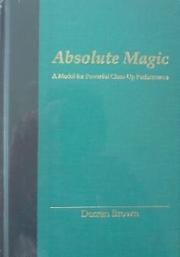
Derren Brown's treatise on performance philosophy challenges you to think about character, honesty, and meaning in magic — the ideal capstone that pushes you to develop your own unique performing voice.
Discussion
Keep reading
Paths that share books, cover the same subject, or open a related topic.