LEGO Building: The Best Books on Brick Art and MOCs
This curriculum takes you from LEGO fundamentals and core building vocabulary all the way through advanced MOC design, mechanical systems, and brick art — each stage building directly on the last. Starting with official LEGO technique guides and progressing through fan-community masterworks, you'll develop the eye, the vocabulary, and the hands-on skills to design and build impressive custom creations.
Foundations: Thinking in Bricks
BeginnerUnderstand core LEGO building principles, part vocabulary, and fundamental techniques so every later book makes immediate sense.
▸ Study plan for this stage
Pace: 4–5 weeks, ~25–30 pages/day (approximately 150–180 pages total across both books)
- LEGO brick anatomy: studs, tubes, and how pieces connect mechanically
- Color theory and visual composition in brick art (contrast, balance, emphasis)
- Basic structural principles: stability, weight distribution, and foundation building
- Part identification and naming conventions (plates, bricks, slopes, minifigure parts, specialized pieces)
- Fundamental building techniques: layering, interlocking, creating clean edges and smooth surfaces
- Design thinking: planning builds before starting, sketching, and iterating
- Adapting techniques across different themes and scales (minifigure-scale, display models, large structures)
- What is the difference between a stud and a tube, and why does this distinction matter for structural integrity?
- How do you plan a LEGO build before placing the first brick, and what role does sketching play in the process?
- What are the core principles of color composition in LEGO art, and how do contrast and balance affect the visual impact of a model?
- Name and describe at least five different LEGO part types and explain when you would use each in a build.
- What techniques ensure a LEGO structure remains stable, and how do you troubleshoot a wobbly or collapsing model?
- How do the building techniques in minifigure-scale models differ from those used in large display pieces?
- Inventory and sort your LEGO collection by part type and color; create a visual reference guide of the parts you own
- Build three small structures (under 100 bricks each) focusing on one technique per build: layering, interlocking, and creating smooth surfaces
- Sketch a simple scene or object on paper, then build it in LEGO without referring to instructions; compare your result to your sketch and iterate
- Rebuild one model from each book using only the techniques you've learned so far, without following the original instructions
- Create a color study: build three versions of the same simple structure (e.g., a 10×10 base) using different color schemes and evaluate which is most visually striking
- Deconstruct a completed LEGO model and document how it was built by photographing each layer; write a brief explanation of the structural choices
Next up: This stage establishes the vocabulary, mechanical understanding, and hands-on confidence needed to tackle more complex builds, specialized techniques (like SNOT building or advanced minifigure customization), and larger thematic projects in subsequent stages.
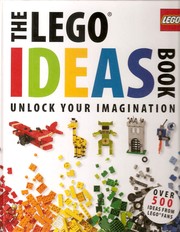
An official, visually rich introduction to building across every major theme — it trains your eye to see how bricks combine and sparks creative thinking before any technical depth is introduced.
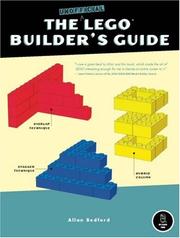
The essential primer on LEGO geometry, stud measurements, and structural logic; reading this second gives you the precise vocabulary and spatial intuition that all advanced books assume you already have.
Technique Mastery: Building Better
IntermediateLearn SNOT, advanced part usage, color theory, and the professional techniques used by top builders to make MOCs look polished and intentional.
▸ Study plan for this stage
Pace: 8–10 weeks, ~25–30 pages/day, with 2–3 days per week dedicated to hands-on building practice
- SNOT (Studs Not On Top) techniques and their applications in creating smooth, angled, and organic surfaces
- Advanced part usage: leveraging unconventional pieces, brackets, and connectors to achieve structural integrity and aesthetic polish
- Color theory and intentional color palettes: creating visual hierarchy, contrast, and cohesion in MOCs
- Architectural principles from 'The LEGO Architect': proportion, symmetry, and how real-world design translates to brick form
- Techniques for achieving professional finish: texture, detail placement, and avoiding the 'toy-like' appearance
- Forbidden techniques and structural hacks from 'Forbidden LEGO': understanding when and why to break standard building rules for effect
- Composition and visual storytelling: how top builders guide the viewer's eye and create intentional focal points
- What is SNOT building, and how does it differ from traditional stud-up construction? Give three specific examples from 'The LEGO Architect'.
- How does Mike Doyle use color theory and intentional color choices to create visual impact in 'Beautiful LEGO'? Describe one specific MOC and its color strategy.
- What are three 'forbidden' techniques discussed in 'Forbidden LEGO,' and when is it appropriate to use them in your own builds?
- How can you use advanced parts (brackets, connectors, slopes) to create smoother surfaces and more professional-looking models?
- What architectural principles from 'The LEGO Architect' can you apply to your own MOCs to improve proportion and visual balance?
- How do professional builders avoid making their MOCs look like toys? What specific techniques are demonstrated across these three books?
- Complete at least two SNOT-focused builds from 'The LEGO Architect' tutorials, focusing on angled surfaces and non-traditional stud placement.
- Analyze three MOCs from 'Beautiful LEGO' and document their color palettes, noting which colors are dominant, secondary, and accent colors. Then rebuild one of them using a completely different color scheme and compare the visual impact.
- Build a small architectural structure (house, tower, or pavilion) using principles from 'The LEGO Architect,' then refine it using SNOT techniques to smooth out rough edges.
- Experiment with 'forbidden' techniques from 'Forbidden LEGO' by building a small test model that intentionally uses at least three unconventional methods, then evaluate whether the result improves the build.
- Create a MOC that deliberately incorporates advanced parts (brackets, clips, connectors) in visible ways, and document how these parts improve structural stability and visual interest.
- Rebuild one of your previous MOCs using the techniques learned across all three books—apply SNOT where appropriate, refine your color choices, and add professional finishing touches.
Next up: This stage transforms you from a builder who follows instructions into one who understands the *why* behind professional design choices, preparing you to develop a personal building style and tackle complex, original MOCs in the next stage.

Uses architectural styles (Art Deco, Modernism, etc.) as a lens to teach advanced techniques like SNOT and micro-scale building — a perfect bridge from basic stacking to deliberate design.
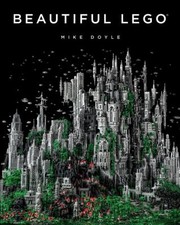
A curated gallery of the world's best MOCs that trains aesthetic judgment; reading it alongside technique books teaches you what 'good' looks like and why certain design choices work.
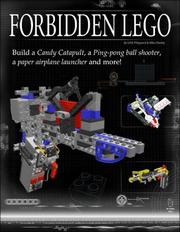
Written by a former LEGO designer, this book reveals the unofficial techniques and rule-breaking builds that push parts beyond their intended use — essential for developing a fearless, experimental mindset.
Specialized Craft: Mechanisms & Sculpture
IntermediateMaster LEGO Technic mechanical systems and large-scale sculptural building so you can add motion, function, and organic form to your creations.
▸ Study plan for this stage
Pace: 6–8 weeks, ~25–30 pages/day with 2–3 building sessions per week (90–120 minutes each)
- LEGO Technic beam and connector systems: understanding load distribution, structural integrity, and how to build stable frameworks that support moving parts
- Gear ratios, power transmission, and mechanical advantage: how to calculate and apply gearing systems to create speed reduction, torque multiplication, and synchronized motion
- Motor integration and actuation: selecting appropriate motors, power sources, and control methods to drive Technic mechanisms effectively
- Sculptural form and organic modeling: techniques for creating curved surfaces, flowing lines, and naturalistic shapes using LEGO bricks at scale
- Scale and proportion in model building: maintaining accurate ratios, planning dimensions, and adapting designs across different size ranges
- Combining mechanics with aesthetics: balancing functional systems with visual appeal so that moving parts enhance rather than detract from the final form
- Advanced building techniques: friction management, axle alignment, and stress-testing to ensure mechanisms operate smoothly under repeated use
- How do LEGO Technic beams distribute load, and what structural principles determine whether a framework will support a moving mechanism without flexing or breaking?
- Given a desired output speed and torque requirement, how would you design a gear train using Technic gears, and what trade-offs exist between speed and power?
- What are the key differences between motor types (e.g., M, L, XL motors in modern sets), and how do you select the right motor for a specific mechanical application?
- How can you create smooth, organic curves and sculptural forms using rectangular LEGO bricks, and what techniques minimize the 'studs-out' appearance?
- What is the relationship between model scale and structural feasibility, and how do you adapt a design when building at a significantly larger or smaller size?
- How do you integrate a functional mechanism (e.g., a walking gait, rotating joint, or lifting arm) into a sculpture so that the motion feels intentional and enhances the artistic vision?
- Build three simple gear trains from 'The LEGO Technic Idea Book' (e.g., speed reduction, torque multiplication, bevel gears), measure their input/output speeds, and verify your gear ratio calculations
- Construct a motorized mechanism from the book (e.g., a walking model, rotating turntable, or articulated arm), test it for smooth operation, and troubleshoot any binding or misalignment
- Design and build a small-scale sculptural form (animal, vehicle, or abstract shape) using Technic beams as an armature, then add curved plating or stacked bricks to create organic surfaces
- Recreate one complete model from 'The art of LEGO scale modeling' at the recommended scale, paying close attention to proportion, detail, and structural stability
- Plan a scale model of a real-world object (car, building, creature) at two different scales (e.g., 1:20 and 1:40), calculate the brick counts and motor requirements for each, and build at least one version
- Combine a Technic mechanism with a sculptural form: build a motorized sculpture (e.g., a flapping bird, walking creature, or articulated figure) where the motion is integral to the design
Next up: This stage equips you with the mechanical and sculptural foundations to tackle advanced topics like automated systems, complex articulation, and large-scale installations where precision engineering and artistic vision must work seamlessly together.

Isogawa's wordless, photo-driven format lets you absorb gears, levers, and linkages purely by example — the ideal starting point for understanding how LEGO mechanisms actually work.

Builds directly on Simple Machines by applying those mechanisms to vehicles and complex drive systems, expanding your mechanical repertoire with real-world applications.

Focuses on large-scale, high-fidelity MOC construction and teaches how to plan, proportion, and execute ambitious builds — the capstone of the intermediate stage.
Advanced MOC Design & Brick Art
ExpertApply a designer's mindset to original MOC creation and pixel/mosaic brick art, combining all prior technical and aesthetic knowledge into cohesive, impressive finished works.
▸ Study plan for this stage
Pace: 4–5 weeks, ~25–30 pages/day with daily building practice
- Narrative-driven MOC design: using storytelling and thematic coherence to guide building decisions
- Architectural principles applied to LEGO: scale, proportion, symmetry, and spatial relationships in neighborhood settings
- Color theory and palette management: selecting and limiting colors to create visual harmony and impact
- Modular building systems: designing individual buildings that connect cohesively within a larger neighborhood framework
- Texture and detail layering: using brick variety, slopes, and specialized pieces to add depth and realism
- Pixel art and mosaic techniques: translating 2D images into 3D brick art using color blocking and pattern recognition
- Iterative design process: sketching, prototyping, and refining MOCs based on visual feedback and structural integrity
- How does Brian Lyles use narrative and theme to guide the design of individual buildings within a neighborhood?
- What architectural principles (scale, proportion, symmetry) does Lyles demonstrate, and how can you apply them to your own neighborhood MOC?
- How do color choices and palette limitations affect the visual cohesion of a multi-building neighborhood project?
- What techniques does Lyles use to add texture, detail, and realism to LEGO buildings, and which specialized pieces are most effective?
- How can you design modular buildings that work independently but also integrate seamlessly into a larger neighborhood layout?
- What is the relationship between 2D pixel/mosaic art and 3D brick building, and how do you translate one into the other?
- How do you evaluate and iterate on a MOC design based on visual feedback and structural concerns?
- Build one complete neighborhood-scale MOC (3–5 interconnected buildings) inspired by a real location or fictional setting, applying Lyles' design principles
- Create a detailed color palette study: select 4–6 colors and design three different building facades using only those colors to explore harmony and contrast
- Design and construct a modular building system where individual structures can stand alone or connect to others; document the connection points and structural logic
- Translate a 2D pixel art image or photograph into a 3D brick mosaic or wall art, experimenting with color blocking and scale
- Sketch three neighborhood layouts on paper before building, focusing on spatial relationships, sight lines, and thematic flow
- Analyze one completed MOC from 'The LEGO Neighborhood Book' by identifying its color palette, architectural details, and narrative elements; then redesign one building from it with a different theme
- Build a detailed "streetscape" section (2–3 adjacent buildings with ground-level details, signage, and landscaping) that demonstrates advanced texture and realism techniques
Next up: This stage equips you with the integrated design thinking and execution skills to tackle increasingly ambitious, thematically complex projects—whether expanding into larger urban dioramas, specialized architectural styles, or collaborative community-building challenges that demand both technical precision and artistic vision.

A deep dive into modular, city-scale MOC design that teaches planning, consistency, and how to build interconnected scenes — critical skills for any large original project.
Discussion
Keep reading
Paths that share books, cover the same subject, or open a related topic.