Kurt Vonnegut Reading Order: Where to Start
This curriculum moves from Vonnegut's most accessible and beloved novel through his major fictional works, then into his nonfiction voice — essays, speeches, and memoir — so the reader builds an intimate understanding of both his art and his worldview. Each stage deepens familiarity with his dark humor, humanist philosophy, and structural experimentation before arriving at the man behind the prose.
The Perfect Entry Point
BeginnerFall in love with Vonnegut's voice, dark humor, and signature style through his most celebrated and accessible novel.
▸ Study plan for this stage
Pace: 4–5 weeks total: Week 1–2 — Read "The Sirens of Titan" (~30 pages/day, ~260 pages); Week 3–5 — Read "Cat's Cradle" (~25 pages/day, ~287 pages), slowing down to savor the short chapters and aphoristic prose.
- Vonnegut's dark humor and satirical voice: how he uses comedy to expose the absurdity of human ambition, war, and meaning-making
- Free will vs. determinism: 'The Sirens of Titan' systematically dismantles the idea that human choices matter, while 'Cat's Cradle' shows how humans desperately invent meaning anyway
- Invented mythology and religion: Bokononism in 'Cat's Cradle' as a self-aware 'pack of lies' that still provides comfort — Vonnegut's complex relationship with faith and fiction
- The short chapter as a literary weapon: 'Cat's Cradle' rarely exceeds two pages per chapter; understanding how this fragmented structure creates rhythm, irony, and momentum
- Science and technology as double-edged swords: Ice-nine in 'Cat's Cradle' and the Tralfamadorian manipulation in 'The Sirens of Titan' both show human ingenuity turned catastrophic
- The 'everyman' protagonist: Malachi Constant and John/Jonah are ordinary, morally unremarkable men swept up in cosmic or apocalyptic forces — a Vonnegut signature
- Fatalism with warmth ('So it goes' before it was coined): even without the phrase, 'The Sirens of Titan' establishes Vonnegut's emotional stance — tragedy acknowledged, then gently shrugged off
- Metafictional self-awareness: Vonnegut's narrators and framing devices (the retrospective narrator in 'Cat's Cradle', the omniscient cosmic irony in 'The Sirens of Titan') that keep the reader at a knowing distance
- By the end of 'The Sirens of Titan', what is revealed to be the true purpose of all human history, and how does Vonnegut use this revelation to satirize humanity's search for cosmic significance?
- What is Bokononism, and why does Vonnegut make it explicitly founded on 'foma' (harmless lies)? What does this say about the role of religion and storytelling in human life?
- How does Vonnegut use the structure of 'Cat's Cradle' — its tiny chapters, its calypso verse, its aphorisms — to reinforce the novel's themes rather than simply decorate them?
- Both novels feature an apocalyptic or world-altering ending. Compare how Vonnegut handles catastrophe in each book: what emotional tone does he strike, and what is the reader left feeling?
- Identify two or three moments of dark humor in each novel. How does the humor function — does it soften the blow of a serious idea, expose hypocrisy, or do something else entirely?
- How do Malachi Constant ('The Sirens of Titan') and the narrator John ('Cat's Cradle') each grapple with the question of whether their lives have purpose? What answers, if any, does Vonnegut offer?
- Voice imitation journal: After finishing each novel, write one page in Vonnegut's style — short sentences, dark irony, a cosmic observation about something mundane in your own life. Compare the two attempts to see how his voice evolved between books.
- Chapter dissection ('Cat's Cradle'): Pick any five consecutive chapters and map out their structure — length, tone shift, what plot or thematic work each one does. Then ask: could any of them be cut? What does that reveal about Vonnegut's economy of prose?
- Bokononism field guide: Create your own one-page 'Book of Bokonon' entry. Invent a Bokononist concept (like a 'karass' or 'granfalloon') for a group or institution in your own life, and write its definition in Bokonon's calypso-inflected, paradoxical style.
- Determinism debate: Write a short (one-page) argument FOR and then AGAINST the idea that free will exists, using only evidence drawn from the events of 'The Sirens of Titan'. Which side does Vonnegut seem to take — or does he refuse to choose?
- Ending analysis: Reread the final 10 pages of both novels back-to-back. Write a paragraph on each, describing the emotional 'note' Vonnegut ends on. Then write a third paragraph comparing them: is Vonnegut more hopeful, more nihilistic, or something harder to name by the time he writes 'Cat's Cradle'?
- Satirical target map: For each novel, list the specific institutions, ideologies, or human behaviors Vonnegut is satirizing (e.g., capitalism, militarism, scientism, organized religion). Note whether his critique is gentle, savage, or ambivalent — this will become a key lens for later Vonnegut reading.
Next up: Mastering Vonnegut's voice, fatalistic humor, and thematic obsessions in these two novels gives readers the emotional and stylistic fluency needed to tackle his more autobiographically raw and structurally experimental work ahead.
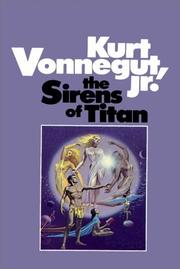
Often recommended as the ideal first Vonnegut — it's funnier and more plot-driven than Slaughterhouse-Five, easing the reader into his absurdist sci-fi worldview and fatalistic humor without the structural complexity of his later masterworks.
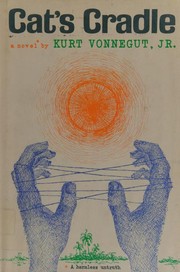
A short, razor-sharp satire of religion, science, and the end of the world. Reading it second cements the Vonnegut 'voice' and introduces his invented religion Bokononism, a recurring philosophical lens in his work.
The Masterworks
IntermediateEngage with Vonnegut's two most important and structurally ambitious novels, now equipped with the vocabulary his earlier books built.
▸ Study plan for this stage
Pace: 6–8 weeks total: Week 1–2 — Mother Night (~20 pages/day, including the Introduction and Editor's Note); Week 3–5 — Slaughterhouse-Five (~15 pages/day, re-reading key chapters slowly); Week 6–8 — Breakfast of Champions (~20 pages/day, pausing to study Vonnegut's illustrations and metafictional interr
- Unreliable narration and moral ambiguity: Mother Night's Howard W. Campbell Jr. forces the reader to question whether a man can be guilty of a performance he never drops
- The 'we are what we pretend to be' thesis: Vonnegut's explicit moral in Mother Night and how identity is constructed through sustained role-play
- Non-linear, fragmented narrative structure: Slaughterhouse-Five's time-jumping mirrors Billy Pilgrim's trauma and the impossibility of telling a war story straight
- Gallows humor and the 'So it goes' refrain: how Vonnegut uses comic fatalism in Slaughterhouse-Five to process mass death without sentimentality or exploitation
- The Dresden firebombing as historical anchor: understanding the real event that haunted Vonnegut and shaped the novel's anti-war argument
- Metafiction and authorial intrusion: Breakfast of Champions features Vonnegut inserting himself as a character, dissolving the boundary between author, narrator, and fiction
- Vonnegut's visual language: the hand-drawn illustrations in Breakfast of Champions as a second, ironic text running alongside the prose
- Free will vs. determinism: the Tralfamadorian worldview in Slaughterhouse-Five and Kilgore Trout's fiction-within-fiction in Breakfast of Champions both interrogate whether human agency is an illusion
- In Mother Night, Howard Campbell claims he was a secret American agent, yet the novel's moral insists he is guilty anyway — what exactly is he guilty of, and how does Vonnegut construct that argument through form as well as content?
- How does Slaughterhouse-Five's non-chronological structure function as an argument about trauma, memory, and the limits of language — and why does Vonnegut say 'there is nothing intelligent to say about a massacre'?
- What does the Tralfamadorian concept of time do to the novel's treatment of free will, and is Billy Pilgrim's acceptance of it presented as wisdom, delusion, or coping mechanism?
- Breakfast of Champions breaks the fictional frame repeatedly — what is Vonnegut critiquing about American culture, consumerism, and the power of stories when he sets his characters 'free'?
- How do Kilgore Trout's in-universe science-fiction stories function as a satirical device across Slaughterhouse-Five and Breakfast of Champions?
- Across all three novels, how does Vonnegut balance comedy and horror, and what would be lost if either element were removed?
- Moral audit of Howard Campbell: After finishing Mother Night, write a one-page 'verdict' on Campbell's guilt or innocence, citing specific scenes. Then argue the opposite position. Notice which argument feels more honest and why.
- Timeline reconstruction: Draw a physical timeline of Billy Pilgrim's life events in the order they actually occurred, then number them in the order Vonnegut presents them. Annotate 3–4 jumps and explain what emotional or thematic effect each reordering creates.
- 'So it goes' tracking: As you read Slaughterhouse-Five, log every instance of 'So it goes' with the death or loss it marks. At the end, review the list — what does the cumulative effect reveal about the novel's relationship to grief and scale?
- Illustrate your own Breakfast of Champions moment: Choose one scene or concept from any of the three novels and render it in a simple drawing or diagram in Vonnegut's style. Reflect in a paragraph on what the visual form reveals that prose alone cannot.
- Kilgore Trout story-within-a-story: Write a 200–300 word Kilgore Trout short story (a pulp sci-fi premise with a dark satirical point) that could plausibly appear in either Slaughterhouse-Five or Breakfast of Champions. This forces you to internalize Vonnegut's satirical method.
- Comparative theme essay: Write a 500-word essay arguing that one single theme — identity, free will, or the ethics of storytelling — is the true connective tissue across all three novels, using at least one piece of textual evidence from each book.
Next up: Mastering these three novels — Vonnegut's most structurally daring and thematically dense work — gives the reader the critical fluency needed to explore his later, more experimental and self-reflective writing, where the formal risks and personal confessions become even more pronounced.
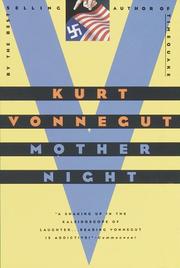
A darker, tighter novel about identity and moral complicity in WWII — it bridges the lighter early work to Slaughterhouse-Five and introduces the moral seriousness beneath Vonnegut's comedy.
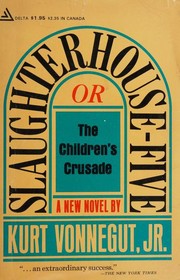
Vonnegut's undisputed masterpiece and the emotional center of his entire career. Having read the earlier novels, the reader can now fully appreciate its non-linear structure, the Tralfamadore concept, and the weight of 'So it goes.'

A wild, self-aware follow-up to Slaughterhouse-Five in which Vonnegut inserts himself into the story. Best read immediately after, as it deconstructs the very fictional universe the reader has just inhabited.
Deeper Into the Fiction
IntermediateExplore the full range of Vonnegut's novelistic career — his early work, his late-career reflections, and his underrated gems.
▸ Study plan for this stage
Pace: 4–5 weeks total: Week 1–2 — Read *God Bless You, Mr. Rosewater* (~190 pages, ~25–30 pages/day); Week 3–5 — Read *Hocus Pocus* (~300 pages, ~25–30 pages/day). Reserve the final 2–3 days of each book for review, journaling, and discussion.
- The 'Rosewater Problem' — Vonnegut's sustained interrogation of inherited wealth, guilt, and the moral obligations of the rich to the poor, as dramatized through Eliot Rosewater's quixotic philanthropy
- Satirical idealism vs. systemic cynicism — how Eliot's genuine compassion is treated as madness by a society that rewards greed, and what that says about American capitalism
- Vonnegut's narrative fragmentation — the episodic, non-linear structure used in both novels as a formal mirror of broken societies and unreliable memory
- The Vietnam War as moral wound — *Hocus Pocus* uses protagonist Eugene Debs Hartke's service and its aftermath to dissect American militarism, class, and collective denial
- Unreliable and self-implicating narrators — both Eliot Rosewater and Eugene Hartke are flawed, self-aware men whose confessions invite the reader to question their reliability and culpability
- Vonnegut's late-career pessimism — comparing the relative hopefulness of Eliot's charity in *God Bless You, Mr. Rosewater* with the bleaker, more resigned tone of *Hocus Pocus*, written 25 years later
- Intertextual self-reference — the appearance of Kilgore Trout in *God Bless You, Mr. Rosewater* and his role as a vessel for Vonnegut's own alienated artistic voice
- Social Darwinism and its discontents — how both novels attack the myth of meritocracy and expose the randomness of fortune and misfortune in American life
- In *God Bless You, Mr. Rosewater*, why does Vonnegut frame Eliot's compassion as a form of insanity — and what is he arguing about a society that reaches that conclusion?
- How does Kilgore Trout function in *God Bless You, Mr. Rosewater* — is he a hero, a cautionary figure, or something more ambiguous?
- In *Hocus Pocus*, how does Eugene Debs Hartke's name itself signal Vonnegut's thematic concerns, and how does Hartke's life story embody the contradictions of the American Dream?
- Both novels use fragmented, non-linear structures. How does this formal choice serve each book's specific themes — and does it work equally well in both?
- Comparing the two books: how did Vonnegut's view of the possibility of individual moral action within a corrupt system shift between the mid-1960s and 1990?
- How does *Hocus Pocus* use the near-future prison-state setting as a satirical device, and what real anxieties of late 20th-century America does it reflect?
- **Compassion Audit:** As you read *God Bless You, Mr. Rosewater*, keep a running log of every act of charity Eliot performs. After finishing, categorize them: Which acts seem genuinely helpful? Which seem self-serving or delusional? Write a one-page verdict on whether Eliot is a saint, a fool, or both.
- **Structural Mapping:** For each novel, draw a timeline or diagram of the narrative's chronological events vs. the order in which they are revealed. Annotate where Vonnegut withholds or reorders information — then write a paragraph explaining what effect each major reordering creates.
- **Voice Comparison Essay:** Write 400–600 words comparing the narrative voices of Eliot Rosewater and Eugene Debs Hartke. How does each man's self-presentation reveal his blind spots? Which narrator do you trust more, and why?
- **The Pessimism Spectrum:** Place both novels on a spectrum from 'hopeful' to 'despairing.' Use at least three specific passages from each book as evidence. Then write a brief argument: does Vonnegut's darkening worldview make *Hocus Pocus* a lesser or greater achievement than *God Bless You, Mr. Rosewater*?
- **Kilgore Trout Close Read:** Re-read every scene featuring Kilgore Trout in *God Bless You, Mr. Rosewater*. Write a character sketch: What does Trout represent? How does his presence change the meaning of Eliot's story? Consider why Vonnegut keeps returning to this character across his career.
- **Contemporary Parallel:** Choose one central theme from *Hocus Pocus* (e.g., mass incarceration, military class divide, corporate education) and research one real-world news story or statistic that speaks to it. Write a one-page reflection on how Vonnegut's 1990 satire holds up as prophecy.
Next up: Mastering Vonnegut's range — from the idealistic satire of *God Bless You, Mr. Rosewater* to the weary disillusionment of *Hocus Pocus* — equips the reader to engage critically with his most celebrated and complex works, where all these techniques and themes converge at their most refined.
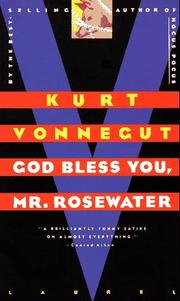
Vonnegut's most compassionate novel, about wealth, mental illness, and human kindness. It reveals the tender humanism that underlies all his satire and is essential for a complete picture of his values.
One of his strongest late novels, set in a near-future America in decline — it shows how his themes of war, class, and American failure evolved across his career and rewards readers who know his earlier work.
The Man Behind the Prose: Essays & Speeches
ExpertHear Vonnegut speak directly — his nonfiction reveals the autobiographical roots of his fiction, his political convictions, and his philosophy of writing and living.
▸ Study plan for this stage
Pace: 8–10 weeks total: ~2.5–3 weeks per book at a relaxed but engaged pace. Palm Sunday (~300 pp): ~15–18 pages/day; Fates Worse than Death (~240 pp): ~12–15 pages/day; A Man Without a Country (~150 pp): ~10–12 pages/day. Reserve the final week for synthesis, re-reading marked passages, and completing ex
- Vonnegut's autobiographical method — how personal trauma (Dresden, his mother's suicide, his sister's death) is processed and transformed into both nonfiction argument and fictional narrative across all three books
- The collage/mosaic form: Palm Sunday and Fates Worse than Death are deliberately non-linear assemblages of speeches, letters, and essays — understanding why Vonnegut chose fragmentation as a structural philosophy
- Humanism as a lived creed: Vonnegut's formal role as Honorary President of the American Humanist Association and how secular humanism underpins his ethics, his comedy, and his critique of organized religion throughout all three books
- Political dissent and the artist's responsibility: from his anti-Vietnam War speeches in Palm Sunday to his post-9/11 fury in A Man Without a Country, tracing how Vonnegut understood the writer as a necessary irritant to power
- The philosophy of writing and style: Palm Sunday's self-graded 'report card' on his own works and his famous rules for short-story writing reveal a deeply self-aware craftsman; A Man Without a Country extends this into meditations on why art matters at all
- Dark comedy as a survival mechanism: across all three books, Vonnegut theorizes his own use of humor — laughter not as escape but as the only sane response to an insane world
- The Dresden thesis revisited in nonfiction: while Slaughterhouse-Five dramatized the firebombing, Fates Worse than Death and Palm Sunday allow Vonnegut to speak about it directly, showing how the event remained a moral and psychological anchor throughout his life
- Legacy, aging, and disillusionment: A Man Without a Country, written in his early eighties, functions as a valediction — mapping how his optimism curdled into grief without ever fully extinguishing his love for human beings
- In Palm Sunday, Vonnegut assigns letter grades to his own novels and plays — what does this self-assessment reveal about his artistic values, and do you agree or disagree with his verdicts based on what you've read in earlier stages?
- How does Fates Worse than Death expand or complicate the account of Dresden and its aftermath that Vonnegut gave in his fiction? What does the nonfiction register allow him to say that the novel could not?
- Vonnegut repeatedly invokes his humanism as a moral framework across all three books — how consistently does he apply it, and where, if anywhere, does his practice seem to contradict his stated principles?
- A Man Without a Country was written after 9/11 and the invasion of Iraq — how does Vonnegut's political voice in that book differ in tone and urgency from the political essays collected in Palm Sunday and Fates Worse than Death?
- All three books use a collage or anthology structure rather than a sustained argument. What are the artistic and rhetorical advantages of this form for Vonnegut's purposes? What are its limitations?
- By the end of A Man Without a Country, what is Vonnegut's final verdict on the human species — and how does it square with the humanism he professed throughout his career?
- Annotation dialogue: As you read each book, mark every passage where Vonnegut references an event or character from his fiction (e.g., a mention of Billy Pilgrim, Kilgore Trout, or Bokonon). After finishing all three books, write a 500-word reflection on how the nonfiction reframes or deepens your reading of the novels from earlier stages.
- Apply the rules: Palm Sunday contains Vonnegut's famous rules for writing a short story. Draft a 600–800 word short story that consciously attempts to follow every rule. Then write a brief self-critique: which rules did you honor, which did you break, and why?
- Grade your Vonnegut: Inspired by Palm Sunday's self-grading exercise, create your own annotated 'report card' for the Vonnegut works you've read across this entire curriculum — assign a grade, write 2–3 sentences of justification for each, and identify which book you think is most underrated by Vonnegut himself.
- Speech reconstruction: Fates Worse than Death and Palm Sunday both include transcribed speeches. Choose one speech, strip away Vonnegut's jokes and digressions, and reduce it to its bare logical argument in bullet-point form. Then write a paragraph analyzing what the humor and digression add back — what would be lost without them?
- Political timeline: Create a visual or written timeline that maps the major political events Vonnegut responds to across all three books (WWII, Vietnam, Watergate, Reagan-era nuclear anxiety, 9/11, Iraq War). Annotate each event with a direct quotation from the relevant book. Reflect in 300 words on how his political voice evolved over five decades.
- Letter to Vonnegut: A Man Without a Country reads, in part, like a letter to the reader from a dying man. Write a 400-word letter back to Vonnegut responding to his most provocative claim in that book — agree, push back, or complicate his argument using evidence from Palm Sunday or Fates Worse than Death.
Next up: Having heard Vonnegut's unmediated voice — his convictions, his wounds, his theory of his own art — the reader is now equipped to return to the fiction with a biographer's eye, tracing the precise seams where autobiography, philosophy, and invention fuse in his novels and stories.

An autobiographical collage of essays, speeches, and letters — the first place Vonnegut drops the fictional mask entirely. Essential for understanding the real experiences that shaped his novels.
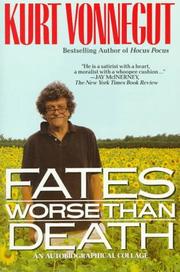
A follow-up essay collection that is more politically urgent and personally candid than Palm Sunday, best read second as it assumes familiarity with his life and worldview.

His final book, written in old age — a short, furious, and funny collection of essays on American politics, art, and mortality. The perfect capstone to the entire curriculum: Vonnegut's last word.
Discussion
Keep reading
Paths that share books, cover the same subject, or open a related topic.