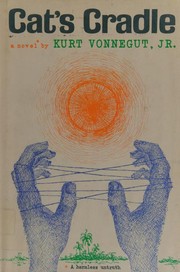
Start with Cat's Cradle. It is short, it is the funniest thing he wrote, and it arrives at the end of the world by way of a fake religion invented by two men on a Caribbean island and a substance called ice-nine that freezes water at room temperature. It carries all the Vonnegut apparatus — the tiny chapters, the flat deadpan, the invented cosmology, the refusal to let a joke and a horror stay separate — with none of the weight of expectation attached to the famous one.
Slaughterhouse-Five is the famous one, and it is a great novel, and it is a worse introduction. The Dresden firebombing material is real autobiography handled with enormous care, the time-slippage structure is doing something specific, and most people arrive at it having been told for years that it is a masterpiece. Read it second, when you already know how his sentences work. You will get much more out of it and you will not spend the first fifty pages waiting to be impressed.
The strong run
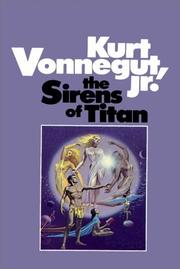
Cat's Cradle, then Slaughterhouse-Five, then The Sirens of Titan — his second novel, a genuine space opera in which the whole of human history turns out to have been arranged for a trivial purpose, and the funniest sustained thing in his early work.
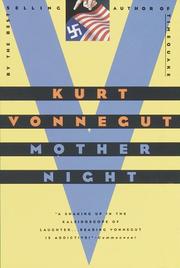
Then Mother Night, which is different in kind: no science fiction at all, narrated by an American who broadcast Nazi propaganda while working as an Allied agent, with a moral stated flatly in the introduction — we are what we pretend to be, so we must be careful what we pretend to be. It is his tightest novel and his most serious, and readers who think Vonnegut is only whimsy should read it immediately.
God bless you, Mr. Rosewater follows: a rich man tries to give his fortune away in small kindnesses to people in Indiana and is declared insane for it. It also introduces Kilgore Trout, who recurs everywhere after.
Where it turns
Breakfast of Champions is the hinge and it divides people sharply. Vonnegut inserts himself as a character, draws felt-tip illustrations, and narrates in a register that some readers find liberating and others find self-indulgent and exhausting. It sold enormously. It is also where the discipline of the earlier books visibly loosens, and Vonnegut himself later graded his own novels and did not rate it at the top.
After it, the fiction declines. That is the honest picture and most critics and most devoted readers agree on it. The best of the late run is Hocus Pocus, a 1990 novel narrated in fragments by a Vietnam veteran teaching at a college opposite a prison — sharper and angrier than the books around it.
His first novel, Player Piano, is not in this catalogue. It is a competent, conventional dystopia about automation and is interesting mainly for how unlike the later voice it is.
The nonfiction collages
Palm Sunday and Fates Worse than Death are what he called autobiographical collages: speeches, letters, essays, family history and self-assessment stitched together. They are uneven by design and they contain some of his best short prose, including his own report-card grades for his novels in Palm Sunday.
Man Without a Country, A is the last book published in his lifetime, a thin collection of late essays, furious about American politics and mortality. It is slight and it is a fair place to leave him.
Where to stop
Four novels — Cat's Cradle, Slaughterhouse-Five, The Sirens of Titan, Mother Night — is the essential Vonnegut and a very good week of reading. Add God bless you, Mr. Rosewater if you want the Trout material. Past Breakfast of Champions, read only if the voice has become something you want more of regardless of quality, which for a lot of readers it genuinely does. More author paths on Discover.
Follow the full ordered path here: Kurt Vonnegut Reading Order: Where to Start.