Knut Hamsun Reading Order: Where to Start
Knut Hamsun invented a great deal of what became modernist fiction — the unreliable interior monologue, the plotless novel of consciousness — and then spent his old age supporting the Nazi occupation of Norway, which is why any honest reading order has to arrive at the politics rather than skip it. Start with Hunger, which is where he starts, then read the other novels of the restless 1890s, then the pastoral epics that won him the Nobel, and finish with the late books and the strange postwar memoir he wrote while under psychiatric examination for treason.
Start with Hunger
BeginnerMeet the Hamsun narrator — proud, starving, lying to himself in real time — in the two books that made his name.
▸ Study plan for this stage
Pace: Two weeks. Hunger is 155 pages and has no chapters worth speaking of — read it in three or four sittings, because the deterioration is cumulative and daily instalments let the narrator recover between readings in a way the book does not intend. Pan is 169 pages in very short sections and goes quickl
- Hunger has almost no plot: a young writer walks around Kristiania starving, pawns his waistcoat, lies to strangers, writes a little, refuses food when it is offered, and the novel simply follows his mind. Published in 1890, it is where the modern interior monologue effectively begins
- The narrator is not reliable and is not meant to be diagnosed. He is proud, theatrical, self-sabotaging and often lying to himself in real time, and the novel refuses to explain, judge, or cure him — that refusal is the innovation
- Watch how often he makes his situation worse on purpose. Turning down help is the book's recurring action and the closest thing it has to a plot
- The city is rendered from inside a starving skull: distances distort, strangers acquire enormous significance, invented names and stories arrive unbidden. Hamsun is writing perception rather than description
- Pan moves the same psychology from the city to a Nordland forest — a hunter, a summer, a dog, and a courtship conducted almost entirely through misunderstanding and calculated cruelty
- Pan's narrator tells you what he did and steadily withholds why, and the epilogue hands the account to somebody else. Learning to distrust a first person is the skill both books teach
- Hamsun's stated programme was to write the unconscious life of the mind rather than social types — he attacked his famous predecessors publicly for writing characters instead of consciousnesses, and these two books are the demonstration
- Edition warning, and it matters more here than for most writers: the cheap public-domain editions reprint the earliest English translations from around 1900, which are softened and in places abridged. The modern Penguin retranslations by Sverre Lyngstad are the ones to look for, and the difference i
- Count the occasions on which the narrator of Hunger could have eaten and did not. What does the pattern suggest he is actually pursuing?
- Where does the novel invite you to pity him, and where does it make pity impossible?
- Hunger has no resolution, only a departure. Why is any ending other than that one unavailable to this book?
- In Pan, at what point do you stop believing Glahn's account of himself, and what specifically triggers it?
- What is the effect of Pan's epilogue being told by another voice? What does it confirm and what does it unsettle?
- Both narrators sabotage the thing they want. Is Hamsun diagnosing this or admiring it? The question runs through the rest of the path.
- Check the copyright page of your edition before starting and note the translation date. If it is pre-1920, consider swapping — this is the single highest-value ten minutes in the path.
- Read Hunger's first twenty pages and last twenty pages in one evening, then the middle over the following days. The book is a loop rather than an arc and seeing the ends together makes that structure obvious.
- Keep a one-line note of every lie the narrator of Hunger tells a stranger. The list is funnier and stranger than the reputation for grimness suggests.
- In Pan, mark each of Glahn's acts of deliberate cruelty toward Edvarda. Read consecutively they form a courtship strategy, which is not how they read in passing.
- Write 300 words in the first person about walking through a city while very hungry, without naming any emotion. Hamsun's method is a constraint before it is a style.
Next up: You now know the Hamsun narrator — proud, unreliable, and working against his own interests — which is the figure the rest of the 1890s pushes to its limit.

The only correct starting point: a young writer wanders Kristiania starving, and the novel refuses to explain, judge or resolve him. It is where the modern interior monologue effectively begins, and it is short.

A hunter in the far north, a summer romance, and a narrator whose account you slowly stop trusting. The most beautiful of the early books and the natural second read — same psychology, moved from the city to the forest.
The Rest of the 1890s
IntermediateComplete the early quartet of consciousness novels and see how far Hamsun pushed the unreliable narrator before he turned to social panorama.
▸ Study plan for this stage
Pace: Three weeks. Mysteries is the longest of the early novels, around 300 pages, and is the most erratic thing Hamsun wrote — read it at 30 pages a sitting and expect the tone to lurch. Victoria is 162 pages and takes two evenings; it is deliberately the palate cleanser after Mysteries, so do not revers
- Mysteries opens with a stranger in a loud yellow suit arriving in a small coastal town with a violin case containing no violin, and proceeds to provoke, charm, humiliate and confuse everyone in it. Nagel is the least explicable protagonist in Hamsun and the book keeps it that way
- The novel escalates Hunger's method: motive is not merely withheld, it is contradicted. Nagel's own accounts of himself conflict, and the book never adjudicates
- Hamsun's contempt for tidy motivation is explicit here — this is the novel where the attack on the well-made psychological novel becomes the form itself
- The cruelty toward the deformed character known as the Midget is the hardest material in the early work, and the novel's attitude to it is genuinely unstable rather than merely ironic
- Victoria is the gentlest book Hamsun wrote: a miller's son and a landowner's daughter, class in the way, told in a compressed lyric mode that abandons the interior monologue almost entirely
- Victoria matters structurally as the bridge — it introduces the social and economic frame (land, money, who can marry whom) that the big later novels are built on, while keeping the early lyricism
- Across all four early novels the recurring figure is a man who despises the settled life and cannot construct any other. That contempt for ordinary bourgeois getting-on is where the later politics has one of its roots, and it is worth noticing now rather than being surprised by it later
- These four are the books on which the twentieth-century claim for Hamsun rests. Isaac Bashevis Singer credited the whole modern school of fiction to him, and it is this quartet he meant
- What does Nagel want? Assemble the evidence and then say honestly whether the novel supports a single answer.
- Where does Mysteries change register — comic to cruel, lyric to farcical — and how many times does it happen?
- How does the town function in Mysteries? Compare it to the city in Hunger as a mechanism rather than a setting.
- Victoria abandons the unreliable narrator. What does Hamsun gain, and does the book lose the thing that makes the others distinctive?
- Class prevents the marriage in Victoria. Is Hamsun criticising that arrangement or accepting it? Read the ending carefully before answering.
- After four novels: what is Hamsun's model of a person? State it in two sentences, because the later books test it against whole communities.
- Track Nagel's self-descriptions and note where they contradict. The contradictions are the character, and listing them is more useful than any interpretation.
- Read the first chapter of Mysteries and the first chapter of Hunger back to back. Two years apart, one is an escalation of the other, and the technique is easier to see in the openings than anywhere else.
- Read Victoria in a single evening. It was built to be taken in one movement and dividing it across a week noticeably weakens it.
- Write down the social position — land, money, work — of every significant character in Victoria. This is the vocabulary the Nobel novels assume and the early books have barely used until now.
- Note the passages in these two books where a character is admired for wanting nothing. That admiration is about to become a politics.
Next up: The consciousness novels are behind you, and the mature books do something different — they turn the same suspicion of modern life outward onto whole communities.

A stranger in a yellow suit arrives in a small town and starts provoking everyone in it. The most extreme of the early novels and the one that best shows Hamsun's contempt for tidy motivation — read after Hunger, whose method it escalates.
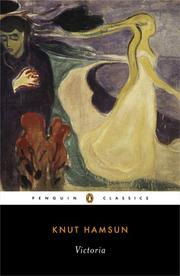
A miller's son and a landowner's daughter, told in the compressed lyric mode. The gentlest book he wrote and a useful bridge between the fevered early novels and the broad later ones.
The Nobel Novels
IntermediateRead the mature, expansive Hamsun — whole communities rather than single consciousnesses — and understand what the Nobel committee was actually rewarding.
▸ Study plan for this stage
Pace: Six to eight weeks. Growth of the Soil is 272 pages and reads slowly by design, in short chapters covering years at a time — 20 pages a sitting suits it, and it is the wrong book to rush. Wayfarers is 360 pages and much warmer and faster. The Women at the Pump runs around 350 pages and is the funnie
- Growth of the Soil won the 1920 Nobel Prize and is the reason Hamsun was, for a period, the most honoured writer in Europe: a man walks into empty northern land, clears it, builds a farm, and a life accumulates around him in flat biblical prose
- The novel's values are stated without irony — work, land, children, self-sufficiency — and its villains are the town, money, the telegraph, mining speculation and modern law. This is where the politics becomes visible, and it is visible in the book itself rather than only in the biography
- Inger's story, including the infanticide and the imprisonment that follows, is where the novel is most disturbing and most easily skated over. What the book forgives, and on what grounds, is the sharpest question in it
- The prose changed completely: the interior monologue is gone, replaced by an external, chronicling voice that reports what people do and rarely what they think. This is a different writer using the same name, and noticing the deliberateness of the change is the point of reading the early work first
- Wayfarers follows two drifters through a changing coastal north and is the warmest thing Hamsun wrote — his own vagabond youth turned into social history. It is the first book of a trilogy, so it opens more than it closes
- The Women at the Pump is the corrective to any account of Hamsun as a solemn pastoralist: a small town's gossip, self-deception and cruelty, written by a satirist who is genuinely funny and genuinely merciless
- Read together, the three show the same suspicion of modernity from three angles — endorsed in Growth of the Soil, tolerated in Wayfarers, and turned on its own subjects in The Women at the Pump. Hamsun is not a consistent ideologist in his fiction, which is part of what makes the later biography so
- Growth of the Soil was subsequently promoted by Nazi cultural officials as exemplary blood-and-soil literature. That is a fact about its reception rather than proof of authorial intent, and the honest reading holds both: the book was congenial to them for reasons that are on its pages, and it is not
- What does Isak want, and how does the novel keep him from ever articulating it?
- What happens to Inger, how does the novel account for it, and where does its sympathy actually sit?
- List the modern intrusions into Sellanraa in order of arrival. What does the pattern say about what the novel thinks progress is?
- How does the narrating voice of Growth of the Soil differ from Hunger's, sentence by sentence? Take a paragraph of each and describe the difference concretely.
- The Women at the Pump ridicules a small community. Is the target the same modernity Growth of the Soil resents, or something else?
- Given all three books, what does Hamsun believe a good life consists of — and how much of that belief could a reader in 1920 have separated from what came later?
- Read the opening two pages of Growth of the Soil aloud. The biblical cadence is the argument, and it is far more audible than visible.
- Keep a list of everything the town brings to the wilderness in Growth of the Soil and mark whether the book treats it as gain or loss. The tally is unambiguous and is the cleanest evidence of the novel's politics.
- Read Inger's chapters twice, and write a paragraph on what the novel asks you to accept. Do it before reading any criticism of the book.
- Set a page of The Women at the Pump beside a page of Growth of the Soil. That the same writer produced both in the same few years is the most useful complication available.
- Note where Wayfarers is affectionate toward exactly the drifting, unproductive life that Growth of the Soil implicitly condemns.
Next up: You have the fiction the Nobel rewarded and can see the values inside it, which is the only responsible position from which to read the last books and the collaboration.

The novel that won the 1920 Nobel: a man clears a farm out of empty northern land. Read it knowing the politics are already visible here, in the suspicion of cities, money and modernity.

Two vagabonds moving through the changing coastal north. The best of the later panoramic novels and the warmest — Hamsun's own drifting youth turned into social history.

A cruel, very funny portrait of a small coastal town's gossip and self-deception. It is the sharpest of the mature novels and shows the satirist behind the pastoralist.
The Late Books and the Reckoning
IntermediateFinish the fiction and confront the collaboration directly, in the book Hamsun wrote about his own trial.
▸ Study plan for this stage
Pace: Four to five weeks. Segelfoss Town is 368 pages and is the most explicitly ideological novel here; three weeks at a steady pace. The Ring is Closed is 338 pages, thin and odd, and takes a week. On Overgrown Paths runs around 200 pages and should be read last, slowly, in short sittings — it is a stra
- Segelfoss Town follows a trading post becoming a town, and everything Hamsun values about the old arrangement is dismantled by commerce, credit and a new class of people with opinions. It is the sequel to an earlier novel about the same place, so it starts mid-story on purpose
- This is the clearest statement of the anti-modern politics in the fiction: hierarchy is natural, the merchant class is contemptible, and the newly literate are ridiculous. Reading it late rather than early means you can see it as a position rather than mistaking it for a mood
- The Ring is Closed, published in 1936, is the last novel: Abel Brodersen returns to his home town wanting nothing, achieving nothing, and refusing every ambition offered to him. Thin and evasive, and the logical end point of fifty years of admiring people with no ambitions
- The facts of the collaboration, plainly: Hamsun publicly supported the German occupation of Norway from 1940, urged Norwegian soldiers to stop resisting, met Hitler in 1943, gave his Nobel medal to Goebbels, and published a short admiring obituary of Hitler in an Oslo newspaper days after the German
- The aftermath, equally plainly: he was detained after the war, held in a hospital and an old people's home, psychiatrically examined, found to have permanently impaired mental faculties, and never tried for treason — instead he was ruined by a heavy civil fine. He was in his late eighties and largel
- On Overgrown Paths is his account of that period, written under detention and published in 1949 when he was ninety. It is lucid, evasive, self-possessed, occasionally very funny, and it never apologises. It is also, by common agreement including among his critics, extraordinarily well written
- The book's central manoeuvre is worth watching closely: he neither defends the politics nor renounces them, and instead writes an old man's diary in which the examination, the doctors and the countryside are treated with equal attention. Whether that is dignity, evasion or senility is exactly the qu
- There is no consensus reading and you are not obliged to reach one. The honest positions run from separating the novels entirely from the man to holding that Growth of the Soil's values point straight at 1940. Both are argued seriously by people who have read everything here
- Norway's own settlement remains unresolved: he is read in schools, his house is a museum, and public commemorations of him still cause arguments. That the country has not finished with him is useful permission not to finish with him yourself in an afternoon
- What exactly does commerce destroy in Segelfoss Town, and who is blamed? Name the classes the novel holds responsible.
- Is Segelfoss Town's politics continuous with Growth of the Soil's, or an escalation? Cite passages from both.
- Abel wants nothing. Is the novel admiring, diagnostic, or exhausted?
- In On Overgrown Paths, what does Hamsun choose to write about instead of the charge against him, and how deliberate does the substitution appear?
- The court found permanently impaired mental faculties. Does the prose of On Overgrown Paths support that finding? Judge it on the page rather than on the record.
- Having read ten of his books: is there anything in Hunger, Pan or Mysteries that anticipates the politics, or does the line only run through the pastoral novels? Argue from text.
- What are you going to do with this writer? Answer for yourself, in writing, in one paragraph — the path exists to bring you to a position you can defend rather than to hand you one.
- Read a short factual account of the trial and the psychiatric assessment before opening On Overgrown Paths. The book assumes the circumstances and is disorienting without them.
- Mark every passage in On Overgrown Paths where he comes close to the subject and turns away. The pattern is the book's real content.
- Set Growth of the Soil's celebration of the soil beside the paragraphs in Segelfoss Town about the new commercial class, and write 400 words on whether one leads to the other. Use quotations, not impressions.
- Read one contemporary Norwegian assessment of the Hamsun question — the debate is public, ongoing and easy to find — and check your own position against it.
- Reread the first page of Hunger last. That the same man wrote it in 1890 and the Hitler obituary in 1945 is the fact this path has been walking toward, and it should be encountered rather than resolved.
Next up: That is the whole career and the whole problem — the inventor of the modern interior monologue and the man who eulogised Hitler are one writer, and you can now hold both without needing either to cancel the other.

A trading post becomes a town and everything Hamsun values about it is destroyed by commerce. The clearest statement of the anti-modern politics, which is why it belongs late rather than early.
His last novel, published in 1936: a man who wants nothing drifts back to his home town. Thin and strange, and worth reading as the final position of a writer who spent fifty years admiring people with no ambitions.
Written at ninety while detained and psychiatrically assessed for his support of the occupation. Evasive, lucid, unrepentant and extraordinary — the necessary last book, because it is where the reader has to decide what to do with everything before it.
Discussion
Keep reading
Paths that share books, cover the same subject, or open a related topic.