Kenzaburo Oe Reading Order: Where to Start
Oe wrote out of two facts he never stopped returning to: the birth of his brain-damaged son Hikari, and the bomb. Start with the two short, violent early novels that made his reputation, move to the major mid-career work and the Hiroshima reportage, then follow the long late novels where the son becomes a composer and the myths of his mountain village take over, and finish with the Nobel lecture that names the whole project.
Start Here
BeginnerRead the two short early novels that carry Oe's core subject in its rawest form.
▸ Study plan for this stage
Pace: 3 weeks for about 400 pages. A Personal Matter (214pp) over 10 days — it is short but relentless and reads better with breaks. Nip the Buds, Shoot the Kids (189pp) over the following week and a half. Do not read them in the same weekend.
- The biographical fact behind A Personal Matter is not a rumour: Oe's son Hikari was born in 1963 with a cranial hernia, survived surgery with permanent brain damage, and later became a composer. The novel was written immediately after, and Hikari recurs in the fiction for the next fifty years
- Bird is not Oe and the novel is not a confession — it is a thought experiment in which the father takes the choice Oe did not, and drinks and fails his way toward letting the baby die
- The ending is the most argued-over thing he wrote. It turns abruptly toward acceptance in the last pages, and readers have complained since 1964 that it is unearned. Form your own view; the argument is worth having
- Nip the Buds, Shoot the Kids was his first novel, written at twenty-three: reformatory boys evacuated to a mountain village during the war, then walled in and abandoned when plague breaks out
- The village in that first book is already the village of the entire career — a valley in the forest of Shikoku, isolated, with its own myths and its own capacity for atrocity
- Oe read French literature at university and wrote deliberately against smooth Japanese prose; the long, clause-heavy sentences are a chosen style, not a translation artefact
- His subject in both books is a person the community has decided is disposable, and what the people around them do with that permission
- What does Bird want when the novel opens, and how much of his despair predates the baby?
- The Africa map and the trip he never takes recur throughout. What are they standing in for?
- Does the last chapter of A Personal Matter convince you? Name the specific sentence where it turns
- In Nip the Buds, what exactly do the adults do, and at what point does the novel stop being about the war?
- Both books put a child in the position of a thing that can be discarded. What does the twenty-three-year-old handle better than the twenty-nine-year-old, and vice versa?
- Read the last ten pages of A Personal Matter twice and write two sentences arguing that the ending is a failure, then two arguing it is the point
- Note every time Bird's body betrays him — vomiting, drinking, the hangover. The physical writing is doing most of the moral work
- Sketch the geography of the village in Nip the Buds. You will be returning to it in three more books
- Look up one paragraph about Hikari Oe's music before starting stage two. It changes how the later books read, and it is a fact, not a sentiment
Next up: You now have both halves of his material — the disabled son and the abandoned village — which is exactly what the major novel fuses and what the Hiroshima reportage explains.

A man called Bird contemplates letting his newborn son die rather than raise a disabled child. The universal entry point: short, savage, and the book every later work argues with.

Reform-school boys evacuated to a wartime village and abandoned there during an epidemic. His first novel, written at twenty-three; read it second to see the village and the abandoned child already fully formed.
The Major Work
IntermediateTake on the novel most critics call his best, and the non-fiction that grounds his politics.
▸ Study plan for this stage
Pace: 6–7 weeks for around 710 pages. The Silent Cry (288pp) over 3 weeks and expect it to be hard going — the density is real and 20 pages a sitting is a fair pace. Hiroshima Notes (160pp) over a week, in short doses. Teach Us to Outgrow Our Madness (261pp) over 2 weeks, one novella at a time.
- The Silent Cry is usually named his best novel: two brothers return to the ancestral valley, and a peasant uprising from a hundred years earlier begins repeating itself around them, with the younger brother casting himself in his great-grand-uncle's role
- Its Japanese title refers to a specific historical year, and the novel's whole method is the superimposition of 1860, 1945 and 1960 onto the same few square miles
- The brothers split Oe's own material between them: one has a disabled infant institutionalised and a marriage collapsing, the other has the violence and the charisma
- Hiroshima Notes is reportage from the early 1960s — the survivors, the doctors who stayed at the atomic bomb hospital, the politics of the annual commemoration. It is where his idea of dignity under unbearable conditions is set out plainly
- The link between the two subjects is stated openly in that book: for Oe the disabled child and the atomic dead are the same moral problem, which is why the Hiroshima essays belong beside The Silent Cry rather than in a separate category
- Teach Us to Outgrow Our Madness collects four short novels, including 'Aghwee the Sky Monster' — a composer haunted by the baby he let die — and 'Prize Stock', the story of a captured Black airman in a wartime village that won him the Akutagawa Prize at twenty-three
- Reading the four novellas together shows how many times he rewrote the same wound before finding a form that could carry it at novel length
- Why does Takashi need the 1860 uprising to be true, and does the novel ever confirm his version of it?
- The supermarket and its owner sit at the centre of the village's economy. What is the novel saying about who now owns rural Japan?
- Mitsusaburo narrates. What does he refuse to look at, and where does the prose go evasive?
- In Hiroshima Notes, what does Oe mean by dignity, and which specific person in the book supplies the definition?
- 'Aghwee the Sky Monster' and A Personal Matter are the same premise with opposite outcomes. What does the novella get that the novel cannot?
- After Hiroshima Notes, does A Personal Matter look like a private book or a political one?
- Keep a chronology while reading The Silent Cry: mark every scene by which of the three eras it belongs to. The novel deliberately blurs them and the note-keeping restores the design
- Track the two brothers' bodies — the eye, the weight, the physical damage. Oe assigns injuries with intent
- Read Hiroshima Notes in short sittings and stop after any chapter that lands hard. It is not a book to push through
- Read 'Prize Stock' immediately after Nip the Buds, Shoot the Kids and note what the two village stories share
- Write one paragraph connecting the atomic survivors to the disabled infant, in Oe's terms rather than your own. If you cannot, reread the preface
Next up: With the myth of the valley and the moral argument both in place, the late novels can be read as what they are — Oe writing his own life, his son and his earlier books into the fiction on purpose.

Two brothers return to their ancestral valley, where a hundred-year-old peasant uprising starts repeating itself. Denser than A Personal Matter and the fullest version of his myth of the forest village — read it once you know the obsessions.
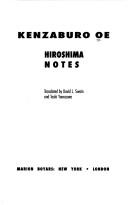
Reportage from the bomb survivors and the doctors who stayed. The moral centre of his non-fiction, and it explains why the disabled child and the atomic dead are the same subject for him.
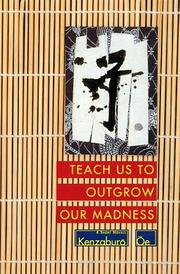
Four novellas, including 'Aghwee the Sky Monster' and 'The Day He Himself Shall Wipe My Tears Away'. The best single volume for seeing how many ways he rewrote the same wound.
The Late Novels
IntermediateFollow the long, self-quoting later fiction where Oe writes himself, his son and his own earlier books into the story.
▸ Study plan for this stage
Pace: 12–14 weeks for about 1,770 pages, and this stage is where most readers stall, so pace it deliberately. A Quiet Life (240pp) 2 weeks, Rouse Up O Young Men of the New Age (272pp) 2–3 weeks, An Echo of Heaven (206pp) 2 weeks, then Somersault (573pp) over 4 weeks at 25 pages a day, and The Changeling (
- The late fiction is openly autobiographical and self-quoting: a novelist narrator with Oe's biography, a disabled son who appears under various names, and constant reference to Oe's own earlier books. This is a method, not laziness — the recurring furniture is what lets him revise his own past
- A Quiet Life is the exception that makes the rest readable: it is narrated by the daughter while the famous father is abroad, so for once you see the household from outside the novelist's head
- Rouse Up O Young Men of the New Age is built on William Blake. The father reads Blake in order to find language for his son's inner life, and the poems are quoted at length — literature used as an instrument of survival rather than as decoration
- An Echo of Heaven follows a woman who has lost both her sons toward something like sainthood in a Mexican commune, and is the clearest measure of how strange Oe's religious thinking became in the late 1980s
- Somersault is his longest novel and his direct response to the Aum Shinrikyo sarin attack of 1995: the leaders of a religious movement publicly renounce their own teaching, then spend six hundred pages trying to rebuild
- The Changeling opens with a novelist listening to cassette tapes left by his film-director brother-in-law, who has just killed himself. The situation is drawn from Oe's own family — his wife's brother, the director Juzo Itami, died in 1997 — and the novel does not disguise it
- The disabled son in these books is a composer with a real inner musical life. Hikari Oe's compositions were recorded and sold widely in Japan, so the transformation across the path from the infant in A Personal Matter is a documented one, not a novelist's consolation
- What does the daughter's narration in A Quiet Life let Oe say about himself that his own narrators never do?
- Which Blake passages does Rouse Up return to most, and what work is the father asking them to perform?
- In An Echo of Heaven, does Oe believe in Marie's sanctity, or is he studying the people who need her to be a saint?
- Somersault turns on a public renunciation of faith. Why does Oe make the recanting come first and the story second?
- In The Changeling, what are the rules of the tape conversations, and at what point does Kogito start talking to a dead man rather than to a recording?
- Across these five, is the repetition of his own biography deepening the material or exhausting it? Argue it with examples
- Before starting Somersault, read one factual page on the 1995 Tokyo subway attack. The novel assumes the context entirely
- Keep a running list of the recurring figures — the novelist, the son, the valley, the dead friend — and note which book each name belongs to. The late work is a single connected system and the list is your map
- Whenever a late novel refers to an earlier Oe book, look up the reference. You have read most of them by now, which is the payoff of doing the path in order
- Read a page of Blake alongside the relevant chapter of Rouse Up rather than taking the quotation at Oe's valuation
- If Somersault stalls, put it down for a week rather than abandoning the stage. Its first two hundred pages are the slowest in the whole path and the rest is not like them
Next up: Having lived inside the late system, you are ready for Oe stating his own position outright — and then for the last novel, which closes the circle back to the valley.
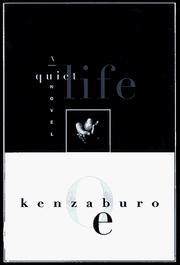
A daughter narrates the household while the famous novelist father is abroad. The gentlest of the late books and the natural door into them, because it shows the family from outside Oe's own head.
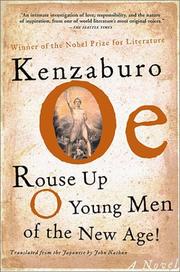
A father reads Blake in order to understand his growing son. The clearest statement of Oe as a reader — literature used directly as a survival tool.
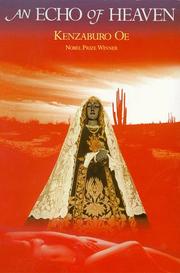
A woman who has lost both sons drifts toward sainthood in a Mexican commune. Shorter than the other late novels and a good measure of how strange his religious thinking became.
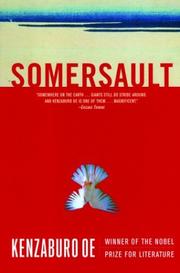
A religious cult's leaders publicly recant, then try to rebuild. His longest novel and his direct response to the Aum sarin attacks; save it until you are fluent in his method.

A novelist listens to cassette tapes left by his film-director brother-in-law, who has just killed himself. The late masterpiece, and it assumes you already recognise the autobiographical furniture.
The Nobel Context
IntermediateHear Oe explain his own position in Japanese literature and in postwar politics.
▸ Study plan for this stage
Pace: 5 weeks for about 550 pages. Japan, the Ambiguous, and Myself (128pp) in a few evenings — it is a lecture plus related talks and should be read attentively rather than slowly. Death by Water (424pp) over 4 weeks at about 20 pages a day.
- The 1994 Nobel lecture is titled in deliberate opposition to Kawabata's 1968 lecture, Japan, the Beautiful, and Myself: where Kawabata offered a serene traditional Japan, Oe offers an ambiguous one, torn between Asia and the West and unwilling to be admired
- Read as a summary, the lecture names every commitment the path has already demonstrated — the periphery against the centre, the disabled son as a source of language, postwar democracy, and a refusal of imperial Japan
- The refusal was not rhetorical: Oe declined Japan's Order of Culture in the same year on the grounds that it is conferred by the Emperor
- Death by Water is his final novel: the aging writer returns to the valley to open the red leather trunk that supposedly explains his father's drowning in a wartime flood, and finds it does not
- The novel deliberately fails at its own premise. The trunk is a dead end, and the book turns instead to a theatre troupe restaging his earlier work and to a violent confrontation with a young woman — which is Oe conceding that the founding myth cannot be recovered
- The title comes from the drowned-sailor section of Eliot's The Waste Land, quoted in the book, and the drowning is the image the whole career has circled since Nip the Buds, Shoot the Kids
- Ending here rather than with the late novels puts the valley at both ends of the path, which is exactly how Oe arranged his own bibliography
- What does Oe mean by ambiguous, and what is he refusing to be by choosing that word over beautiful?
- Where in the lecture does he place his son, and is the placement sentimental or structural?
- In Death by Water, why does Oe let the trunk be empty of what the narrator wanted? What does the failure allow?
- The Caveman Group restages the earlier fiction inside the novel. What is Oe doing by having his own work performed back at him at the end of his career?
- Having read the whole path, was the father's drowning ever really the subject — or was it always the son?
- Compare the last page of Death by Water with the last page of A Personal Matter. Fifty years apart, what has actually changed?
- Read Kawabata's Japan, the Beautiful, and Myself alongside Oe's lecture. The opposition is explicit and the pairing takes an hour
- Mark every claim in the lecture and find the book on this path that supports it. All of them have one
- While reading Death by Water, keep the note you made about the valley in stage one open. The geography is unchanged after fifty years and the correspondences are exact
- Write one paragraph on why Oe kept rewriting the same three events instead of finding new ones, and whether you find that a limitation
- Rank the thirteen books on this path by how much prior Oe they assume. The ranking is close to his publication order, which is the argument for reading him this way
Next up: That is the whole arc, from the twenty-three-year-old's village to the last novel's empty trunk — and the natural next steps are Kawabata, whom the Nobel lecture is answering, or Abe, the other postwar novelist who refused the traditional Japan Oe rejects.

The 1994 Nobel lecture and related talks, written in deliberate opposition to Kawabata's 'Japan, the Beautiful, and Myself'. Read last: it is a summary of everything above, in his own words.
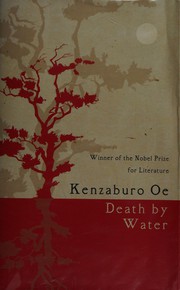
An aging writer returns to the village to open the red trunk that may explain his father's drowning. The final novel, and it closes the circle back to The Silent Cry — which is why it belongs at the very end.
Discussion
Keep reading
Paths that share books, cover the same subject, or open a related topic.