Kay Scarpetta Reading Order: Where to Start
Patricia Cornwell's Scarpetta series now runs past twenty-five books, but the part everyone means when they recommend it is the first eleven — narrated in Scarpetta's own voice, set in Richmond, and running one continuous story about her niece Lucy, the detective Marino, and a killer who will not stay caught. Publication order is the only order: the recurring cast changes permanently, and several books end on cliffhangers. This path takes that first run and stops where the series changes shape rather than pretending the later books are part of the same thing.
Start Here: Postmortem
BeginnerMeet Scarpetta, Marino and Lucy, and see why a forensic pathologist narrating her own autopsies was a genuinely new thing in 1990.
▸ Study plan for this stage
Pace: About two weeks for the pair, roughly 370 and 390 pages. Postmortem moves fast enough to be a three-evening book once the first killing lands, and most readers finish it quicker than they planned. Body of Evidence is the slower of the two: its middle third is office politics, subpoenas and a manuscr
- The autopsy as the set piece rather than the interrogation. In 1990 a narrator who cut open the body herself was genuinely new in popular fiction, and the procedure is the attraction, not a garnish on the plot.
- First-person narration from the medical examiner, which means Scarpetta only learns what the evidence and her own contacts tell her. The police investigation happens partly offstage and she has to argue her way into it.
- Pete Marino's hostility as a starting position, not a character flaw to be resolved in one book. The relationship is the series' long game.
- Lucy introduced young, as a difficult, gifted child parked on her aunt. Everything she becomes over the next nine books starts here.
- Period technology throughout: early DNA work treated as novel and contestable, minicomputers, dial-up, dot matrix printers, physical case files. The science dates visibly and watching it arrive is part of the interest now.
- Institutional threat as the real antagonist alongside the killer: budget, jurisdiction, the health commissioner, a hostile press. Scarpetta is a state employee and the books never forget it.
- The recurring worry about chain of custody and contaminated evidence, which drives more plot turns than deduction does.
- What can Scarpetta know as a narrator that a police detective narrator could not, and where does that limit her instead?
- Which techniques in Postmortem are presented as cutting edge, and which of them would be unremarkable lab work today?
- Is Marino's objection to Scarpetta about her job, her class, or her sex, and does Body of Evidence answer that any differently than Postmortem does?
- Body of Evidence turns on a writer who wrote to Scarpetta before dying. What does that let Cornwell do with the press and public-records plot that the first book could not?
- After two books, is the draw the forensic procedure, the cases, or the household of Scarpetta, Marino and Lucy?
- Keep a running list of every forensic technique treated as new or unproven in Postmortem, and mark the ones you know are now routine. Carry the list forward; it becomes a timeline of the science across all eleven books.
- Note each occasion Scarpetta is shut out of a room, a meeting or a scene, and who does the shutting. By The Last Precinct that list is the shape of her career.
- Read the first full autopsy sequence in Postmortem slowly, then reread it after finishing Body of Evidence, and see how much of it you now follow without the explanations.
- Decide before continuing whether you want procedure or thriller. If the lab detail is what you are here for, the next three books are the best the series ever balances it.
Next up: Postmortem and Body of Evidence establish the office, the antagonisms and the pathology vocabulary you need, so the next three books can spend their pages on plot instead of explanation.
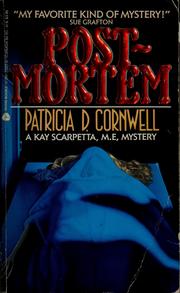
The first novel, a serial strangler in Richmond, and the book that created the modern forensic thriller and every television show descended from it. Start here without exception.
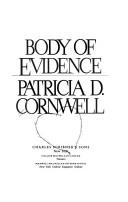
A novelist is murdered after writing to Scarpetta for help. Read it second: it establishes the office politics and the press hostility that dog her for the next ten books.
The Early Peak
BeginnerRead the three books where the forensic detail and the storytelling are best balanced.
▸ Study plan for this stage
Pace: Around four to five weeks for the three, roughly 1,160 pages, and the least demanding stretch of the whole path. All That Remains and Cruel and Unusual are both tightly plotted and read quickly. The Body Farm is where readers slow down, partly because the Tennessee decomposition facility sections ar
- The step up in plotting at All That Remains, where the political cover-up gives the series a structure larger than one killer and one body.
- Temple Gault entering in Cruel and Unusual as a multi-book villain rather than a case of the week. This is the point where the series becomes sequential and out-of-order reading starts costing you something.
- The forensic set piece as chapter engine: the executed prisoner problem in Cruel and Unusual, the decomposition research facility in The Body Farm. Each book now has one procedural idea it is built around.
- Lucy shifting from a plot complication to a driver of it, and the technical skills that make her useful becoming a liability.
- Cornwell writing recurring cast changes as permanent. Losses and defections here are not reversed later.
- Fingerprint and DNA evidence becoming actively contested rather than merely described, so the science starts generating suspense instead of just texture.
- The Virginia setting used as a real jurisdiction with real neighbours, which is what makes the Tennessee trip in The Body Farm feel like a departure.
- All That Remains puts a political cover-up behind the killings. Does that make the forensic work more important to the solution or less?
- Cruel and Unusual opens with an execution and a body that behaves as though the executed man is still working. What exactly is the trick, and when did you spot it?
- What does the decomposition research facility contribute to The Body Farm beyond its title, and would the case work without it?
- Where does Lucy stop being a subplot? Name the scene.
- Temple Gault appears late and does not dominate his first book. What is Cornwell setting up that a self-contained villain could not give her?
- Write down what you believe the mechanism is in Cruel and Unusual at the halfway point, then check it against the ending. The book is built to make an intelligent wrong answer available.
- After The Body Farm, list what has permanently changed in the cast since Postmortem. Five books in, the list is longer than it feels.
- Compare an autopsy passage in All That Remains with the first one in Postmortem and note how much explanation Cornwell has stopped giving you.
- This is the first natural stopping point. Postmortem through The Body Farm is a complete early run and many readers stop here satisfied. Decide deliberately whether to go on rather than drifting into the next book.
Next up: Cruel and Unusual put Temple Gault on the board and The Body Farm left him there, so the next stage is the single continuous storyline that finishes him and deals with the wreckage.
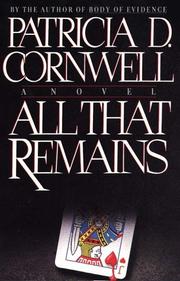
Couples disappearing along Virginia highways, with a political cover-up behind it. The plotting steps up sharply here and the series stops feeling like a procedural with a gimmick.
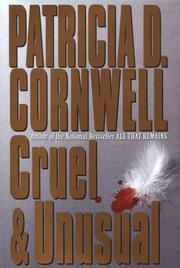
A man is executed and then apparently kills again. It won the Gold Dagger, and it introduces Temple Gault, the antagonist who shapes the next four books.
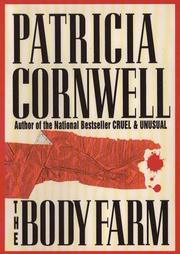
A child's murder takes Scarpetta to the Tennessee decomposition research facility that gives the book its title. The best-known entry after Postmortem, and Lucy's storyline turns here.
The Gault Arc Closes
IntermediateFollow the Temple Gault storyline to its end and into the books that immediately deal with the fallout.
▸ Study plan for this stage
Pace: Roughly four weeks for about 1,110 pages, but the reading is uneven. From Potter's Field is the fastest and most propulsive book in the path, effectively a chase through the New York subway system, and it wants to be read in two or three long sittings rather than picked at. Cause of Death is quieter
- From Potter's Field as the payoff to a thread begun two books earlier. Reading it out of order removes the entire point of the arc.
- The aftermath structure: Cause of Death is deliberately about the personal cost of the previous novel, which is why it feels smaller and is meant to.
- The Chandonne material opening quietly in Cause of Death, one antagonist family replacing another before you notice the handover.
- The series widening its threat model from individual killers to institutions, cults and finally infectious disease, which is where Unnatural Exposure comes from.
- Internet-era technology arriving as a plot device, dated in a way that is now historically interesting rather than merely old.
- Lucy fully adult and operational, and the professional consequences of that, which the earlier books were quietly preparing.
- Cliffhanger endings becoming standard practice, so publication order stops being a recommendation and becomes a requirement.
- Gault is finished in From Potter's Field. Does the resolution justify the four books spent getting there?
- Cause of Death is a smaller book than the one before it. Is that a failure of ambition or a structural choice about grief?
- What does Unnatural Exposure attempt that the earlier books did not, and where specifically does it not come off?
- Track the handover: at what point in Cause of Death does a new antagonist family quietly replace Gault as the series' central threat?
- By this stage the science is doing less deduction and more spectacle. Do you mind?
- Read From Potter's Field in as few sittings as you can manage. Its structure depends on momentum and it flattens badly when read fifteen pages at a time.
- Immediately after finishing it, write down what you expect the fallout to be for Scarpetta, Marino and Lucy, then read Cause of Death and see which of the three Cornwell actually pays attention to.
- Note every mention of the Chandonne name and the Interpol thread in Cause of Death and Unnatural Exposure. Those references are load-bearing for all three books in the final stage.
- This is the second natural stopping point. The Gault storyline is closed and a reader who wanted that arc has now had it. Decide here whether the remaining three books are for you.
Next up: The Chandonne thread opened in these books and the personal damage they inflict are exactly what the last three novels are about, so the final stage is the arc paying off and then ending.

Gault in the New York subway tunnels at Christmas. The climax of the arc that began in Cruel and Unusual — reading it out of order removes the entire point.
A diver dies at a decommissioned nuclear plant. The aftermath book, dealing with the personal cost of the previous novel, and it opens a new antagonist family.
A dismembered body carrying a virus, and the series' first move toward bioterrorism. Uneven, but it is load-bearing for the three that follow.
The End of the First Run
IntermediateFinish the Richmond years and understand exactly where the series stops being the one people recommend.
▸ Study plan for this stage
Pace: About five weeks for roughly 1,300 pages, and the pace is deliberately front-loaded. Point of Origin is tight and fast, the best-constructed late book. Black Notice is longer and slower for its first 150 pages while Scarpetta is barely functional, which is the point but is also the hardest reading i
- Point of Origin ending on a permanent loss, which is the event the remaining two books are about. Nothing in them reads correctly if you skip it.
- The Chandonne family taking over completely in Black Notice, so the antagonist is now a bloodline rather than a person.
- Scarpetta as suspect rather than expert in The Last Precinct, the reversal the first-person narration was built for and the furthest Cornwell pushes it.
- A published date to ignore: Black Notice came out in 1999, and some catalogue records for it carry a nonsense year. It belongs between Point of Origin and The Last Precinct, no matter what a listing says.
- The end of the Richmond years and of Scarpetta as narrator. After The Last Precinct the series switches to third person, changes city and changes cast, and reads like a different set of books.
- The forensic material by now fully modern, which closes the arc that began with contested early DNA work in Postmortem.
- Recurring characters carrying nine books of accumulated damage, which is the actual reward for having read in order.
- Point of Origin ends on a loss. Do the two books that follow earn it, or use it?
- The Last Precinct puts Scarpetta on the wrong side of the investigation. What does first-person narration do there that a third-person account could not?
- Compare the forensic detail in Black Notice with Postmortem. What has the science gained in a decade, and what has the writing lost by no longer needing to explain it?
- Is the Chandonne family a stronger antagonist than Temple Gault, or the same idea at greater length?
- Having finished eleven books, what was actually keeping you reading: the cases, the science, or the household?
- Read the last thirty pages of Black Notice and the first thirty of The Last Precinct in one sitting. They are a single continuous scene and the break between volumes is arbitrary.
- Go back to the technique list you started in Postmortem and close it out. Eleven books cover roughly a decade of real forensic practice and the list is a readable record of it.
- Before deciding whether to continue past The Last Precinct, read a chapter of the next book in a shop or library. The narration is third person and the setting is no longer Richmond, and five minutes will tell you whether you want that series or this one.
- Write one paragraph naming the point at which the series was at its best for you. Most readers land on the second or third stage, and knowing which tells you what to read next in the genre.
Next up: You have read the entire Richmond run in Scarpetta's own voice, which is the part of the series people mean when they recommend it; the fourteen or more books that follow are third person, set elsewhere, and are a genuinely different proposition, so continue only by deliberate choice rather than by default.
Arson investigations and the return of a figure from Scarpetta's past. Tense, tightly built, and it ends on a loss that the next two books are about.
A body in a shipping container from Belgium, and Scarpetta beginning to recover. The Chandonne family introduced here dominates everything remaining in the arc.
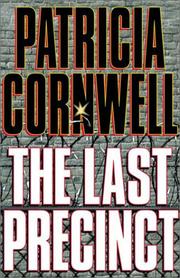
The direct continuation of Black Notice and the close of the first-person Richmond era — after this the series switches to third person, moves cities, and reads very differently. This is the natural place to stop, or to decide deliberately to carry on.
Discussion
Keep reading
Paths that share books, cover the same subject, or open a related topic.