Jon Krakauer Reading Order: Where to Start with His Books
Krakauer writes about obsession in several different registers, and the mountaineering books are not interchangeable with the investigations of religion, the military and the courts. This path starts with the climbing journalism and Into the Wild, takes on Into Thin Air together with the book written specifically to contradict it, then moves to the investigative work, and closes with the late books where the contested-account problem is the whole point.
The climber who became a writer
BeginnerMeet Krakauer in his original register — magazine journalism about people who take absurd risks in the mountains — and see the obsession theme before it is applied to anything else.
▸ Study plan for this stage
Pace: Three to four weeks. Eiger Dreams is 208 pages of independent magazine pieces — one or two a sitting, in any order, though the Devils Thumb essay is worth saving until you have read the others. Into the Wild is 284 pages and reads fast; a week and a half.
- Eiger Dreams is a collection of assignments, not a thesis, and reading it that way shows you what Krakauer was before he had a subject: a working climber writing for a magazine about the Eiger's north face, ice in Valdez, the Talkeetna glacier pilots, a bad season on K2, and the peculiar sociology o
- The prose habits are already fixed here — the technical detail delivered without apology, the reconstructed sequence of somebody else's bad decision, the refusal to make the risk-taker either a hero or an idiot.
- The account of his own solo attempt on the Devils Thumb is the important piece in the collection, because it is the template for everything after: a young man alone, an obsession he cannot fully explain, and a narrator looking back at himself without much sympathy.
- Into the Wild expands a magazine article about Chris McCandless, who walked into the Alaskan interior in 1992 with very little equipment and died in an abandoned bus. The book is an argument about what he was doing, against an Alaskan consensus that he was simply unprepared.
- The structure is comparative: chapters on other young men who went into wilderness and did not come back, and then two chapters on Krakauer's own Devils Thumb climb at a similar age. He states the identification on the page rather than concealing it.
- The cause of death is the book's most-revised claim. Krakauer proposed a toxic seed, then revised the mechanism more than once in later editions and articles, and the question remains open. Read whichever edition you have while knowing the argument moved.
- That identification with the subject is the thing his critics point at in every later book. Note here how it works when he admits it, so you can judge the later books where the admission is less explicit.
- In the Devils Thumb essay, what does Krakauer say he was doing on that mountain, and how much of the explanation does he trust?
- What is Into the Wild arguing about McCandless, and what is the strongest version of the Alaskan objection to it?
- Why does Krakauer put his own climb inside a book about somebody else's death? What does it buy him, and what does it cost?
- The chapters on Everett Ruess and the other lost young men are comparative evidence. Evidence for what proposition, exactly?
- Krakauer has revised his account of how McCandless died. Does the revision affect the book's argument, or only its final chapter?
- Read the Devils Thumb essay in Eiger Dreams and the Devils Thumb chapters in Into the Wild back to back, and write 200 words on what changes when the same episode is retold inside an argument.
- List the ways in which McCandless was unprepared and the ways in which he was competent, using only what the book itself reports. The list is more mixed than either side of the argument admits.
- Take one Eiger Dreams piece and mark where Krakauer's own opinion enters the reporting. In magazine work it is usually one sentence, and finding it trains you for the longer books.
- Write down, before going further, the standard you will hold him to on sourcing. You will use it four more times on this path.
Next up: You have the method and its known weakness in his own account; the next stage puts it against two people who were there and disagreed.
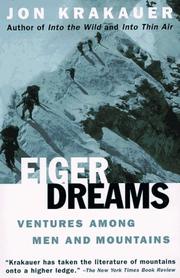
His first book, a collection of climbing pieces from Outside magazine, including the account of his solo ascent of the Devils Thumb. Short, modular, and the cheapest way to find out whether his prose works for you before a full-length book.

Chris McCandless walking into the Alaskan interior and dying there, expanded from a magazine piece. Read it second because it is the same interest in self-destructive obsession from the first book, sustained at length — and because Krakauer's identification with his subject, which he admits on the page, is what his critics point to in every later book.
Everest, and the dispute about it
BeginnerRead the most famous mountaineering book of the last fifty years, then read the two participants who publicly disagreed with it, and form your own view of an event with no agreed account.
▸ Study plan for this stage
Pace: Six to eight weeks, and read the three consecutively rather than in parallel. Into Thin Air is 335 pages, The Climb 372, Left for Dead 304. Read Into Thin Air first and fully, then The Climb, then Left for Dead. Do not read summaries of the controversy before you have read the two primary accounts.
- Into Thin Air reconstructs 10-11 May 1996 on Everest, when eight people died in a storm on the descent, written by a client on one of the commercial expeditions and published within a year of the events.
- Krakauer states in the book that he was oxygen-deprived, exhausted and that his memory of specific events is unreliable, and he corrects one significant misidentification he made in the original magazine piece. The book therefore contains both strong judgements about other people's conduct and an ex
- The judgement that generated the dispute concerns Anatoli Boukreev, a guide who climbed without supplemental oxygen and descended ahead of clients — and who then went back out alone into the storm repeatedly and brought people in.
- The Climb is Boukreev's answer, written with G. Weston DeWalt and including transcripts of debriefing material. It argues that climbing without supplemental oxygen was a considered decision, that descending quickly was part of being able to help, and it disputes Into Thin Air's account point by poin
- The two books cannot both be correct on several factual matters, and neither has been established as the correct one. That is the actual state of the question, not a fence-sitting summary of it — the participants held their positions for the rest of their lives, and Boukreev died on another mountain
- Later editions of Into Thin Air carry a postscript responding to The Climb, so the argument continues inside the books themselves. Check which edition you have.
- Left for Dead is the third first-person account, by a client who was twice left for dead on the South Col and walked into camp on his own. He has no stake in the guiding dispute, which makes his version useful as a check on both — and his book is also about a marriage and a depression, and is the st
- The wider question underneath the personal one — whether commercial guiding on Everest put unqualified clients in a position where no guiding decision could have saved them — is the argument the whole stage is really about.
- List the specific factual disagreements between Into Thin Air and The Climb. How many turn on what somebody said, and how many on what somebody did?
- What is Boukreev's stated reason for climbing without supplemental oxygen, and what is Krakauer's stated objection? State each as its holder would.
- Krakauer warns that his own perception was impaired. How should a reader use that warning — does it weaken every judgement in the book equally, or only some?
- What does Left for Dead confirm, complicate or contradict in each of the other two accounts?
- Boukreev received a mountaineering award for the rescues in the same period the criticism was published. What does that tell you, and what does it not settle?
- Having read all three, what would it take to decide this? Name the evidence that does not exist.
- Build a single timeline of 10-11 May on one sheet, with three columns — Into Thin Air, The Climb, Left for Dead — and enter each event under every account that mentions it. The blank cells are as informative as the conflicts.
- Pick the three sharpest disagreements and write, for each, the strongest case on both sides in 100 words apiece. Do not write a verdict.
- Note every place where an account depends on a single person's memory of a conversation at altitude, and mark those separately from claims with more than one witness.
- Check whether your copy of Into Thin Air has the postscript. If it does, read it only after The Climb, not before.
- Write 300 words on what this stage taught you about reading a first-person account of a disaster, in terms you could apply to a book on any other subject.
Next up: You now have a worked example of two irreconcilable accounts of the same hours, which is exactly the reading posture the investigative books require.

The 1996 Everest disaster, written by a client who survived it and published within a year. It is also the source of the controversy: Krakauer is explicit that he was oxygen-starved and that his memory may be unreliable, and the book nonetheless makes judgements about other people's conduct that they contested for the rest of their lives.
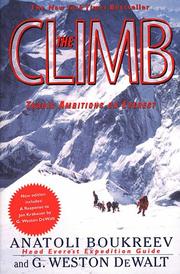
Written with G. Weston DeWalt by the Russian guide whose decision to descend without supplemental oxygen ahead of his clients Krakauer questioned — and who then went back out into the storm alone and brought three people in. It disputes Into Thin Air directly and at length. Read them consecutively; the two accounts cannot both be right and neither has been established as the correct one.
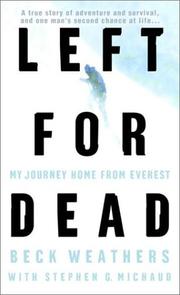
The client left for dead on the South Col who walked back into camp. A third first-person account of the same hours from someone with no stake in the guiding dispute, and by some distance the strangest.
Belief and the state
IntermediateFollow Krakauer out of the mountains into two long investigations of institutions, and see how each was received by the people it describes.
▸ Study plan for this stage
Pace: Ten to twelve weeks. Under the Banner of Heaven is 399 pages and alternates a 1984 murder case with church history — three weeks. Massacre at Mountain Meadows is 448 pages of academic history and is much slower going; four weeks, and read the notes. Where Men Win Glory is 472 pages; three weeks.
- Under the Banner of Heaven braids two narratives: the 1984 killing of a woman and her infant daughter by two fundamentalist brothers who claimed a revelation, and a history of the Latter-day Saint movement from Joseph Smith onward. The braid is the argument — that the second explains the first.
- The book was rejected by the LDS Church, whose historians disputed his use of sources and, more sharply, the implied continuity between the mainstream church and the fundamentalist offshoots. Krakauer added an author's note responding to that criticism; read it as part of the book.
- This is a thesis about faith and violence, not a neutral history, and it does not present itself as one. Judging it requires knowing what a specialist history of the same events looks like, which is why the next book is here.
- Massacre at Mountain Meadows treats one episode central to Krakauer's argument: the 1857 killing of an emigrant wagon train in southern Utah. It was written by three historians with access to church archives and published by a university press.
- The two books emphasise responsibility differently. The academic history locates the decision with local leaders under the pressure of an approaching federal army and traces the sequence in close detail; Krakauer's account places the episode in a longer pattern. Both are argued from evidence and the
- Reading them together is the exercise: a popular thesis-driven book and a specialist monograph on overlapping material, each with a visible method.
- Where Men Win Glory follows a professional football player who enlisted after 2001 and was killed in Afghanistan by fire from his own unit, and the official account that followed. The institution under investigation is the US military and the subject is the manufacture of a story.
- The book is built from documents — the investigations, the citation, the memoranda, the congressional record — more than from interviews, which makes it the most checkable of his books and the most political.
- State Krakauer's thesis about faith and violence in two sentences, then state the strongest objection made to it.
- What does the academic history of Mountain Meadows establish about the sequence of decisions, and where does its emphasis differ from Krakauer's?
- Which of the two books tells you more clearly what it does not know? Give an example from each.
- In Where Men Win Glory, at what point does the official account of Tillman's death stop being an error and become a decision? What is the documentary evidence for that point?
- Krakauer is dealing with an institution in each of these books. Compare how the LDS Church and the US Army each responded to being described.
- Is Under the Banner of Heaven a history with a thesis or a thesis with history attached? The distinction matters; argue it either way.
- Read the Mountain Meadows chapter of Under the Banner of Heaven, then the corresponding chapters of Massacre at Mountain Meadows, and write 400 words comparing what each treats as the decisive factor. Do not adjudicate; identify what each book would need to be shown to change its mind.
- Track five specific claims in Under the Banner of Heaven back to their sources in his notes and describe the type of each source — archive, interview, secondary work, court record.
- Read the author's note responding to the church's historians and write down which criticisms he concedes and which he rejects.
- For Where Men Win Glory, list the documents the book reproduces or quotes and mark which parts of the argument rest on documents and which on testimony.
- Write 200 words on how the Everest stage changed the way you read these two disputes.
Next up: The next stage takes the problem you have been reading around — whose account is believed — and makes it the explicit subject.

A 1984 double murder by Mormon fundamentalists, braided with a history of the LDS church. The book was rejected by the church, whose historians disputed both his handling of the sources and the implied link between mainstream Mormonism and the fundamentalist offshoots; Krakauer added an author's note responding to them. It is a strong thesis about the relationship between faith and violence, not a neutral history.
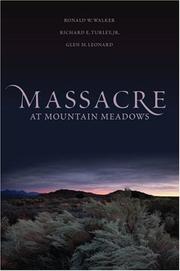
The 1857 killing of an emigrant wagon train, researched by three historians with full access to LDS archives and published by Oxford. It covers an episode central to Krakauer's argument and reaches different emphases about responsibility. Read it as the other side of a live historiographical argument.

Pat Tillman, who left the NFL for the Army Rangers and was killed by his own side in Afghanistan, and the cover-up that followed. The most political of his books and the one where the institution being investigated is the US military.
The late work
BeginnerRead the books where the unreliability of testimony is the explicit subject rather than a complication, and the collected journalism that shows the through-line.
▸ Study plan for this stage
Pace: Six to eight weeks. Missoula is 392 pages and is heavy going for reasons of subject rather than difficulty; give it three weeks and take breaks. Three Cups of Deceit is 75 pages and reads in one sitting. Classic Krakauer collects magazine pieces and can be read a piece at a time. Content note: Misso
- Missoula examines how a town, a university, a police department and a county prosecutor's office handled a series of sexual assault allegations, reconstructed from court transcripts, police records and interviews with the people involved.
- The book's method is its subject: it is about whose testimony gets believed and what institutions do with an account they find inconvenient — the same problem the Everest stage put in front of you, in a setting where the stakes are legal rather than reputational.
- One of the cases it covers ended in acquittal, and the book reports both the trial and the process around it. Krakauer is writing about institutional handling rather than delivering a verdict, and reading him as if he were doing the latter misses what the book is doing.
- He has said the book began when he learned that someone he knew had been assaulted years earlier without his knowing. As with Into the Wild, the personal entry point is stated rather than hidden.
- Three Cups of Deceit is seventy-five pages dismantling the origin story and the charity finances behind a bestselling humanitarian memoir. It is the shortest thing he has written and the most direct.
- Krakauer had donated substantially to the charity in question and says so at the outset. A book about a story too good to check, by someone who did not check it, is an unusually honest shape for an investigation.
- Classic Krakauer collects magazine work across the career — big-wave surfing, the troubled-teen industry, Everest again, Arctic wilderness — and read last it shows the through-line: obsession, physical risk, and institutions that produce a convenient account of what happened.
- Taken together the late books make explicit what the early ones assumed: that the reporter's own position in the story is a fact about the evidence, not a lapse in professionalism.
- What does Missoula establish about institutional process, as distinct from what it establishes about any individual case?
- Where does Krakauer rely on court transcripts and where on interviews, and how does he signal the difference to the reader?
- In Three Cups of Deceit, which of the disputed claims are checkable against documents and which rest on witnesses? Which category does most of his case fall into?
- He was a donor before he was an investigator. Does that strengthen the book, weaken it, or simply need declaring?
- Reading Classic Krakauer last, what is the single preoccupation that runs from the earliest piece to the latest? State it without using the word obsession.
- Across the whole path, when has Krakauer been most careful about sourcing and when least? Use your standard from the first stage.
- For Missoula, keep a note of every point at which an institution had a decision to make, and what it decided. That list is the book's argument stripped of the individual cases.
- Write 300 words on how Missoula and The Climb are the same problem in different settings, and where the analogy breaks down.
- In Three Cups of Deceit, list his claims in two columns — documented and testimonial — and write a paragraph on whether the case would stand on the documents alone.
- Choose the piece in Classic Krakauer nearest in subject to one of the full-length books and write 200 words on what the long form added.
- Return to the sourcing standard you wrote down in the first stage and grade all seven Krakauer books against it in one sentence each.
Next up: This completes the path: the climbing journalism, the contested Everest accounts, two institutional investigations read against a specialist history, and the late work where the reliability of testimony is the explicit subject.
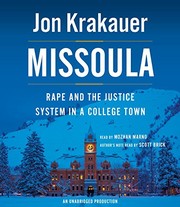
Sexual assault cases in a Montana college town and how the police, prosecutors and university handled them. Reported through court records and interviews, and the book where his method turns directly on the question of whose account gets believed. Difficult subject matter, handled without sensationalism.

A short investigation dismantling Greg Mortenson's bestselling Three Cups of Tea and the finances of his charity. Krakauer had been a donor, and says so. Notable as the shortest thing he has written and the most direct about his own prior credulity.

Collected magazine work spanning the career, and the right closing book: read at the end, the pieces show the same fixation on obsession, risk and institutional failure arriving in a dozen different guises.