Lucas Davenport Prey books in order: where to start with John Sandford
The Prey novels follow Lucas Davenport from Minneapolis homicide detective to state investigator to federal marshal, and the job change matters: the early books are city police procedurals, the later ones are rural manhunts with a much wider map. They are written to be readable in any order, but the recurring cast, Davenport's marriage and the running fallout of earlier cases all reward publication order. This path takes the first thirteen in sequence and ends with the spin-off that splits the series in two.
Start here
BeginnerMeet Davenport as a Minneapolis cop and learn the shape of a Sandford book: the killer is on the page from chapter one, and the tension is procedural.
▸ Study plan for this stage
Pace: 3 weeks for about 1,080 pages — Rules of Prey (368), Shadow Prey (358) and Eyes of Prey (358). These are fast books built on short chapters and hard cuts between hunter and hunted, so 100 pages an evening is an ordinary pace and the main risk is reading three in a fortnight and blurring them. Read t
- The inverted structure — the killer is on the page from the first chapter, so the suspense is procedural and psychological rather than a whodunit
- Lucas Davenport as introduced: a Minneapolis detective with an outside income from designing games, expensive clothes, and an explicitly predatory streak the books do not apologise for
- The 'rules' conceit in the first novel, and how a killer's system gives Sandford a way to dramatise investigative reasoning
- Sandford's chapter rhythm — short scenes, alternating point of view, a cut on the beat before resolution — which is the engine of the whole series
- The Minneapolis–St Paul setting as a working police jurisdiction with politics, press and internal review, not just local colour
- Davenport's depression, established properly in Eyes of Prey, as a recurring condition the later books track rather than cure
- The supporting squad — Del, Sloan, and the department hierarchy — as continuity that will still be paying off twenty books later
- What does Sandford gain by showing you the killer in chapter one, and what kind of tension does he give up?
- Rules of Prey opens a personal storyline that runs for roughly a dozen books. By the end of Eyes of Prey, what are its moving parts?
- How does Sandford dramatise deduction without lecturing — where does Davenport actually reason on the page?
- Shadow Prey attaches its murders to a specific historical grievance. How much does the book engage with it, and how much is it a motive engine?
- In Eyes of Prey, what changes about the way Davenport is written once his depression is explicit?
- Chart the point-of-view pattern of Rules of Prey for its first fifty pages — mark each chapter as Davenport, killer, or victim — and identify the repeating unit
- Write down each of the killer's rules as it appears in Rules of Prey and note which one he breaks and how Davenport uses the break
- Keep a running series bible from book one: recurring cops, women in Davenport's life, injuries, and department politics; you will need it for all five stages
- Time yourself on one chapter of Rules of Prey and one of Eyes of Prey and compare the word count — Sandford's pacing is measurable, and the difference is the point
- After Eyes of Prey, write two sentences on Davenport's mental state; keep them, because Silent Prey is a direct continuation of it
Next up: These three establish the formula, the city and Davenport's inner weather; the next stage is where Sandford stops experimenting and writes the run most readers name as the best of the early series.
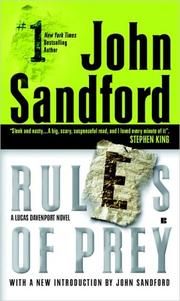
The 1989 first novel, introducing Davenport and the maddog killer who leaves rules at his scenes. Catalogued as Rules of Prey (Lucas Davenport Mysteries). Start here — the personal storyline it opens runs for a dozen books.

Ritual killings of officials with ties to Native American land cases, and the first appearance of Lily Rothenburg. The record credits a Japanese translator alongside Sandford; it is the right book.

A disfigured actor and a pathologist, and the book where Davenport's depression stops being background colour. Read third: it sets up the emotional state the next two books work through.
The series finds its level
BeginnerRead the run where Sandford settles the formula and produces the book most readers name as the best.
▸ Study plan for this stage
Pace: 3 weeks for roughly 1,000 pages — Silent Prey (320), Winter Prey (343) and Night Prey (336). Silent Prey depends on Eyes of Prey, so do not reorder it; it moves Davenport to New York and involves a killer harvesting body parts. Winter Prey is the one to slow down for: give it a full week and read it
- Direct sequel logic: Silent Prey continues a specific character and consequence out of Eyes of Prey, which is rare in a series marketed as readable in any order
- Davenport out of jurisdiction — how Sandford handles a detective with no authority, and what that does to the procedural machinery
- Winter Prey as the first rural manhunt: isolation, weather as an antagonist, and a small-county law enforcement structure instead of a metro department
- Setting as a constraint on plot — snow, distance and darkness limit what both hunter and killer can do, and Sandford exploits every limit
- The Weather Karkinnen storyline as the series' long domestic thread, beginning here and reshaping the stakes of later books
- Recurring investigators like Meagan Connell, and Sandford's habit of giving a one-book partner a full arc
- The template established: Winter Prey's structure is the one the BCA-era books will run on for another two decades
- Why does Silent Prey only work if you have read Eyes of Prey — what specifically does it assume?
- How does the winter setting change Davenport's method, and what techniques from the city books simply stop being available?
- What does Sandford do differently when writing rural law enforcement rather than a metro department?
- Night Prey's killer is a burglar first. How does that change the investigative logic compared with the earlier serial-killer plots?
- If Winter Prey is the high point of the early series, what exactly is it doing better — pacing, setting, antagonist, or Davenport himself?
- Diagram Winter Prey's geography on paper — cabin, town, roads, the lake — and mark where each major scene happens; the plot is spatial and the map makes the construction visible
- Compare the opening chapter of Rules of Prey with the opening chapter of Winter Prey and list every craft difference: sentence length, how the killer is introduced, how quickly the reader is oriented
- Track the Weather Karkinnen thread across Winter Prey and Night Prey and add it to your series bible with dates and page references
- Take one Silent Prey chapter set in New York and rewrite its premise as if it were set in Minneapolis; note which plot elements survive the move and which do not
- List the ways Sandford makes cold dangerous in Winter Prey without ever stopping to describe weather for its own sake
Next up: Winter Prey shows Sandford's rural template arriving early; the next stage takes Davenport out of the police department itself, which is the change that eventually makes that template the norm.

Davenport in New York chasing a killer who escaped the events of Eyes of Prey. It only works if you have read that book, which is why it sits here.

Davenport alone in the Wisconsin north woods in deep winter. The high point of the early series and the first time Sandford writes a rural manhunt, which becomes the later template.

A burglar turned stalker, and the return of Meagan Connell. Read after Winter Prey for the continuing Weather Karkinnen storyline.
Davenport's job changes
IntermediateFollow him out of the police department and into political and consulting work.
▸ Study plan for this stage
Pace: 3–4 weeks for about 1,140 pages — Mind Prey (368), Sudden Prey (400) and Certain Prey (368). Reading order matters more in this stage than anywhere else in the series: Sudden Prey is a revenge plot aimed at Davenport's family by people arrested in an earlier book, and Certain Prey introduces Clara R
- Consequence as plot: Sudden Prey is generated entirely by the arrest at the end of an earlier book, which is the series taking its own continuity seriously
- Davenport moving out of straight police work into political and consulting arrangements, and how his authority becomes negotiated rather than assigned
- The professional antagonist — Clara Rinker is competent, unhurried and sympathetic in a way the psychopaths of the first stage are not, which changes the moral texture
- Threats against family as the escalation available to a series that has exhausted stranger-danger
- Mind Prey's antagonist as a study in fixation rather than compulsion, and how Sandford varies a killer type he has already used three times
- The Minneapolis department politics — commissioners, chiefs, and the mayor's office — becoming plot rather than backdrop
- How Sandford writes a recurring villain who must survive the book, and the plotting compromises that requires
- What makes Clara Rinker work as an antagonist where a serial killer would not, and what does Sandford have to concede to keep her alive?
- Sudden Prey depends on an arrest from a previous book. What does that do to the claim that these can be read in any order?
- How does Davenport's changing employment change the investigations — what can he do now that he could not, and what has he lost?
- Mind Prey is described as the most personal case of the early run. Personal in what sense, and to whom?
- By the end of this stage, how much of the series' tension comes from cases and how much from Davenport's private life?
- Reconstruct the chain of events that produces Sudden Prey's revenge plot, book by book, using your series bible — this is the clearest continuity in Sandford and worth having written down
- Compare Clara Rinker's introduction in Certain Prey with the killer's introduction in Rules of Prey line by line, and describe what Sandford does differently to make one a recurring character and the other disposable
- List every institutional position Davenport holds across these three books and note, for each, the specific investigative power it grants or removes
- Take the Mind Prey abduction and map the timeline against the investigation timeline; Sandford runs them in parallel, and seeing the offset shows how he builds pressure
- Update your series bible with everyone who now knows Davenport well enough to be used against him — you will want that list for the BCA books
Next up: With Davenport untethered from the Minneapolis department, the next stage puts him in a statewide job where the map widens and Winter Prey's rural template becomes the standard shape of a Sandford novel.
A kidnapped psychiatrist and the most personal case of the early run. It leads directly into the domestic turn of the next two books.

A revenge plot aimed squarely at Davenport's family by the survivors of an earlier arrest. Reading order matters more here than almost anywhere else in the series.
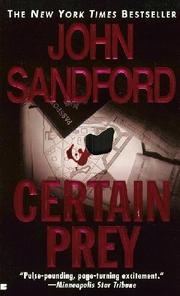
Introduces Clara Rinker, the professional killer who becomes the series' best recurring antagonist. Read it before any later book that mentions her.
The BCA years
IntermediateRead Davenport as a state investigator with a statewide caseload.
▸ Study plan for this stage
Pace: 3–4 weeks for about 1,160 pages — Naked Prey (423), Hidden Prey (325) and Storm Prey (411). Naked Prey is a genuine re-entry point if you have lost the thread: it opens with Davenport newly at the Bureau of Criminal Apprehension and does not require the intervening books. It opens on a double lynchi
- A statewide remit as a structural change — Davenport now travels to the crime instead of working a jurisdiction, and the books become road novels
- The rural manhunt as standard form, twelve books after Winter Prey proved it worked
- Naked Prey's subject: a killing that a whole community has reasons not to solve, which is a different investigative problem from a hunt
- Hidden Prey's use of history as motive — an espionage residue case is Sandford importing a plot type from outside the procedural
- Storm Prey and the marriage-under-threat book: the domestic thread from stage two now generating the case rather than reacting to it
- The BCA supporting cast and how Sandford refreshes a squad without discarding the old one
- Davenport aged into authority — money, rank and reputation change what scenes are even possible for him
- What does the BCA job let Sandford write that the Minneapolis job did not, and what did he have to give up?
- Naked Prey is a book about a community. How does Sandford construct an investigation where the obstacle is collective silence rather than a single antagonist?
- Is Hidden Prey's espionage plot a good fit for this series, or a novelty? Argue from the book's own pacing.
- Storm Prey puts Weather at the centre. How does the series handle a recurring character in real danger when the reader knows the shape of a long-running series?
- Set a BCA-era chapter against a Rules of Prey chapter: what has actually changed in Sandford's prose between the first novel and the BCA books?
- Read Naked Prey's first three chapters as if you had started the series here, and list exactly what a new reader would and would not understand — this tests the 'any order' claim directly
- Map the travel in each of the three books: where Davenport goes, how far, and how the distance shapes the investigation
- Take one procedural sequence from Winter Prey and one from Naked Prey and compare how a rural investigation is run — same template, many books and one job change apart
- Track Weather across Storm Prey and add the outcome to the domestic thread in your series bible; note how many books the relationship has now been running
- Write down the working cast list of the BCA books and mark which names originated in stage one, stage two or stage three
Next up: The BCA years introduce the supporting agent who eventually earns his own series, which is exactly where the final stage goes.

The first book with Davenport at the Bureau of Criminal Apprehension, opening on a double lynching in rural Minnesota. A clean re-entry point if you ever lose the thread.

A Cold War espionage residue case worked with a Russian investigator. It shows the wider remit the new job gives him.
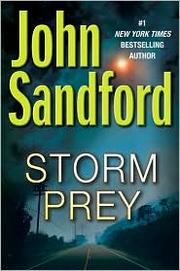
A pharmacy robbery that puts Weather, now a surgeon, at the centre of the case. The strongest of the marriage-under-threat books.
The spin-off
IntermediateMeet the second series that grew out of this one.
▸ Study plan for this stage
Pace: About a week for 400 pages. Dark of the Moon is the first Virgil Flowers novel and reads faster than any Prey book — looser, funnier, and set in small-town southern Minnesota rather than on the road. Read it only after the Prey novels above, because Flowers arrives in this book as a character you al
- Spinning a series off a supporting character — what Sandford keeps (the inverted structure, the short chapters) and what he changes (tone, pace, hero)
- Virgil Flowers as a deliberate inversion of Davenport: casual where Lucas is expensive, talkative where Lucas is cold, and working alone by preference
- Small-town Minnesota as a setting where everyone's history is available and nothing is anonymous, which reverses the metro procedural's core problem
- Comedy inside a crime plot — Sandford's willingness to let a murder investigation be funny, and where he stops
- Davenport as an offstage authority figure, and how a spin-off manages the parent series' hero
- The shared universe: same agency, same state, same continuity, different register
- What a series formula looks like when it is being deliberately loosened rather than repeated
- What specifically makes Flowers a different protagonist from Davenport, beyond manner — what can he do that Lucas cannot?
- How does Sandford keep the inverted structure while changing the tone, and does the humour cost the book any tension?
- Would Dark of the Moon work as a first Sandford novel? What would a reader miss?
- The small town knows everything about itself. How does Sandford turn that into an investigative obstacle rather than a shortcut?
- Having read across the whole Prey run, what is the constant — the thing present in Rules of Prey and still present here?
- Chart Dark of the Moon's point-of-view pattern the way you charted Rules of Prey in stage one, and compare the two diagrams directly
- Mark every appearance or mention of Davenport in Dark of the Moon and note what function each one serves — authority, continuity, or reassurance to the reader
- Write a paragraph describing Flowers using only evidence from the Prey books where he appeared as a supporting character, then check it against his own novel
- Close your series bible by listing which threads are complete, which are ongoing, and which characters have crossed from Prey into the Flowers books
Next up: This is the end of the path: you have the Prey series from city procedural to statewide manhunt, and a working sample of the spin-off that carries the same machinery in a different key.

The first Virgil Flowers novel, spun off from a supporting Prey character and set in small-town southern Minnesota. Looser and funnier than the Davenport books; read it once you know Flowers from the Prey novels above.
Discussion
Keep reading
Paths that share books, cover the same subject, or open a related topic.