The Prey Series Reading Order: Where to Start with John Sandford
The Prey novels are not really thirty-four self-contained thrillers; they are one long account of what happens to a cop when the job keeps changing under him. Lucas Davenport starts as a Minneapolis homicide detective with a side income writing games, moves to the state Bureau of Criminal Apprehension, and ends up a US Marshal working anywhere in the country — and the books change genre with him, from city procedural to rural manhunt to something closer to a road novel. This path is organised around that arc and around the two spin-off series that branch off it, so it reads the volumes where the job, the family or the world changes and names where Virgil Flowers and Letty Davenport pick the story up. If you want the first thirteen books straight through instead, read our John Sandford author path.
Minneapolis: the cop Davenport starts as
BeginnerEstablish Davenport's method and his city, and reach the recurring antagonist who first proves the series can carry a plot across books.
▸ Study plan for this stage
Pace: Two months at about two books a month — 1,545 pages across four novels, with Rules of Prey at 368, Easy Prey 407, Chosen Prey 370 and Mortal Prey 400. That is the pace to hold for the whole path: a thirty-four-book series read at two a month is a two-year project and a readable one, where a book a w
- Davenport's method: an investigator who behaves more like the people he hunts than like his own department, which is the engine of every book
- The dual point of view — the reader watches the killer work while the detective catches up — established in Rules of Prey and used for decades
- Minneapolis and St Paul as a worked, specific city rather than a generic urban backdrop
- The mature city formula at its most comfortable in Easy Prey, before Sandford starts breaking it deliberately
- Clara Rinker as the series' first fully realised recurring antagonist, and what a returning villain does that a new one cannot
- Davenport's personal life shifting from scenery to plot, which is the change Chosen Prey and Mortal Prey turn on
- The side income from writing games, which explains how a detective in this series has money and freedom no real one would
- What does the killer's point of view give Rules of Prey that a conventional whodunnit could not, and what does it cost in suspense?
- Where exactly does Davenport cross a line his department would not sanction, and how does the book frame it?
- Easy Prey is described as the formula at its most comfortable. List the formula's parts, and check them against Chosen Prey.
- Why does Mortal Prey work better because Clara Rinker was introduced two books earlier rather than in her own novel?
- By the end of this stage, what does Davenport want that he did not want in Rules of Prey?
- Write out the beat sheet of Easy Prey in one page, then use it as a checklist against Chosen Prey. The gaps are where Sandford is already loosening the pattern.
- Keep a job-and-family ledger — Davenport's employer, his territory, his household — updated at the end of every book on this path. The series is about that ledger changing, and no single volume shows it.
- In Mortal Prey, mark every scene given to Rinker rather than to Davenport and count the pages. The proportion is why she works.
- Set your pace before starting book two and write it down. Two books a month is the recommendation; the point is to pick a number, because a series this long defeats readers who do not.
Next up: With the city formula fully learned, you can feel exactly what changes when Sandford moves Davenport to a state agency and takes the city away.
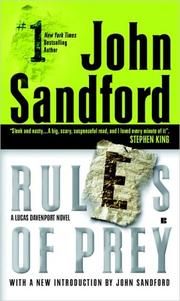
The one unavoidable book: it introduces Davenport, the maddog killer, and the trick the whole series runs on — an investigator who behaves more like the people he hunts than like his own department. The catalogue record carries the Lucas Davenport Mysteries series tag in its title; it is the standard first novel.

A fashion-world murder that is the cleanest example of the mature Minneapolis formula, and the book where Davenport's personal life stops being scenery. Read it as the series at its most comfortable, just before Sandford starts breaking the pattern.

The last of the pure city procedurals, and worth reading immediately before Mortal Prey because it sets up the domestic situation that book detonates.
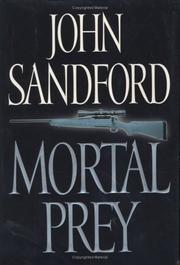
Clara Rinker, the hitwoman introduced two books earlier, returns, and Davenport goes to St Louis after her. It is the first time the series brings back a fully realised antagonist rather than a new killer, and it is the high point of the early run.
The BCA years: a bigger map, worse country
IntermediateFollow the shift from a city detective to a state investigator, and see how the rural Minnesota setting changes what the books can do.
▸ Study plan for this stage
Pace: Six to eight weeks for 1,178 pages — Broken Prey 390, Invisible Prey 388 and Buried Prey 400 — at a book every two to three weeks. Read Buried Prey last of the three and not earlier, even though its main case is the oldest: half the novel is Davenport as a young patrol officer working the case that
- The change of scale from a city detective to a state investigator: a whole state to cover and no department behind him in the same way
- Rural Minnesota as a setting that changes what the plots can be — distance, isolation and thin local policing become plot mechanics
- Invisible Prey's stretch of the format: a crime that runs on money and social class rather than on a psychopath
- The family thread taking on real weight, including Letty, who is eventually spun off into her own series
- Buried Prey's double timeline, the only volume that goes back to Davenport's beginning
- How a long series manufactures freshness: change the badge rather than the detective
- What can a state investigator do that a city detective cannot, and what has Davenport lost in the move?
- Invisible Prey has no serial killer. What is holding the tension instead, and does it hold as well?
- Buried Prey shows you the young Davenport. Which of his adult traits turn out to be there already, and which are clearly later additions?
- How does the rural setting change the pacing of an investigation compared with the Minneapolis books?
- Reading these three after the city novels, what would a reader who started here miss?
- Update the job-and-family ledger for all three books, and add a column for who Davenport can call on. It shrinks and then regrows across this stage.
- Compare the first fifty pages of Broken Prey with the first fifty of Easy Prey and note what the state-level jurisdiction changes about how a case opens.
- Read the 1985 strand of Buried Prey straight through on its own, skipping the present-day chapters, then read the present-day strand. Then decide whether the interleaving earns itself.
- Pick the book in this stage you would cut and defend the cut in three sentences. A thirty-four-book series is uneven, and being able to say why is what lets you keep going.
Next up: The state job has been shown to have a hard edge — a jurisdiction that stops at the state line — which is precisely the limit the next three books break.
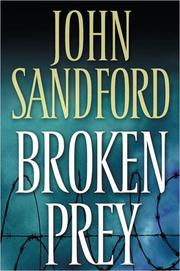
The first strong book of the state-investigator era, built around escapees from a secure hospital. Read it here to feel the change of scale: Davenport now covers a whole state and no longer has a department behind him in the same way.

An antiques-theft plot that runs on money and social class rather than a psychopath, which is Sandford stretching the format deliberately. It also develops Letty, adopted a few books earlier, whose place in the family reshapes the domestic thread and eventually spawns her own series.

Half the book is Davenport as a young patrol officer in 1985, working the case that made him. It is the only volume that goes back to the beginning, so it lands hardest twenty books in — read it after the BCA books, not before.
The transition: from state investigator to federal marshal
IntermediateRead the three books across which Davenport loses the BCA job and acquires a badge with no geographical limit.
▸ Study plan for this stage
Pace: Six to eight weeks for 1,235 pages: Field of Prey 407, Gathering Prey 428 and Golden Prey 400. Read Gathering Prey directly before Golden Prey — the first exposes the jurisdictional limit that the second solves, and the pair is the hinge of the whole series. Field of Prey turns on a body dump in an
- Field of Prey as the last great BCA investigation, and the scale a state agency can just about carry
- Jurisdiction as the actual subject of Gathering Prey: a multi-state case a Minnesota investigator cannot legally work
- Letty as a driver of plot rather than a dependent, which is the change that makes her own series possible
- The US Marshal badge and what it removes: no fixed territory, no home department, no local politics
- Bob and Rae as a replacement ensemble, and how a long series survives losing its supporting cast
- Chase structure versus investigation structure — the books stop asking who and start asking where
- Why Golden Prey works as an entry point where almost no other mid-series volume does
- What specifically prevents Davenport from finishing the job in Gathering Prey, and how does Golden Prey remove that obstacle?
- Field of Prey is the biggest case in the series. Does scale make it the best one, and if not, what does it cost?
- Compare the opening chapter of Golden Prey with that of Rules of Prey. What has the series become?
- What do Bob and Rae do for the books that Davenport's Minneapolis colleagues did not?
- If a friend started at Golden Prey, what would they misunderstand about Davenport, and would it matter?
- Read Gathering Prey and Golden Prey back to back with nothing between them and mark the exact page where the series changes genre.
- Update the job-and-family ledger. This stage produces the single largest entry: employer, territory and colleagues all change at once.
- Take one chase sequence from Golden Prey and one interrogation sequence from Easy Prey and compare what each is doing with information. This is the clearest way to see the structural switch.
- Write a one-paragraph pitch for the series as it exists from Golden Prey onward, without reference to Minneapolis. If it reads like a different series, that is the correct answer.
Next up: Davenport can now go anywhere, which is the condition the late books are written under and the reason they stop resembling the ones you started with.

A body dump in an abandoned farm cistern and the largest serial case in the series, which is also the last great BCA investigation before the ground shifts.

Letty pulls Davenport into a travellers-and-killers plot that crosses several states, exposing exactly the jurisdictional limit that the next book solves. Read it directly before Golden Prey.

Davenport becomes a US Marshal here, and the series changes permanently: no fixed territory, a new supporting cast in Bob and Rae, and a chase structure instead of an investigation. This is the second real starting point in the series if you refuse to begin at book one.
The late books
IntermediateSee what the series becomes once Davenport can go anywhere, and where it stands now.
▸ Study plan for this stage
Pace: A month for the two, at 928 pages — Ocean Prey 488 and Toxic Prey 440, both longer than anything in the early stages. Ocean Prey first: it puts Davenport, Virgil Flowers and the Marshals on one Florida case together and is the best single demonstration of how the three series share a world, so it al
- The shared world made explicit: Ocean Prey is the crossover the earlier books only implied
- Virgil Flowers first appearing here in a Davenport novel, which is how most readers meet the spin-off
- The federal-era book as a road novel: a case in Florida with no institutional home for the investigators
- Toxic Prey's shift from hunting a person to containing an idea, and how far that is from a Minneapolis procedural
- Length as a symptom — the late books are the longest, and what the extra pages are used for
- Taking stock: what the series has kept from Rules of Prey and what it has abandoned
- Ocean Prey runs three sets of characters at once. How does Sandford keep them distinct, and which set does the book actually belong to?
- Toxic Prey's antagonist is driven by ideology rather than compulsion. Does the series' dual point of view still work on a character like that?
- What has Davenport kept from the detective in Rules of Prey, and what is simply gone?
- These are the two longest books on the path. Where is the extra length going — plot, cast, or place?
- Is Toxic Prey a good place to stop? Argue it both ways.
- While reading Ocean Prey, keep a tally of pages by viewpoint — Davenport, Flowers, the Marshals. The split is the argument for reading the spin-off.
- Close the job-and-family ledger you started in stage one and read it end to end. That document is the series' real arc and no single novel contains it.
- Reread the first chapter of Rules of Prey immediately after Toxic Prey. Every book on this path sits between them, and the contrast is the point.
- Decide here whether you are following the spin-offs. The final stage is optional by design, and stopping at Toxic Prey leaves you with a complete Davenport arc.
Next up: Ocean Prey has already introduced Virgil Flowers and the ledger has shown Letty growing into a lead, so the last stage places both branches rather than starting from scratch.

The full crossover: Davenport, Virgil Flowers and the Marshals working one Florida case together, which makes it the best single demonstration of how the three series share a world.

A late book turning on a bioweapon and a scientist's ideology rather than a hunt, and the clearest sign of how far the federal-era novels have drifted from the Minneapolis procedurals. A reasonable place to stop and take stock.
Where the spin-offs branch off
IntermediatePlace the Virgil Flowers and Letty Davenport books relative to the Prey sequence, and decide whether to follow either.
▸ Study plan for this stage
Pace: Six weeks for the three, and treat this stage as a sampler rather than a sequence. Holy Ghost is 432 pages and The Investigator 464, so those two run to 896 pages; no reliable length is recorded for Dark Angel, which is a full-length novel. Read Holy Ghost first for the Flowers register — it is a co
- Virgil Flowers as a deliberate tonal counterweight: the same world, played light, with the violence kept further off the page
- Small-town Minnesota as Flowers' territory, which is the ground the BCA books passed through and never settled in
- Letty's move from a character in someone else's series to the lead of her own, and what the transition required
- Political Washington as a setting the Prey books never used, and what it lets The Investigator do
- Cyber and hacker material in Dark Angel as a genuinely new register for this world
- How a shared world survives losing its centre: the branches do not need Davenport, and that is the test they pass
- What does Holy Ghost do with a case that a Davenport novel could not, and is the difference the character or the register?
- Reading The Investigator after Gathering Prey, which of Letty's traits are inherited from Davenport and which are hers?
- Dark Angel's subject matter is outside anything in the Prey books. Does the world still feel like one world?
- If you only followed one branch, which, and what makes it the better use of the next twelve months?
- What does each spin-off suggest about why Sandford wanted out of the Davenport point of view?
- Read the first chapter of Holy Ghost and the first chapter of Toxic Prey on the same evening. The tonal distance in one sitting is the clearest thing this stage can show you.
- Go back to the Letty scenes in the Prey books you have read and line them up against The Investigator. The continuity is stronger than most spin-offs manage and it is worth checking rather than assuming.
- Plot the three series on one timeline — Prey, Flowers, Letty — marking the crossovers you have read. Ocean Prey is the only point where all three meet.
- Choose your ending: stop here, follow Flowers from his first solo book, or follow Letty forward. All three are legitimate, and a thirty-four-book series plus two branches is only finishable by someone who decides.
Next up: This is the end of the path: Davenport's arc is complete, both branches are placed, and any further reading is a choice between them rather than a next step.

Virgil Flowers, who first appears as Davenport's subordinate in the BCA books, carrying his own comic small-town case about a faked apparition. It is the best single sample of the spin-off's much lighter register.

Letty Davenport, adopted in Naked Prey and grown up across the series, gets her own book working for a senator. Read it after Gathering Prey, whose events explain who she has become.

The second Letty novel, moving her into hacker and cyber territory the Prey books never touch, and the current end of that branch. It closes this path by showing where the world goes once Davenport is no longer the centre of it.
Discussion
Keep reading
Paths that share books, cover the same subject, or open a related topic.

