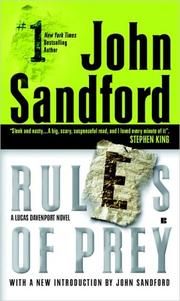
Start with Rules of Prey, the 1989 first novel. Every guide that tells you the Prey books are standalone is technically right and practically wrong: the cases resolve inside each book, but Lucas Davenport's life does not. His moves between police forces, his money, his marriage and the colleagues who become series regulars all accumulate, and starting in the middle means meeting a fully assembled world you are expected to already know.
There is one legitimate alternative starting point, and it is Naked prey. That is the book where Davenport leaves the Minneapolis police for a state agency, which functionally reboots the series with a new job, a new territory and a new cast. If the early books' content is a problem for you — and it might be, see below — beginning there costs less than it would in most series.
What our list actually covers
This path holds twelve Prey novels plus one spin-off. The Prey series itself runs past thirty books, and even within the stretch listed here the numbering is not continuous — the first eight are consecutive, then it jumps. Missing volumes include Secret Prey, Easy Prey, Chosen Prey and Mortal Prey, among others. That matters in exactly one place, noted below. Everywhere else you can read the books listed here in the order given and lose nothing but a few cases.
The Minneapolis run
Rules of Prey sets the template: a serial killer with his own point-of-view chapters, and a cop who is a wealthy game designer, a womaniser and prepared to break the law to win. Shadow prey pushes into Native American politics in the Twin Cities. Eyes of prey is the one long-time readers most often name as the best of the early books, built around a genuinely unpleasant pair of killers. Silent prey takes Davenport to New York after a villain from Eyes of prey — the one place the reading order actually binds. Winter prey strands him in rural Wisconsin in a blizzard and introduces Weather Karkinnen, who becomes permanent. Night prey, Mind prey and Sudden prey run consecutively and are the point at which the series settles into the thing it will be for twenty years.
The middle, and the strongest stretch
Certain prey introduces Clara Rinker, a professional killer written with enough sympathy that she comes back; a later book turning on her is not in our list, so her story here is incomplete. Naked prey is the state-agency reset. Hidden prey is a Cold War story that is better plotted than most of its neighbours. Storm prey opens with a pharmacy robbery that puts Weather in the middle of the case, and is the best of the later books listed here. Most long-time readers name roughly this middle band — from the reset through the twenties — as the series at its most consistent.
Two series, one universe
Sandford writes two Minnesota crime series and readers routinely confuse them. Prey follows Lucas Davenport across the books listed above. The Virgil Flowers series follows a different investigator — looser, funnier, more rural, more likely to end with a barn on fire — and Dark of the moon is its first book, not a Prey novel. They share a world and a chain of command: Flowers first turns up as one of Davenport's investigators inside the Prey books, Davenport appears in the Flowers books as his boss, and several cases cross between the two series, most visibly once Davenport has moved to the state agency. Later still, Sandford wrote books billed as joint outings for both men. Practically, that means read Prey first and pick up Dark of the moon once Flowers has already annoyed you in someone else's novel — it opens assuming you know who he works for and why that matters.
Honest warnings
The early Prey books are considerably more graphic than the later ones, and specifically so about sexual violence against women. The killer point-of-view chapters in Rules of Prey, Eyes of prey and Mind prey are extended and detailed. That style was common in the late-1980s thriller market and Sandford moved away from it as the series went on, but it is there in the first third and it is the single most common reason readers put the series down. Davenport himself is also written to be uncomfortable — he is corrupt in small ways, violent by choice, and the books do not consistently disapprove.
Where to stop
There is no bad place. The series has no ongoing plot that demands completion, so stopping after Storm prey leaves nothing unresolved. Readers who go further generally find the books lighter and more procedural, with less of the killer's-eye material — better company, lower voltage. More crime fiction lives on Discover.
Follow the full ordered path here: Lucas Davenport Prey books in order: where to start with John Sandford.