Jennifer Egan Reading Order: Where to Start
Jennifer Egan does not have a house style — she has a habit of building a completely different machine for each book, which makes 'where to start' a real question rather than a formality. This path opens with the most purely enjoyable novel she has written, moves to the Pulitzer-winning book everyone means when they say her name, then follows her into the historical fiction and finally back to the early work, which reads differently once you know what she became.
The way in
BeginnerMeet Egan through her two most straightforwardly gripping novels, and get used to a writer who will change form on you without warning
▸ Study plan for this stage
Pace: 4 weeks. The Keep is 256 pages and genuinely propulsive - four or five nights. Look at Me is 416 and much slower, with two long parallel storylines; give it three weeks at ~25 pages a night and do not skim the Rockford chapters, which are where the book is actually thinking.
- Egan has no house style - each book is a different machine, so 'where to start' is a real question rather than a formality
- The Keep's nested frame: a story is being told by someone with a reason to tell it, and finding out who changes the book retroactively
- Gothic furniture used sincerely - the castle, the pool, the twin - rather than as pastiche
- Look at Me's central bargain: a model whose face is rebuilt becomes unrecognisable to everyone including herself, and identity turns out to be an image problem
- The novel predicts self-broadcast and the monetised online persona before either existed, which is a structural insight rather than a lucky guess
- Doubling as Egan's recurring device - two Charlottes in Look at Me, two levels of narration in The Keep
- Where the frame-break happens in each book, and how gently The Keep does what A Visit from the Goon Squad will do at full scale
- In The Keep, who is telling the story, and at what page did you work it out? What did the delay buy Egan?
- What is the castle's pool actually for, in structural rather than plot terms?
- Look at Me splits between two characters sharing a name. What does the split let Egan say that one protagonist could not?
- Which parts of Look at Me now read as prediction, and which as period detail? Be specific about the difference.
- Both books are about people performing a version of themselves for an audience. Which one takes that more seriously?
- After finishing The Keep, reread its first ten pages. Almost every sentence changes meaning; note three that change most.
- Track how many pages Look at Me spends away from the model plot. The proportion tells you what the book thinks it is about.
- Write one paragraph in the voice of The Keep's narrator. The tics - the interruptions, the defensive asides - are learnable, and imitating them is the fastest way to see them.
- List the ways a character in either book presents a curated self. Keep the list; you will use it on The Candy House.
Next up: You have now watched Egan nest one story inside another and split one identity across two characters, which are precisely the two moves A Visit from the Goon Squad performs thirteen times over.
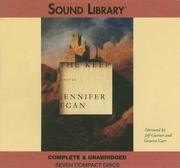
A gothic thriller set in a crumbling European castle, with a second story nested inside it that reframes everything. The best entry point: genuinely fun to read, and the frame-breaking structure is a gentle preview of what Goon Squad does at full scale.
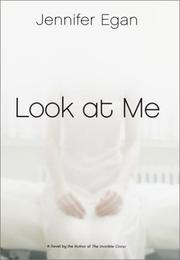
A fashion model whose face is rebuilt after a crash, written before social media existed and eerily predictive of it. Read it second for the first real dose of Egan's interest in identity, image and self-broadcast — the theme the later books never drop.
Goon Squad and its sequel
IntermediateRead the two linked books that made Egan's reputation, and understand how a novel built from discontinuous chapters across decades still coheres
▸ Study plan for this stage
Pace: 4 weeks. A Visit from the Goon Squad is 359 pages but each chapter is a self-contained unit - read exactly one chapter per sitting and stop, because the gaps between them are where the book works. The Candy House is 352 and does the same thing; read it immediately after, within days, while the Goon
- Thirteen chapters, thirteen forms, thirteen decades-spanning perspectives - the novel is a set of short stories that refuses to be one
- Time as the antagonist named in the title: the goon squad is time itself, and every chapter is a before-and-after measured against another chapter
- The PowerPoint chapter as sincere formal invention rather than gimmick - it is also the emotional centre of the book
- Second person, celebrity profile, magazine feature: Egan borrows a non-fiction form per chapter and lets the form characterise the narrator
- Minor characters promoted to protagonists, which is the organising principle of both books and the entire premise of The Candy House
- The Candy House's conceit - externalised, uploadable memory - as the logical extension of Look at Me's self-broadcast
- Why The Candy House is a sibling volume, not a sequel: it runs alongside rather than after, and reading order between the two matters far less than reading them close together
- Structural coherence without continuous plot - what actually holds these books together when chronology does not
- Which Goon Squad chapter is the emotional centre for you, and which is the structural centre? If they differ, why?
- What does the PowerPoint chapter do that continuous prose could not have done here?
- Pick one character who appears as a minor figure in one chapter and a protagonist in another. What does the double exposure reveal?
- In The Candy House, what exactly is the trade people accept when they upload their memories - and does the novel think it is a bad one?
- Do these two books cohere as novels, or are they linked collections? Defend a position using the chapter transitions.
- Build a timeline of Goon Squad by chapter, in chronological rather than reading order. Then say what the reading order was for - the answer is the book's argument.
- Draw the character web across both books. Names recur far more than you notice on a first read.
- Reread the PowerPoint chapter as prose: describe one slide in a paragraph. What you lose measures what the form gained.
- Pick one Goon Squad chapter and identify the non-fiction genre it is imitating, then find one sentence that breaks the imitation.
- Compare your stage-one list of self-presentation strategies with The Candy House's. Egan has been writing this book for twenty years.
Next up: With the formal fireworks fresh, you are in the only position from which Manhattan Beach delivers its actual shock - which is how completely conventional it is.
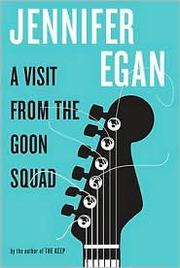
Thirteen chapters, each a different character, form and decade — including one told entirely in PowerPoint slides — orbiting the music industry and the passage of time. The centre of the path, and the book that pays off every structural trick you saw in The Keep.

A sibling volume rather than a sequel, following minor characters from Goon Squad into a near future where memory can be uploaded and shared. Read it immediately after, while the first book's enormous cast is still in your head.
The historical novel
IntermediateSee Egan abandon formal experiment entirely and write a long, conventionally realist novel, and judge what that costs and what it buys
▸ Study plan for this stage
Pace: 3 weeks. Manhattan Beach is 512 pages, the longest book on this path and the most continuously plotted, so it takes a steady ~25 pages a night rather than the chapter-at-a-time discipline the previous stage needed. It rewards momentum; do not stretch it out.
- Egan abandons formal experiment entirely - one chronology, close third person, conventional scene construction - and the choice is the point
- The research is visible on purpose: the diving apparatus, the Naval Yard, the waterfront rackets are rendered with an archival specificity the earlier books never wanted
- Anna's diving as the novel's central image - descending, sealed off, breathing through a line to a surface she cannot see
- Three lives braided by a single vanished father, which is the closest thing to a Goon Squad structure that a realist novel will allow
- Genre inheritance: this is a wartime melodrama and a crime novel, treated with complete sincerity
- What conventional form buys - accumulating dread, an ending that lands - and what it costs, which is the electricity of the previous stage
- The continuity nobody notices: it is still a book about a woman inventing a self the world has no template for
- Would this novel be more or less impressive if it were the first Egan you had read? Your answer explains why it is placed here.
- What does the diving material do beyond period colour - name the thematic work it performs.
- Where, if anywhere, does Egan's formal restlessness leak through the realist surface?
- The novel has three centres of consciousness. Is the balance right, or does one crowd the others out?
- What has Egan gained by writing a book she could have written at twenty-five, after writing books nobody else could write?
- Find one passage that could have been a standalone Goon Squad chapter and say what makes it fit here instead.
- Time yourself on 30 pages of Manhattan Beach and 30 pages of Goon Squad. The reading-speed difference is a real fact about the two forms.
- Write the one-paragraph jacket copy for this book without mentioning Egan's name. Then ask whether you would pick it up.
- Note every scene involving water. The novel is organised around them more tightly than the plot admits.
Next up: Having seen the full range - nested gothic, formal explosion, straight realism - you can read the early work as a baseline and see which obsessions were there before any of the techniques were.

Brooklyn during the Second World War, following a woman who becomes a navy diver, built on years of archival research. Placed after Goon Squad deliberately: the shock of the book is how completely traditional it is, and that only registers once you know what she can do instead.
Back to the beginning
IntermediateRead the earliest work with the whole career in view, and trace which obsessions were present from the first page
▸ Study plan for this stage
Pace: 3 weeks. The Invisible Circus is 352 pages and reads like a straightforward literary novel of its era - two weeks at ~25 a night. Emerald City is 192 pages of stories; take two or three per sitting over the final week, and read them as drafts of preoccupations rather than as a book with an argument.
- The debut as baseline: a conventional coming-of-age structure, which makes visible how much of later Egan is invented rather than innate
- Phoebe retracing her dead sister's route - a plot about reconstructing someone else's experience, which is what every later Egan book does formally
- 1970s counterculture treated as already-vanished history, an early instance of Egan's real subject, elapsed time
- Emerald City's restlessness confined to individual stories - the range is present before the ambition is
- The travel and displacement material that keeps recurring: Americans abroad, misreading where they are
- Reading a career backwards - which recurring obsessions were present at the start, and which are late acquisitions
- Why the least characteristic book on the path is worth reading last rather than not at all
- Which Egan preoccupations are already fully present in The Invisible Circus, and which are entirely absent?
- The debut is about reconstructing a life from fragments. How is that the same project as Goon Squad, and how is it not?
- Which Emerald City story most anticipates a later book, and what specifically links them?
- Would you recommend the early work to a new reader? Your answer is the test of whether this path's ordering was right.
- Across seven books: is Egan a formal innovator who happens to write about time, or a writer about time who keeps needing new forms?
- List the Egan books in the order you would now recommend them to a specific friend, and write one line of justification each.
- Find the sentence in The Invisible Circus that sounds most like the later Egan and the paragraph that sounds least like her.
- Reread one Emerald City story after finishing the novel, then say what the story form gave her that the novel could not.
- Write 200 words on what changed between 1994 and 2010 - your own account, not the received one.
Next up: This closes the path: you have read Egan forwards through the invention and backwards to the source, which is the only way to see how much of her was built rather than given.
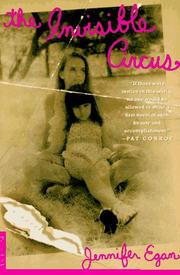
A teenager retraces her dead sister's route across 1970s Europe. The debut novel, and the least characteristic book here — worth reading late, as the baseline against which everything she later invented becomes visible.
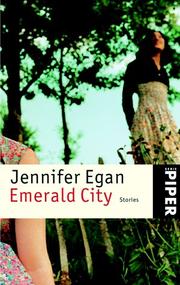
The early collection, where the restlessness that later became structural is still confined to individual stories. A short closing stop that shows the range arriving before the ambition did.
Discussion
Keep reading
Paths that share books, cover the same subject, or open a related topic.