Lincoln Rhyme books in order: where to start with Jeffery Deaver
The Lincoln Rhyme novels are the reason to read Deaver, and they should be read in publication order — not for the cases, which are self-contained, but because the relationship between Rhyme and Amelia Sachs develops steadily across the run and several books turn on where it has got to. Know the house style before you commit: Deaver plots for reversals, usually several per book and at least one in the last twenty pages, and he will lie to you by omission to get there. Readers either find that exhilarating or exhausting, and the first book settles it. This path takes the Rhyme run in order, stops at a defensible point rather than listing all of them, then adds the Kathryn Dance spin-off — which begins inside a Rhyme novel — and two standalones that show what Deaver can do outside the formula.
The first three
BeginnerMeet Rhyme and Sachs, learn how the forensic method drives the plots, and find out whether the twist-per-chapter style works for you.
▸ Study plan for this stage
Pace: Four to five weeks for three long thrillers of similar size — The Bone Collector (432 pages), The Coffin Dancer (453) and The Empty Chair (454). Each is a two-week read at an ordinary pace and a weekend if the style takes you, which is the actual test of this stage. Read them in publication order. T
- The premise: a quadriplegic former head of NYPD forensics directing a patrol officer through a crime scene by radio, established once in book one and never re-explained afterwards
- Evidence-driven plotting — the deduction chain from trace material to location is the actual engine, not the chase
- The Deaver reversal: multiple per book, at least one in the last twenty pages, achieved by withholding rather than by lying outright
- Lincoln Rhyme and Amelia Sachs as a partnership built on him needing her hands and her needing his certainty
- Book two's compressed clock — an assassin with three targets and seventy-two hours — as the purest demonstration of the structure
- Book three moving Rhyme out of the apartment and out of New York, and putting Sachs on the opposite side of the investigation
- Cases are self-contained; the relationship is the continuing story, which is why publication order matters
- What can Rhyme do that a conventional detective cannot, and what is the cost the books keep returning to?
- In The Coffin Dancer, how many reversals are there, and where does each one sit in the book's structure?
- Did Deaver play fair with you on the last twist of each book — was the information there to be caught?
- What does taking Rhyme to rural North Carolina in The Empty Chair prove about what the series is actually about?
- Where does Sachs act against Rhyme in book three, and what does it change between them?
- After three books: is the twist-per-chapter style exhilarating or exhausting for you? Answer honestly before committing to twelve more.
- Read The Bone Collector with a pencil and mark every reversal as it lands. When you finish, go back to the twenty pages before each one and check whether the information was on the page. That audit is the only useful way to judge Deaver.
- In The Coffin Dancer, note the time stamp at each chapter break and plot the seventy-two hours. The pacing is engineered against that clock and the graph shows it.
- Keep a Rhyme-and-Sachs log across the three books: one line per book on where the relationship stands at the end. You will need it — the later books turn on it.
- Take one forensic deduction chain from book one — trace evidence to conclusion to address — and write it out as numbered steps. Then check how many steps required information the reader did not yet have.
Next up: The style and the partnership are established; the next stage is Deaver at his most confident, and includes the book that starts the spin-off.
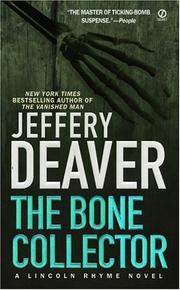
The first Rhyme novel and by some distance the best-known: a quadriplegic former head of NYPD forensics directing a patrol officer through a crime scene by radio. Everything about the premise, the partnership and the method is established here, and the later books never re-explain it. The catalogue record carries the series note in its title.
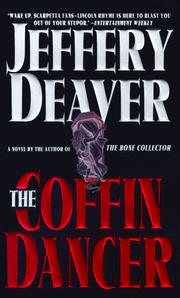
Book two, an assassin with three targets and a seventy-two-hour clock, and the purest example of Deaver's structure — the reversals come faster here than anywhere else in the run. Read it second while the rules are still new to you.

Book three, which takes Rhyme out of New York to rural North Carolina and puts Sachs on the opposite side of the investigation. The book that proves the series is about the two of them rather than about the apartment full of equipment. Its catalogue record has the author name appended to the title.
The strongest middle run
BeginnerRead the four books where Deaver is most confident, including the one that spawned the spin-off.
▸ Study plan for this stage
Pace: Six to eight weeks for four substantial books — The Stone Monkey (528 pages), The Vanished Man (488), The Twelfth Card (544) and The Cold Moon (465). Read them in order and read The Cold Moon in place rather than skipping ahead to the spin-off, since it is where Kathryn Dance first appears and is th
- Research as the difference between a competent Deaver and a good one — The Stone Monkey's snakehead smuggling material is the best-sourced in the run
- An antagonist with a coherent method rather than a gimmick, which is what makes the Ghost the series' strongest villain
- The Vanished Man's illusionist killer, which lets Deaver justify misdirection inside the story rather than only in the structure
- Historical material in The Twelfth Card — a nineteenth-century strand running alongside the present-day investigation, and the only time Deaver attempts it well
- Kinesics introduced through Kathryn Dance in The Cold Moon: reading body language and speech patterns, a second investigative method set against Rhyme's trace evidence
- How a long series seeds a spin-off inside a main-sequence book
- Where the reversals stop being a trick and start being the book's subject
- What does The Stone Monkey get right about its subject that a thriller usually does not bother with?
- How does making the killer a professional illusionist change the contract between Deaver and the reader?
- In The Twelfth Card, what does the nineteenth-century strand contribute besides atmosphere — does the present-day plot need it?
- How does Dance's method differ from Rhyme's, and which of the two does The Cold Moon treat as more reliable?
- Which of these four has the best final twist, and can you say why in structural terms rather than by describing it?
- In The Vanished Man, list every illusion described in the text and mark which ones the plot later uses. Deaver is showing you the method before he uses it, which is the fairest he ever plays.
- Continue the reversal audit from stage one on The Twelfth Card: mark each turn, then verify the setup. Compare your hit rate with book one — you should be catching more, which is what the audit is for.
- In The Cold Moon, mark every scene Dance is in and read them consecutively afterwards. That sequence is effectively the pilot for the spin-off.
- Update your Rhyme-and-Sachs log. Four more books have passed; note what has changed and what has not.
Next up: With the series at its peak behind you, the next stage follows it into the modern run and identifies where it begins repeating its own moves.
A human-smuggling ship wrecked off Long Island and a snakehead hunting the survivors. The best-researched of the run and the one with the most convincing antagonist.

A killer who is a professional illusionist, which lets Deaver justify his misdirection inside the story rather than only in the structure. The most purely enjoyable book of the series and the one to hand a sceptic.
A Harlem schoolgirl researching an ancestor becomes a target, with a nineteenth-century strand running alongside the present-day one. Deaver rarely attempts historical material and this is his best use of it.

Read this one in place, not out of order: it is a strong Rhyme novel in its own right and it is also where Kathryn Dance first appears, so it is the bridge to the spin-off stage below.
Later Rhyme
IntermediateContinue through the modern run, and understand where the series starts repeating its own moves.
▸ Study plan for this stage
Pace: Five to six weeks for The Broken Window (414 pages), The Burning Wire (452) and The Steel Kiss (562). The Steel Kiss is the longest book in the run and the slowest of the three. Read them in order; The Broken Window brings back Rhyme's cousin and is one of the few genuine continuity threads in the s
- Data mining and identity theft in The Broken Window — the entry that has aged into being about something rather than merely using a topic
- Continuity in a series of self-contained cases: the cousin plot as one of the very few threads that carries book to book
- The Burning Wire as the last book where the central gimmick feels discovered rather than assembled
- The Steel Kiss's structural change — Sachs leading while Rhyme has left the force — which is the largest alteration the format ever undergoes
- Diminishing returns in a long-running series: how to recognise a premise chosen because it was available rather than because it was necessary
- Where to stop, and why The Burial Hour and The Cutting Edge are optional rather than required
- What does The Broken Window predict about data and privacy, and how much of it has happened?
- Compare the central gimmick of The Burning Wire with that of The Stone Monkey — which came from research and which from a premise search?
- What changes about the books when Sachs leads and Rhyme is not officially on the case?
- Is the reversal count still going up, and are the reversals still surprising you? Check your audit notes.
- If you stop after The Steel Kiss, what have you actually left unfinished?
- Run the reversal audit one more time on The Burning Wire and compare the results with your audit of The Coffin Dancer. Falling surprise with steady frequency is the specific way this series ages.
- Track the cousin thread across The Broken Window and note every prior book it refers back to; that list is the entire continuity of the series in one page.
- In The Steel Kiss, mark every scene that would have been Rhyme's in an earlier book and is now Sachs's. The redistribution is the change the whole book is built on.
- Write your own stopping decision: continue, or stop here, with one sentence of reason. Then check it after the standalones in the last stage.
Next up: The main sequence is behind you, and the spin-off introduced back in The Cold Moon is the natural next thing to try — especially if the Rhyme formula has worn thin.
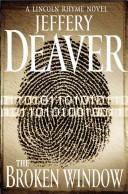
Data mining and identity theft, and the entry that has aged into being about something. Also brings back Rhyme's cousin, one of the few genuine continuity threads in the run.

A killer using the electrical grid as a weapon, and the last book in which the central gimmick feels genuinely new. From here the premises start to feel assembled rather than discovered.

Sachs leading while Rhyme has left the force, which is the most substantial change to the format the series ever made. A reasonable place to stop: The Burial Hour and The Cutting Edge follow and are competent, but the remaining books can be read in any order or not at all.
The Kathryn Dance books
IntermediateRead the spin-off, which is built on an entirely different investigative method and is worth trying even if the Rhyme formula has worn thin.
▸ Study plan for this stage
Pace: Four to five weeks for The Sleeping Doll (492 pages) and Roadside Crosses (488). Read them after The Cold Moon, where Dance is introduced. Much of The Sleeping Doll is two people in a room talking, and it is more gripping than that sounds, but it is a slower read than a Rhyme novel because the tensi
- Kinesic analysis as a detection method — reading body language, speech patterns and baseline behaviour in interviews instead of trace evidence
- The interrogation as a scene form: how Deaver builds suspense out of two people at a table
- A different reliability problem: Rhyme's evidence is mute and Dance's is a person who can lie back
- Roadside Crosses on online mobbing, written early enough that the phenomenon still needed explaining
- Crossover between the two series — Rhyme appears in the Dance books and Dance in the Rhyme books, so the spin-off is not sealed off
- What a spin-off is for: keeping the author's structural habits while changing the investigative method under them
- What are the specific kinesic tells Dance relies on, and how does Deaver keep the technique from becoming mind-reading?
- How does the reversal structure work when the source of information is a suspect rather than a crime scene?
- In Roadside Crosses, who is actually responsible for the harm, and does the book commit to an answer?
- Which method makes for better fiction, Rhyme's or Dance's, and is that the same as which is more convincing?
- Does the crossover between the series add anything, or is it a courtesy to readers of both?
- In The Sleeping Doll, mark each interview scene and note the one piece of information Dance extracts from it. Reading those notes alone should reconstruct the plot — that is the test of whether the conversational structure holds.
- Take one interrogation and rewrite its key exchange as a Rhyme forensic sequence. What Deaver has to change tells you what each method can and cannot deliver.
- Run the reversal audit on Roadside Crosses; the setup for the final turn is planted differently from the Rhyme books and is worth locating precisely.
- If you want the whole thread, note that XO and Solitude Creek follow and both resolve in this catalogue; write the four Dance titles in order before you go looking.
Next up: Two series and two methods later, the last stage removes the continuing cast entirely and shows what Deaver's construction does with no familiar scaffolding to lean on.

Dance's first novel, in which the detection is kinesic analysis — reading body language and speech patterns in interviews — rather than trace evidence. Much of the book is two people in a room talking, and it is more gripping than that sounds. Read it after The Cold Moon, where she is introduced.
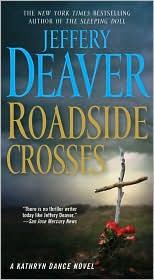
The second Dance, about online mobbing, and the better plotted of the two. If you want the whole thread, XO and Solitude Creek follow and both resolve in our catalogue; Rhyme also appears in the Dance books and vice versa.
Outside the series
IntermediateRead the two standalones that show Deaver's construction working on material with no continuing cast to lean on.
▸ Study plan for this stage
Pace: Four to five weeks. A Maiden's Grave (422 pages) was written before the Rhyme series began and is his best pure thriller; Garden of Beasts (501 pages) won the Steel Dagger and is the only Deaver novel with real historical weight. Read the standalone first and finish on Garden of Beasts. A Maiden's G
- Hostage negotiation as a plot structure: a single location, a running clock, and information as the only weapon either side has
- Deaf characters and interpreted communication as a source of genuine plot rather than colour
- Reversals serving character instead of the reverse — the distinguishing feature of A Maiden's Grave among Deaver's books
- Historical setting as constraint: 1936 Berlin limits what the plot can invent, and the limitation improves the writing
- A protagonist who is a professional murderer, and what a thriller has to do to make that workable
- What Deaver could have been — the argument that the standalones make against forty books of series fiction
- In A Maiden's Grave, what does the negotiator actually control, and where does the book's tension really come from?
- How does Deaver use the deaf schoolgirls as agents rather than as objects of rescue?
- In Garden of Beasts, what does the 1936 setting prevent him from doing, and how does the book benefit?
- Does the historical material carry moral weight, or is Berlin a backdrop with unusually good production values?
- Comparing these two with the Rhyme run: what does a continuing cast give Deaver, and what does it cost him?
- Which single Deaver novel would you hand to someone who has read none, and has that answer changed since stage one?
- Run the reversal audit a final time on A Maiden's Grave and note where each turn falls relative to the character it affects. Compare with your Bone Collector audit — the reversals here serve someone, and that difference is measurable in your notes.
- Map the siege in A Maiden's Grave: every location inside and outside the building, and who knows what at each stage. Deaver's plot is an information map and drawing it makes the construction visible.
- In Garden of Beasts, list every real historical fact the plot depends on and check three of them. The constraint is the point of the exercise.
- Revisit the stopping decision you wrote in the Later Rhyme stage and answer it again now, with the standalones read.
Next up: Two series and two standalones in, you have the full range of what Deaver does — and the strongest case for reading the books where the machinery serves the people in it.
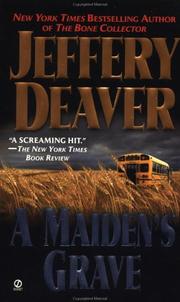
A hostage siege in a Kansas field with a busload of deaf schoolgirls, written before the Rhyme series began. His best pure thriller, and the one where the reversals serve the characters rather than the other way round.
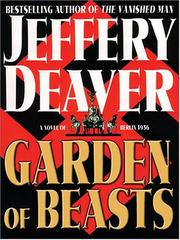
An American hitman sent into Berlin during the 1936 Olympics. It won the Steel Dagger, it is the only Deaver novel with real historical weight, and it is the strongest argument that he could have written a different kind of book. The right one to finish on.
Discussion
Keep reading
Paths that share books, cover the same subject, or open a related topic.