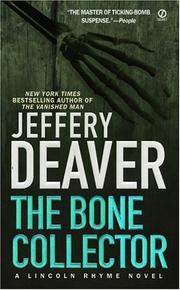
Start with The Bone Collector. It is the first Lincoln Rhyme novel, publication order and internal chronology are identical across the series, and the setup it establishes carries everything after it: Rhyme is a former head of NYPD forensics, quadriplegic after a crime-scene accident, and when the book opens he is arranging his own death. Amelia Sachs is a patrol officer on what she intends to be her last day in uniform. The partnership that runs through more than a dozen novels is assembled here, and the later books assume you watched it happen.
The tempting alternative is to pick whichever plot summary sounds best, because each case is self-contained. You can do that and still enjoy the book. What you lose is consequence: Rhyme's physical condition changes across the series, Sachs's career moves, and entering late turns those developments into background detail rather than payoff.
How the series is built
Every Rhyme novel runs the same machine. A forensic manhunt against a clock, short chapters alternating between the investigators and the offender, and two or three consecutive reversals in the final fifty pages. That structure is both the appeal and the ceiling. Deaver is unusually good at it, and he is completely committed to it, so by the fifth or sixth book you will read defensively — not guessing the specific twist, but knowing that whoever appears caught is not, and that the last chapter will re-explain the previous four hundred pages. Most readers find the first four or five the strongest for exactly this reason.
The main sequence
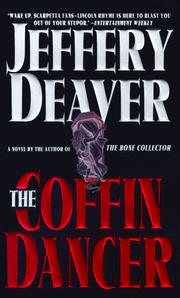
The Bone Collector (1997), The coffin dancer (1998) and The empty chair (2000) are the tightest three. The third is the most interesting thing the series does with its own premise: it takes Rhyme out of New York to rural North Carolina and strips him of his laboratory.
The Stone Monkey (2002) turns on human smuggling from China and is the strongest of the middle books. The vanished man (2003) sets an illusionist against a detective, matching the misdirection to Deaver's own method — delightful or too neat, depending on the reader. The Twelfth Card (2005) works through Harlem history. The Cold Moon (2006) introduces the Watchmaker, the closest thing the series has to a recurring antagonist, and is the book most often named as the best after the first.
The Broken Window (2008) is about data brokers and identity: dated in its specifics, prescient in its argument. The burning wire (2010) is the electrical-grid book and the point at which several readers feel the gimmick has started driving the plot rather than the reverse.
There is then a real gap in this list. The series runs through The Kill Room and The Skin Collector before The steel kiss (2016), and continues past it with The Burial Hour, The Cutting Edge, The Midnight Lock and The Watchmaker's Hand. Those are not in our catalogue. The order above is unaffected, but this is not the complete Rhyme shelf.
Kathryn Dance and the standalones
The Sleeping Doll (2007) opens a second series built around Kathryn Dance, a California agent who reads body language rather than trace evidence. She first appears in The Cold Moon, so read that first. Roadside crosses (2009) follows. Worth knowing before you start: the kinesic interrogation Dance practises is dramatised well beyond what the research supports, and the books treat it as near-infallible.
A maiden's grave (1995) predates Rhyme entirely — a hostage siege in a Kansas slaughterhouse, and the cleanest demonstration of Deaver's construction without the series apparatus around it. Garden of Beasts (2004) is Berlin in 1936, an American contract killer moving through the Olympic Games, and the least Deaver-like novel he has written. Readers who find the series machinery tiring often name it his best. Find more crime reading orders on Discover.
Follow the full ordered path here: Lincoln Rhyme books in order: where to start with Jeffery Deaver.
Ready to learn something deeply?
Build a reading path — free