Lincoln Rhyme Reading Order: Where to Start with Jeffery Deaver
Start with The Bone Collector. That is not the obvious advice it sounds like — plenty of long crime series have a weak opener you are told to skip — but Deaver's first Rhyme novel is the one that establishes the whole apparatus: a quadriplegic former head of NYPD forensics who cannot leave his bed, a patrol officer named Amelia Sachs who becomes his hands at the crime scene, and a puzzle structure in which the reader is given the same physical evidence Rhyme is. The books are readable out of order, but the Rhyme-Sachs relationship and two recurring adversaries develop strictly in sequence, and the twist endings Deaver is known for land harder when you have watched him teach you his own rules. This path takes the series in publication order, groups it into the stretches that actually function as arcs, and marks where a spin-off novel belongs.
Start here: the first three
BeginnerMeet Rhyme, Sachs and the evidence-first puzzle structure, and decide from the strongest opening run whether the series is for you
▸ Study plan for this stage
Pace: Four to five weeks for 432, 453 and 454 pages, read in this order. They are fast commercial thrillers and go quicker than the page counts suggest. All three turn on serial offenders who abduct and kill on a deadline, and Deaver describes the injuries in forensic detail; The Bone Collector also opens
- The evidence-first structure: the reader is given the same physical trace evidence Rhyme is, at the same time
- Rhyme as a detective who cannot leave his bed, and Amelia Sachs as the body at the scene
- How Rhyme's disability is written as a set of constraints on the plot rather than as a theme laid over it
- The signature double-reversal ending, which arrives fully formed in The Coffin Dancer
- The Coffin Dancer's inversion — an assassin who attacks the investigators' method rather than the victims
- The Empty Chair stripping Rhyme of his lab and his authority, and forcing Sachs to act against him
- The supporting cast — Sellitto, Cooper, Thom — established here and load-bearing later
- What is the fairness contract Deaver sets up in The Bone Collector, and does he keep it?
- How does the deadline structure change what kind of clues can be used?
- In The Coffin Dancer, what specifically is the assassin exploiting about Rhyme's method?
- What does The Empty Chair prove about the formula by removing the Manhattan townhouse from it?
- Where in The Empty Chair does Sachs act against Rhyme, and what does the series gain from letting her be right?
- Keep the trace-evidence list as Deaver builds it in The Bone Collector and stop reading at the last entry before the reveal to attempt the solution yourself; the book is built to be played this way.
- In The Coffin Dancer, mark the point where you first suspected a reversal, then count how many pages Deaver spent laying it before that.
- After The Empty Chair, list which of Rhyme's usual resources were unavailable and what the plot substituted for each one.
Next up: The opening trio establishes the partnership and the puzzle contract; the next run widens the canvas from a single offender to organised crime and historical cold cases.
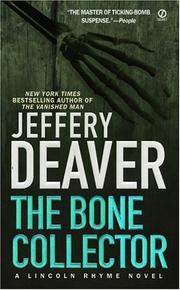
The entry point, and the one book you should not skip: it introduces Rhyme after the accident, brings Sachs in from patrol, and sets the pattern of a serial offender leaving deliberate forensic clues on a deadline. Everything later assumes this partnership, so read it first even though the 1999 film may have spoiled the villain for you.
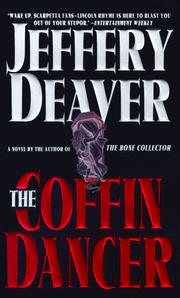
The second novel and the best demonstration of what Deaver does that other procedural writers do not — an assassin who works by manipulating the investigators themselves, which turns Rhyme's own method into the vulnerability. Read directly after book one; it is where the series' signature double-reversal ending arrives fully formed.

Deaver moves Rhyme out of the Manhattan townhouse to rural North Carolina, which strips away his equipment and his authority and forces Sachs to act independently. It is the book that proves the formula is not bound to one setting, and the Sachs material here pays off across the rest of the series.
The run that made it a series
BeginnerFollow the partnership past its establishing books and see Deaver widen the canvas from single-offender puzzles to organised crime and cold-case forensics
▸ Study plan for this stage
Pace: Five to six weeks for 528, 488 and 544 pages. The Stone Monkey concerns human smuggling and opens with a shipwreck and mass drowning; The Vanished Man and The Twelfth Card both centre on staged killings, and The Twelfth Card's historical thread deals with Reconstruction-era racial violence.
- The Stone Monkey opening the series past Manhattan procedural into a broader criminal world
- The Ghost as a formidable adversary who is not a puzzle-setter, and what changes when the offender is not playing
- The Vanished Man's illusionist premise, making misdirection the literal subject rather than only the technique
- The supporting cast carrying real weight for the first time — Sellitto, Cooper and Thom as characters rather than function
- The Twelfth Card's braided contemporary and Reconstruction-era plots and how the historical strand supplies motive
- Sachs's own arc — her ambition, her career and her relationship with Rhyme — getting sustained treatment
- What does The Stone Monkey's Chinatown setting let Deaver do that the earlier books could not?
- How does the Ghost differ from the Bone Collector and the Coffin Dancer as an antagonist?
- In The Vanished Man, which of the tricks are played on the characters and which on the reader?
- What does the Reconstruction thread in The Twelfth Card contribute besides atmosphere?
- How has the Rhyme-Sachs relationship changed since The Empty Chair, and which book did the work?
- In The Vanished Man, note each illusion as it is described and mark whether Deaver later explains the method; the ratio tells you how the book treats its reader.
- Chart Sachs's decisions across all three books and identify the one that would have been impossible for her in The Bone Collector.
- Compare the trace-evidence lists in The Stone Monkey and The Bone Collector, and note how much more of the work is now done by people other than Rhyme.
Next up: The series has proved it can carry a large cast and a long plot, which is what the recurring-adversary sequence in the next stage requires.
A human-smuggling case that opens the series out to a Chinatown setting and a genuinely formidable antagonist in the snakehead known as the Ghost. Placed fourth because it is the first book where the supporting cast — Sellitto, Cooper, Thom — carries real weight.

An illusionist as the offender, which lets Deaver make misdirection the literal subject rather than just the technique. It is the purest puzzle in the series and a good gauge of whether you enjoy being deliberately deceived; read it after The Stone Monkey.
A contemporary case braided with a Reconstruction-era historical thread, and the book where Sachs's own arc — her ambition and her relationship with Rhyme — gets its most sustained treatment so far. It sets up the emotional register the next stage depends on.
The Watchmaker arc
IntermediateRead the recurring-adversary sequence in the order it was written, and understand where the Kathryn Dance spin-off intersects it
▸ Study plan for this stage
Pace: About six weeks for 465, 492, 414 and 452 pages, and this is the stage where reading order genuinely matters most. The Sleeping Doll is not a Rhyme novel — it is the first Kathryn Dance book, launched from her appearance in The Cold Moon — and it belongs here rather than at the end because the two s
- Charles Vespasian Hale, the Watchmaker, as the one adversary Deaver brings back repeatedly
- How a recurring antagonist changes a formula built on self-contained puzzles
- Kathryn Dance and kinesic analysis as a deliberate methodological opposite to Rhyme's physical evidence
- Why The Sleeping Doll reads as a spin-off pilot and what it establishes about how Dance works
- The Broken Window's data-mining premise, and the fact that it now dates as period detail
- Rhyme's cousin Arthur, and the series' one genuinely personal case
- The Burning Wire as the direct continuation and resolution of the Watchmaker thread
- What makes the Watchmaker a different kind of problem for Rhyme than a one-book offender?
- How does Dance's method contradict Rhyme's, and does Deaver treat one as more reliable?
- What does The Sleeping Doll establish that the later crossovers depend on?
- Which parts of The Broken Window's surveillance premise have been overtaken by events, and does the plot still work?
- How does the Arthur Rhyme case change what you know about Rhyme before the accident?
- Does The Burning Wire resolve the Watchmaker arc, or defer it?
- Read The Cold Moon and The Burning Wire close enough together that the Watchmaker's earlier moves are fresh, and list what the later book assumes you remember.
- In The Sleeping Doll, mark each of Dance's behavioural readings and check whether the plot ever confirms it independently; that is the fair test of the method as Deaver writes it.
- Write down every claim The Broken Window makes about what data brokers could do, and note which are now ordinary.
Next up: With the recurring-adversary arc closed, the last stage samples the modern run so you can judge for yourself where the series is still worth following.

The novel that introduces Charles Vespasian Hale, the Watchmaker, the only antagonist Deaver brings back repeatedly across the series. It also introduces kinesics expert Kathryn Dance, who goes on to headline her own books. This is the one place where reading order genuinely matters most — start the arc here.

Not a Rhyme novel: it is the first Kathryn Dance book, launched from her appearance in The Cold Moon, and it swaps physical evidence for body-language interrogation. Read it here rather than at the end, because the two series cross over later and this establishes how Dance works.
A data-mining company as the engine of the crime, and the book in which Rhyme's estranged cousin Arthur is framed — the closest the series comes to a personal case. It also dates least gracefully of the run, which is worth knowing going in; the surveillance premise now reads as period detail.

Electricity itself as the murder weapon, and the direct continuation of the Watchmaker thread from The Cold Moon. Read it last in this stage: the resolution of that arc depends on having both earlier books fresh.
Later Rhyme
IntermediateSample the modern run, and judge for yourself where the series is still worth following after book ten
▸ Study plan for this stage
Pace: Six to seven weeks for 507, 451, 562 and 544 pages — the longest stage on the path, and the one you are meant to sample rather than complete. The Kill Room turns on an American drone strike and is argued out as a legal problem; The Skin Collector involves poison tattooed into living victims and is a
- The Kill Room as the most politically pointed book in the series, and how the forensic frame handles a state actor
- The Skin Collector's mirroring of the first novel, and why it only pays for a reader who started at the start
- Rhyme's move to academia and Sachs working alone at the opening of The Steel Kiss
- How a long-running series resets a partnership without undoing it
- The Midnight Lock's intruder who takes nothing, and the late-series turn toward violation rather than violence
- Judging where a long crime series stops developing and starts repeating, using books you have watched develop
- How does The Kill Room adapt the evidence-first structure to a killing nobody disputes happened?
- Which specific elements of The Bone Collector does The Skin Collector deliberately invert?
- What does The Steel Kiss change about the partnership, and does the change hold in The Midnight Lock?
- Are the reversals in the later books still surprising, or have you learned the author's habits?
- On the evidence of these four, is the series still developing, and would you continue past this path?
- Read The Skin Collector with your notes from The Bone Collector open and list every deliberate echo — the book is written to be read that way.
- Predict the reversal in each of the four before it lands, write the prediction down, and score yourself; the result is the honest measure of whether the formula still works on you.
- Write a two-paragraph recommendation for a new reader covering where to start, where the arc is, and where to stop — you now have the whole series' shape to do it from.
Next up: You have the full arc from the debut through the Watchmaker sequence to the modern run, and enough of Deaver's method to decide what to read next in it.
A drone strike ordered by an American agency, argued out as a legal and forensic problem — the most politically pointed book in the series and the strongest of the later run. A reasonable place to resume if you took a break after The Burning Wire.
A deliberate mirror of the first novel, with an offender consciously modelling himself on the Bone Collector and tattooing poison into his victims. It rewards the reader who started where this path told them to; read it after The Kill Room.

Rhyme has left the police consultancy for academia and Sachs is working the case alone at the start, which resets the partnership in a way none of the middle books do. Placed here because the change only registers if you have watched the previous dozen.

A late entry built around an intruder who breaks in only to move things, and a good final stop for this path: the series continues past it, but by this point you will know whether you want the rest. Deaver's most recent Rhyme novels are not yet in our catalogue.
Discussion
Keep reading
Paths that share books, cover the same subject, or open a related topic.