Dave Robicheaux books in order: where to start with James Lee Burke
There are more than twenty Dave Robicheaux novels and they must be read in publication order, because the continuing material — the sobriety, the marriages, the daughter Alafair growing up, what happens to the people Robicheaux loves — is the actual series and the crime plots are largely interchangeable. Reading out of order does not confuse you; it spoils you, since several books turn on a death you would otherwise meet unprepared. This path takes the run in order, groups it into the stretches that hang together, stops at a defensible point rather than marching through every title, and closes with the two best novels Burke wrote outside the series. Be warned that the prose is the reason people stay and also the reason some readers bounce: Burke writes long lyrical passages about Louisiana light and weather in the middle of violent books, and he does it deliberately.
The first three, in order
BeginnerMeet Robicheaux, Clete Purcel and the New Iberia setting, and see the series establish the two things it runs on — the drinking and the violence Robicheaux cannot stop reaching for.
▸ Study plan for this stage
Pace: 5 to 6 weeks. The Neon Rain is 275 pages, Heaven's Prisoners 276 and Black Cherry Blues 342 — about 890 pages, so ten days to a fortnight each. Do not rush them and do not read them out of order. All three are violent, and Robicheaux's alcoholism is not a background trait but a continuous condition
- Everything about Robicheaux — the Vietnam service, the temper, the drinking, the Cajun childhood, the friendship with Clete Purcel — is established in The Neon Rain and never re-explained afterwards. Starting anywhere else means being told none of it.
- The Neon Rain is still a New Orleans police procedural. The thing the series becomes is not yet visible, and readers who judge Burke on book one are judging the wrong book.
- Heaven's Prisoners is the most load-bearing novel in the run: Robicheaux out of the department, running a bait shop, a plane crash, a child pulled from the water, and consequences that run for decades.
- The daughter Robicheaux takes in here is the series' longest continuous thread. She is a child in book two and an adult with her own plot by book eighteen.
- Black Cherry Blues won the Edgar and made Burke's reputation. Robicheaux is framed for murder and taken to Montana, which removes the Louisiana setting and demonstrates how much of the atmosphere was doing the work.
- Clete Purcel is not a sidekick. He is the man Robicheaux would be without the sobriety, and Burke uses him to do the things the protagonist cannot be allowed to do.
- The prose is the reason people stay and the reason some people leave: long lyrical passages about Louisiana light, weather and vegetation dropped into the middle of violent scenes, entirely on purpose.
- What does The Neon Rain tell you about Robicheaux's past that no later book repeats?
- Why does Burke take Robicheaux out of the police department in book two and then spend twenty novels getting him back in and out again?
- What does the loss in Heaven's Prisoners change about how Robicheaux behaves in Black Cherry Blues?
- Black Cherry Blues moves to Montana. What stops working, and what turns out to have been Robicheaux rather than Louisiana?
- Find a passage where a paragraph of landscape writing interrupts a scene of violence. What is the interruption doing?
- Start a single continuing file for the whole path: one line per book, listing who is alive at the end, where Robicheaux is employed, and the state of his sobriety. The series is that file; the murders are not.
- Copy out two landscape passages, one from The Neon Rain and one from Black Cherry Blues, and read them aloud. If they irritate you rather than working on you, this path is not going to change, and it is better to know at book three than book twelve.
- Note every scene in the first three books in which Clete does something Robicheaux will not. That pattern is the moral machinery of the entire series.
- After Heaven's Prisoners, write two sentences on what you think the series will now be about. Check the note at the end of stage three.
Next up: The opening movement is over and the character is fully assembled, which is what the more ambitious early-nineties books spend their time on instead of exposition.

The first Robicheaux, and still a New Orleans police procedural rather than the thing the series becomes. Start here: everything about Robicheaux's history, his temper and his friendship with Clete is established in this book and never re-explained.
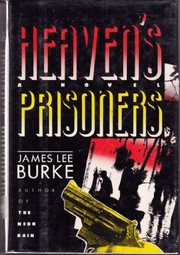
Robicheaux out of the department and running a bait shop, and the book where the series finds its real subject — a plane crash, a child pulled from the water, and consequences that run for the next thirty years. Read it immediately after the first; it is the single most load-bearing book in the run.
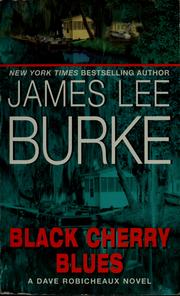
The Edgar winner, and the novel that made Burke's reputation: Robicheaux framed for murder and up in Montana, which gets him out of Louisiana and shows how much the setting was doing. The end of the opening movement.
The series at full strength
IntermediateRead the early-nineties stretch where the historical and supernatural material enters and the books become more ambitious than the genre requires.
▸ Study plan for this stage
Pace: 6 weeks. A Morning for Flamingos is 319 pages, In the Electric Mist with Confederate Dead 346 and Dixie City Jam 402 — just over 1,060 pages, a fortnight each. Read Electric Mist before Dixie City Jam, which directly follows it. Dixie City Jam is the most violent book in the run and its antagonist i
- A Morning for Flamingos is the most conventionally plotted book of the three — Robicheaux shot, recovering, then working undercover against a New Orleans mob family — and it is the one that puts him back in law enforcement for the long run.
- In the Electric Mist with Confederate Dead is the decision point of the whole path. Robicheaux converses with the ghost of a Confederate general in the mist over the Atchafalaya, and Burke plays it entirely straight.
- If the ghost does not work for you, stop. Burke does not abandon the supernatural register afterwards; it recurs, and the later books lean on it harder rather than less.
- The Confederate material is doing historical work as well as atmospheric work. Burke's Louisiana is a place where the past is physically present, and the general is the most literal statement of that idea in the series.
- Dixie City Jam brings in a sunken Nazi submarine and a Nazi-obsessed antagonist, and it is the book against which later Burke villains are measured. It is also where the violence stops being incidental to the plot.
- This is the stretch where Burke stops writing crime novels that happen to be well written and starts writing novels that are more ambitious than the genre requires, which is also when he becomes divisive.
- The crime plots across these three are close to interchangeable. What is not interchangeable is the accumulating damage to Robicheaux, which is the only thing that carries forward.
- In A Morning for Flamingos, what does going undercover cost Robicheaux, and how long does the cost stay visible?
- Is the general in Electric Mist a hallucination, a ghost, or something Burke declines to decide? Find the sentences that let you argue each.
- What is the Confederate material actually about, given that the crime plot does not need it?
- What makes the Dixie City Jam antagonist different from the villains of the first three books?
- By the end of this stage, how much of what happens to Robicheaux is done to him and how much does he go looking for?
- Read the first Electric Mist scene with the general twice — once as written and once assuming Robicheaux is drinking again. Both readings survive the text, and choosing between them is the test the book is setting.
- Update the running file from stage one after each book. By the end of Dixie City Jam the list of people harmed because they were near Robicheaux is long enough to be an argument the novels are making about him.
- Track the weather in Dixie City Jam. Burke uses barometric pressure and approaching storms structurally, and once you notice it you can predict the violence a chapter ahead.
- Set the ghost scenes in Electric Mist against a landscape passage from The Neon Rain. It is the same prose doing two different jobs, and seeing that is the clearest defence of the supernatural material available.
Next up: You have accepted or rejected the register Burke will use for the rest of the run, and the books now start putting the continuing family material at the centre rather than in the frame.

Robicheaux shot and recovering, then working undercover against a New Orleans mob family. The most conventionally plotted book of this stage and the one that puts him back in law enforcement for the long run.
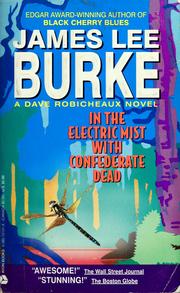
The best-known novel in the series, in which Robicheaux converses with the ghost of a Confederate general in the mist over the Atchafalaya. It is either the book that converts you to Burke or the one that loses you, and there is no point continuing past it if it is the latter.
A sunken Nazi submarine, a genuinely frightening antagonist, and the most violent book of the early run. Read it after Electric Mist, where it directly follows, and note that its villain is the standard against which later Burke villains get measured.
The strong middle run
IntermediateFollow the late-nineties books, where the continuing family material starts driving the plots rather than framing them.
▸ Study plan for this stage
Pace: 6 weeks. Cadillac Jukebox is 395 pages, Sunset Limited 387 and Purple Cane Road 370 — about 1,150 pages, a fortnight each. Two ordering notes: this stage skips several published titles from the same years, and the sequence still reads cleanly because Burke recaps the family situation rather than the
- Burke is a genuinely political writer and Cadillac Jukebox is where that becomes explicit: a civil-rights-era murder, a governor's race, and Louisiana politics rendered with more bile than usual.
- The politics is not decoration. Burke's recurring claim is that money and old family power in Louisiana are continuous with the violence of the past, and the middle books argue it directly.
- Sunset Limited is the tightest plot in the series — a labour organiser crucified on a barn door forty years earlier, and a town that has agreed not to remember. It is the best demonstration that Burke can construct as well as he can write sentences.
- Purple Cane Road has Robicheaux investigating his own mother's death, which the series has been circling since the first chapter of The Neon Rain.
- Purple Cane Road is the payoff for twelve books of accumulated backstory, and it is the strongest single argument for reading Burke in order rather than dipping in.
- Across this stretch the family stops framing the plots and starts generating them. Robicheaux's wife, his daughter and his own history are now the case rather than the context.
- The recurring structural move of these books is a crime from decades earlier surfacing in the present. Burke is not writing whodunits; he is writing about what a community agreed to forget.
- What does Cadillac Jukebox think Louisiana politics is for, and which character speaks closest to Burke's own view?
- In Sunset Limited, who benefits from the forgetting, and how does Burke show a whole town participating in it?
- Purple Cane Road resolves a question raised in book one. Was the answer prepared, or does Burke assemble it retrospectively? Look at what the earlier books actually said.
- Robicheaux repeatedly takes cases he has a personal stake in. Is Burke endorsing that, or is the series a slow indictment of it?
- Which of these three plots would still hold up without any continuing character? Which would collapse?
- For each of the three books, write down the historical crime and the present-day crime on the same line. The pattern is identical every time, and seeing it stated three times is what makes the later books legible.
- Go back to The Neon Rain and find every reference to Robicheaux's mother. Read them in sequence, then read Purple Cane Road. That is the exercise this whole path is built to make possible.
- In Sunset Limited, mark the point at which you knew who was responsible, then go back and find the earliest fair clue. Burke plays fairer here than anywhere else in the run.
- Update the running file. The list of dead and damaged is now long, and comparing it with your two-sentence prediction from stage one is a genuine measure of whether the series went where you expected.
Next up: The family material now drives the books entirely, which is the condition under which the late novels take on a real historical catastrophe.
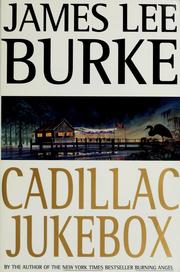
A civil-rights-era murder, a governor's race, and Louisiana politics rendered with more bile than usual. Burke is a genuinely political writer and this is where that becomes explicit.

A labour organiser crucified on a barn door forty years earlier, and the town that has agreed not to remember. One of the tightest plots in the series and a good demonstration that Burke can construct as well as he can write sentences.
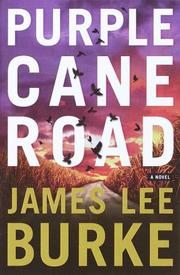
Robicheaux investigating his own mother's death, which the series has been circling since the first book. The most personal novel of the run and the one that pays off twelve books of backstory — which is the whole argument for reading in order.
Katrina and the late books
IntermediateRead the three strongest later novels and understand where the series stops rewarding sequential reading.
▸ Study plan for this stage
Pace: 6 to 7 weeks. The Tin Roof Blowdown is 379 pages and A Private Cathedral 384; The Glass Rainbow has no page count on its record and is a full-length novel of comparable size, and the record is a large-print edition. A fortnight each, with a gap before A Private Cathedral because it is a different ki
- The Tin Roof Blowdown is the best book Burke has written since Black Cherry Blues: Katrina and its aftermath, furious, grief-stricken and specific about what happened in New Orleans.
- It works as a standalone, but it is far heavier if you have watched this city across fifteen novels. That accumulated familiarity is the strongest single argument for reading the series in order.
- Burke is not neutral about Katrina. The novel makes accusations about who was abandoned and by whom, and it should be read as a novelist's charge rather than as an account of record.
- The Glass Rainbow puts Alafair, now grown, and her unsuitable boyfriend at the centre of the plot, and closes on the boldest ending in the series. The child from Heaven's Prisoners is now the reason the book exists.
- From The Glass Rainbow onward the books become more elegiac and less plotted. Burke is writing about mortality and about running out of time, and the crime plots thin accordingly.
- A Private Cathedral is late Burke entirely unrestrained: a time-travelling assassin in a Robicheaux novel, played straight and without apology. It is divisive and it is the last genuinely ambitious book in the run.
- This is a defensible place to stop. The remaining titles are enjoyable and can be read in any order, and nothing in them requires the sequence you have just spent months building.
- The catalogue record for A Private Cathedral credits Will Patton alongside Burke; Patton is the audiobook narrator, not a co-author.
- What does The Tin Roof Blowdown accuse, and of whom? Separate what the novel dramatises from what a character asserts.
- How does fifteen books of New Orleans change your reading of the flood chapters, compared with coming to them cold?
- The Glass Rainbow ends on a choice Burke makes about how to leave the reader. What did he gain by it, and what did the next books have to do about it?
- Is the assassin in A Private Cathedral a departure, or is it the Electric Mist material taken to its logical end?
- Where would you tell someone else to stop reading Robicheaux, and why there?
- Read The Tin Roof Blowdown, then go back to the New Orleans of The Neon Rain twenty years earlier. Write half a page on what has physically gone. That comparison is only available to a reader who did the run in order.
- In The Glass Rainbow, track Alafair's chapters only. Read as her book rather than Robicheaux's, it is a different and sharper novel.
- Take the supernatural elements from Electric Mist, one mid-series book and A Private Cathedral, and lay them out in order. Decide whether Burke escalated deliberately or drifted.
- Finish your running file with the full list of the dead across the run. It is the honest answer to the question of what these books are about.
Next up: Having seen what Burke does with a continuing detective and a continuing city, you can now see what he does with neither.
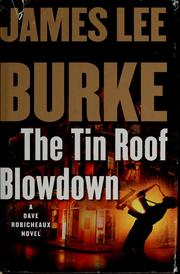
Hurricane Katrina and its aftermath, and the best book Burke has written since Black Cherry Blues. Furious, grief-stricken and specific about what happened in New Orleans; it works as a standalone but is far heavier if you have watched this city across fifteen novels.
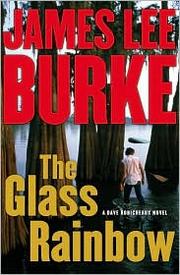
Alafair grown up and her unsuitable boyfriend at the centre of the plot, with an ending that is the boldest thing in the series. From here the books become more elegiac and less plotted.

Late Burke at his most unrestrained — a time-travelling assassin, in a Robicheaux novel, played entirely straight. Divisive and the last genuinely ambitious book in the run; a reasonable place to stop, since the remaining titles are enjoyable and can be read in any order.
Away from Robicheaux
IntermediateRead the two non-series novels that show what Burke can do without the constraints of a detective and a body.
▸ Study plan for this stage
Pace: 4 weeks. The Lost Get-Back Boogie is 256 pages and Wayfaring Stranger 276 — about 530 pages, but neither reads quickly. The Boogie has almost no plot to pull you forward and Wayfaring Stranger covers four decades. Ten days to a fortnight each. Wayfaring Stranger includes the Battle of the Bulge and
- The Lost Get-Back Boogie was rejected more than a hundred times across nine years before appearing in 1986, and was then nominated for a Pulitzer. That history is worth knowing because it explains the book's shape.
- A paroled musician in Montana, no crime plot to speak of, and no detective. It is the purest sample of Burke's prose available anywhere, with none of the genre machinery to carry it.
- Reading it after fifteen Robicheaux novels answers the question the series keeps raising: how much of Burke's effect is the writing and how much is the accumulated character.
- Wayfaring Stranger is the Holland family novel, running from a boy meeting Bonnie and Clyde through the Battle of the Bulge to the postwar Texas oil business.
- It is the most ambitious book Burke has written, and the moral concerns of the Robicheaux novels — money, violence, what men do to hold onto land — are working at a scale a detective series structurally cannot hold.
- Both books make explicit what the series implies: that Burke's real subject is American greed and its cost, and that the crime plot was always a delivery mechanism.
- Finishing here rather than on a late Robicheaux is deliberate. It leaves you with Burke at his most capable rather than at his most mannered.
- Without a murder to solve, what is The Lost Get-Back Boogie's engine? Name the thing that makes you turn the page.
- Does Burke's prose hold up without the genre scaffolding, or does it need the violence to earn its lyricism?
- What does Wayfaring Stranger's scale let Burke do that eighteen Robicheaux novels could not?
- Both non-series books are about men who cannot let something go. How is that different from Robicheaux's version of the same failing?
- Having finished, which Burke would you hand to someone who has never read him — and would it be a Robicheaux at all?
- Read a chapter of The Lost Get-Back Boogie and a chapter of The Neon Rain, published within a year of each other, back to back. The prose is the same and one has a plot; deciding which you prefer is the point of this stage.
- In Wayfaring Stranger, mark where each of the four historical settings begins and ends, and note how much page space each gets. The proportions tell you which era Burke actually wanted to write about.
- Take the Montana of The Lost Get-Back Boogie and the Montana of Black Cherry Blues and write a paragraph on how differently Burke uses the same landscape when he does and does not have a detective in it.
- Finally, go back to your running file and write the series obituary: what changed in Robicheaux between 1987 and 2020, and at which book. Doing it after the two standalones gives you the outside view the series never offers.
Next up: You have now read Burke inside the series and outside it, which is the complete case for and against him and the point at which the remaining Robicheaux novels can be read in any order you like.

Rejected by publishers over a hundred times across nine years before finally appearing in 1986 and being nominated for a Pulitzer. A paroled musician in Montana, no crime plot to speak of, and the purest sample of Burke's prose.

The Holland family novel that runs from a boy meeting Bonnie and Clyde through the Battle of the Bulge to the postwar Texas oil business. The most ambitious book he has written, and the right one to finish on: it shows the moral concerns of the Robicheaux novels working at a scale the series could not hold.
Discussion
Keep reading
Paths that share books, cover the same subject, or open a related topic.