Dave Robicheaux Reading Order: Where to Start with James Lee Burke
James Lee Burke's Dave Robicheaux novels are crime fiction in which the sequence carries more weight than the cases do. Robicheaux is a recovering alcoholic, and across the series he loses wives, gains a daughter, quits and rejoins police work, and ages in real time — so reading out of order spoils losses that the later books treat as long settled. Start at the beginning and read forward. This path takes the sequence in publication order, which is also its internal chronology, and marks where the run is strongest and where it repeats itself.
Start Here: The First Three
BeginnerMeet Robicheaux, New Iberia and Clete Purcel, and see the pattern the series will keep — a private grief driving a public investigation.
▸ Study plan for this stage
Pace: 3-4 weeks, one novel a week: The Neon Rain (275 pp), Heaven's Prisoners (276 pp), Black Cherry Blues (342 pp). Read them in order and do not skip the second - almost everything later in the series assumes what happens in it. These books contain sustained depictions of alcoholism and relapse, torture
- The first-person voice: a cop's plain reporting that keeps sliding into lyric, and the effect of that slide
- Clete Purcel as the man who does what Robicheaux will not, and the friendship as the series' actual spine
- New Iberia, Bayou Teche and New Orleans as specific, load-bearing places rather than colour
- Alcoholics Anonymous and the recovery frame - Robicheaux narrates as a man counting days
- The recurring shape: a private grief drives a public investigation, and the case is the lesser half
- Louisiana history as an active presence - slavery, Reconstruction, the oil economy - inside a contemporary crime plot
- Consequences that persist: what happens in one book is still true four books later, which is why order matters
- What is different about the way Burke writes violence compared with a conventional police procedural?
- What does Clete enable, and what does the series lose whenever he is off the page?
- How is Robicheaux's drinking narrated - what does he tell you about it, and what does he leave for you to see?
- By the end of Black Cherry Blues, what has permanently changed since page one of The Neon Rain?
- Is the grief-soaked register something you want three more books of, or twenty?
- Track Robicheaux's drinking across all three books and mark each point where the narration turns lyrical - the two correlate
- Note every Clete Purcel appearance in The Neon Rain and what each one makes possible that Robicheaux could not do himself
- Read the opening paragraph of each of the three books aloud and describe how Burke sets the register in the first sentences
- After Black Cherry Blues, write one sentence on what is permanently different in Robicheaux's life - that sentence is your test of whether to continue
Next up: The first three establish the man and the losses; the next stretch is where Burke's prose and his sense of Louisiana history come fully together.

The first novel, and the correct starting point: New Orleans homicide, a body in a bayou, and a detective who is one drink from losing everything. Clete Purcel is introduced here, and the friendship is the spine of everything that follows.
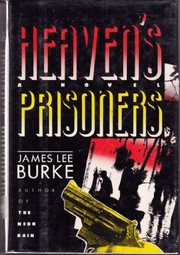
Second, and unskippable — Robicheaux leaves the police, and a plane crash gives him the daughter he raises for the rest of the series. Almost every later book assumes what happens in this one.
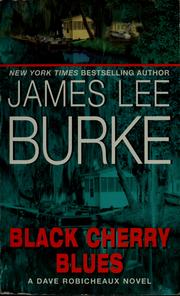
Third, and the first to win an Edgar. It follows directly from the wreckage of Heaven's Prisoners, moving Robicheaux to Montana; by the end of it you will know whether the series' grief-soaked register is for you.
The Early Peak
IntermediateRead the stretch where Burke's prose and his sense of Louisiana history come fully together, and where the series stops being about cases at all.
▸ Study plan for this stage
Pace: 4-5 weeks. A Morning for Flamingos (319 pp), A Stained White Radiance (352 pp) and In the Electric Mist with Confederate Dead (346 pp), a week to ten days each. This is the strongest sustained run in the series and worth reading slowly. The books deal with drug-trade violence, Klan politics, child a
- Interior life outweighing plot: A Morning for Flamingos is about fear and recovery with a drug case attached
- Undercover work as psychological pressure rather than as procedural machinery
- The private crime standing for a regional one - a family's history opening onto Klan politics and old Louisiana money
- The ambiguous supernatural: General Hood as hallucination, memory or presence, with Burke declining to settle it
- Burke's set-piece landscape and weather writing, and what it is doing structurally at each appearance
- Trust in the narrator as the thing that makes the ambiguity work, which is why order matters here specifically
- In A Morning for Flamingos, how many pages are given to the drug case and how many to Robicheaux's fear?
- How far back does the family history in A Stained White Radiance reach, and what is Burke claiming by reaching that far?
- Does General Hood tell Robicheaux anything he could not already know, and what turns on the answer?
- What is a Burke landscape passage doing when it interrupts a scene - stalling, foreshadowing, or something else?
- Why do most readers name In the Electric Mist as the best, and do you agree after reading the two before it?
- Mark every appearance of General Hood in In the Electric Mist and note in each case whether he supplies information Robicheaux could have had otherwise
- Count the pages of A Morning for Flamingos devoted to the undercover case against those devoted to Robicheaux's state after being shot
- Trace the Sonnier family history in A Stained White Radiance back to its earliest dated event and diagram how the present-day crime descends from it
- Pick one landscape passage from each of the three books and write down what it is doing for the plot at that exact point
Next up: After the peak the series settles into a reliable shape, which is worth reading for the craft and worth recognising as a shape.

Fourth. Robicheaux goes undercover after being shot, and the book is as much about fear and recovery as about the drug case. The first novel where the interior life clearly outweighs the plot.
Fifth. A local family's history opens onto Klan politics and old Louisiana money — the series' recurring move of making a private crime stand for a regional one, done here for the first time at full strength.
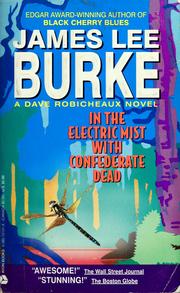
Sixth, and the book most readers name as the best. A decades-old murder, a film crew, and a Confederate general who may or may not be a hallucination. Read it in order — the ambiguity works because you already trust the narrator.
The Nineties Run
IntermediateContinue through the middle of the series, where the books settle into a reliable shape and the recurring villains accumulate.
▸ Study plan for this stage
Pace: 4-5 weeks. Dixie City Jam (402 pp), Burning Angel (412 pp) and Cadillac Jukebox (395 pp) run longer than the early books and take a week to ten days each. The plots get larger without the prose loosening, and this is the last of the sustained early run - after Cadillac Jukebox the series becomes not
- The recurring antagonist type: the charming sadist with money or standing behind him
- Land, tenancy and race in the parish as the substrate under the crime plot
- History as a buried object - the submarine, the deed, the unprosecuted killing - which the plot exhumes
- Political corruption plots and Burke's handling of Louisiana state politics
- The mid-series pattern becoming visible: a crime that is a symptom of a property arrangement a century old
- Recurring villains accumulating across books, and what a returning antagonist costs in tension
- What traits do the antagonists of these three books share, and where does the type first appear in the series?
- In Burning Angel, who benefited at each transfer of the disputed land, and how far back does Burke take it?
- Can you write the shape of a mid-series Robicheaux plot in six beats, and does Cadillac Jukebox fit it?
- Where does the formula start showing, and does the prose ever slacken with it?
- What does the political material in Cadillac Jukebox do that the family material in A Stained White Radiance did not?
- Name the antagonist of each of the three books and list the traits they share, then check those traits against the villain of Black Cherry Blues
- Trace the property title in Burning Angel through the book and write down who gained at each transfer
- Write the six-beat shape of a mid-series Robicheaux novel from Dixie City Jam, then test it against Cadillac Jukebox and mark the deviations
- Pick a single paragraph of description from each of these three books and one from The Neon Rain and see whether the prose has changed at all
Next up: The next two decades are the uneven part of the series, and the useful skill is knowing which three books are worth the time.
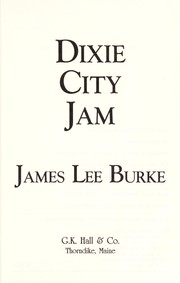
Seventh. A sunken Nazi submarine off the Louisiana coast, and one of the series' nastiest antagonists. The plots get larger here without the prose loosening.

Eighth, and the most direct engagement with land, tenancy and race in the parish. A good example of the mid-series pattern: the crime is a symptom of a property arrangement a century old.
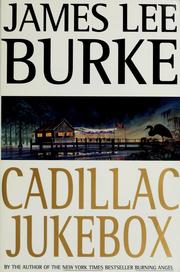
Ninth. A political thriller about a governor's race and a decades-old civil rights killing. Placed here as the last of the sustained early run — after this the books become more variable.
The Long Middle
IntermediateNavigate the two decades where the series is uneven, using the three books that are clearly worth the time.
▸ Study plan for this stage
Pace: 4-5 weeks for three books drawn from a much longer stretch: Purple Cane Road (370 pp, eleventh in the series), Last Car to Elysian Fields (400 pp, thirteenth) and The Tin Roof Blowdown (379 pp, sixteenth). This is a deliberate selection, not the full run - the series is genuinely uneven here. Sunset
- The mother's death - a thread withheld since the first book and finally investigated in Purple Cane Road
- Ageing as subject rather than as detail, from Last Car to Elysian Fields onward
- Katrina as the largest real event the series ever absorbs, and Burke's use of reportage inside fiction
- The shift from case to condition: the later books are about a state of affairs more than a crime
- How a long series repeats itself, and what the repetitive books have in common
- Reading a series selectively without losing continuity, and what you actually miss
- What had the series told you about Robicheaux's mother before Purple Cane Road, and how much was withheld?
- How does Burke signal Robicheaux's age in Last Car to Elysian Fields, and what changes in the action as a result?
- Which parts of The Tin Roof Blowdown read as reportage on Katrina rather than as fiction?
- What do Sunset Limited, Jolie Blon's Bounce, Crusader's Cross and Pegasus Descending have in common that makes them skippable?
- Does the continuity actually hold when you skip four books, and where does it strain?
- Before starting Purple Cane Road, go back through the first three novels and collect every line Robicheaux says about his mother
- Mark every reference to Robicheaux's age and physical decline in Last Car to Elysian Fields and see how the fight scenes change
- Read The Tin Roof Blowdown and separate the Katrina material into what is documented reporting and what is invented
- Sample one of the skipped books and write down what this stage would have lost - or gained - by including it
Next up: The last stage is Burke writing a protagonist past retirement, where the series turns openly elegiac and finally abandons realism altogether.
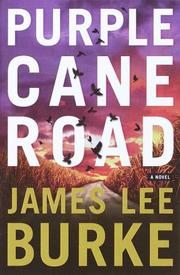
Eleventh. Robicheaux finally investigates his own mother's death, which the series has been withholding since book one. If you read only one book from this stretch, read this one — Sunset Limited, which precedes it, is skippable.
Thirteenth. A late return to form after a couple of thinner outings, and the book where Robicheaux's age starts to be the subject rather than a detail. Jolie Blon's Bounce sits between this and Purple Cane Road and can be skipped without losing the thread.
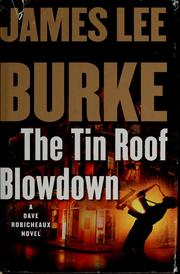
Sixteenth, set in New Orleans during and after Hurricane Katrina, and the most important book of the second half. The two intervening novels — Crusader's Cross and Pegasus Descending — are the series at its most repetitive; this is not.
The Late Novels
IntermediateFinish with the books written as Burke's protagonist ages past retirement and the series turns openly elegiac and sometimes surreal.
▸ Study plan for this stage
Pace: 2-3 weeks. The Glass Rainbow (eighteenth in the series) over a week - it ends on a genuine cliffhanger about Robicheaux's daughter, which Creole Belle picks up directly if you want to continue book by book beyond this path. A Private Cathedral (384 pp, the twenty-third novel) over a week; it is a di
- The elegiac late register: a narrator who has outlived most of the people the series introduced
- Alafair grown into an adult character with her own plot, more than thirty years after the plane crash
- The cliffhanger ending of The Glass Rainbow and its resolution outside this path
- Genre abandonment in A Private Cathedral - a supernatural assassin, a Renaissance feud, and no pretence of procedure
- Whether the supernatural in the late books is a break with In the Electric Mist or the arrival of what was always implied
- A thirty-three year gap between first and last book, audible in the voice
- What two readings does The Glass Rainbow's final page permit, before you learn which one the next book takes?
- At what point exactly does A Private Cathedral stop pretending to be a crime novel?
- Is the supernatural in A Private Cathedral a break from the series or its logical end, given In the Electric Mist?
- What has changed in Robicheaux's voice between 1987 and 2020, and what has not changed at all?
- Would you tell a new reader to stop before these two, and why?
- After the last page of The Glass Rainbow, write down both readings the ending permits before finding out which Creole Belle takes
- Mark the exact page in A Private Cathedral where the book stops being a procedural, and describe what signals it
- List every supernatural or near-supernatural element from In the Electric Mist onward and decide whether A Private Cathedral is a break or an arrival
- Reread the first chapter of The Neon Rain immediately after finishing A Private Cathedral and write down what a thirty-three year gap did to the voice
Next up: That is the arc from The Neon Rain to A Private Cathedral; the natural continuation is the books this path skipped, Burke's Hackberry Holland novels, and the Louisiana history the series keeps returning to.
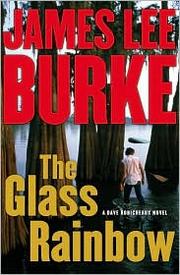
Eighteenth, and one of the strongest late entries, ending on a genuine cliffhanger about Robicheaux's daughter. Creole Belle picks it up directly if you want to keep going book by book.

The twenty-third novel, and the point where Burke abandons realism outright — a supernatural assassin, a Renaissance-era feud, and no pretence that this is a police procedural. A strange, divisive book, and the right note to end a reading path on because it only makes sense after everything before it.
Discussion
Keep reading
Paths that share books, cover the same subject, or open a related topic.