Jamaica Kincaid Reading Order: Where to Start with Her Books
Kincaid's books are short and are usually met one at a time in an anthology, which hides how tightly they answer each other — the same mother, the same island, the same anger, worked through in different forms. This path reads them as the single argument they are.
Start here
BeginnerBegin with the novel of a girlhood, which sets up everything after it.
▸ Study plan for this stage
Pace: One week. Annie John is 148 pages and reads in two or three sittings, but it is built as eight linked chapters that were first published separately — read one or two a night rather than swallowing it whole, so the seams stay visible.
- The mother-daughter bond as the central catastrophe, not the background: closeness is the wound, not its absence
- Chapter-as-story construction — each of Annie John's eight sections stands alone, which is why the book feels episodic rather than plotted
- The first-person child narrator whose voice does not modulate for adult hindsight
- Colonial Antigua rendered from inside a schoolroom: the British curriculum as ordinary furniture rather than as an argument
- Repetition and incantation as Kincaid's basic sentence rhythm
- Illness and departure as the only available exits from the mother
- At what specific moment does Annie's mother stop being an ally, and is it an event or a decision?
- What does the Columbus chapter do that a straightforward statement about colonialism could not?
- How does Kincaid handle time between chapters — what is left out, and why does it not read as a gap?
- Why does the novel end with a departure rather than with a reconciliation or a death?
- Where does the child's voice know more than a child would, and does Kincaid disguise it or leave it bare?
- Read the opening chapter and the closing chapter back to back in one sitting and list every image that recurs in both — the trunk, the sea, the mother's hands — then note what has changed about each.
- Take the chapter in which Annie defaces the picture of Columbus and write a paragraph on what the school setting adds; keep it, because A Small Place will make you revise it.
- Mark every sentence longer than four lines. There are few. Work out what Kincaid saves them for.
- Copy out the last page by hand. The prose is doing something metrical and it is easier to hear at writing speed than at reading speed.
Next up: You now have the private version of the story — a girl, a mother, an island — which is exactly the material A Small Place will reopen as a political indictment.
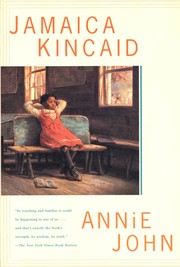
A girl in Antigua and her mother, and the slow catastrophe of growing away from her. Short, and the clearest entry to the voice.
The essay that reframes it
BeginnerRead the non-fiction that turns the private story into a political one.
▸ Study plan for this stage
Pace: Two or three days. A Small Place is 81 pages and can be read in ninety minutes, but it is written as sustained address and rereading it immediately is normal rather than excessive — plan to read it twice inside the same week you finish Annie John.
- Second-person address as an aggressive form: the reader is conscripted as the tourist
- Antigua before and after independence, and Kincaid's refusal to treat the second as an improvement on the first
- The library that was never rebuilt as the book's controlling image of corruption
- Anger as a rhetorical instrument rather than a lapse of control
- Non-fiction that retrospectively rewrites the fiction — the same island, the same schooling, without the protection of a child narrator
- Why the book got her banned from Antigua for years, and what that says about who it was written for
- Who is the 'you' of A Small Place, and where does Kincaid let that 'you' off the hook, if ever?
- The essay attacks both the British and the post-independence Antiguan government. Are those attacks symmetrical, and does Kincaid want them to be?
- What in Annie John looks different now — name at least two specific scenes you would read against the grain after this?
- Why does the library recur, and what makes it a stronger figure than a statistic would be?
- Is the closing passage about Antiguans being 'just human beings' a softening, a trap, or both?
- Reread the Columbus chapter of Annie John immediately after finishing A Small Place and revise the paragraph you wrote in the previous stage. The revision is the point of the exercise.
- Mark every shift of pronoun in the first twenty pages — you, we, I, they — and track how the accusation moves around the room.
- Read the final section aloud. The tonal turn in the last few pages is easy to miss silently and hard to miss out loud.
- Write down the three sentences you found hardest to accept, and state plainly whether you disagree with the claim or only with the temperature.
Next up: Having seen Kincaid state the political case directly, you can read Lucy and The Autobiography of My Mother as fiction that has stopped explaining itself.

Eighty furious pages addressed to the tourist visiting Antigua. It got her banned from the island for years and it retrospectively changes what Annie John was about.
Leaving
IntermediateFollow the same figure out of the Caribbean and into America.
▸ Study plan for this stage
Pace: Three weeks. Lucy is 176 pages and moves quickly; The Autobiography of My Mother is 246 pages, far denser, and resists being read fast. Give Lucy a week, then take two weeks on the Autobiography at roughly twenty pages a sitting.
- Lucy as Annie John's continuation in everything but name — same figure, new continent, no reconciliation offered
- The au pair's position: intimate with a family and structurally outside it
- Mariah's liberal goodwill as the object of Lucy's coldest attention
- Xuela's first-person voice in The Autobiography of My Mother as the most extreme refusal in Kincaid — of motherhood, of consolation, of the reader's sympathy
- Dominica rather than Antigua, and a narrator who has no mother to write against because the mother died at her birth
- Titles that lie in productive ways: an autobiography of someone else, a novel called by a first name only
- What does Lucy gain by refusing every version of gratitude offered to her, and what does it cost the novel in warmth?
- How does the daffodil scene in Lucy work as a compressed rewriting of the Columbus chapter in Annie John?
- Xuela says she loved no one. Does the book support her, contradict her, or hold both?
- Why is The Autobiography of My Mother narrated from old age when Lucy is narrated from inside the experience, and what changes?
- Both books refuse a mother. Which refusal is the harder one to read, and why?
- Read the first two pages of Annie John and the first two pages of Lucy side by side and mark where the voice has hardened; be specific about diction, not just tone.
- Track a single motif through The Autobiography of My Mother — water, or the smell of the narrator's own body — and note every appearance. Kincaid places them deliberately and the pattern only becomes visible when listed.
- Stop at the point where Xuela ends her first pregnancy and write half a page on whether the novel presents this as a defeat. Then finish the book and see whether you still hold the view.
- Reread A Small Place's account of what colonial education did to a child, then reread Lucy's daffodil scene. Note what the fiction can do that the essay cannot, and vice versa.
Next up: You have now read the argument in fiction at its coldest; the last stage brings it back to Kincaid's own family and her own marriage, where the same voice has no character to hide behind.

A young woman arrives in New York as an au pair. The sequel to Annie John in everything but name. Note the bare title returns a German edition; this is the form that resolves.
Dominica, and a narrator who refuses every consolation offered to her. The coldest and, for many readers, the best.
The late books
IntermediateThe memoir and the marriage novel, which close the argument.
▸ Study plan for this stage
Pace: Two to three weeks. My Brother is short and can be read in a few sittings, but its subject makes a slower pace reasonable. See Now Then is 187 pages and is the hardest reading on this path — its loops mean a chapter may need a second pass before it resolves. Allow a fortnight for it and do not treat
- Memoir written without the softening its subject invites — Kincaid's brother's death from AIDS in Antigua, reported rather than mourned
- The medical facts of a Caribbean AIDS death in the 1990s, and what the book does by stating them flatly
- The recurring mother, now seen from adulthood and from outside the daughter's grievance
- See Now Then's temporal loops: the same domestic scene revisited from shifting positions rather than advanced
- Autobiographical readings and their limits — See Now Then was received as a marriage exposé and the formal experiment was largely ignored
- The complete arc: Annie John's girlhood, A Small Place's indictment, and these two as the same voice with no distance left
- What does My Brother refuse to do that a conventional AIDS memoir does, and is the refusal a kindness or a severity?
- How does Kincaid's account of her mother in My Brother sit against Annie John's mother — the same person, or a corrected one?
- See Now Then repeats rather than progresses. What does repetition let Kincaid say about a marriage that a chronology could not?
- Which of the six books on this path would you now hand to a first-time reader, and has that answer changed since the first stage?
- Across the whole path, is the mother a subject, a technique, or both?
- Read the passages in My Brother about the mother's care of her dying son alongside the mother's withdrawal in Annie John, and write a page on what the memoir does to the novel.
- In See Now Then, pick one scene that recurs and mark every version of it. Then arrange the versions in the order the sentences suggest rather than the order they appear.
- Reread A Small Place last, after everything. It is eighty pages and it functions as the key to the whole shelf; note which of its claims each novel had already been dramatising.
- Write one paragraph explaining the reading order of these six books to someone who has read none of them, naming which you would drop if they had time for only three.
Next up: This closes the argument the path set out to trace, and leaves you equipped to read Kincaid's garden writing and essays as extensions of the same voice rather than as a departure from it.

Her brother's death from AIDS in Antigua, written without any of the softening the subject invites.
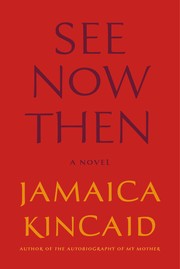
A marriage disintegrating, told in loops. Divisive, and the most formally extreme thing she has done.
Discussion
Keep reading
Paths that share books, cover the same subject, or open a related topic.