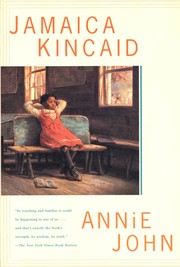
Start with Annie John. It is short, it is the clearest entry to the voice, and it sets up everything that follows: a girl in Antigua, her mother, and the slow catastrophe of growing away from her. The prose is plain and incantatory at once, and the book is often read as gentle by people who have only met a chapter of it in an anthology. It is not gentle. It is an account of a love turning into its opposite, narrated by someone who never quite says so.
Then read A small place second, and do not save it. Kincaid's books are short and are usually encountered one at a time, out of context, which hides how tightly they answer one another — the same mother, the same island, the same anger, worked through in different forms. A small place is eighty furious pages addressed directly to the tourist arriving in Antigua, and it retrospectively changes what Annie John was about, turning a mother-daughter story into a colonial one without altering a word of it. Read in that order, the two books are a single argument.
Start here
Annie John came out in the mid-1980s, assembled from linked pieces that first appeared separately, which is why each chapter can stand alone and why the whole is stronger than any of them.
The essay that reframes it
A small place (1988) is non-fiction and is the most confrontational thing she has published. The reader is addressed as "you", implicated on the first page and never let off it. She was reportedly unwelcome in Antigua for years afterwards. It is the shortest book on this path and the one that most changes the ones around it.
Leaving
Lucy (1990) follows the same figure out of the Caribbean: a young woman arrives in New York as an au pair for a wealthy couple whose kindness she declines to be grateful for. It is the sequel to Annie John in everything but name. One practical note — our catalogue record for this title is not a standard English-language edition, so check what you are buying before you order it.
The Autobiography of my Mother (1996) is set in Dominica and narrated by a woman who refuses every consolation on offer, including the reader's sympathy. It is the coldest book she has written and, for a lot of readers, the best. It is also the point at which the anger stops being autobiographical and becomes something built.
The late books
My Brother (1997) is a memoir of her brother's death from AIDS in Antigua, written without any of the softening that subject invites, and with an honesty about her own reluctance that most memoirists would edit out.
See Now Then (2013) is a marriage disintegrating, told in loops that double back on themselves for pages. It is the most formally extreme thing she has done and it divides readers sharply — admirers call it her most ambitious book, others find it airless. Read it last or not at all.
Publication order, or this order?
The two are almost the same. The one deliberate change is putting A small place, published after Annie John, immediately next rather than leaving it in strict sequence with the fiction, because reading the essay early is what stops the early novels being taken as sweet. If you prefer strict chronology you will lose very little, since her books arrived in roughly the order the material demanded.
Her garden writing — the books about Vermont and about plant-hunting — is a genuine part of the work and is not on this path, mostly because it is the least represented in our catalogue. If the colonial argument in A small place interests you, the garden books extend it in a direction nobody expects.
Where to stop
Two books, Annie John and A small place, are a real reading of Kincaid and take one evening each. Four, adding Lucy and The Autobiography of my Mother, is the standard shape of a serious one.
More literary reading paths are on Discover.
Follow the full ordered path here: Jamaica Kincaid Reading Order: Where to Start with Her Books.