Iris Murdoch Reading Order: Where to Start
This curriculum moves from Murdoch's most accessible and celebrated novels into her denser, more ambitious fiction, and finally into her philosophical writings — the ideas that underpin everything. Because the learner starts at an intermediate level, we skip gentle introductions and go straight to the heart of her work, building novelistic intuition before tackling her philosophy head-on.
The Essential Entry Points
IntermediateGet a firm feel for Murdoch's voice, moral vision, and recurring obsessions — love, power, enchantment, and the difficulty of being good — through her two most celebrated and readable novels.
▸ Study plan for this stage
Pace: 8–10 weeks total: spend 5–6 weeks on "The Sea, the Sea" (~25–30 pages/day, allowing for its dense, diary-like prose) and 3–4 weeks on "The Bell" (~20–25 pages/day, which is shorter and more plot-driven). Build in at least one full pause day per week for reflection journaling.
- The Unreliable Narrator as Moral Symptom: Charles Arrowby in 'The Sea, the Sea' narrates obsessively and self-servingly — learning to read against his grain is central to understanding Murdoch's moral vision.
- Eros and Enchantment: Both novels dramatize how romantic or spiritual love can become a form of possession and fantasy rather than genuine attention to another person.
- The Difficulty of Being Good: Murdoch's characters sincerely want to be virtuous but are perpetually ambushed by ego, self-deception, and desire — goodness is hard-won and rarely achieved.
- Power and Submission in Community: 'The Bell' uses Imber Court as a microcosm to explore how informal communities generate hierarchies, dependency, and the abuse of spiritual authority.
- The Consolations and Dangers of Art: Charles's retreat in 'The Sea, the Sea' frames the artist-figure as someone whose aesthetic sensibility can both illuminate and dangerously aestheticize real people.
- Murdoch's Platonic Moral Philosophy in Fiction: Her concept of 'unselfing' — the discipline of attending to reality rather than one's own fantasies — is dramatized (and violated) throughout both novels.
- The Bell as Symbol: In 'The Bell', the submerged and replacement bells operate as rich symbols of vocation, guilt, hidden truth, and the gap between religious aspiration and human failure.
- The Sea as Psychological Mirror: The sea in 'The Sea, the Sea' functions as an externalization of Charles's unconscious — sublime, indifferent, and ultimately humbling.
- In 'The Sea, the Sea', how does Charles Arrowby's narration systematically distort his account of Hartley, and what specific textual moments reveal the gap between his version and a more plausible reality?
- How does 'The Bell' use the lay community at Imber Court to interrogate the relationship between religious idealism and human psychological need — and where does that relationship break down most catastrophically?
- Both novels feature a character who believes they are acting out of love but is in fact exercising control. Compare Charles Arrowby and Michael Meade on this point: what does each man want, and what does each refuse to see about himself?
- Murdoch argued that the central task of moral life is learning to see other people as they really are, not as projections of our own needs. Identify one scene in each novel where a character either achieves or catastrophically fails this kind of 'just vision'.
- The bell in 'The Bell' and the sea in 'The Sea, the Sea' both function as more than setting — they are active symbolic presences. What moral or psychological work does each image do in its respective novel?
- By the end of each novel, what has the central character actually learned, if anything? Does Murdoch allow genuine moral transformation, or does she suggest that self-knowledge arrives too late, or not at all?
- Unreliable Narrator Annotation: As you read 'The Sea, the Sea', keep a running two-column log — on the left, record what Charles claims or believes; on the right, record the evidence in the text that contradicts or complicates his account. Review the log at the end to map the shape of his self-deception.
- Character Desire Map: For both novels, draw a simple diagram showing each major character's core desire and the person or object it is directed at. Draw arrows to show how desires conflict, overlap, or feed off one another. Use this to discuss how Murdoch constructs moral entanglement.
- 'Unselfing' Passage Hunt: Identify 3–5 passages in each novel where a character momentarily escapes their ego — through nature, art, another person, or crisis — and write a paragraph on each explaining what triggers the moment and whether it lasts.
- Symbolic Object Essay (300–500 words): Choose either the bell or the sea and write a focused essay tracing how Murdoch develops it as a symbol across the novel. Cite at least four specific scenes and argue for what the symbol ultimately means in moral terms.
- Rewrite a Scene from Another POV: Select a pivotal scene in 'The Sea, the Sea' narrated by Charles (e.g., a confrontation with Hartley) and rewrite it in 200–300 words from Hartley's imagined perspective. Reflect on what this exercise reveals about Murdoch's narrative strategy.
- Comparative Reflection Journal: After finishing both novels, write a 400–600 word journal entry answering: 'What does Murdoch seem to believe about whether human beings can change?' Draw on specific characters and moments from both books to support your answer.
Next up: Mastering Murdoch's moral vision and narrative irony in these two landmark novels gives the reader the interpretive vocabulary — unselfing, enchantment, the unreliable ego — needed to tackle her more philosophically explicit and structurally experimental works in subsequent stages.
Her Booker Prize-winning masterpiece and the ideal starting point: a gripping, darkly comic study of self-deception and obsession that showcases her full range without requiring prior knowledge of her work.
An earlier, tighter novel set in a lay religious community; it introduces her central themes of goodness, sexuality, and moral failure in a more contained form, deepening what you noticed in The Sea, the Sea.
The Major Fiction
IntermediateEncounter the full breadth of Murdoch's novelistic ambition — her Gothic mode, her philosophical set-pieces, and her most complex characters — building a rich map of her fictional world.
▸ Study plan for this stage
Pace: 10–12 weeks total, divided across the three novels: ~2–3 weeks for A Severed Head (~20–25 pages/day), ~3–4 weeks for The Black Prince (~25–30 pages/day), and ~4–5 weeks for The Good Apprentice (~20–25 pages/day). Allow one buffer week between novels for reflection and review.
- The Gothic mode in Murdoch: how A Severed Head uses shock, taboo, and the uncanny to destabilize bourgeois complacency, particularly through the figure of Honor Klein as a 'severed head' — a symbol of pure, terrifying rationality
- Eros and power: across all three novels, love is never innocent — it is a force of domination, self-deception, and occasionally genuine transformation; track how each protagonist is enslaved by desire
- The unreliable narrator as philosophical device: Bradley Pearson in The Black Prince is a deeply self-serving narrator whose account of love and art must be read against the grain, raising questions about truth, ego, and aesthetic experience
- Art, creativity, and the Eros of form: The Black Prince is Murdoch's most sustained meditation on what it means to create — Bradley's theory of art as 'the Black Eros' connects aesthetic and erotic obsession
- Guilt, spiritual crisis, and the search for the Good: The Good Apprentice centers on Edward Baltram's paralysis after causing a friend's death, making it Murdoch's most explicit dramatization of moral recovery and the possibility of redemption
- The 'enchanter' figure: each novel features a charismatic, manipulative character (Honor Klein, Arnold Baffin, Jesse Baltram) who exerts a quasi-magical hold over others — study how Murdoch critiques the fantasy of the all-powerful individual
- Philosophical set-pieces and embedded argument: Murdoch embeds Platonic, Freudian, and existentialist ideas directly into dialogue and action — identify the key set-piece debates in each novel and the ideas they dramatize
- Multiplicity and the 'fat, relentless ego': Murdoch's recurring target is the self that cannot truly see others; map how each protagonist's journey involves (or fails to involve) a genuine opening to otherness
- In A Severed Head, what does Honor Klein represent philosophically and psychologically, and how does her presence expose the self-deceptions of Martin Lynch-Gibbon and the other characters?
- The Black Prince is framed by multiple editorial postscripts that contradict Bradley Pearson's narrative. What is Murdoch arguing about the relationship between self-knowledge, love, and the stories we tell about ourselves?
- How does Bradley Pearson's theory of 'the Black Eros' function as both a philosophy of art and a symptom of his own ego — and does the novel endorse, ironize, or complicate it?
- In The Good Apprentice, Edward Baltram's guilt is contrasted with his half-brother Stuart's voluntary renunciation of desire. What does this contrast reveal about Murdoch's vision of moral seriousness and the path toward the Good?
- All three novels feature a remote, almost mythic setting or character who seems to exist outside ordinary social reality (Honor Klein, the figure of Hamlet/Shakespeare for Bradley, Jesse Baltram at Seegard). What narrative and philosophical work do these 'outside' figures perform?
- Across all three novels, how does Murdoch use comedy, farce, and even melodrama to make philosophical points — and what does this tonal mixture suggest about her view of human moral life?
- Close-reading journal: After finishing each novel, write a 400–600 word entry identifying one scene you consider a 'philosophical set-piece.' Summarize the idea being dramatized, quote the key passage, and explain how the fictional form (character, plot tension, imagery) does philosophical work that a straight essay could not.
- Character map and power diagram: For each novel, draw a diagram of all significant relationships, annotating each connection with the dominant force at work (desire, guilt, manipulation, genuine love, etc.). Compare the three diagrams — what structural patterns repeat across Murdoch's fictional world?
- Narrator reliability audit (The Black Prince): As you read, keep a running list of moments where Bradley Pearson's account seems self-serving, inconsistent, or contradicted by other characters. After finishing, read the postscripts and revise your list. Write a one-page verdict: how much of Bradley's story do you believe, and why?
- Comparative essay (800–1000 words): Choose one concept — the 'enchanter,' Eros, or the ego — and trace how it functions differently across all three novels. Use specific scenes and quotations from each book to build your argument.
- Philosophical source pairing: Select one passage from each novel that seems to draw on Plato (especially the Symposium or the allegory of the cave) or Freud. Write a short note (150–200 words each) explaining the connection and what Murdoch adds, changes, or critiques in her fictional treatment.
- Rewrite an ending: Choose the ending of any one of the three novels and write an alternative final scene (300–400 words) in which the protagonist makes a different moral choice. Then write a brief reflection on what Murdoch's actual ending insists upon that your version loses.
Next up: Mastering these three novels — with their unreliable narrators, embedded philosophy, and morally complex characters — equips the reader to engage with Murdoch's non-fiction and critical writing, where the ideas dramatized in the fiction are argued directly and the full architecture of her moral philosophy can be examined on its own terms.

A sharp, witty, almost farcical novel of erotic entanglement; reading it here shows the playful, satirical side of Murdoch and makes the darker novels that follow feel richer by contrast.
Her most formally daring novel, with unreliable narration and an extended meditation on art, Eros, and Shakespeare; it rewards the pattern-recognition you've built in the earlier novels.

A late, sprawling novel about guilt, redemption, and spiritual hunger — her most direct fictional engagement with the question of how one becomes good, bridging her fiction and philosophy.
Philosophy: The Foundations
IntermediateUnderstand the moral philosophy Murdoch was developing alongside her novels — her rejection of existentialism, her recovery of the concept of the Good, and her idea of 'moral vision' — so that her fiction can be re-read with new eyes.
▸ Study plan for this stage
Pace: 6–8 weeks total. Week 1–3: "The Sovereignty of Good" (~30 pages/week across its three essays — read each essay twice, once for overview and once for close annotation). Weeks 4–7: "Existentialists and Mystics" (~40–50 pages/week; prioritize the essays on Sartre, Heidegger, and the concluding pieces o
- The Good as a transcendent, non-personal ideal — Murdoch's recovery of a Platonic 'Form of the Good' as the proper object of moral attention, distinct from God or the self
- Moral vision and 'just and loving attention' — the idea that morality is primarily a matter of how we see, not just what we do; the quality of attention we bring to reality and to other people
- The 'fat relentless ego' — Murdoch's diagnosis of the self as a distorting lens that clouds moral perception through fantasy, self-pity, and consolation
- Rejection of existentialism — her sustained critique of Sartre's picture of the human being as radically free, will-driven, and self-creating, which she finds morally thin and unrealistic
- The role of beauty and art in moral life — how attending to great art or natural beauty can 'unsell' the self and train the capacity for unselfish attention
- Unselfing — the disciplined process by which the ego is quieted so that reality (especially other people) can be seen more clearly and truly
- Moral concepts as descriptive-evaluative — her argument that our moral vocabulary is thick, world-involving, and cannot be cleanly separated into 'fact' and 'value' as linguistic philosophy assumed
- The place of mysticism and religion in a secular moral framework — explored in 'Existentialists and Mystics,' where she probes whether a non-dogmatic spirituality can ground ethics
- What exactly does Murdoch mean by 'the Good,' and why does she insist it must be impersonal and transcendent rather than identified with God, the will, or social convention?
- How does Murdoch's concept of 'attention' (drawn partly from Simone Weil) challenge the existentialist view that moral life is fundamentally about choice and action?
- What is the 'fat relentless ego,' and what practical or spiritual disciplines does Murdoch suggest can loosen its grip on our perception?
- On what grounds does Murdoch reject Sartre's account of freedom and the self, and what does she propose as a more psychologically realistic alternative?
- How does Murdoch use the example of beauty — in art and in nature — to argue that aesthetic experience has genuine moral significance?
- Across both books, how does Murdoch position herself between the secular liberal tradition and religious mysticism — and what does she ultimately borrow from each?
- Close-reading journal: After each essay in 'The Sovereignty of Good,' write a one-page paraphrase in plain language, then a second page noting every claim you find surprising, unconvincing, or that resonates with a novel you have read — this forces active rather than passive reading.
- Dialogue exercise: Write a 500-word imagined debate between Murdoch and Sartre on the question 'Is the will the seat of morality?' Draw only on arguments present in the two books; this sharpens your grasp of her anti-existentialist critique.
- Attention practice log: For one week, keep a daily 10-minute log in which you describe one person or scene you observed that day as precisely and unselfishly as possible — then reflect on how difficult it was to suppress interpretation and projection. Connect your observations to Murdoch's concept of 'just and loving attention.'
- Concept mapping: Draw a visual map linking the following terms from both books — Good, attention, unselfing, ego, freedom, beauty, reality, love — with labeled arrows showing how Murdoch argues they relate. Revise the map after finishing 'Existentialists and Mystics' to see how her thinking develops.
- Passage annotation: Select one dense passage from 'The Sovereignty of Good' (e.g., the 'M and D' thought experiment) and one from 'Existentialists and Mystics' (e.g., her essay on the sublime). Annotate each line by line, identifying the philosophical move being made, the implicit opponent being addressed, and the literary or experiential example being used.
- Re-reading bridge: Choose one Murdoch novel you have already read (or a chapter of one) and re-read a key scene with her philosophical vocabulary in hand. Write a paragraph identifying where a character's moral failure or growth can be explained by concepts such as 'unselfing,' 'fantasy,' or 'attention.' This previews the analytical work of later stages.
Next up: Having internalized Murdoch's moral philosophy — her vision of the Good, the dangers of the ego, and the ethics of attention — the reader is now equipped to return to the novels not merely as stories but as philosophical laboratories, where these ideas are tested, dramatized, and complicated by the full pressure of human life.
Her single most important philosophical work, and the essential key to everything else: three essays arguing for attention, love, and the reality of the Good. Short enough to read in a sitting, profound enough to take weeks to absorb.

A collected volume of her philosophical and critical essays spanning her whole career; read after The Sovereignty of Good, it fills in the intellectual context — her debates with Sartre, her reading of Plato, her theory of literature.
The Philosophical Summit
ExpertEngage with Murdoch's full-scale systematic philosophy and her most ambitious attempt to unite Platonism, morality, and art into a single vision — the culmination of a lifetime's thinking.
▸ Study plan for this stage
Pace: 10–12 weeks, ~25–30 pages/day (the book runs ~520 pages of dense philosophical prose); plan for slower days on the Ontological Proof, Derrida critique, and final chapters — budget re-reading time for at least three pivotal chapters
- The Sovereignty of Good revisited at scale: Murdoch's mature account of Good as a transcendent, non-definable moral reality that anchors all value
- Platonism without dogmatism: how Murdoch rehabilitates Plato's Forms — especially the Form of the Good — as regulative ideals rather than metaphysical furniture
- Consciousness and moral vision: the idea that moral life is primarily a matter of how we see (attend to) reality, not merely how we act, and the role of 'unselfing' in clearing that vision
- The Ontological Argument reinterpreted: Murdoch's sustained engagement with Anselm's proof as a pointer toward the necessary reality of Good rather than the existence of a theistic God
- Art as moral exemplar: the claim that great art — especially literature — performs the same cognitive and moral work as genuine moral attention, making it indispensable to ethics
- Critique of post-structuralism and deconstruction: Murdoch's direct confrontation with Derrida, Foucault, and the linguistic turn as threats to moral realism and the concept of truth
- The self as illusion and obstacle: the Freudian-inflected picture of the ego as a source of fantasy and self-deception that morality must overcome
- Unity of the vision: how Metaphysics as a Guide to Morals attempts to synthesize Murdoch's decades of thinking on Plato, Kant, existentialism, psychoanalysis, religion, and aesthetics into one coherent moral philosophy
- How does Murdoch distinguish her neo-Platonic concept of the Good from both traditional theism and secular humanism, and why does she insist Good must be 'transcendent' yet non-supernatural?
- What is Murdoch's reinterpretation of the Ontological Argument, and how does she use it to argue for the reality of Good rather than the existence of God?
- In what specific ways does Murdoch argue that great art and literature function as moral teachers — and what are the limits she places on this claim?
- How does Murdoch's critique of Derrida and post-structuralism connect to her broader defense of moral realism and the concept of truth?
- What role does the concept of 'attention' (drawing on Simone Weil) play in Murdoch's mature moral psychology, and how does it relate to her critique of the Kantian will?
- How successfully does Metaphysics as a Guide to Morals unify Murdoch's philosophical concerns — where does the synthesis hold, and where might a critical reader identify tensions or gaps?
- Philosophical mapping: After finishing each major chapter, draw a one-page concept map linking that chapter's central argument to at least two other chapters — track how the book's threads (Plato, art, self, language, Good) converge across the whole text
- Ontological Argument close reading: Isolate Murdoch's chapters on the Ontological Proof, write a 600-word reconstruction of her argument in your own words, then write a 300-word steelman objection — this forces genuine comprehension of the book's most technically demanding section
- Comparative annotation: Choose any two consecutive novels from earlier stages of your Murdoch curriculum and re-read 20–30 pages of each with Metaphysics as a Guide to Morals open beside you — annotate moments where the fiction dramatizes a specific philosophical claim from the non-fiction
- Debate the post-structuralists: Write a 500-word response from an imagined Derrida or Foucault to Murdoch's critique in the book, then write Murdoch's 300-word counter-reply — this sharpens your grasp of what is genuinely at stake in her polemic
- The Good without God: Draft a personal philosophical statement (750–1,000 words) answering the question 'Can Good be real without being divine?' using only arguments and evidence drawn from Metaphysics as a Guide to Morals — cite specific passages
- Synthesis essay: Write a 1,200–1,500 word essay arguing whether Murdoch succeeds in uniting Platonism, morality, and art into a single coherent vision — identify the strongest joint in her argument and the weakest, supporting both claims with direct textual evidence
Next up: Mastering Murdoch's systematic philosophical vision in Metaphysics as a Guide to Morals equips the reader to return to her novels with a fully theorized interpretive lens — recognizing how her fiction was never merely illustrative but always a parallel philosophical practice in its own right, setting up any subsequent stage focused on retrospective synthesis or critical reception.
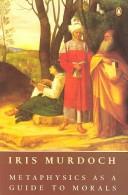
Her magnum opus in philosophy, synthesizing everything: Plato, consciousness, religion, art, and morality in one vast argument. Placed last because it presupposes familiarity with both her fiction and her earlier essays.
Discussion
Keep reading
Paths that share books, cover the same subject, or open a related topic.