Inspector Banks Reading Order: Where to Start with Peter Robinson
Peter Robinson wrote twenty-eight DCI Alan Banks novels over thirty-five years, and readers are routinely told to skip the early ones and start with In a Dry Season. That advice is half right: In a Dry Season is where the series becomes genuinely good, but Banks's marriage, his relationship with Annie Cabbot and the whole Eastvale set-up are built in the books before it, and starting late costs you those. This path reads in publication order, flags the point where the quality lifts, and says where to stop.
Start Here: The Early Yorkshire Novels
BeginnerMeet Banks as a Londoner newly transferred to a Yorkshire town, and get the domestic and procedural setup that the later, better books depend on.
▸ Study plan for this stage
Pace: 3 weeks, about 800 pages: Gallows View (225), A Dedicated Man (261), A Necessary End (317). These are short conventional procedurals and read fast — a novel a week is unhurried. Gallows View is plainly a debut and is the weakest book in the series; read it anyway for the Eastvale setup, and do not j
- Banks as a Londoner newly transferred north, and the outsider's-eye device Robinson uses the move for
- Eastvale and the Yorkshire Dales as a fixed geography the whole series will use
- The marriage to Sandra, and Banks's domestic life as a running plot rather than background
- The music, whisky and reading habits Robinson gives Banks — mannerisms that later carry real weight
- Buried history as a recurring engine, arriving with A Dedicated Man's murdered local historian
- The police hierarchy — Gristhorpe, and the superiors Banks will keep colliding with
- The shift in A Necessary End from puzzle to argument, which is the first sign of the later books
- What does Banks's move north give Robinson that a local detective would not?
- What is established about Banks's marriage in these three books, and how much of it is Robinson's setup rather than incident?
- In A Dedicated Man, how does the historical material feed the present-day investigation?
- A Necessary End puts Banks opposite an internal-affairs superintendent. What argument is the book actually making?
- Which elements of Gallows View does Robinson keep, and which does he quietly drop?
- Keep a running character ledger from book one — name, role, first appearance — because Robinson reintroduces minor Eastvale figures decades later.
- Note every reference to Banks's music listening across the three novels and what is happening when it occurs; the pattern is deliberate.
- After A Necessary End, write down what you would guess Banks's relationship with authority will be for the rest of the series, then check the guess in stage four.
- Sketch a rough map of Eastvale and the surrounding dale from the descriptions, and add to it as the series goes.
Next up: The setup is in place; the next stage is where Robinson consolidates the cast and the plotting tightens.

The 1987 first novel. Short, conventional and clearly a debut, but it establishes Eastvale, Banks's move north and his marriage — all of which pay off much later. Read it, but do not judge the series on it.

A local historian found dead on a dig. Robinson's interest in the Yorkshire landscape and in buried history arrives here, and it is the thread that runs to the best book in the series.
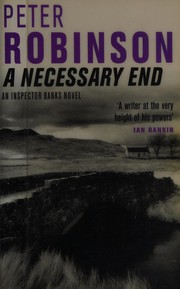
A policeman is stabbed at a demonstration, and Banks is put opposite an internal-affairs superintendent. The first novel where the series has a real argument in it rather than only a puzzle.
The Procedurals Settle In
BeginnerRead through the middle-period books where Robinson consolidates the Eastvale cast and the plotting gets tighter, and learn the transatlantic title problem this series has.
▸ Study plan for this stage
Pace: 4–5 weeks, about 1,300 pages: The Hanging Valley (273), Past Reason Hated (352), Wednesday's Child (360), Final Account (320). Four books at 300-odd pages each; a book a week with a spare week. Learn the practical problem this series has before you buy anything: Robinson's books were frequently reti
- The transatlantic retitling problem, and how to check a Robinson novel's identity before buying
- The Hanging Valley as the first book that reads like mature Robinson, and the Toronto strand that widens the series' geography
- Solutions turning on character rather than procedure — the direction Past Reason Hated points
- Braided plots: two investigations running in parallel, a structure Robinson will use for the rest of his career
- Robinson's refusal to soften an ending, established in Wednesday's Child
- Financial and white-collar crime as Eastvale subject matter (Final Account)
- The consolidation of the recurring Eastvale team, and the beginnings of a real workplace
- What does The Hanging Valley do that the first three books do not?
- In Past Reason Hated, how much of the solution is available from procedure alone, and how much requires reading the theatre company's relationships?
- How do the two strands of Wednesday's Child comment on each other?
- What is Robinson doing with the ending of Wednesday's Child, and why would softening it have cost the book something?
- Which of these four books would you have skipped, and what would you have lost?
- Build a title-concordance table for the series — UK title, US title, year — starting with Final Account and Dry Bones That Dream; you will need it to buy the rest.
- In Past Reason Hated, list every clue and mark it as procedural or characterological; the ratio is Robinson changing method in real time.
- Track the braided structure of Wednesday's Child: chart which chapters belong to which case and where they intersect.
- Update the Eastvale character ledger from stage one and mark who has become a fixture.
Next up: These four consolidate the series; the next three are where readers say it becomes genuinely good.
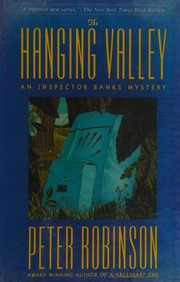
A body in a remote dale and an investigation that reaches to Toronto. The strongest of the early books and the first that reads like the mature Robinson.
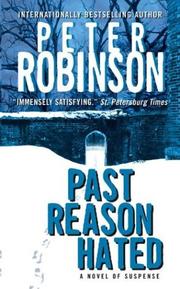
A Christmas murder inside a theatre company. Notable for how much of the solution turns on character rather than procedure — the direction the series is heading.
Two cases braided together, one of them a child abduction. The bleakest of the early novels and the one that shows Robinson will not soften an ending.
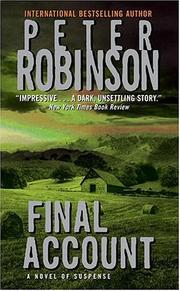
Published in the United Kingdom as Dry Bones That Dream — the first of several books in this series with two titles, so check before buying that you do not already own it. An accountant's execution opens onto financial crime.
The Series Turns
IntermediateReach the books people actually recommend, and see what changes: dual timelines, longer form, and a much stronger sense of place and history.
▸ Study plan for this stage
Pace: 4 weeks, about 1,120 pages: Innocent Graves (376), Blood at the Root (309), In a Dry Season (439). Read them in this order rather than jumping to In a Dry Season first, which is the usual advice — Annie Cabbot's arrival and Banks's post-divorce state land far harder in sequence. Blood at the Root wa
- Aftermath as subject: Innocent Graves taking the consequences of an investigation as seriously as its solution
- The collapsed prosecution as a plot shape — what happens to everyone when the case fails in court
- Far-right politics in a Yorkshire town, introduced in Blood at the Root and returned to later
- Dual timeline construction: how In a Dry Season interleaves the wartime village with the present-day dig
- Place as evidence — the drowned village exposed by drought is the series' central image
- Annie Cabbot's introduction, and what she is for structurally as well as personally
- Banks after the divorce: what changes in his method once his domestic anchor is gone
- The step up in ambition — longer, slower, more interested in history than in the puzzle
- What does Innocent Graves say about the cost of an investigation to the people cleared by it?
- How does Blood at the Root set up the Eastvale of the later novels?
- In a Dry Season alternates two periods. What does each timeline know that the other does not, and when does Robinson let them meet?
- How does Annie Cabbot change the dynamic of an investigation, and what does Robinson use her to say about Banks?
- Why is In a Dry Season better than the eight books before it? Name the specific techniques.
- Chart In a Dry Season's chapter structure — which timeline, whose viewpoint — and identify the point at which the two halves start converging.
- Reread the opening chapter of Gallows View immediately after In a Dry Season and write a paragraph on what changed in Robinson's prose over twelve years.
- Track every mention of Banks's marriage across stages one to three and write the arc as a single timeline.
- Compare Robinson's handling of the far-right material in Blood at the Root with a later novel that returns to it, once you reach stage five.
Next up: The series has peaked; the next stage is the two novels immediately after, where Robinson pushes furthest from the conventional procedural.
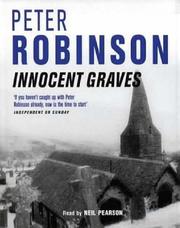
A schoolgirl murdered in a churchyard, and a case that collapses in court. The novel where Robinson starts taking the aftermath of an investigation as seriously as the investigation.
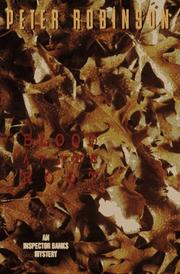
Published in the United States as Dead Right. A racially motivated killing outside a pub, and the introduction of the far-right politics Robinson returns to. Read it before In a Dry Season; it sets up the Eastvale of the later books.
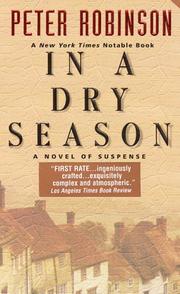
A drought exposes a drowned village and a body walled into a cottage, and the novel alternates between the wartime past and the present investigation. Award-winning, and genuinely the best book in the series — but read it here rather than first, because Annie Cabbot's arrival and Banks's post-divorce state both land harder in sequence.
The Strong Middle Run
IntermediateFollow the two novels immediately after the series' peak, where Robinson pushes furthest into damaged characters and away from the conventional procedural.
▸ Study plan for this stage
Pace: 3 weeks, about 915 pages: Cold Is the Grave (451) and Aftermath (464). Two long novels; read them back to back, since the second follows directly from the atmosphere of the first. Aftermath deals with a serial-killing case largely through its consequences, including the treatment of victims and of a
- Payoff on setup: Cold Is the Grave cashing in the police hierarchy Robinson built in the first three books
- The favour from a hostile superior as a structure that puts Banks in permanent debt
- Aftermath's inversion — the crime largely offstage, the novel about what follows
- Multiple viewpoints, including those of people damaged by the investigation
- Robinson's interest in the wrongly suspected, which runs from Innocent Graves through here
- How far a procedural can move from procedure and still work
- Annie Cabbot's own arc developing independently of Banks
- What does Riddle's request in Cold Is the Grave cost Banks, and how does Robinson use the first three novels to make that cost legible?
- Aftermath tells the story from several viewpoints. Which one carries the book's argument?
- What is Robinson refusing to do in Aftermath that a conventional serial-killer novel would do?
- How has Annie Cabbot's role changed since In a Dry Season?
- These two are widely called the series' strong middle. What specifically holds up, and what is starting to repeat?
- List the debts and obligations between Banks and each superior officer, from Gallows View to Cold Is the Grave, and see how much of the plot is a ledger.
- Map Aftermath's viewpoint chapters and count the pages given to each character; the distribution is the novel's thesis.
- Pick a scene in Aftermath and rewrite it as a conventional procedural would handle it; then say what Robinson gained by not doing that.
- Write down which threads are still open at the end of Aftermath — one of them is picked up directly in the next stage.
Next up: Aftermath leaves a thread hanging that the first book of the next stage picks up directly, which is why that novel is the right way back into the long late period.
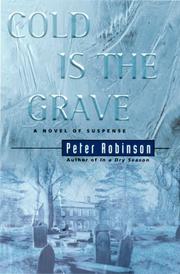
Banks's hostile chief constable asks him for a personal favour. The best use Robinson ever makes of the police hierarchy he set up in the first three books.
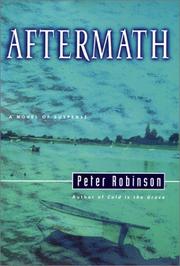
A serial-killing case told largely through its consequences, and the most disturbing book in the series. Read it directly after Cold Is the Grave; it is also the point at which some readers step off, which is a fair response rather than a failure of nerve.
The Later Novels, and Where to Stop
IntermediateSample the long late period without committing to all of it, and understand how the series ended.
▸ Study plan for this stage
Pace: 3 weeks, about 825 pages: Friend of the Devil (398) and Careless Love (426). This stage is a sample rather than a completist run — the late period is long, and these two show you both ends of it. Friend of the Devil is a direct sequel to Aftermath and runs two investigations in parallel with Annie C
- Continuity payoff: Friend of the Devil resolving an Aftermath thread years later
- Annie Cabbot as a co-lead running her own case rather than as Banks's subordinate
- The late style — assured, character-led, less urgent, and what has been traded away for it
- Contemporary policing detail entering a series that began in 1987, and how Robinson handles the change
- Where a long series' returns diminish, and how to decide for yourself which of the remaining novels to read
- The posthumous ending: a series that stops rather than closes, and what that does to its arcs
- How does Friend of the Devil use Aftermath, and does it require you to have read it?
- What has changed in Banks himself between Cold Is the Grave and Careless Love?
- What does Robinson's late style do better than his middle period, and what does it do worse?
- How does the series handle the technological and procedural changes in policing across thirty-five years?
- Having read fourteen of the twenty-eight, which of the remaining novels would you now choose, and on what basis?
- Reread the last chapter of Aftermath immediately before starting Friend of the Devil and note exactly what Robinson assumes you remember.
- Compare a single interview scene from Gallows View with one from Careless Love and describe, concretely, how the prose and the procedure both changed.
- Complete the Eastvale character ledger you began in stage one and mark who survived the whole series.
- Take your title-concordance table from stage two and finish it for the remaining novels, so you can pick your way through the late period without buying duplicates.
Next up: From here the sensible next moves are the remaining late Banks novels chosen from your own ledger, or Robinson's standalones and short-story collections, which sit outside the Eastvale continuity.
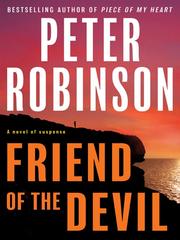
Two investigations, one of them a direct sequel to Aftermath, running in parallel with Annie Cabbot leading her own. The best of the late books and the natural place to rejoin if you have skipped ahead.

A late, quieter novel, and a good demonstration of what the series settled into: assured, character-led, less urgent. Robinson died in 2022; the last book, Standing in the Shadows, was published posthumously, so Not Dark Yet and Standing in the Shadows are where the series ends rather than concludes.
Discussion
Keep reading
Paths that share books, cover the same subject, or open a related topic.