DCI Banks books in order: where to start with Peter Robinson
Twenty-eight Alan Banks novels ran from 1987 to 2023, and they are not of one piece: the first half-dozen are competent English village procedurals, and then somewhere around In a Dry Season the series becomes something considerably better. This path reads them in publication order — which is also chronological order, since Banks ages — but tells you which early books you can skim and where to slow down. The two standalones are kept for the end.
The first Yorkshire books
BeginnerMeet Banks, Eastvale and the Dales, and get the recurring cast established without over-investing in the weakest stretch of the series.
▸ Study plan for this stage
Pace: Two to three weeks for 803 pages across three short novels — Gallows View at 225, A Dedicated Man at 261 and A Necessary End at 317. These are quick reads and they should be read quickly. Do not linger on this stage: it is the weakest stretch of a long series and its job is to establish Banks, Eastv
- The premise established in Gallows View: Alan Banks has moved north from the Metropolitan Police to a Yorkshire market town, and the culture shock in both directions is the series' founding tension.
- Robinson is still finding the voice in the debut. It is a conventional village procedural with a peeping-tom case, and judging the series on it is the standard error — say what is thin about it and move on.
- Publication order is also chronological order here, because Banks ages in real time across the series. His marriage, his children and his career all move, and reading out of order breaks that.
- Eastvale and the Dales are not scenery. A Dedicated Man is the first book to use the landscape structurally — a body under a dry-stone wall, an archaeologist — and from here the setting does real work.
- The recurring cast begins forming now: colleagues, superiors, and Banks's home life. Robinson builds a supporting ensemble that carries increasing weight, so noting who appears is worth the effort even in the weaker books.
- A Necessary End introduces the theme that runs the length of the series: Banks set against another officer rather than against a criminal, and institutional pressure as an antagonist in its own right.
- Music. Banks's listening is a running characterisation device throughout the series, and it starts here — a small thing that becomes one of the more distinctive features of the books.
- What does Banks's move from the Met to Eastvale establish about him, and what is he escaping?
- Name two specific weaknesses in Gallows View that Robinson has fixed by A Dedicated Man.
- How does A Dedicated Man use the Dales landscape as more than backdrop? Point to a specific plot function.
- In A Necessary End, what does putting Banks against another officer allow Robinson to do that a straightforward criminal antagonist would not?
- Which recurring characters have been introduced by the end of this stage, and what is each one for?
- Start a series ledger on page one: recurring characters, Banks's rank, his domestic situation, and the year each book appears to be set in. Twenty-eight novels is too many to track from memory and the later books assume you remember.
- Read Gallows View and A Dedicated Man back to back and list what changed in the prose between them. Robinson's improvement across this series is unusually visible and this is the first place to see it.
- Note every time Banks's outsider status is used in an investigation. It becomes a structural device rather than a character note.
- Write a one-line verdict on whether you would continue on the strength of these three. Then read In a Dry Season's opening chapter and revise it — that comparison is the honest argument for staying with the series.
Next up: The cast and the setting are established; the next stage is where the plotting begins to tighten and the domestic material starts carrying as much weight as the cases.

The 1987 debut. Banks has just moved north from the Met, and the book is a conventional village procedural with a peeping-tom case. Start here for the setup, but do not judge the series by it — Robinson was still finding the voice.

The second, and a clear improvement: a body under a dry-stone wall, an archaeologist, and the first real use of the Dales landscape as more than scenery. If you only read one of the first three, read this one.
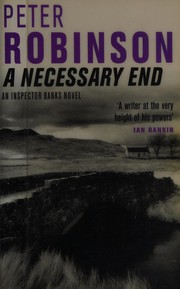
A policeman killed at a demonstration, and the first book to put Banks against another officer rather than against a criminal. The theme of institutional pressure that runs through the whole series starts here.
The series settles
BeginnerWork through the middle-period books quickly, noting how Banks's home life starts to carry as much weight as the cases.
▸ Study plan for this stage
Pace: Three to four weeks for 1,140 pages — Past Reason Hated at 352, Dry Bones That Dream at 412 and Innocent Graves at 376. Read these at pace as well; they are good procedurals rather than major novels, and the reason to read them is that the recurring cast and Banks's domestic arc are developing under
- The plotting tightens visibly at Past Reason Hated — an amateur theatre company and a Christmas murder, with a cleaner structure than anything before it. It won the Arthur Ellis Award, which is a fair external marker of where the craft steps up.
- The double-title problem, worth internalising because it recurs across British crime series: Dry Bones That Dream and Final Account are one book. Check before buying.
- Dry Bones That Dream is the first book in which Robinson works a genuinely modern crime — a farmhouse execution that opens into money laundering — rather than a village-mystery variant.
- Innocent Graves is the pivot in miniature: a schoolgirl killed in a churchyard, an investigation that goes wrong, and the consequences of that failure carried as the story rather than as a subplot. This is the shape all the best later books take.
- Banks's home life starts to carry equal weight with the cases. The marriage under strain, the children, the drinking — Robinson is building a serial character rather than a detective who solves a case per volume.
- The supporting cast becomes load-bearing here. Colleagues get their own arcs, and by the later stages some books are as much theirs as Banks's.
- Robinson's characteristic move is emerging: the crime is the occasion, and the actual subject is what the investigation does to the people conducting it.
- What specifically is tighter about the plotting of Past Reason Hated compared with the first three novels?
- Why is Dry Bones That Dream described as the first modern crime in the series? What kind of crime were the earlier books about?
- In Innocent Graves the investigation goes wrong. What does Robinson do with that failure that a conventional procedural would not?
- How has Banks's domestic situation changed across these three books, and how does it interact with the cases?
- Which supporting character has gained the most ground in this stage, and what does Robinson use them for?
- Keep the ledger current, adding each new recurring character and each shift in Banks's home life. You will need it in the later stages, where books open assuming several years of history.
- For each of the three novels, write one sentence on what the book is actually about beneath the case. The gap between the case and the subject is the measure of Robinson's development.
- Compare the opening chapter of Gallows View with the opening of Innocent Graves. Write a paragraph on what has changed in technique.
- Note before starting In a Dry Season what you think the series' ceiling is on this evidence. The next stage is where the series exceeds it, and having the prediction written down makes that visible.
Next up: Everything in the first six books is groundwork for the three novels in the next stage, which is where the series stops being a competent procedural and becomes something considerably better.
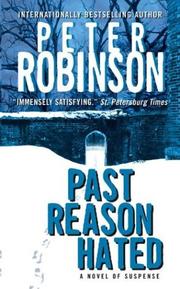
An amateur theatre company and a Christmas murder. The plotting tightens noticeably here and it won the Arthur Ellis Award, which is a fair marker of where the craft steps up.
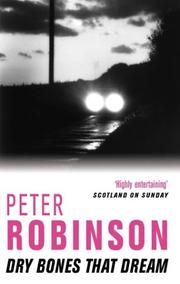
Published in the United States as Final Account — the same novel under two titles, and both are held as separate catalogue records, so avoid buying it twice. A farmhouse execution that turns into a money-laundering case, and the first book where Robinson works a genuinely modern crime.
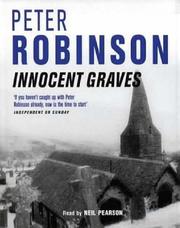
A schoolgirl killed in a churchyard, and the book that most directly anticipates the later Robinson: the investigation goes wrong, and the consequences of that are the story rather than a subplot.
The turn
IntermediateRead the three books where the series becomes properly good, and be able to say what changed.
▸ Study plan for this stage
Pace: Four to five weeks for 1,354 pages — In a Dry Season at 439, Cold Is the Grave at 451 and Aftermath at 464. Slow down here; this is the stage the whole path exists for. Read In a Dry Season and Cold Is the Grave straight through, as they are closely linked. Aftermath is a genuinely difficult book: a
- In a Dry Season is the pivot and the book to give someone who will not start at the beginning. A drought exposes a drowned village and a wartime body, and the historical narrative running alongside the present-day investigation is the first time Robinson attempts real structural ambition.
- The dual-timeline structure is the technical achievement. The past narrative is not flashback or framing — it is a second novel running in parallel, and the two illuminate each other rather than one explaining the other. It won the Anthony and Barry awards.
- What changed, in a sentence you should be able to give: Robinson stopped writing cases and started writing novels that contain cases. The historical material, the moral weight and the willingness to let the investigation fail are all new here.
- Cold Is the Grave sets up the long feud with Chief Constable Riddle — Banks sent to find Riddle's runaway daughter — which is the institutional-pressure theme from A Necessary End escalated into a sustained arc.
- Aftermath is the most accomplished thing Robinson wrote and the most brutal. Its formal move is telling the case partly through the perpetrator's wife, which is what makes it more than a serial-killer novel and also what makes it hard to read.
- The reason the series is taken seriously is largely this stage. Reviewers and awards both mark it, and any recommendation of Robinson that skips these three is not really a recommendation of Robinson.
- Robinson's willingness to let the police be complicit, mistaken or damaged rather than vindicated is fully developed by the end of this stage, and it is what separates him from the cosier end of the British procedural.
- How do the two timelines in In a Dry Season inform one another? Give a specific instance where the past narrative changes the meaning of a present-day scene.
- State in one sentence what changed between Innocent Graves and In a Dry Season. Defend it with evidence from both books.
- What does the Riddle arc allow Robinson to do across multiple novels that a single-book antagonist could not?
- In Aftermath, what does the wife's perspective add? Would the novel work without it, and would it be better or worse?
- Aftermath is both the hardest and the best book in the series. Is that a coincidence, or is the difficulty doing work? Argue it either way.
- If someone will only read one Peter Robinson novel, which of these three do you give them and why?
- Read In a Dry Season with a two-column note: present-day investigation on one side, wartime narrative on the other, marking every point where information crosses. The crossings are the design.
- Write a page on what In a Dry Season does that the previous six books do not. This is the single most useful piece of writing to produce on this path.
- Decide about Aftermath before starting it rather than a hundred pages in. If you continue, note where the perpetrator's wife's perspective is doing moral work rather than generating suspense.
- Track the Riddle conflict across Cold Is the Grave and note what it costs Banks professionally and personally. The consequences persist into the later stage.
- Compare the treatment of violence in Aftermath with that in Gallows View. The difference is the whole argument for reading twenty-eight books by one writer.
Next up: The series has now reached its peak, and the next stage samples the long run that follows and takes it to the end without asking you to read all twenty-eight.
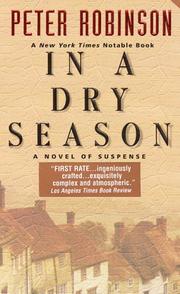
The pivot, and the book to give someone who wants to try Robinson without starting at 1987. A drought exposes a drowned village and a wartime body; the historical narrative running alongside the present-day investigation is the first time Robinson attempts real structural ambition, and it works. It won the Anthony and Barry awards.
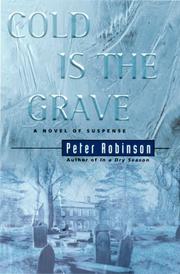
Banks is sent to find his chief constable's runaway daughter, which is the setup for the series' long feud with Riddle. Read straight on from In a Dry Season; the two are closely linked.
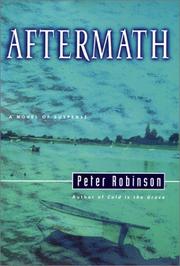
The hardest book in the series by some distance — a house of horrors case, told partly through the perpetrator's wife. It is genuinely brutal and some readers stop here. It is also the most accomplished thing Robinson wrote, and the reason the series is taken seriously.
Late Banks
IntermediateSample the long later run and reach the end of the series without reading all twenty-eight.
▸ Study plan for this stage
Pace: Four to five weeks. Friend of the Devil is 398 pages and When the Music's Over is 692 — much the longest book on the path — and Standing in the Shadows completes the series. This is a sampling stage rather than a complete reading: the later run is long, and these three are chosen to show the mid-per
- By this point the supporting cast carries the books. Friend of the Devil runs two investigations in parallel, Banks's and Annie Cabbot's, converging late, and Cabbot's is not the subplot.
- The parallel-investigation structure is the mature form of the dual timeline from In a Dry Season — Robinson keeps returning to two narratives set against each other, and recognising that as his signature is the point of reading this stage after the last.
- When the Music's Over is written directly into the post-Savile moment: a historical abuse case involving a celebrity, with the institutions that failed to act as much the subject as the perpetrator.
- Robinson at his most willing to let the police look complicit in what they are investigating. The late books are markedly less comfortable with the institution than the early ones, and that trajectory across twenty-eight novels is the real argument of the series.
- Standing in the Shadows is the last novel, published after Robinson's death. Read it knowing that: it is the end of the series rather than a book that happens to be last.
- The final novel returns to the dual-timeline structure of In a Dry Season, setting a 1980 miners'-strike-era thread against a present-day investigation. Ending on the device that made the series is not an accident.
- The long middle of the later run is skipped here deliberately. It is competent and consistent, and a reader who wants more can fill in freely, but nothing in it is load-bearing for the arc.
- How much of Friend of the Devil belongs to Annie Cabbot rather than to Banks, and what does Robinson gain by splitting it?
- What does When the Music's Over say about institutions rather than individuals? Where does the novel place responsibility?
- Compare the police as portrayed in A Necessary End with the police in When the Music's Over. Describe the trajectory in one sentence.
- Standing in the Shadows uses the structure of In a Dry Season. What does returning to it at the end of a career do that a new structure would not?
- Having sampled rather than read the full later run: what do you think you missed, and does it matter?
- Chart the parallel structures across In a Dry Season, Friend of the Devil and Standing in the Shadows. Three uses of one device across a career is a legitimate subject for a page of writing.
- Update the series ledger through to the end — Banks's rank, his domestic situation, which colleagues remain. Then compare it with the entry you wrote for Gallows View.
- Decide about When the Music's Over before starting it, as with Aftermath. If you read it, note where the novel is examining institutional failure rather than depicting abuse.
- Write a paragraph on the ending of the series as an ending. Robinson did not write it knowing it would be the last, which makes what it does with the miners'-strike material worth thinking about.
- List the later novels you would go back and fill in, with a reason for each. That list is the honest measure of whether the sampling worked.
Next up: Twenty-eight novels of one detective is a particular achievement; the last stage asks what Robinson could do when there was no series to carry him.
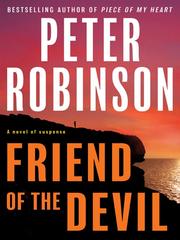
Two investigations, Banks's and Annie Cabbot's, running in parallel and converging. The best of the mid-2000s books and a good demonstration of how much the supporting cast now carries.
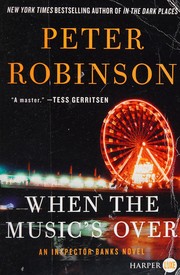
A historical abuse case involving a celebrity, written straight into the post-Savile moment. Robinson at his most willing to let the police look complicit in what they are investigating.
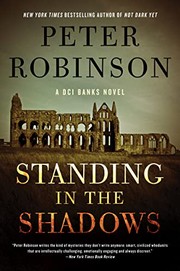
The last novel, published after Robinson's death in 2022. A 1980 miners'-strike-era thread against a present-day investigation — the dual-timeline structure he first used in In a Dry Season, returned to at the end. Read it knowing it is the end.
Away from Banks
IntermediateRead the two standalones and see what Robinson does without a series detective.
▸ Study plan for this stage
Pace: Two to three weeks for 789 pages — Caedmon's Song at 381 and Before the Poison at 408. Two standalones, no required order, though reading the early one first shows the technique arriving and the late one second gives the path a strong finish. Caedmon's Song alternates between a serial killer's victi
- Caedmon's Song is an early standalone and structurally the ancestor of everything Robinson later did with dual narratives — two women's stories alternating, converging late. It is short, bleak and technically more interesting than the Banks novels written around it.
- Seeing the dual-narrative device appear in a standalone before it appears in the series is the reason this stage sits at the end rather than in chronological position. It reframes In a Dry Season as the arrival of a technique Robinson had already been working on.
- Before the Poison: a composer returns from Los Angeles to a Yorkshire house where a mid-century murder took place, and the past case is reconstructed alongside the present-day one. Same structure, entirely different register.
- Without a series detective the books become interior. There is no procedure to lean on and no recurring cast, so the weight falls on the narrator, which is a different kind of writing from the Banks novels.
- Before the Poison won the Arthur Ellis Award and is the best argument that Robinson was a novelist who happened to write crime, rather than a crime writer who improved. Whether you accept that argument is the closing question of this path.
- Yorkshire is the constant. Both standalones use the same landscape as the series, and the standalones make clear how much of the Banks books' quality was always the place rather than the detective.
- This is a good place to finish. Ending on a standalone rather than on the last Banks novel leaves the series' achievement visible rather than closed.
- How does Caedmon's Song's alternating structure work, and where does it differ from the dual timeline of In a Dry Season?
- What does Robinson lose without a series detective, and what does he gain?
- Before the Poison reconstructs a mid-century murder alongside a present-day story. Which narrative is the novel actually about?
- Assess the claim that Robinson was a novelist who happened to write crime. What evidence in these two books supports it, and what in the Banks novels argues against it?
- Having read fourteen books across this path, what is your one-paragraph answer to someone asking where to start with Peter Robinson — and does it match the recommendation you would have given after stage one?
- Read Caedmon's Song and write down, before checking, where you think it sits relative to In a Dry Season in Robinson's development. Then check.
- Compare the narrators of the two standalones. Both are outsiders in Yorkshire; describe how differently each is handled.
- Write a final page ranking the fourteen books on this path, with a one-line reason for the top three and the bottom three.
- Draft the recommendation you would give a new reader: which book to start with, which to skip, where the series turns, which two are hard going, and where to stop. That guide is the deliverable of the whole path.
Next up: This is the end of the path: the series from its uncertain beginning through its peak to its close, plus the two standalones that show what the writer was doing when nobody was waiting for the next Banks.
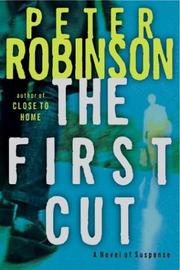
An early standalone, alternating between a serial killer's victim and a young woman travelling the Yorkshire coast. Bleak, short, and structurally the ancestor of the dual narratives he used later.

A composer returns from Los Angeles to a Yorkshire house where a 1950s murder took place. It won the Arthur Ellis Award and is the best argument that Robinson was a novelist who happened to write crime, rather than the reverse. A good place to finish.
Discussion
Keep reading
Paths that share books, cover the same subject, or open a related topic.