Start with Gallows View, the 1987 first novel, and read forward in publication order. The advice you will be given everywhere else is to skip the early books and open with In a dry season, and that advice is half right: the tenth novel is where the series becomes genuinely good, and it is the one that wins the awards and the recommendations.
The half it gets wrong matters more, though. Banks is a continuing character in a specific place, and his marriage, his move north from London, the Eastvale hierarchy he keeps colliding with and the arrival of Annie Cabbot are all built in the books before the peak. Start at the peak and those things arrive as backstory you are told rather than history you watched. Peter Robinson wrote twenty-eight DCI Alan Banks novels over thirty-five years; the early ones are short and the payoff is real.
The early Yorkshire novels
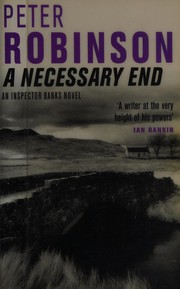
Gallows View is conventional and clearly a debut. Read it anyway — it establishes Eastvale and Banks's move north — but do not judge the series on it. A dedicated man puts a local historian dead on a dig and brings in Robinson's lasting interest in the Yorkshire landscape and in buried history, which is the thread running directly to the best book in the run. A necessary end has a policeman stabbed at a demonstration and sets Banks against an internal-affairs superintendent; it is the first of these novels with an argument in it rather than only a puzzle.
The middle books, and the two-title problem
The hanging valley is the strongest of the early novels and the first that reads like mature Robinson. Past Reason Hated is a Christmas murder inside a theatre company, solved largely on character. Wednesday's Child braids two cases, one of them a child abduction, and is the bleakest of the early run.
Then Final account, which is where a practical warning belongs: this series was published under different titles on either side of the Atlantic, and this novel appeared in the United Kingdom as Dry Bones That Dream. Blood at the root is the other well-known case, published in the United States as Dead Right. Check the plot summary before buying a Banks novel you do not recognise; more than one reader has bought the same book twice.
Where the series turns
Innocent Graves is the hinge. A schoolgirl is murdered in a churchyard and the case collapses in court, and Robinson starts taking the aftermath of an investigation as seriously as the investigation itself. Blood at the root introduces the far-right politics he returns to for the rest of the series; read it before the next one, because it builds the Eastvale the later books are set in.
In a dry season is the novel everyone means. A drought exposes a drowned village and a body walled into a cottage, and the book alternates between a wartime past and the present-day inquiry. Most readers rate it the best in the series, and it is the correct answer to which Banks novel is the good one — but read it tenth rather than first, because Annie Cabbot's arrival and Banks's post-divorce state both land harder in sequence.
After the peak
Cold is the grave has Banks's hostile chief constable asking him for a personal favour, which is the best use Robinson ever makes of the hierarchy set up in the first three books. Aftermath handles a serial-killing case almost entirely through its consequences and is the most disturbing thing in the series; some readers step off here, which is a fair response rather than a failure of nerve.
Where to stop
Friend of the devil is the best of the late novels and a direct sequel to Aftermath, with Annie Cabbot running her own investigation in parallel. It is also the natural place to rejoin if you have skipped ahead. Careless Love shows what the series settled into late on: assured, character-led, less urgent. Robinson died in 2022, and the final novel, Standing in the Shadows, was published posthumously — so the series ends rather than concludes, and stopping anywhere in the late run costs you nothing structural.
Follow the full ordered path here: Inspector Banks Reading Order: Where to Start with Peter Robinson.
Ready to learn something deeply?
Build a reading path — free