Honore de Balzac Reading Order: Where to Start
This curriculum guides an intermediate reader into the heart of Balzac's La Comédie Humaine, beginning with the most self-contained and celebrated entry points, then expanding outward through the major thematic clusters, and finally equipping the reader to navigate the full cycle with critical and biographical context. Each stage builds on the characters, social world, and recurring themes encountered in the previous one, so that by the end the reader can move freely through the whole edifice.
The Best Entry Points
IntermediateExperience Balzac's storytelling at its most gripping and self-contained, establishing the social world of the Comédie Humaine and its core obsessions: ambition, money, and passion.
▸ Study plan for this stage
Pace: 8–10 weeks total: ~3 weeks on Père Goriot (~20–25 pages/day), ~2.5 weeks on Eugénie Grandet (~15–20 pages/day, slower for its dense provincial atmosphere), and ~2.5 weeks on The Wild Ass's Skin (~20 pages/day); reserve the final week for review, journaling, and comparative reflection across all thre
- The Comédie Humaine as a unified social ecosystem: recurring characters, interconnected milieux, and Balzac's ambition to be the 'secretary of society'
- The Pension Vauquer as a microcosm of Parisian society in Père Goriot — how a single physical space encodes class, aspiration, and moral decay
- Paternal self-destruction and filial ingratitude: Goriot's Christ-like sacrifice and the daughters' commodification of love
- Provincial avarice vs. Parisian ambition: the contrast between Grandet's Saumur and Rastignac's Paris as two faces of the same money-obsessed civilization
- The Balzacian 'type': characters who embody a single ruling passion (la passion dominante) taken to its logical, ruinous extreme
- The magic skin (la peau de chagrin) as a metaphor for the economy of desire — every wish costs life-force, mirroring capitalism's logic of expenditure and diminishment
- Rastignac's education sentimentale: the initiation of the ambitious provincial into Parisian cynicism, culminating in his famous defiant challenge to the city
- Money as moral language: inheritances, debts, dowries, and speculation as the true grammar of human relationships across all three novels
- In Père Goriot, how does Vautrin's philosophy of 'the jungle beneath the social contract' function as a dark counter-education to the lessons Rastignac receives from Mme de Beauséant — and which vision does the novel ultimately seem to endorse?
- Eugénie Grandet never leaves Saumur, yet the novel is as much about money's violence as Père Goriot. How does Balzac use the confined provincial setting and Grandet's obsessive hoarding to make avarice feel as dramatic as Parisian ambition?
- In The Wild Ass's Skin, Raphaël's magic talisman shrinks with each wish granted. How does this fantastical device literalize the economic and psychological logic that governs desire in Père Goriot and Eugénie Grandet as well?
- Balzac's narrator frequently interrupts the story to deliver sociological analysis or moral commentary. Choose one such passage from each of the three novels and explain what it reveals about Balzac's method and his view of the novelist's role.
- Goriot, Grandet, and Raphaël are each consumed by a single ruling passion. Compare how each passion (paternal love, avarice, desire) destroys its bearer — and what Balzac implies about the relationship between passion and modernity.
- By the end of these three novels, what picture of 'success' in Balzac's world has emerged? Is there any character who achieves it without moral compromise, and what does that answer tell us about the Comédie Humaine's worldview?
- Mapping the social world: Draw a diagram of the social strata represented in Père Goriot (from Goriot's garret to the Faubourg Saint-Germain salons). Annotate each level with the currency of exchange — money, beauty, name, wit — that allows or blocks movement between them. Then check whether Eugénie Grandet and The Wild Ass's Skin fit the same map or require additions.
- Passion autopsy: For each of the three protagonists (Goriot, Grandet, Raphaël), write a one-page 'case study' in Balzac's own pseudo-scientific style, diagnosing their ruling passion, tracing its origin, and predicting its inevitable outcome — as if you were a naturalist cataloguing a species.
- The Rastignac journal: After finishing Père Goriot, write three diary entries from Rastignac's point of view — one after his first salon visit, one after Goriot's death, and one at the graveside scene overlooking Paris. Use the text to stay faithful to his evolving cynicism.
- Close-reading the object: Select one charged object from each novel (e.g., Goriot's silver soup tureen, Grandet's gold coins, the wild ass's skin itself). Write a 300-word analysis of how Balzac describes it — diction, detail, narrative weight — and what it reveals about the novel's moral economy.
- Comparative money ledger: Create a simple ledger tracking the flow of money (or its refusal) in Eugénie Grandet — who gives, who withholds, who inherits, who is cheated. Then write a paragraph arguing whether Balzac presents Eugénie's final charitable wealth as redemption, irony, or tragedy.
- Write the missing scene: The Wild Ass's Skin's introduction by Marcel Girard frames Balzac's fantastical mode. After reading it, write a 400-word preface as if you were introducing Père Goriot to a first-time reader — imitating Girard's approach of situating the novel within Balzac's larger project and the social history of the era.
Next up: Mastering these three novels gives the reader a firm grasp of Balzac's core obsessions and character types, making them ready to pursue deeper or more specialized corners of the Comédie Humaine — whether the political intrigues of the Scènes de la vie politique, the darker criminal underworld Vautrin inhabits in later novels, or Balzac's more experimental and philosophical works.

The undisputed gateway to the Comédie Humaine: it introduces the Maison Vauquer boarding house, the young Rastignac, and the arch-villain Vautrin, establishing the recurring cast and the ruthless logic of Parisian society. Reading it first gives you the social map every subsequent novel assumes.

A perfectly structured, almost claustrophobic study of avarice set in the provinces — a deliberate contrast to the Parisian world of Père Goriot. Its simplicity of plot makes Balzac's psychological and moral depth unmistakable before the more complex novels ahead.
A philosophical fantasy that doubles as Balzac's personal manifesto on desire and self-destruction. Reading it third reveals the metaphysical underpinning of the whole cycle and introduces the young Rastignac in a different register.
Ambition and Society in Paris
IntermediateFollow the major social arenas of the Comédie Humaine — journalism, law, the arts, and the aristocracy — and see how Balzac's recurring characters weave through them.
▸ Study plan for this stage
Pace: 8–10 weeks total: Weeks 1–5 for "Lost Illusions" (~35–40 pages/day, accounting for its length of ~700 pages), then Weeks 6–10 for "A Harlot High and Low" (~30–35 pages/day across ~550 pages). Reserve the final 2–3 days of each book for review and reflection before moving on.
- The provincial vs. Parisian divide: how Lucien de Rubempré's journey from Angoulême to Paris dramatizes the brutal gap between romantic idealism and social reality
- The corruption of journalism: Balzac's anatomy of the Parisian press in 'Lost Illusions' as a machine that commodifies talent, opinion, and truth for profit
- Social performance and identity: how characters construct, sell, and destroy public personas — Lucien's repeated reinventions across both novels as a case study
- The Vautrin/Carlos Herrera figure: the master manipulator as a shadow social architect who operates outside legitimate institutions to engineer power
- The interconnected web of the Comédie Humaine: recurring characters (Rastignac, de Marsay, Nucingen) appearing across both books as proof that Parisian society is a closed, self-referential system
- Money as the universal solvent: how debt, credit, speculation, and financial ruin drive plot and character fate in both novels, particularly through Nucingen's banking schemes in 'A Harlot High and Low'
- The aristocracy as a gated social arena: the Faubourg Saint-Germain's codes, exclusions, and hypocrisies as obstacles and prizes for ambitious outsiders like Lucien
- Esther Gobseck and the commodification of women: how 'A Harlot High and Low' uses Esther's fate to expose the intersection of desire, money, and social power
- How does Balzac use the Parisian newspaper world in 'Lost Illusions' to argue that modern society corrupts artistic integrity — and what specific episodes with Lucien and his journalist peers best illustrate this?
- In what ways does Vautrin/Carlos Herrera function as an alternative social institution in 'A Harlot High and Low,' and how does his relationship with Lucien mirror or invert the mentor relationships Lucien sought in 'Lost Illusions'?
- Trace the role of money and debt across both novels: which characters are destroyed by financial entanglement, which survive, and what does the pattern reveal about Balzac's view of capitalism and social mobility?
- How do the aristocratic salons and the legal system each operate as social arenas in these two books — who holds power within them, and what are the rules for entry and exclusion?
- By the end of 'A Harlot High and Low,' what has Lucien's arc — spanning both novels — revealed about the limits of ambition, beauty, and talent as tools for social ascent in Balzac's Paris?
- How does Balzac use recurring characters (e.g., Rastignac, Nucingen, de Marsay) appearing in both books to create the sense that Parisian high society is a single, interlocking organism?
- Character web diagram: After finishing each book, draw a map of all named characters, connecting them by relationship type (patron, rival, lover, creditor, manipulator). Note which characters appear in both novels and annotate how their role shifts — this makes the Comédie Humaine's web tangible.
- Journalism close-read: Select two or three scenes in 'Lost Illusions' where Lucien writes or edits for the press. Write a one-page analysis of how Balzac's prose style in those scenes — word choice, irony, pacing — enacts the very cynicism he is describing thematically.
- Social arena journal: Keep a running log divided into four columns — Journalism, Law, the Arts, Aristocracy. Each reading session, jot down one scene per column (if applicable) that shows how that arena operates, who its gatekeepers are, and what it costs to enter. Review the log after each book.
- Vautrin character study: Write a 400–600 word profile of Vautrin/Carlos Herrera as he appears in 'A Harlot High and Low.' Argue whether he is best read as a villain, a tragic figure, or a satirical stand-in for the hidden machinery of society itself.
- Comparative money audit: List every significant financial transaction, debt, or scheme mentioned in both novels (Nucingen's maneuvers, Lucien's borrowing, Esther's arrangements). Categorize them by who gains and who loses, then write three sentences on what the overall pattern implies about Balzac's economic worldview.
- Rewrite a scene: Choose one moment where Lucien makes a fateful social choice (e.g., signing on with a newspaper faction, accepting Vautrin's patronage). Rewrite the scene giving Lucien a different decision, then write a short paragraph predicting how Balzac's plot logic would punish or reward that alternative — this tests how well you understand Balzac's deterministic social mechanics.
Next up: By mapping the full arc of Lucien's ambition and Vautrin's underground empire across these two novels, the reader has internalized how Balzac's social arenas interlock — a foundation that makes the next stage's focus on domestic life, private passion, and the quieter tragedies of the Comédie Humaine feel like the necessary interior counterpart to the public spectacle just witnessed.

Balzac's most expansive single novel and arguably his masterpiece: the story of the poet Lucien de Rubempré's rise and fall through the worlds of provincial printing, Parisian journalism, and literary ambition. It is the indispensable bridge between the entry novels and the full cycle.
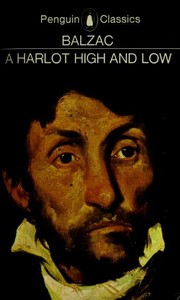
The direct sequel to Lost Illusions, following Lucien and Vautrin through the criminal underworld and high society. Reading it immediately after Lost Illusions completes the arc and shows Balzac's novelistic architecture at its most interconnected.
The Private Dramas: Love, Marriage, and Money
IntermediateExplore Balzac's intimate domestic and psychological studies, rounding out the full range of the Comédie Humaine beyond pure social ambition.
▸ Study plan for this stage
Pace: 5–6 weeks total: Weeks 1–3 for "Cousin Bette" (~25–30 pages/day, including 2–3 pause days for reflection notes); Weeks 4–6 for "Cousin Pons" (~20–25 pages/day, with a slower pace to absorb its elegiac tone and dense collector's detail). Reserve the final 2–3 days for comparative review across both n
- Resentment as a structural force: In 'Cousin Bette,' Balzac elevates repressed envy into a near-demonic engine of plot, showing how a lifetime of social humiliation can be weaponized into systematic destruction of an entire family.
- The femme fatale and male weakness: Valérie Marneffe in 'Cousin Bette' embodies Balzac's recurring archetype of the calculating woman who exploits male desire; the Hulot men's ruin illustrates how erotic obsession overrides class, reason, and duty.
- The collector as identity: In 'Cousin Pons,' Schmucke and Pons form a dyad in which art collecting is not mere hobby but the entire architecture of a man's self-worth, social meaning, and vulnerability.
- Parasitism and predation in domestic life: Both novels expose the family and household as sites of economic predation — Bette orchestrates it from within; in 'Cousin Pons,' relatives and strangers alike circle a dying man's collection like vultures.
- Money, inheritance, and the commodification of affection: Balzac dissects how financial expectation corrupts familial love, turning relatives into creditors and heirs into enemies in both novels.
- Marginality and the outsider: Both Bette and Pons are peripheral figures — poor relations tolerated at the edges of bourgeois comfort — and Balzac uses their marginality to expose the cruelty at the heart of respectable society.
- Sympathy and irony in narrative voice: Balzac's narrator oscillates between clinical sociological analysis and deep pathos, particularly in 'Cousin Pons,' where the reader is invited to mourn a man society has already dismissed.
- The Poor Relations diptych as unified vision: Reading the two novels together reveals Balzac's deliberate structural pairing — one driven by destructive energy (Bette), one by passive suffering (Pons) — completing a single moral argument about how society treats its dependents.
- How does Balzac transform Bette's resentment from a personal psychological trait into a force capable of dismantling an entire aristocratic household, and what social conditions made that resentment inevitable?
- What role does Valérie Marneffe play as both an individual character and a symbolic figure in 'Cousin Bette,' and how does her relationship with multiple men simultaneously critique bourgeois male desire?
- In 'Cousin Pons,' how does Balzac use the art collection as a mirror of Pons's inner life, and what does the fate of the collection after his death say about the relationship between beauty, value, and human worth in Balzac's Paris?
- Both novels feature a 'poor relation' at their center — compare and contrast how Bette and Pons each respond to their marginalization, and what Balzac seems to be arguing by placing these two radically different responses side by side.
- How do the secondary characters in each novel — the Hulot family in 'Cousin Bette,' the Camusot de Marville family in 'Cousin Pons' — function as social ecosystems that enable or accelerate the central tragedy?
- In what ways do 'Cousin Bette' and 'Cousin Pons' expand or complicate the vision of the Comédie Humaine beyond social ambition, and what specifically 'intimate' or 'psychological' dimensions do they add to Balzac's larger project?
- Resentment mapping (Cousin Bette): Draw a diagram of Bette's network of manipulation — identify each target, the specific grievance or leverage she uses against them, and the outcome. Annotate which of Bette's moves are reactive (driven by past humiliation) and which are proactive (calculated long-term strategy). Write a one-paragraph analysis of what this map reveals about Balzac's theory of soci
- Character dossier — Valérie Marneffe: Write a 400–500 word 'case file' on Valérie as if you were a Balzacian narrator: her social position, her methods, her self-awareness, and her ultimate fate. Then write a second paragraph from Valérie's own point of view justifying her actions. Reflect on how the two perspectives change your moral reading of her.
- Collector's inventory (Cousin Pons): As you read 'Cousin Pons,' keep a running list of at least 10 specific objects in Pons's collection that Balzac describes in detail. For each, note what Balzac says about its origin, value, or meaning to Pons. At the end, write a short essay (300 words) arguing what the collection as a whole represents about Pons's relationship to the world.
- Comparative close reading — the 'poor relation' scene: Find one scene in each novel where Bette or Pons is visibly humiliated or condescended to by a wealthier relative. Write a side-by-side close reading (~500 words total) analyzing Balzac's narrative tone, the language used by the condescending character, and the body language or internal reaction of Bette/Pons. What does the comparison reveal a
- Moral ledger exercise: After finishing both novels, create a two-column 'moral ledger' for each book listing the characters who cause harm and the characters who suffer it. Then write a short reflection: does Balzac distribute justice fairly by the end of each novel? Where does he seem to endorse, condemn, or simply observe without verdict?
- Thematic synthesis essay: Write a 600–800 word essay responding to this prompt: 'Balzac called these his Poor Relations novels. What does poverty — of money, of love, of social recognition — actually mean in Cousin Bette and Cousin Pons, and how does each novel propose a different human response to it?' Use at least three specific scenes or passages from each novel as evidence.
Next up: By mastering Balzac's intimate psychological and domestic registers in these two novels, the reader is now equipped to engage with the full philosophical and structural ambition of the Comédie Humaine as a whole — understanding not just the social machinery but the human suffering it produces, which is the essential foundation for any synthetic or critical study of Balzac's legacy.
One of Balzac's late masterpieces and the first of the 'Poor Relations' diptych: a ferocious study of envy, desire, and family destruction. Its dense cast and moral complexity reward the reader who has already internalized Balzac's world.
The companion piece to Cousin Bette, and a moving portrait of an innocent collector destroyed by greed. Reading the two together reveals Balzac's symmetrical architectural thinking and his deepest sympathies.
Navigating the Whole Cycle
ExpertAcquire the biographical, critical, and structural tools needed to read any corner of the Comédie Humaine independently and understand how its 90+ works form a unified system.
▸ Study plan for this stage
Pace: 6–8 weeks, ~25–30 pages/day (Robb's biography runs ~500 pages of text); plan for slower reading during dense critical chapters on Balzac's working methods and the architecture of the Comédie Humaine, and faster reading through the narrative biographical sections
- The Comédie Humaine as a unified system: Balzac's retrospective design of 90+ works into Scenes, Studies, and Analytical sections — and why that architecture matters for reading any single novel
- The 'returning character' device (personnages reparaissants): how Robb traces Balzac's invention and deployment of shared characters across works to create a living fictional world
- Balzac's working method and creative process: nocturnal writing marathons, obsessive revision on galley proofs, the role of debt and financial pressure as engines of productivity
- The biographical roots of the fiction: how Robb maps Balzac's real relationships (Mme de Berny, Mme Hanska, his mother), social ambitions, and business failures onto recurring themes and character types in the Comédie
- Balzac's social theory and the 'species' metaphor: his debt to Geoffroy Saint-Hilaire and the naturalist ambition to classify all social types as a scientist classifies fauna
- The tension between Balzac's reactionary Catholicism and monarchism and the radical, destabilizing energy of his fiction — what Robb reveals about this ideological contradiction
- Critical reception and Balzac's place in literary history: how Robb situates him in relation to contemporaries (Hugo, Sand, Stendhal) and later inheritors (Zola, Proust, James)
- Reading the Comédie Humaine non-linearly: using Robb's biographical and structural insights as a navigation tool to enter the cycle at any point with full contextual awareness
- After reading Robb, can you sketch the three-tier structural division of the Comédie Humaine (Scenes of Private/Provincial/Parisian/Political/Military Life, Philosophical Studies, Analytical Studies) and explain what each tier was meant to accomplish?
- How does Robb argue that Balzac's personal financial catastrophes — his printing venture, his lifelong debt — shaped both the themes and the relentless output of the Comédie Humaine?
- What is the significance of the returning-character system, and which specific characters does Robb highlight as the most architecturally important connective tissue across the cycle?
- How does Robb characterize the relationship between Balzac's stated conservative ideology (Catholic, royalist) and the implicit social critique embedded in novels like Père Goriot or Cousin Bette?
- In what ways does Robb use Balzac's biography to illuminate the 'species' or naturalist metaphor — and what does that metaphor reveal about Balzac's ambitions for the Comédie as a total social document?
- Based on Robb's account of Balzac's revision habits and working process, how should a reader approach the different textual layers and editions of the Comédie Humaine?
- Draw a structural map of the Comédie Humaine using Robb's descriptions: create a visual diagram showing the major divisions and sub-sections, then populate it with at least 15 titles you have already read or plan to read, placing each in its correct category
- Build a 'returning character dossier': using Robb's biography as a guide, select 5 major recurring characters (e.g., Rastignac, Vautrin, Bianchon, Nucingen, de Marsay) and write a one-paragraph biography of each that synthesizes their appearances across multiple works as Robb describes them
- Write a 1,000-word critical essay answering: 'Does Robb's biography support the reading of the Comédie Humaine as a coherent system or as a retroactively unified collection of separate works?' — take a clear position and defend it with specific evidence from Robb
- Conduct a 'biographical source-hunt': choose one novel from the Comédie Humaine you have read and use Robb's index and relevant chapters to identify every biographical parallel Robb draws between Balzac's life and that novel's characters, settings, or themes; annotate your findings in a notebook
- Create a reading-order itinerary for a hypothetical new reader of the Comédie Humaine: using Robb's structural and thematic insights, design a 10-work sequence that moves logically through the cycle's major divisions and character arcs, with a one-sentence justification for each choice
- Comparative annotation exercise: re-read the preface Balzac wrote for the 1842 edition of the Comédie Humaine (the 'Avant-propos') alongside Robb's analysis of it, and write marginal notes on the preface identifying where Robb confirms, complicates, or contradicts Balzac's own account of his project
Next up: Robb's biography equips the reader with the biographical lens, structural map, and critical vocabulary needed to move from guided study into fully independent, self-directed reading of any work in the Comédie Humaine — the natural next stage is sustained, unmediated immersion in the primary texts themselves, navigating the cycle autonomously with these tools in hand.
The definitive modern English-language biography: richly researched and compellingly written, it illuminates how Balzac's chaotic life — his debts, loves, and obsessive work habits — generated the Comédie Humaine. Essential context for reading any part of the cycle.
Discussion
Keep reading
Paths that share books, cover the same subject, or open a related topic.