Home Irrigation and Sprinkler Systems: The Best Books to Read, in Order
Home irrigation reading splits cleanly into three problems: how to install and run a system, how to size it so it actually delivers water where the plants are, and where the water comes from in the first place. The general how-to books cover the first, the landscape-irrigation texts cover the second and are the ones most homeowners skip to their cost, and the rainwater and greywater books cover the third. This path takes them in that order, on the assumption that you have a yard, a hose bib and no system yet.
The Installation Manuals
BeginnerUnderstand the physical parts of a residential system — valves, heads, controllers, backflow prevention, trenching — well enough to price a job or install a small one yourself.
▸ Study plan for this stage
Pace: Two weeks, and it is mostly looking rather than reading. Sprinklers and Drip Systems is 96 pages of Sunset's illustrated how-to format and can be read in two evenings; the Black and Decker landscape-projects volume is a large-format project book, so read only the irrigation, trenching and sleeving s
- The parts list and what each does: point of connection, backflow preventer, main line, zone valves, lateral lines, heads or emitters, controller, and the wiring that ties valves to controller
- Static pressure versus flow, and why they are different questions — pressure is what the meter holds when nothing is moving, flow is what you can actually deliver in gallons per minute
- Why the available flow at the meter, not the size of the yard, decides how many zones a system needs
- Trenching and sleeving: depth, sleeving under hard surfaces, and why doing this before hardscape saves the largest single cost in a retrofit
- Backflow prevention as a potable-water protection device rather than an irrigation component, and that the type required is set by local code
- Campbell's chain from source to tap — well or meter, storage, pump, pressure tank, distribution — and where an irrigation system taps into it
- The winterisation problem: blow-out versus drain-down, and that which one applies is decided by your climate and your pipe layout, not by preference
- Trace the water from the street to a sprinkler head and name every component it passes through, in order.
- What is your static pressure at the hose bib, and what is your available flow in gallons per minute? Which of the two is your binding constraint?
- Why can a system have plenty of pressure and still water badly?
- What does a backflow preventer protect, and who decides which type you must install?
- From Campbell: what changes about all of the above if the property is on a well rather than a meter?
- Buy a hose-bib pressure gauge and read static pressure at the bib with everything in the house off. Then fill a five-gallon bucket, timed, to get gallons per minute. Write both numbers on the inside cover of the Sunset book — every design decision in stage three depends on them.
- Draw your property to scale on graph paper with the meter, hose bibs, hard surfaces and every planting bed marked, using the Sunset planning chapter as the template. This drawing is the working document for the whole path.
- Using the Black and Decker irrigation and trenching sections, work out where a sleeve would have to run under every path and driveway on your drawing, and mark them. Do this even if you are not building yet; it is the decision that is expensive to reverse.
- Follow Campbell's account of pressure tanks and pumps and identify, on your own property, where the pressure you measured is actually being set — the utility main, a pressure-reducing valve at the house, or a pump.
Next up: You can now picture the hardware and you know your two governing numbers; the next stage argues that for most home landscapes the right hardware is not sprinklers at all.
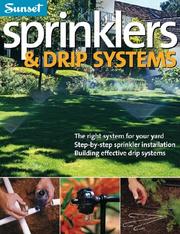
The Sunset guide is the most straightforward step-by-step for a homeowner: planning the layout, laying pipe, setting heads, wiring valves. Published as Sprinklers and Drip Systems; start here because everything later assumes you can picture the hardware.

Catalogued as Black and Decker the Complete Guide to Landscape Projects — a general yard-projects book whose irrigation chapters are unusually clear on trenching, sleeving under paths and tying into an existing supply. Read it alongside Sunset for the parts Sunset assumes.

The Storey classic on finding, storing, piping and pressurising water on a property. Third because pressure and flow at the meter are the constraint that decides what system you can actually build, and most irrigation books start after that question.
Drip, and Using Much Less Water
BeginnerLearn the emitter-based approach that suits most home landscapes, and the hydrozoning habit of grouping plants by water need rather than by looks.
▸ Study plan for this stage
Pace: Three weeks for about 520 pages, and these are short, practical books that read quickly. Drip Irrigation for Every Landscape and All Climates (123 pages, 1992) is the anchor and deserves the most careful reading — Kourik is specific about emitter spacing and filtration in a way almost nothing else i
- The emitter as the unit of design: you are choosing a flow rate per plant, not a spray pattern over an area
- Why drip clogs and how Kourik says to prevent it — filtration, pressure regulation, flushing points, and emitter choice for your water quality
- Hydrozoning: grouping plants by water requirement so a zone can be run for the plants in it rather than as a compromise across the whole yard
- Bainbridge's low-tech delivery methods — buried clay pots, deep pipes, wicks, porous capsules — and the case that they beat both sprinklers and drip on efficiency for established woody plants
- Penick's argument that the largest saving is shrinking the irrigated area rather than improving the irrigation, via plant choice, rain gardens and captured runoff
- Root-zone geometry: an emitter wets a bulb of soil whose shape depends on soil texture, which is why spacing is a soil question before it is a plant question
- Where drip is the wrong answer — turf, and anywhere the pipe would have to be walked on or dug through routinely
- What is your soil texture, and what wetting pattern does Kourik predict from a single two-gallon-per-hour emitter in it?
- What are the three things Kourik says cause emitter clogging, and which applies to your water?
- Take your property drawing from the last stage and define hydrozones on it. How many are there, and does that number exceed the zones your available flow can support?
- Bainbridge and Penick both reduce water use, but by different means. Which of the two applies to an established landscape you cannot redesign?
- Where on your own property would a sprinkler still be the correct choice, and why?
- Do a jar or ribbon soil-texture test on two spots in your yard, then use Kourik's spacing guidance to set emitter spacing for each. If the two results differ, you have just discovered you need two different specifications in one landscape.
- Colour your property drawing into hydrozones following Penick's method — high, moderate, low and no supplemental water — and total the square footage of each. The high-water total is the number that will decide your water bill.
- Build one of Bainbridge's buried clay pot or deep-pipe installations for a single shrub, and for one season water that plant by no other means. It is the cheapest possible test of whether his method works in your soil.
- Run a single drip line off a hose bib with a filter and pressure regulator, as Kourik specifies, and after two weeks pull one emitter and inspect it. Whether it is clean or fouled tells you more about your water than any table will.
- Use the regional tables in Waterwise Gardening to write a first watering schedule, then note every place where a current local restriction contradicts it. That list is the measure of how far a 1989 table can be trusted.
Next up: You have decided what to water and by what method; the next stage is the arithmetic that decides whether the system actually delivers it evenly.
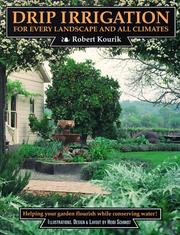
Still the best single home guide to drip: emitter choice, spacing, filtration, and how to avoid the clogging that makes people give up on it. The anchor of this path.

Bainbridge covers buried clay pots, wicks, deep pipes and the other low-tech delivery methods that beat sprinklers on efficiency. Read it second because it makes the case that the right answer is often not a sprinkler system at all.

The design side: hydrozones, rain gardens, plant choice and reducing the irrigated area in the first place. Here because deciding what not to water is the largest single saving available.

The older Sunset companion, useful mainly for its regional planting and watering-schedule tables. Optional if the previous two have already answered your questions.
The Design Maths
IntermediateSize a system properly — precipitation rate, distribution uniformity, matched precipitation, friction loss, zoning to available flow — so it waters evenly instead of merely running.
▸ Study plan for this stage
Pace: Four to six weeks, and this is the hard stage. Landscape Irrigation (240 pages, 1996) is a professional text and the one to read straight through — it is readable, but it is arithmetic, and a chapter a sitting with a calculator is the right pace. The Turf Irrigation Manual (396 pages, 1994) is a ref
- Precipitation rate: how many inches per hour a given head, at a given spacing and pressure, actually applies — and that this is calculated, not read off the box
- Matched precipitation rate, and why mixing a half-circle and a full-circle head on one zone without matched nozzles waters half the area twice as fast
- Distribution uniformity: the measure of how evenly a zone applies water, and why a low uniformity forces you to overwater everything to keep the driest spot alive
- Head-to-head spacing and the geometry behind it — square versus triangular layout, and why the design assumes overlap to the adjacent head
- Friction loss: pressure lost to pipe run, fittings and valves, and how to work it back from the head to the point of connection
- Operating pressure at the nozzle as distinct from static pressure at the meter, and what misting and doughnutting each tell you about being over or under it
- Sizing a zone to available flow: total the head flow rates, keep the sum under your measured gallons per minute with margin, and split the zone when it exceeds
- Infiltration rate and runoff — the soil's limit on how fast water can be applied, which caps precipitation rate independently of the hardware
- Calculate the precipitation rate of a zone from Smith's method. What run time does it need to apply half an inch?
- What happens, in inches per hour, if you put an unmatched half-circle and full-circle head on the same zone? Show the number.
- How much pressure is lost between your point of connection and the furthest head on your longest run? Work it from the Turf Irrigation Manual's friction tables.
- Your soil's infiltration rate and your zone's precipitation rate — which is higher, and what do you do about it?
- What does distribution uniformity measure, and why does a poor figure cost water even when the total applied is correct?
- Which of Pair's 1960 assumptions about equipment no longer hold, and does that change the hydraulics or only the hardware?
- Run a catch-can test: set straight-sided containers in a grid across one zone, run it for a fixed time, measure each, and compute both the average precipitation rate and the distribution uniformity using Smith's formulas. This single test will tell you more about your existing system than the rest of the stage.
- Take the property drawing and hydrozones you have built and lay out heads at head-to-head spacing for one turf area, working the geometry from the Turf Irrigation Manual's layout section. Then total the flow and check it against your measured gallons per minute; if it fails, split the zone and do it again.
- Work a complete friction-loss calculation from the furthest head back to the meter using Choate's tables, and compare the result against your measured static pressure. The difference is the pressure actually available at the nozzle.
- Reproduce one worked example from Smith with his own numbers before substituting yours. Getting his answer is how you find out whether you have understood the method or copied the shape of it.
- Read the chapter in Pair on application rate and infiltration, then check the number he gives for your soil type against what Smith gives. Where they differ, work out which is the more conservative and design to that.
Next up: You can now size a system to the water you have; the last stage asks whether you can supply some of that water from somewhere other than the meter.

Smith's Landscape Irrigation: Design and Management is the readable professional text on the numbers: how to calculate what a head actually applies and how to zone within your available gallons per minute. The single most useful upgrade over any homeowner guide.

The long-standing industry manual on turf and landscape system design, heavy on hydraulics tables and head layout geometry. Use it as a reference beside Smith rather than reading it through.

Catalogued as Sprinkler Irrigation — the Sprinkler Irrigation Association's classic engineering reference that Pair edited. Dated and agricultural in emphasis, but it is where the sprinkler-hydraulics conventions the homeowner books quote came from.
Where the Water Comes From
IntermediateReduce or replace mains supply with rainwater, storage and greywater, and understand the sizing and legal constraints on each.
▸ Study plan for this stage
Pace: Three to four weeks for about 580 pages. Rainwater Harvesting for Drylands and Beyond (304 pages) is a principles-first book and the one to read carefully — Lancaster's argument is that the earthworks come before the tank, so reading him after buying storage wastes money. Water Storage (125 pages) a
- Lancaster's ordering principle: begin with the smallest, simplest, most upstream interventions — shaping the land to slow, spread and sink water — before any tank is considered
- Catchment sizing arithmetic: roof area times rainfall times the conversion factor gives gallons, and that number tells you whether storage is worth building at all
- Storage sizing against demand and rainfall pattern — a climate with one wet season needs an entirely different tank from one with even rainfall
- Getting stored water back out at usable pressure: gravity head, pump, and why a tank on the ground will not run a drip zone without help
- Tank materials, siting and first-flush diversion, and the structural fact that stored water is heavy
- Greywater sources ranked by usability — laundry and shower water yes, kitchen and toilet water no — and why the distinction is about grease and pathogens
- Branched-drain distribution and the design rule behind it: no filters, no pumps, no storage of greywater, because stored greywater turns septic
- The legal layer: permitting, health codes and irrigation restrictions vary by jurisdiction, and Ludwig is arguing about them as well as describing them
- How many gallons does your roof yield in an average year? Calculate it from Lancaster's formula with your own roof area and rainfall figures.
- Given that yield and your irrigation demand from the previous stage, what tank size is justified, and over what payback period?
- What pressure does a full tank of a given height deliver at the outlet, and is it enough to run the drip zone you designed?
- Why does Ludwig insist greywater must not be stored, and what fails if you ignore it?
- Which of the greywater designs in Create an Oasis is legal where you live? Where did you find that out, and what did it say?
- Measure your roof's footprint and multiply through Lancaster's catchment formula with your local annual rainfall to get an annual yield in gallons. Then compare it against the seasonal demand you calculated in stage three; the ratio decides whether the rest of this stage is theory or a project.
- Walk your property in the rain, or immediately after, and map where water actually goes — the paths, the ponding, the runoff leaving the boundary. Then apply Lancaster's earthwork interventions to that map before considering any tank. Doing the walk first is the whole method.
- Size a cistern from Ludwig's tables for the yield you calculated, then work out where it would physically sit, what it weighs full, and how the water gets from it to the zone. Most tank plans die at the third of those three.
- Trace your laundry drain from the machine to where it leaves the house and establish whether a branched-drain diversion is physically possible, following Create an Oasis. Then look up your jurisdiction's greywater rule and write down what it actually permits — that pair of answers is the whole feasibility study.
Next up: That completes the path: you can price and lay out a system, size it correctly to your own pressure and flow, and know what fraction of its water could come from the sky or the laundry rather than the meter.

Lancaster's principles-first approach to catching water in the landscape before it ever reaches a tank. Read it before buying storage, because most of his best interventions are earthworks and cost nothing.

Tanks, cisterns and ponds: sizing, materials, siting and the plumbing to get stored water back into an irrigation system at usable pressure. The practical sequel to Lancaster.

Catalogued as The New Create an Oasis With Greywater. The standard guide to reusing laundry and shower water for landscape irrigation, including the branched-drain designs and the health and code constraints that make or break a legal install.